SUNY series in Aging – serie
Visar alla böcker i serien SUNY series in Aging. Handla med fri frakt och snabb leverans.
4 produkter
4 produkter
382 kr
Tillfälligt slut
The manner of aging is a cultural construct and there is a specifically Indian way of aging. That way is shown in this book through the anlyses of key concepts—aging (jara), stages of life (asarama), time (kala), determinate deeds (karma), desire (kama), change (parinama), and rejuvenative force (vaja).The author offers important transcultural insights into the realities of aging, disease, and inevitable death faced by all. The composite Inidan religious tradition provides patterns for shaping the aging experience into a meaningful system of vital social values, ethical principles, and life goals, This analysis of the Indian approach provides significant clues for understanding aging in other cultures.
380 kr
Tillfälligt slut
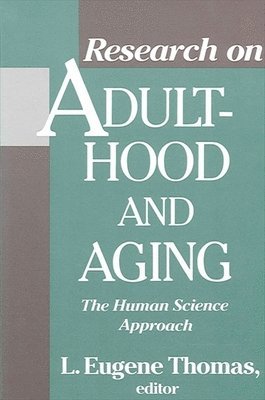
By borrowing from a wide range of disciplines such as psychology, sociology, anthropology, psychiatry, and the humanities, this book gives a more "human," personal voice to the many experiences of aging. The result is a new sort of social science research, one which often reads more like literature than social science. Indeed, the author uses a wide variety of techniques borrowed from the humanities, from hermeneutics to oral histories, in addition to the more traditional social science methods.
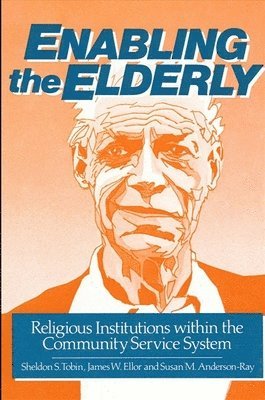
Enabling the Elderly
Religious Institutions within the Community Service System
Inbunden, Engelska, 1986
1 051 kr
Tillfälligt slut
Here three gerontological professionals have combined their diverse backgrounds in a timely and urgently needed study of how religious institutions interact with their communities to provide care for the elderly. In an easily accessible and well-written text, actual and potential services are described, and ways of enhancing religious/agency collaboration are suggested. Data are presented from studies in four communities and in a variety of provider settings.The book begins with an overview of aging in modern society, followed by a discussion of the vital importance of spiritual well-being for elderly women and men today. The authors show how church and synagogue can provide services for elderly persons, highlighting ways in which intentions can be translated into programs.A second section identifies diverse categories of elderly persons in the community and their physical, social, emotional, and spiritual needs. It suggests opportunities for religious organizations to address these needs, particularly through collaboration with service agencies. Programs currently provided by synagogues and churches are detailed.A final section examines the benefits of institutions working together with service agencies on potential problem areas. It provides ways to enhance the partnership—from simple communication, to cooperation, coordination, collaboration, and even confederation.The book concludes with a useful model, developed from the authors' original research, that can enhance interaction between churches and synagogues, and service agencies.
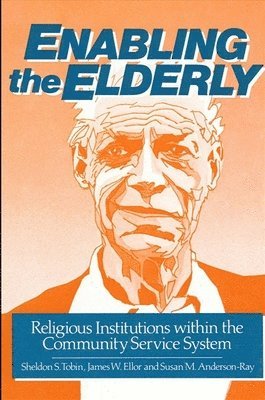
Enabling the Elderly
Religious Institutions within the Community Service System
Häftad, Engelska, 1986
374 kr
Tillfälligt slut
Here three gerontological professionals have combined their diverse backgrounds in a timely and urgently needed study of how religious institutions interact with their communities to provide care for the elderly. In an easily accessible and well-written text, actual and potential services are described, and ways of enhancing religious/agency collaboration are suggested. Data are presented from studies in four communities and in a variety of provider settings.The book begins with an overview of aging in modern society, followed by a discussion of the vital importance of spiritual well-being for elderly women and men today. The authors show how church and synagogue can provide services for elderly persons, highlighting ways in which intentions can be translated into programs.A second section identifies diverse categories of elderly persons in the community and their physical, social, emotional, and spiritual needs. It suggests opportunities for religious organizations to address these needs, particularly through collaboration with service agencies. Programs currently provided by synagogues and churches are detailed.A final section examines the benefits of institutions working together with service agencies on potential problem areas. It provides ways to enhance the partnership—from simple communication, to cooperation, coordination, collaboration, and even confederation.The book concludes with a useful model, developed from the authors' original research, that can enhance interaction between churches and synagogues, and service agencies.