SUNY series in Computer-Mediated Communication - Böcker
Visar alla böcker i serien SUNY series in Computer-Mediated Communication. Handla med fri frakt och snabb leverans.
7 produkter
7 produkter
Computer Networking and Scholarly Communication in the Twenty-First-Century University
Häftad, Engelska, 1996
428 kr
Tillfälligt slut
This book explores the various ways in which computer networking, and more specifically the Internet, is changing the practices, the structure, and the products of academic scholarship. It considers research, teaching, and dissemination of knowledge across a range of disciplines in the humanities, sciences, and social sciences in order to identify particular uses of networking that will come to constitute the academic world of the future.The contributors consider such themes as how networking and particular software environments can be used to support inquiry within research specialties and how scholars in diverse disciplines respond to the availability of new networked channels of scholarly communication. In the context of education, they argue that networking can reconfigure the process of learning, encompassing new audiences, new relationships with teachers, and new learning skills adapted for the network environment. The products of such new configurations are also discussed. The future of electronic journal publication is considered by innovators who have designed some of the first experiments in refereed electronic journal publication. Finally, the new responsibilities and roles of the academic library and academic publishers in a networked environment are debated.
594 kr
Skickas inom 3-6 vardagar
The rush to the Information Superhighway and the transition to an Information Age have enormous political, ethical, and religious consequences. The essays collected here develop both interdisciplinary and international perspectives on privacy, critical thinking and literacy, democratization, gender, religion, and the very nature of the revolution promised in cyberspace. These essays are essential reading for anyone who wants to better understand and reflect upon these events and issues.
583 kr
Skickas inom 3-6 vardagar
Investigates the new world of computer conferencing and details how writers use language when their social interaction is exclusively enacted through text on screens.This book examines interactive electronic discourse, exposing use of language that has the immediacy characteristic of speech and the permanence characteristic of writing. The authors created an asynchronous mainframe conference for language and linguistics classes in which they presented students with the task of analyzing the language used in original newspaper reports of the 1960s Civil Rights Sit-Ins. The authors observed how students wrote to each other across a wide range of social and virtual settings, how they built a real, if short-lived community within and across campus boundaries, and how they handled conflict while avoiding confrontation on sensitive issues of race and power. The result is a study that details how people use language when their social interaction is exclusively enacted through text on screens, and how their exchange is affected by computer conferencing.The students who wrote in the electronic conferences faced two interrelated tasks: participating in a multiparty "conversation" and negotiating the individual identities they presented to one another in their virtual space. Individual writers used their own idiolects to influence the form and content of electronic discourse, adapting their own tacit knowledge of conversational strategies and written discourse to the new medium, as they created a real, although temporary, community.In the electronic universe, writers adapt conventions of oral and written discourse to their own individual communicative ends. Electronic discourse, sometimes called computer mediated communication, presents us with texts in contact, and through those texts, their writers. Intertextuality in electronic conferences replaced a variety of conversational conventions. This book examines evidence for change, some trace of being and human interaction in virtual space, a domain where footprints are not in moondust but in ether.
1 359 kr
Tillfälligt slut
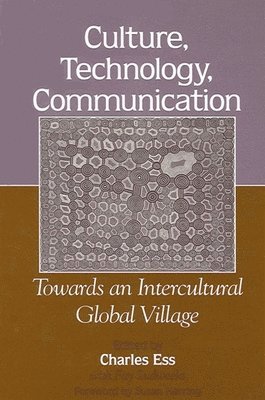
Provides cross-cultural perspectives on computer-mediated communication.Stability and success in our electronic global village increasingly depends on the complex interactions of culture, communication, and technology. This book offers both theoretical approaches and case studies of these interactions from diverse cultural domains, including Europe, the Middle East, Asia, and the United States. This global perspective helps to counteract the Anglo-American presumptions that have dominated discussion and literature on computer-mediated communication (CMC) technologies. The contributors uncover and challenge the culture-bound values and communicative preferences inherent in CMC technologies-including values and preferences related to gender-and also document non-Western examples of implementing these technologies in ways that catalyze global communication while preserving and enhancing local cultures. Taken together, these essays articulate the interdisciplinary foundations and practical models necessary to design and use CMC technologies in ways that help us to avoid the choice between a global but culturally homogenous "McWorld" and fragmented local cultures whose identities are preserved only in their opposition to globalization.
402 kr
Tillfälligt slut
Provides cross-cultural perspectives on computer-mediated communication.Stability and success in our electronic global village increasingly depends on the complex interactions of culture, communication, and technology. This book offers both theoretical approaches and case studies of these interactions from diverse cultural domains, including Europe, the Middle East, Asia, and the United States. This global perspective helps to counteract the Anglo-American presumptions that have dominated discussion and literature on computer-mediated communication (CMC) technologies. The contributors uncover and challenge the culture-bound values and communicative preferences inherent in CMC technologies-including values and preferences related to gender-and also document non-Western examples of implementing these technologies in ways that catalyze global communication while preserving and enhancing local cultures. Taken together, these essays articulate the interdisciplinary foundations and practical models necessary to design and use CMC technologies in ways that help us to avoid the choice between a global but culturally homogenous "McWorld" and fragmented local cultures whose identities are preserved only in their opposition to globalization.
Internet in the Middle East
Global Expectations and Local Imaginations in Kuwait
Inbunden, Engelska, 2005
989 kr
Skickas inom 7-10 vardagar
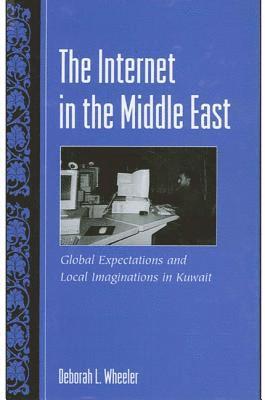
A surprising look at how the Internet does, and does not, affect public discourse and social practice in the Middle East and Kuwait in particular.Providing one of the first ethnographies of the Internet revolution in the Arab world, The Internet in the Middle East analyzes the ways in which the Internet affects public discourse and social practice in Islamic society. With a special focus on Kuwait, Deborah L. Wheeler offers an intimate journey through the lives of women, youth, and Islamist Internet users, and through their testimonies shows what the Internet means to various Internet subcultures in the emirate.The book includes a historical overview of the values and design principles embedded in the Internet by its inventors and early adopters, and examines the major questions, debates, assumptions, and findings of the emerging field of Internet studies. Drawing on six years of research, including three years of fieldwork in Kuwait, Dubai, Jordan, Syria, Egypt, Tunisia, and Morocco, Wheeler provides a comparative overview of the meaning and manifestations of the Internet in the Middle East, giving careful attention to whether or not the Internet lives up to global expectations of promoting democracy, economic privatization, and personal freedom.
Internet in the Middle East
Global Expectations and Local Imaginations in Kuwait
Häftad, Engelska, 2005
382 kr
Tillfälligt slut
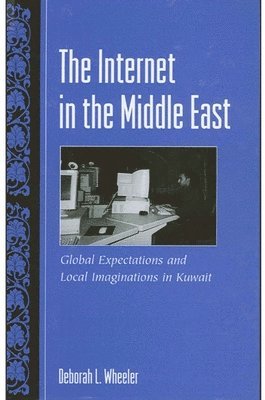
A surprising look at how the Internet does, and does not, affect public discourse and social practice in the Middle East and Kuwait in particular.Providing one of the first ethnographies of the Internet revolution in the Arab world, The Internet in the Middle East analyzes the ways in which the Internet affects public discourse and social practice in Islamic society. With a special focus on Kuwait, Deborah L. Wheeler offers an intimate journey through the lives of women, youth, and Islamist Internet users, and through their testimonies shows what the Internet means to various Internet subcultures in the emirate.The book includes a historical overview of the values and design principles embedded in the Internet by its inventors and early adopters, and examines the major questions, debates, assumptions, and findings of the emerging field of Internet studies. Drawing on six years of research, including three years of fieldwork in Kuwait, Dubai, Jordan, Syria, Egypt, Tunisia, and Morocco, Wheeler provides a comparative overview of the meaning and manifestations of the Internet in the Middle East, giving careful attention to whether or not the Internet lives up to global expectations of promoting democracy, economic privatization, and personal freedom.