Sustainable Infrastructure - Böcker
Visar alla böcker i serien Sustainable Infrastructure. Handla med fri frakt och snabb leverans.
6 produkter
6 produkter
428 kr
Skickas inom 7-10 vardagar
During the 1990s, a new paradigm for power sector reform was put forward emphasizing the restructuring ofutilities, the creation of regulators, the participation of the private sector, and the establishment of competitivepower markets. Twenty-five years later, only a handful of developing countries have fully implemented theseWashington Consensus policies. Across the developing world, reforms were adopted rather selectively, resultingin a 'hybrid model' where elements of market-orientation coexist with continued state-dominance of the sector.This book aims to revisit and refresh thinking on power sector reform approaches for developing countries. Theapproach relies heavily on evidence from the past, drawing both on broad global trends, and deep case materialfrom 15 developing countries. It is also forward-looking; considering the implications of new social andenvironmental policy goals, as well as emerging technological disruptions.A nuanced picture emerges. While regulation has been widely adopted, practice often falls well short of theory;and cost recovery remains an elusive goal. The private sector has financed a substantial expa_nsion of generationcapacity. Yet, its contribution to power distribution has been much more limited, with efficiency levels cansometimes be matched by well-governed public utilities. Restructuring and liberalization have been beneficial ina handful of larger middle-income nations; but have proved too complex for most countries to implement.Based on these findings, the report points to three major policy implications. First, reform efforts need to beshaped by the political and economic context of the host country. The 1990s reform model was most successfulin countries that had reached certain minimum conditions of power sector development and offered asupportive political environment. Second, reform efforts should be driven and tailored towards desired policyoutcomes, and less preoccupied with following a predetermined process. Particularly given that WashingtonConsensus reforms alone will not deliver on twenty-first century policy objectives. Third, countries foundalternative institutional pathways to achieving good power sector outcomes, making a case for greater pluralismgoing forward.
Path to 5G in the Developing World
Planning Ahead for a Smooth Transition to the Fifth Generation of Mobile Technology
Häftad, Engelska, 2024
428 kr
Skickas inom 7-10 vardagar
The global race for 5G has seen countries riding a new wave of wireless technology. 5G is the next-generation mobile communication technology that enables a different level of performance and innovative applications from the 4G mobile communication that is currently in use by most people in the world. It is anticipated for a global commercial launch by 2020. For some countries, 5G services may seem to be in a distant future, for others, it's the initiation into the Fourth Industrial Revolution. With estimated economic value of 12.3 trillion dollars in global economic output and the addition of 20 million jobs to the global economy by 2035, 5G has the potential for immense impact on job creation, productivity, and competitiveness. When fully implemented, the disruptive potential of 5G threatens to make irreversible the digital divide between early and late adopters. Should countries that have yet to turn off 3G services be concerned? Emerging markets have unique characteristics that set them apart from frontier economies: rapid growth in mobile connectivity, nascent markets for fixed infrastructure, and a younger population. These factors are poised to increase adoption of mobile broadband and demand for better connection and services. In other words, 5G may be a powerful force that will help countries leapfrog technologies and accelerate towards meeting their Sustainable Development Goals (SDGs).If then, what are the necessary steps for developing countries to successfully ride the 5G wave at the opportune moment? The potential dual nature of the impact of 5G on developing countries calls for an accurate diagnosis on its implications. This report explores the latest innovation in wireless technology, the tremendous opportunities that could be reaped from adopting 5G, the costs and challenges associated with 5G, and policy considerations for developing countries to most effectively deploy and utilize the 5G network.
441 kr
Skickas inom 7-10 vardagar
Fiscal risks associated with infrastructure are both more frequent and larger than previously assumed. Off the Books: Understanding and Mitigating the Fiscal Risks of Infrastructure quantifies the magnitude and prevalence of these risks in electricity and transport and identifies their root causes across a range of low- and middle-income countries.
Advancing Cloud and Data Infrastructure Markets
Strategic Directions for Low- and Middle-Income Countries
Häftad, Engelska, 2024
441 kr
Skickas inom 7-10 vardagar
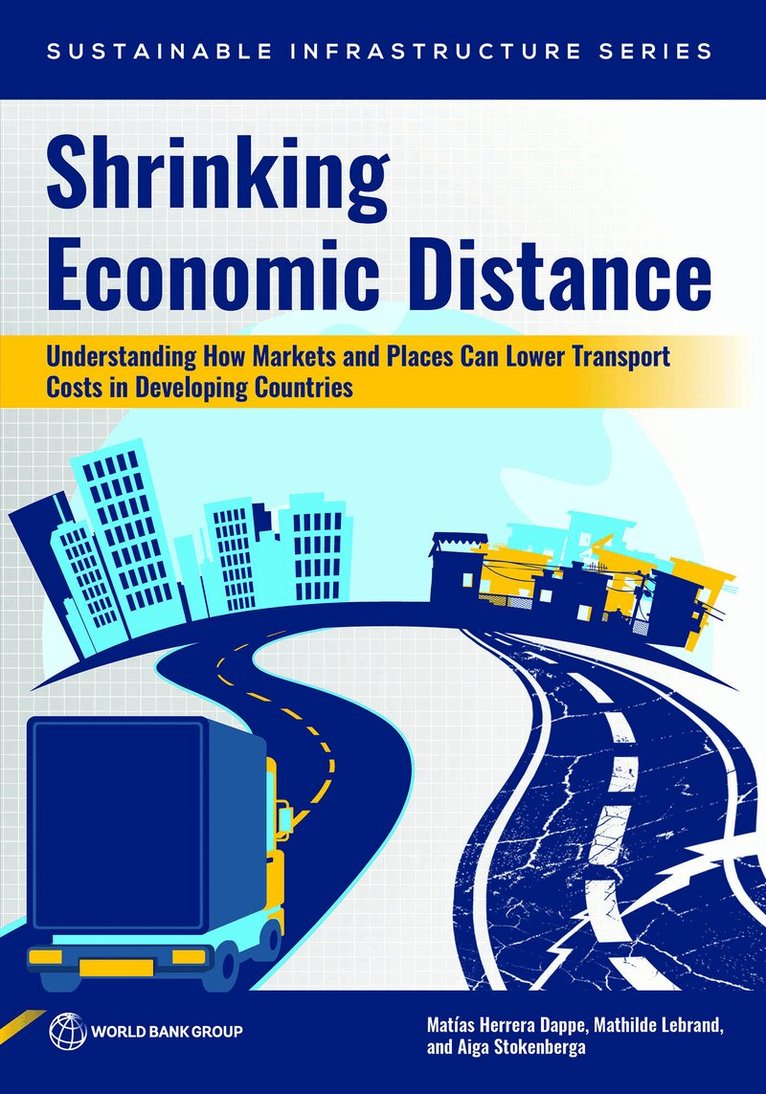
Shrinking Economic Distance
Understanding How Markets and Places Can Lower Transport Costs in Developing Countries
Häftad, Engelska, 2024
428 kr
Skickas inom 7-10 vardagar
Transport prices for international and domestic shipments are higher in low- and middle-income countries than in high-income countries, and shipping times are significantly longer and less reliable. This report identifies the frictions responsible for these outcomes and lays out the building blocks of a reform agenda for reducing them.
Return Imperative
Moving Infrastructure from a Resource-Gap to a Priority-Based Approach
Häftad, Engelska, 2026
467 kr
Kommande
This report introduces the first global, geolocated database of physical infrastructure assets and a framework to guide investment priorities. Comparing social returns with borrowing costs reveals widespread underinvestment across energy, transport, and digital sectors, with especially high returns to transport in developing countries.