Syracuse Studies in Geography - Böcker
Visar alla böcker i serien Syracuse Studies in Geography. Handla med fri frakt och snabb leverans.
9 produkter
9 produkter
264 kr
Skickas inom 7-10 vardagar
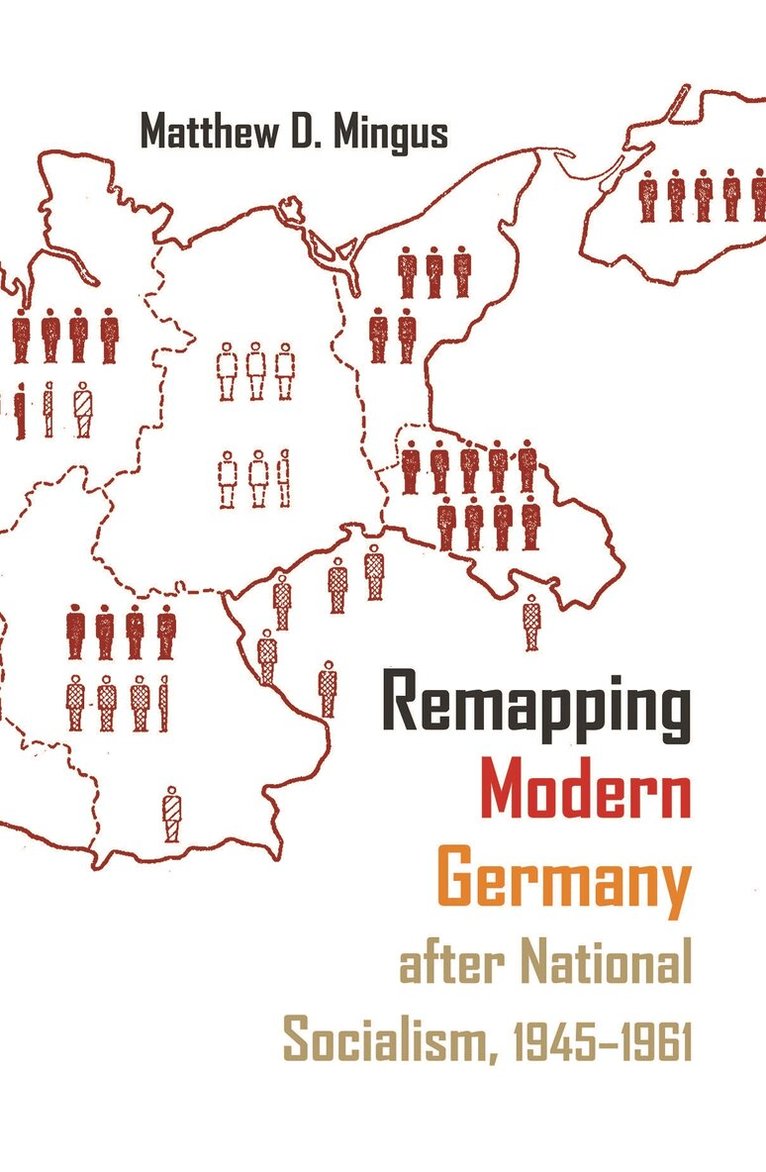
Located in the often-contentious center of the European continent, German territory has regularly served as a primary tool through which to understand and study Germany’s economic, cultural, and political development. Many German geographers throughout the nineteenth and early twentieth centuries became deeply invested in geopolitical determinism—the idea that a nation’s territorial holdings (or losses) dictate every other aspect of its existence. Taking this as his premise, Mingus focuses on the use of maps as mediums through which the United States, Great Britain, and the Soviet Union sought to reshape German national identity after the Second World War. As important as maps and the study of geography have been to the field of European history, few scholars have looked at the postwar development of occupied Germany through the lens of the map—the most effective means to orient German citizens ontologically within a clearly and purposefully delineated spatial framework. Mingus traces the institutions and individuals involved in the massive cartographic overhaul of postwar Germany. In doing so, he explores not only the causes and methods behind the production and reproduction of Germany’s mapped space but also the very real consequences of this practice.
612 kr
Skickas inom 10-15 vardagar
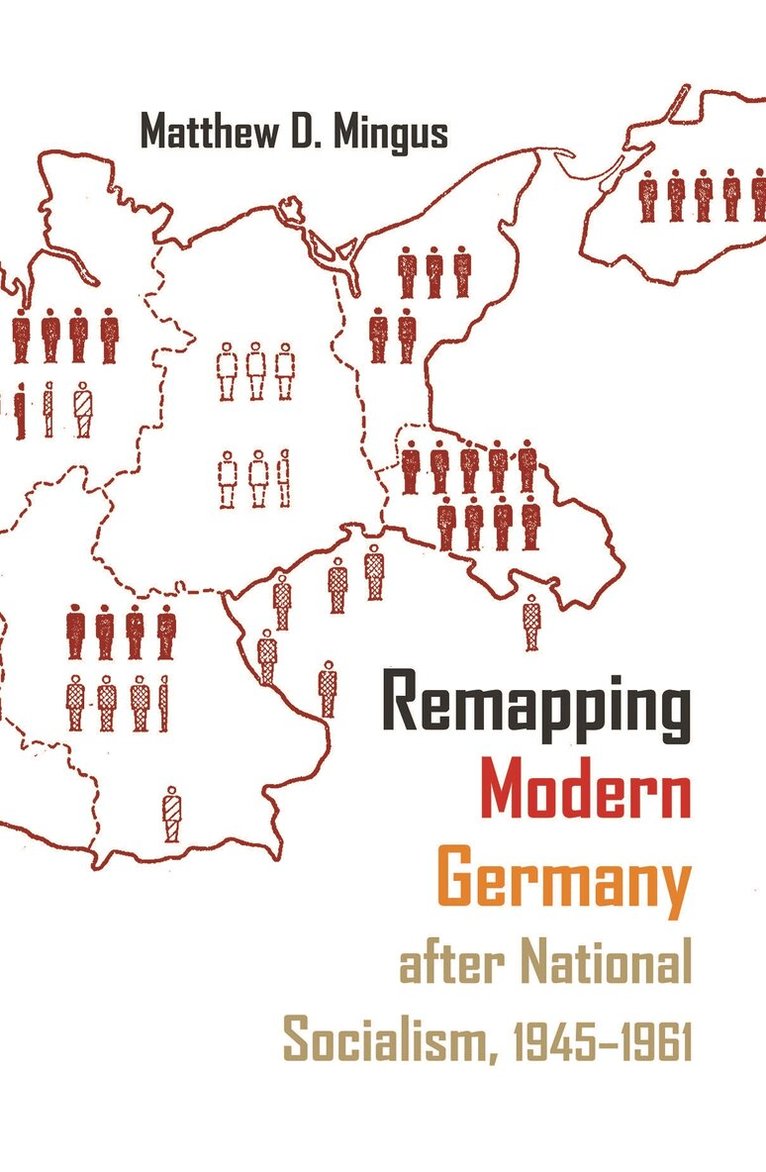
Located in the often-contentious center of the European continent, German territory has regularly served as a primary tool through which to understand and study Germany’s economic, cultural, and political development. Many German geographers throughout the nineteenth and early twentieth centuries became deeply invested in geopolitical determinism—the idea that a nation’s territorial holdings (or losses) dictate every other aspect of its existence. Taking this as his premise, Mingus focuses on the use of maps as mediums through which the United States, Great Britain, and the Soviet Union sought to reshape German national identity after the Second World War. As important as maps and the study of geography have been to the field of European history, few scholars have looked at the postwar development of occupied Germany through the lens of the map—the most effective means to orient German citizens ontologically within a clearly and purposefully delineated spatial framework. Mingus traces the institutions and individuals involved in the massive cartographic overhaul of postwar Germany. In doing so, he explores not only the causes and methods behind the production and reproduction of Germany’s mapped space but also the very real consequences of this practice.
From Rice Fields to Killing Fields
Nature, Life and Labor Under the Khmer Rouge
Inbunden, Engelska, 2017
666 kr
Skickas inom 10-15 vardagar
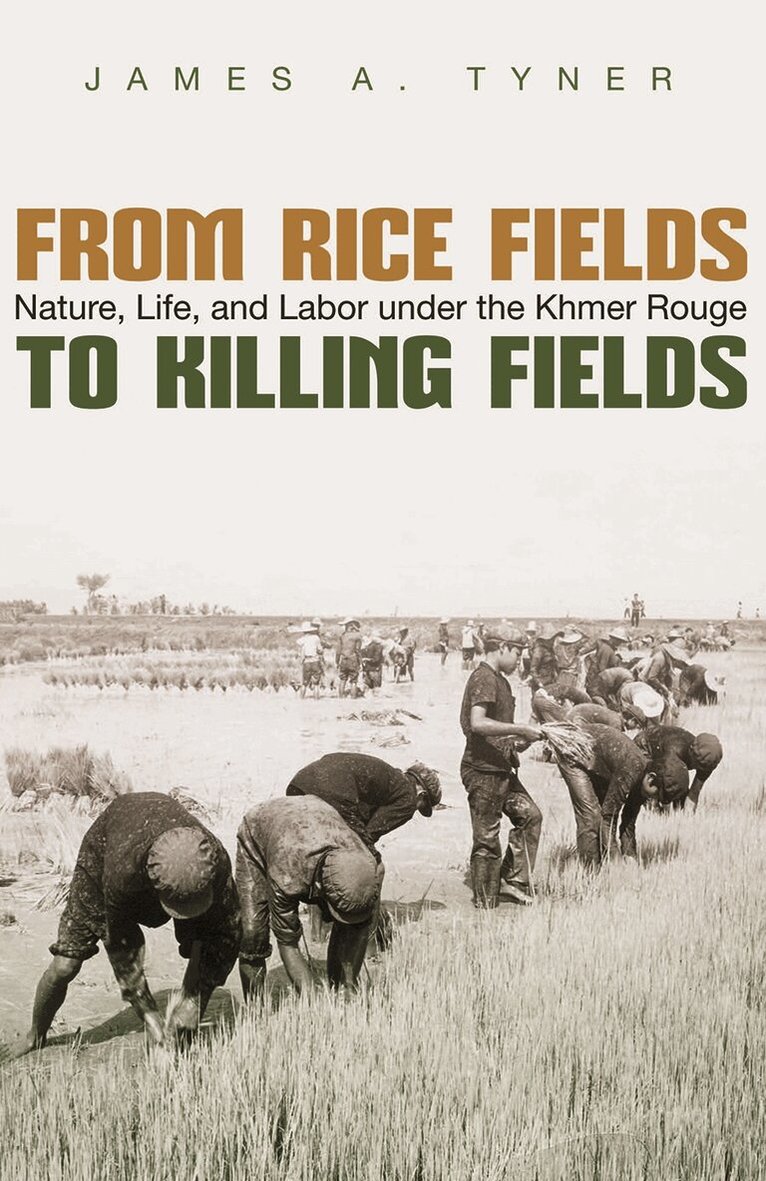
Between 1975 and 1979, the Communist Party of Kampuchea fundamentally transformed the social, economic, political, and natural landscape of Cambodia. During this time, as many as two million Cambodians died from exposure, disease, and starvation, or were executed at the hands of the party. Thedominant interpretation of Cambodian history during this period presents the CPK as a totalitarian, communist, and autarkic regime seeking to reorganize Cambodian society around a primitive, agrarian political economy.From Rice Fields to Killing Fields challenges previous interpretationsand provides a documentary-based Marxist interpretation of the political economy of Democratic Kampuchea. Tyner argues that Cambodia’s mass violence was the consequence not of the deranged attitudes and paranoia of a few tyrannical leaders but of the structural violence, the direct result ofa series of political and economic reforms that were designed to accumulate capital rapidly: the dispossession of hundreds of thousands of people through forced evacuations, the imposition of starvation wages, the promotion of import-substitution policies, and the intensification of agricultural productionthrough forced labor. Moving beyond the Cambodian genocide, Tyner maintains that it is a mistake to view Democratic Kampuchea in isolation, as an aberration or something unique. Rather, the policies and practices initiated by the Khmer Rouge must be seen in a larger, historical-geographical context.
415 kr
Skickas inom 7-10 vardagar
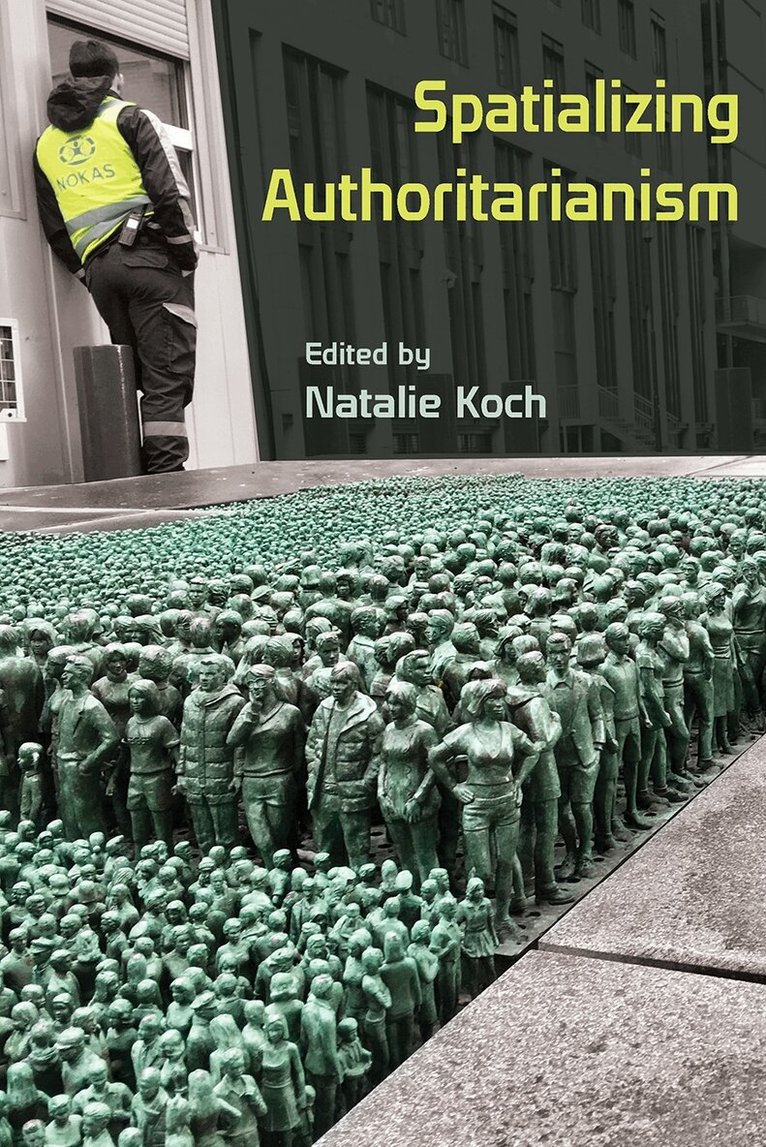
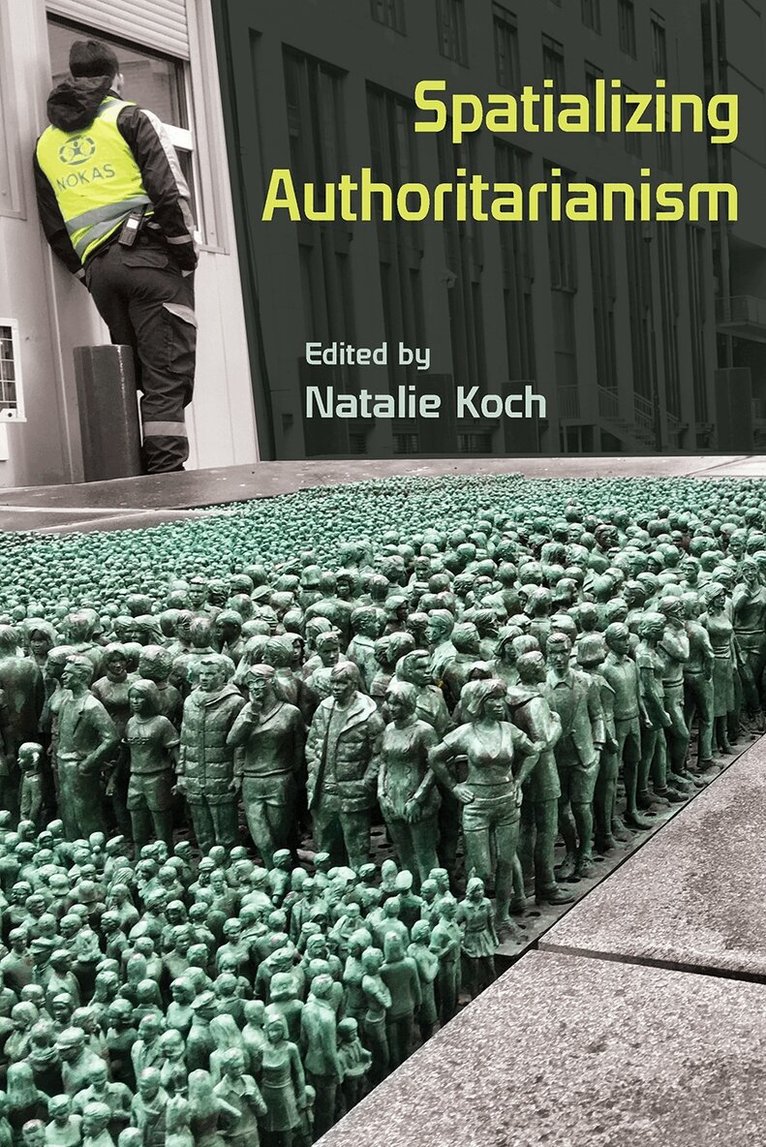
Authoritarianism has emerged as a prominent theme in popular and academic discussions of politics since the 2016 US presidential election and the coinciding expansion of authoritarian rhetoric and ideals across Europe, Asia, and beyond. Until recently, however, academic geographers have not focused squarely on the concept of authoritarianism. Its longstanding absence from the field is noteworthy as geographers have made extensive contributions to theorizing structural inequalities, injustice, and other expressions of oppressive or illiberal power relations and their diverse spatialities. Identifying this void, Spatializing Authoritarianism builds upon recent research to show that even when conceptualized as a set of practices rather than as a simple territorial label, authoritarianism has a spatiality: both drawing from and producing political space and scale in many often surprising ways. This volume advances the argument that authoritarianism must be investigated by accounting for the many scales at which it is produced, enacted, and imagined.Including a diverse array of theoretical perspectives and empirical cases drawn from the Global South and North, this collection illustrates the analytical power of attending to authoritarianism’s diverse scalar and spatial expressions, and how intimately connected it is with identity narratives, built landscapes, borders, legal systems, markets, and other territorial and extraterritorial expressions of power.
Border Humanitarians
Gendered Order and Insecurity on the Thai-Burmese Frontier
Häftad, Engelska, 2022
362 kr
Skickas inom 7-10 vardagar
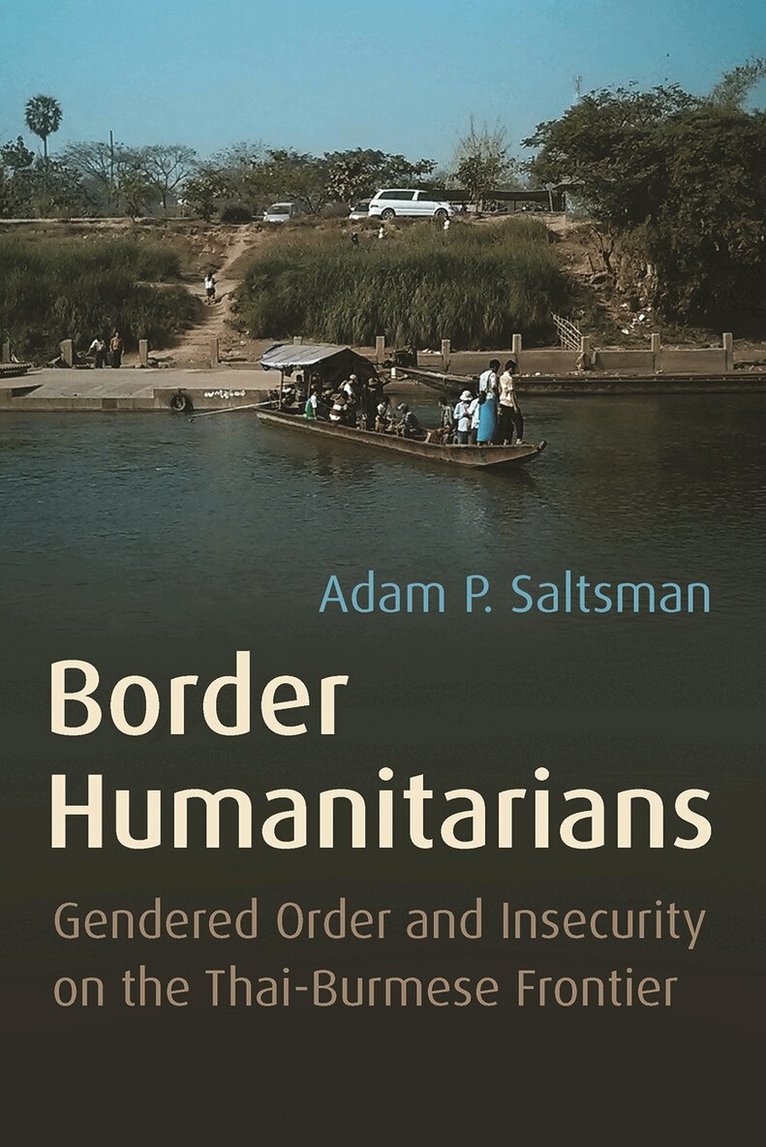
In rich ethnographic detail, Border Humanitarians explores the narratives of Burmese activists in exile who rely on transnational political and social networks to respond to gender violence among the hundreds of thousands of migrants living and working precariously on the Thai border with Myanmar. The activists this book follows must navigate a multiplicity of representations; they are simultaneously "illegal" in Thailand, underpaid feminized laborers in a global garment supply chain, and targets of global North humanitarian intervention with funding to "rescue" and "empower" them. Looking at how these multiple roles overlap, Saltsman asks how state border enforcement regimes, global humanitarianism, and neoliberal capitalist trajectories produce varied sets of constraints and opportunities in migrants’ lives. Here, like in many spaces that are simultaneously zones of refuge and hubs for flexible labor, the borderlands are both a site of dispossession for migrants as well as a resource for collective agency. As Saltsman details, gender itself emerges as an important tool for migrants and aid workers alike to navigate insecurity and assert varying ways of making order amidst the upheaval of displacement and ongoing exclusion.
967 kr
Skickas inom 10-15 vardagar
Authoritarianism has emerged as a prominent theme in popular and academic discussions of politics since the 2016 US presidential election and the coinciding expansion of authoritarian rhetoric and ideals across Europe, Asia, and beyond. Until recently, however, academic geographers have not focused squarely on the concept of authoritarianism. Its longstanding absence from the field is noteworthy as geographers have made extensive contributions to theorizing structural inequalities, injustice, and other expressions of oppressive or illiberal power relations and their diverse spatialities. Identifying this void, Spatializing Authoritarianism builds upon recent research to show that even when conceptualized as a set of practices rather than as a simple territorial label, authoritarianism has a spatiality: both drawing from and producing political space and scale in many often surprising ways. This volume advances the argument that authoritarianism must be investigated by accounting for the many scales at which it is produced, enacted, and imagined.Including a diverse array of theoretical perspectives and empirical cases drawn from the Global South and North, this collection illustrates the analytical power of attending to authoritarianism’s diverse scalar and spatial expressions, and how intimately connected it is with identity narratives, built landscapes, borders, legal systems, markets, and other territorial and extraterritorial expressions of power.
Border Humanitarians
Gendered Order and Insecurity on the Thai-Burmese Frontier
Inbunden, Engelska, 2022
861 kr
Skickas inom 10-15 vardagar
In rich ethnographic detail, Border Humanitarians explores the narratives of Burmese activists in exile who rely on transnational political and social networks to respond to gender violence among the hundreds of thousands of migrants living and working precariously on the Thai border with Myanmar. The activists this book follows must navigate a multiplicity of representations; they are simultaneously "illegal" in Thailand, underpaid feminized laborers in a global garment supply chain, and targets of global North humanitarian intervention with funding to "rescue" and "empower" them. Looking at how these multiple roles overlap, Saltsman asks how state border enforcement regimes, global humanitarianism, and neoliberal capitalist trajectories produce varied sets of constraints and opportunities in migrants’ lives. Here, like in many spaces that are simultaneously zones of refuge and hubs for flexible labor, the borderlands are both a site of dispossession for migrants as well as a resource for collective agency. As Saltsman details, gender itself emerges as an important tool for migrants and aid workers alike to navigate insecurity and assert varying ways of making order amidst the upheaval of displacement and ongoing exclusion.
427 kr
Skickas inom 7-10 vardagar
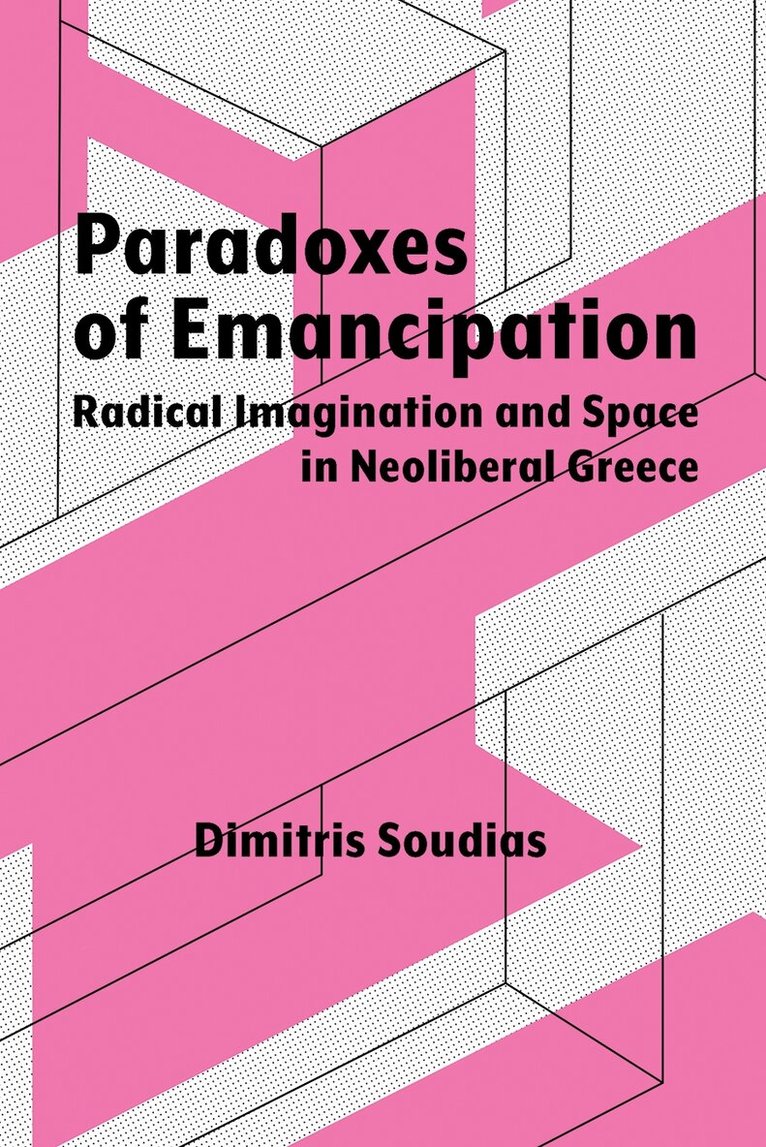
In Paradoxes of Emancipation, Dimitris Soudias traces the formation of political subjectivity in times of crisis, by attending to the 2011 occupation of Syntagma Square in Athens: the heart of the Greek anti-austerity movement. Soudias conceives of the Syntagma Square occupation as a lens through which we can critically engage with broader theoretical and political issues about the crumbling promises of the capitalist imaginary, the epistemic "spirit" of neoliberal rationalities, the spatialized practices of navigating precarity and uncertainty, and the prospects for a radically better tomorrow.By challenging both the romanticization of anti-austerity activism and the reduction of neoliberalism to mere free market thinking, Soudias reveals that the relationship between political subject formation and emancipation in neoliberalism is utterly paradoxical: in their effort to overcome neoliberal rationalities, individuals also partly stabilize them. Interweaving the stories and insights of activists with light-touch sociology, geography, and political theory, this book makes bold claims about the future of emancipation by envisioning an "alter-neoliberal critique." In so doing, Paradoxes of Emancipation presents an illuminating inquiry into how our experiences with capitalist crises lead to profound reevaluations of ourselves in ways that challenge our expectations of the future.
928 kr
Skickas inom 7-10 vardagar
In Paradoxes of Emancipation, Dimitris Soudias traces the formation of political subjectivity in times of crisis, by attending to the 2011 occupation of Syntagma Square in Athens: the heart of the Greek anti-austerity movement. Soudias conceives of the Syntagma Square occupation as a lens through which we can critically engage with broader theoretical and political issues about the crumbling promises of the capitalist imaginary, the epistemic "spirit" of neoliberal rationalities, the spatialized practices of navigating precarity and uncertainty, and the prospects for a radically better tomorrow.By challenging both the romanticization of anti-austerity activism and the reduction of neoliberalism to mere free market thinking, Soudias reveals that the relationship between political subject formation and emancipation in neoliberalism is utterly paradoxical: in their effort to overcome neoliberal rationalities, individuals also partly stabilize them. Interweaving the stories and insights of activists with light-touch sociology, geography, and political theory, this book makes bold claims about the future of emancipation by envisioning an "alter-neoliberal critique." In so doing, Paradoxes of Emancipation presents an illuminating inquiry into how our experiences with capitalist crises lead to profound reevaluations of ourselves in ways that challenge our expectations of the future.