T&T Clark Studies in Ressourcement Catholic Theology and Culture – serie
Visar alla böcker i serien T&T Clark Studies in Ressourcement Catholic Theology and Culture. Handla med fri frakt och snabb leverans.
9 produkter
9 produkter
1 409 kr
Skickas inom 5-8 vardagar
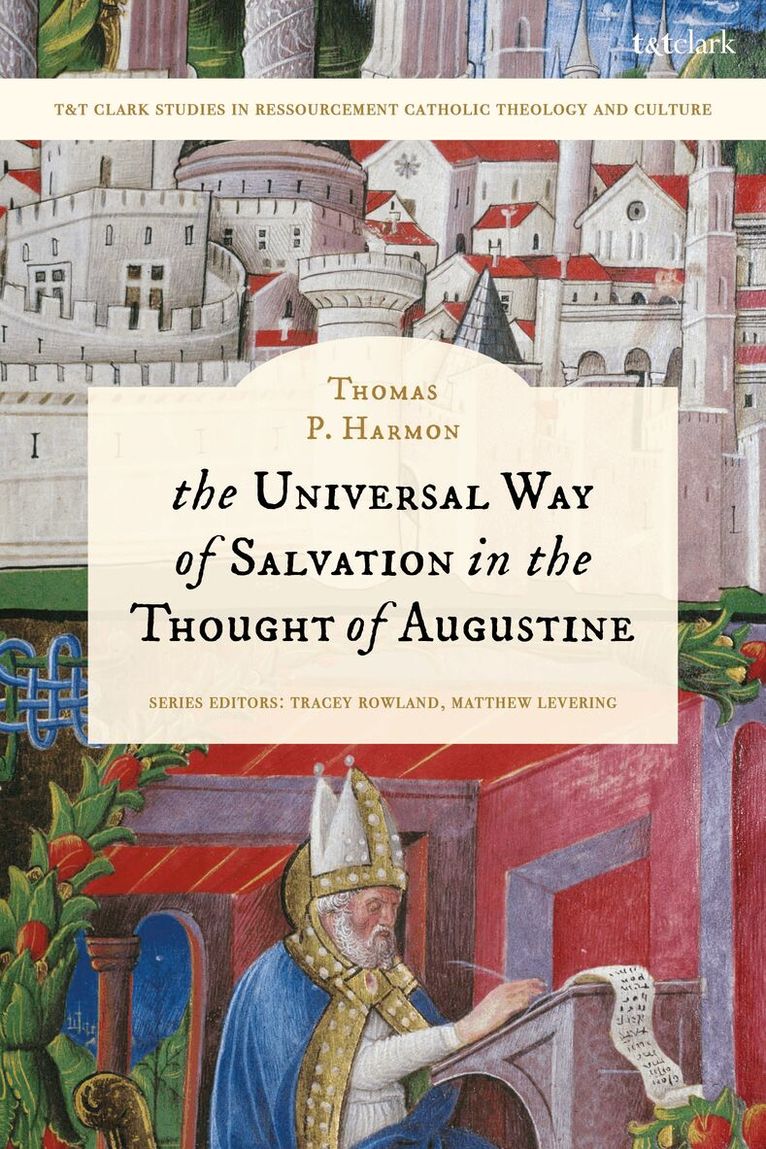
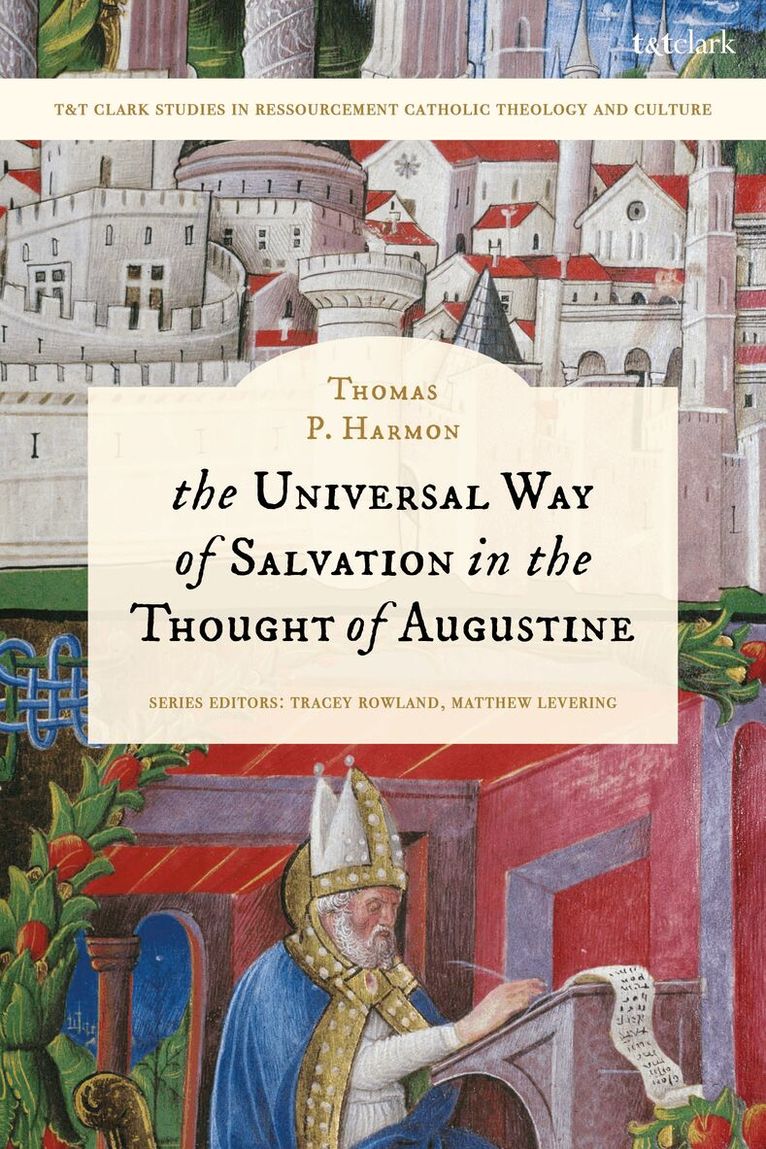
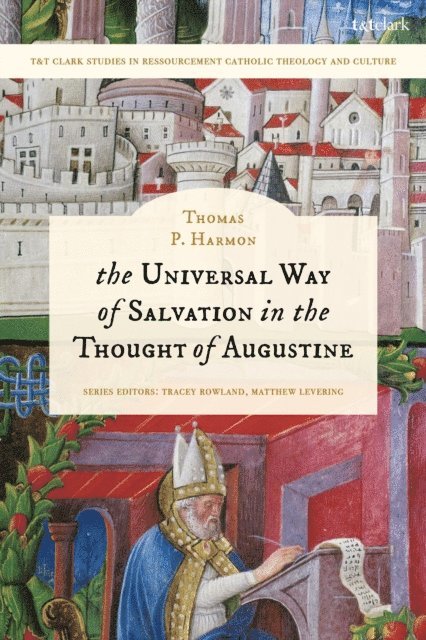
This work examines Augustine’s critique of his Roman predecessors to reveal key aspects of Christ’s mediation of the universal way of salvation. Porphyry of Tyre had noticed that Christianity can make a claim that pagan religion and pagan philosophy cannot: that all types of human being can be saved through the one salvific action of Christ mediated sacramentally through the one Catholic Church. Augustine’s response to Porphyry is grounded firmly on Christology, especially on what Augustine sees to be the unique act of Christ as mediator, based in turn on Christ’s unique position as true God and true man, which in turn is capable of healing the whole man and, by healing the whole man, also healing each of the parts of the soul. Christ himself, as concretely universal, is capable of saving each and any type of human being, no matter which part of the soul rules within him, Augustine counters, which is not a claim his pagan interlocutors can replicate. In addition to careful considerations of ancient authors like Plato, Cicero, Varro, and Porphyry, this book also ranges through Plutarch, Shakespeare, and contemporary political thinkers like Pierre Manent and Leo Strauss; scholars of religion such as Michael Bland Simmons, theologians such as Erik Peterson and Ernest L. Fortin, as well as well-known Augustine scholars such as James Wetzel, G.R. Evans, John Cavadini, Robert Dodaro, Mary Keys, Michael Foley, Rowan Williams, Oliver O’Donovan, John Rist, and many others.
464 kr
Skickas inom 5-8 vardagar
This work examines Augustine’s critique of his Roman predecessors to reveal key aspects of Christ’s mediation of the universal way of salvation. Porphyry of Tyre had noticed that Christianity can make a claim that pagan religion and pagan philosophy cannot: that all types of human being can be saved through the one salvific action of Christ mediated sacramentally through the one Catholic Church. Augustine’s response to Porphyry is grounded firmly on Christology, especially on what Augustine sees to be the unique act of Christ as mediator, based in turn on Christ’s unique position as true God and true man, which in turn is capable of healing the whole man and, by healing the whole man, also healing each of the parts of the soul. Christ himself, as concretely universal, is capable of saving each and any type of human being, no matter which part of the soul rules within him, Augustine counters, which is not a claim his pagan interlocutors can replicate. In addition to careful considerations of ancient authors like Plato, Cicero, Varro, and Porphyry, this book also ranges through Plutarch, Shakespeare, and contemporary political thinkers like Pierre Manent and Leo Strauss; scholars of religion such as Michael Bland Simmons, theologians such as Erik Peterson and Ernest L. Fortin, as well as well-known Augustine scholars such as James Wetzel, G.R. Evans, John Cavadini, Robert Dodaro, Mary Keys, Michael Foley, Rowan Williams, Oliver O’Donovan, John Rist, and many others.
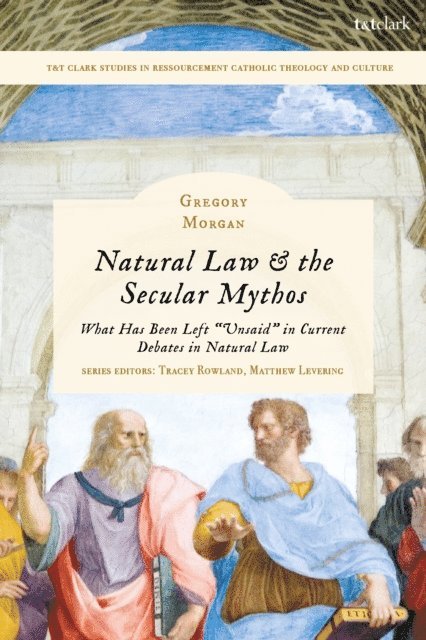
Natural Law & the Secular Mythos
What Has Been Left "Unsaid" in Current Debates in Natural Law
Inbunden, Engelska, 2025
1 331 kr
Skickas inom 5-8 vardagar
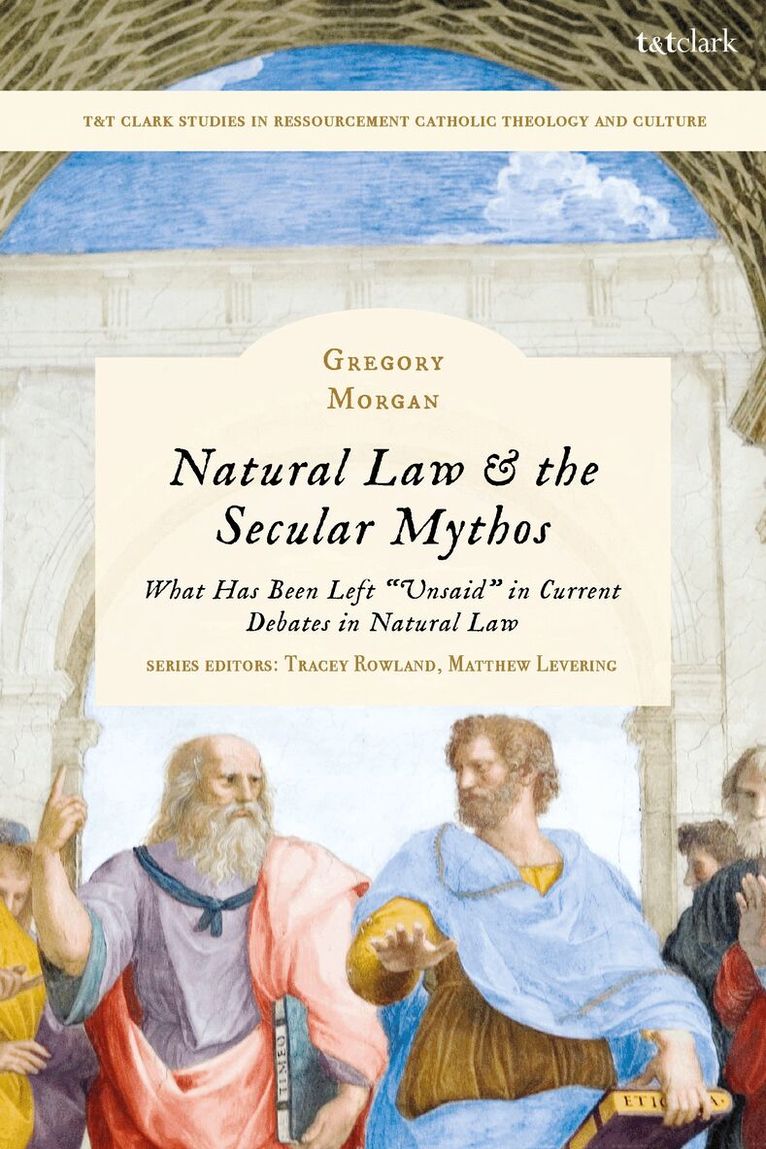
This book argues that natural law – when construed as an epistemological and trans-cultural lingua franca, adjudged capable of legitimating the rational intelligibility and universal applicability of specific Christian moral principles within contemporary “secular” discourse – has failed.Through a detailed analysis of the contributions of three prominent natural law theorists who are located within a shared philosophical-theological tradition, namely, John Finnis, Jean Porter, and John Milbank, the text illuminates the extent to which this failure is as much intramural as it is extramural. Morgan explores how new horizons open up for natural law if the theological “unsaid(s)” are allowed to surface and the disremembering power of the secular mythos is overcome. The final chapter(s) of the book addresses one such horizon— that the theoretical fulcrum of the natural law lies not in its perceptual self-evidence or in its immanent secularity; but rather in its subtle provision of an immanent eschatology.
Natural Law & the Secular Mythos
What Has Been Left "Unsaid" in Current Debates in Natural Law
Häftad, Engelska, 2026
484 kr
Kommande
This book argues that natural law – when construed as an epistemological and trans-cultural lingua franca, adjudged capable of legitimating the rational intelligibility and universal applicability of specific Christian moral principles within contemporary “secular” discourse – has failed.Through a detailed analysis of the contributions of three prominent natural law theorists who are located within a shared philosophical-theological tradition, namely, John Finnis, Jean Porter, and John Milbank, the text illuminates the extent to which this failure is as much intramural as it is extramural. Morgan explores how new horizons open up for natural law if the theological “unsaid(s)” are allowed to surface and the disremembering power of the secular mythos is overcome. The final chapter(s) of the book addresses one such horizon— that the theoretical fulcrum of the natural law lies not in its perceptual self-evidence or in its immanent secularity; but rather in its subtle provision of an immanent eschatology.
1 486 kr
Skickas inom 5-8 vardagar
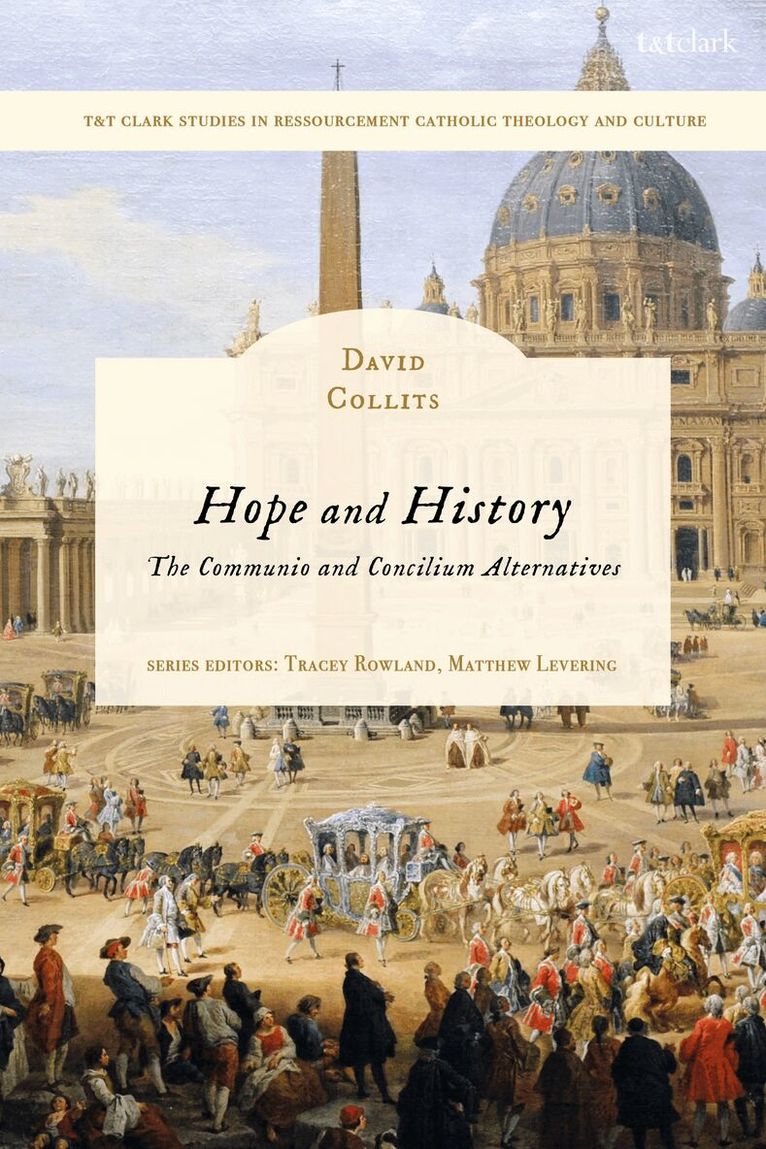
This book enables readers to understand contemporary divisions in Catholic theology. By examining a case study of issues in Catholic fundamental theology, Collits charts a path forward by advocating a rootedness in the Revelation of the Person of Jesus Christ. He does so by exploring metaphysics, the history-ontology and nature-grace relationships, soteriology and Christology. Furthermore, in examining the hope-history debate, this book tackles fundamental political and philosophical questions.Collits approaches this by examining the competing schools of post-conciliar theology. On the one hand, the Concilium school of Karl Rahner, Edward Schillebeeckx, JB Metz and Gustavo Gutiérrez; on the other hand, the Communio school of Josef Pieper and Joseph Ratzinger.
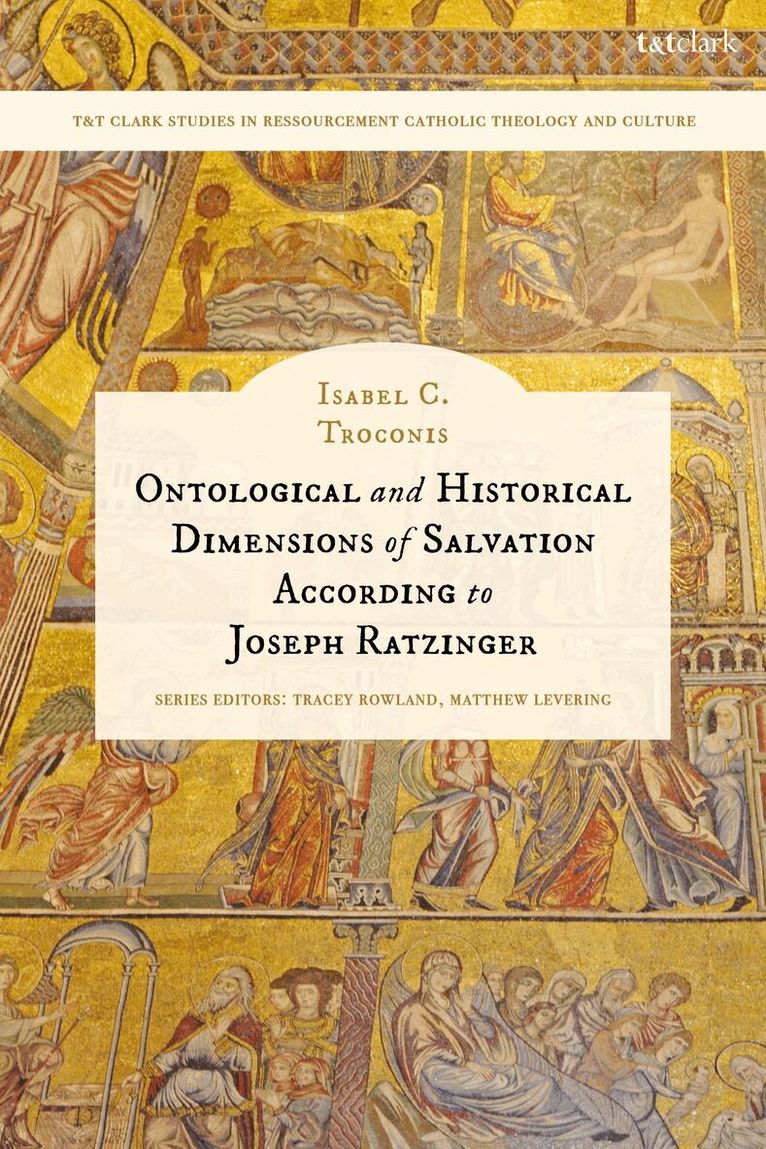
Ontological and Historical Dimensions of Salvation According to Joseph Ratzinger
To Identity through History
Inbunden, Engelska, 2025
1 331 kr
Skickas inom 5-8 vardagar
For Joseph Ratzinger, the separation between ontology and history constitutes the crucial problem that underlies all the difficulties of contemporary dogmatic theology since it affected the original unity of two essential dimensions of Christian revelation. This study delves into Joseph Ratzinger's approach to the problem, his account of the path that led to this separation, and into some key insights, drawn from his understanding of human salvation that could contribute to overcoming this dichotomy that afflicts contemporary theology.Through the study of Joseph Ratzinger's writings, Troconis highlights the relational and existential character of the theology of one of the best-known and most influential Catholic thinkers of our time.
1 678 kr
Kommande
This considered work of fundamental Catholic theology answers major questions on the concept of Christian credibility.Through a methodical and incisive exploration, Woimbée takes you through credibility’s constituent elements, its roots in the Bible and in the intellectual tradition of the Church.In doing so, this work reveals key elements of credibility by forensically examining the historicity of Christ, the meaning of miracles and the significance of prophecies. Woimbée also tackles credibility from Ecclesiastical perspective, by expanding on the relation between Church and the Christ, Holiness and the responsibilities of the Christian people. This is an important work for those interested in church life, mission and evangelisation.
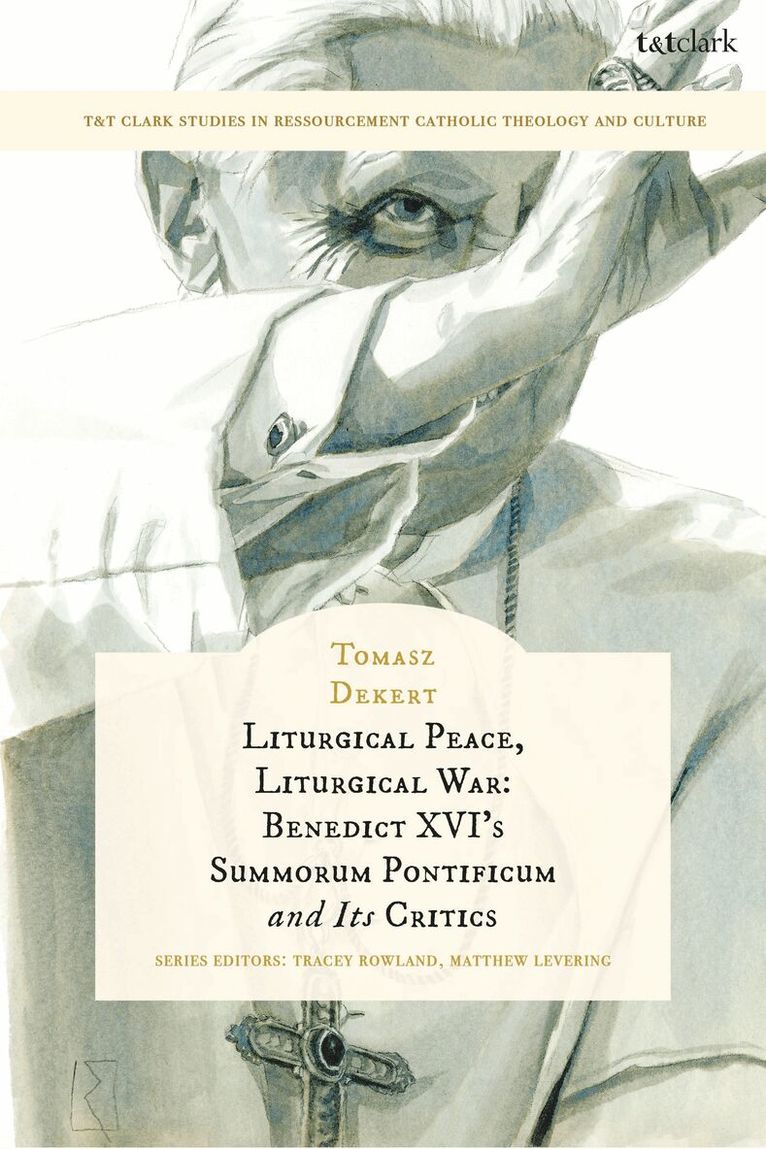
Liturgical Peace, Liturgical War
Benedict XVI's Summorum Pontificum and Its Critics
Inbunden, Engelska, 2026
1 331 kr
Skickas inom 5-8 vardagar
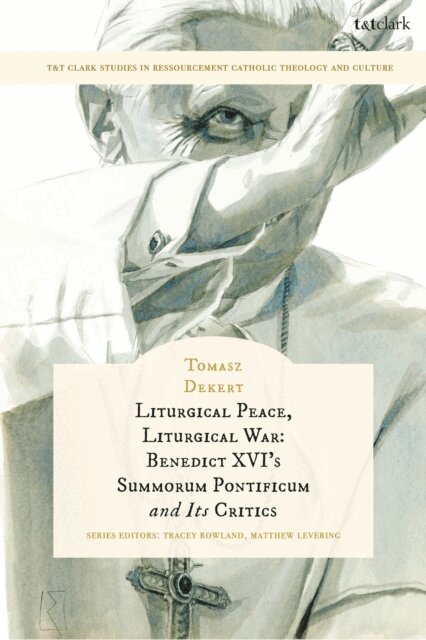
In 2007 Benedict XVI issued the Motu Proprio Summorum Pontificum, lifting restrictions on the celebration of the pre-reform Catholic liturgy. In 2021, Pope Francis overturned his predecessor’s document, directly aligning himself with the critics of Benedict XVI’s decision. Dekert’s book disentagles the arguments of representative pro-reform critics of Summorum Pontificum, as well as the documents and discourse surrounding Traditionis Custodes. Dekert evaluates these arguments in context, assessing the validity of the historical and anthropological claims supporting them, while questioning their underlying assumptions. He also analyzes the connections between the pro-reform discourse of liturgical experts and the Vatican’s liturgical policies since 2021. The core theoretical framework of his analysis is Roy A. Rappaport’s concept of the “obvious aspects of ritual,” which provides tools for a fresh perspective on the liturgical reform and the potential of Benedict XVI’s liturgical option in addressing the ongoing liturgical conflict within contemporary Catholicism. This approach reveals the deeply problematic nature and lack of clarity in the expert discourse and the recent papal liturgical legislation at historical, anthropological, logical, and doctrinal levels.
1 406 kr
Kommande
This book is a scholarly intervention in the debates within the Church around the question of “sexuality.” It proposes that hot-button issues such as contraception, gay marriage, and the moral status of reproductive technologies are not merely debates about what we should or should not do in the privacy of our own homes; rather, these are matters with inevitable implications for the common good.Using St. Augustine’s two cities as a frame, the book explores the concepts of ‘sexuality’ and chastity. It argues that “sexuality” discourse is a carrier for two key modern impulses: self-invention and the desire for intimacy. Moreover, by associating “self-invention” with human dignity, “sexuality” discourse helps create a political society devoted to the promotion of personal autonomy as its end- a politics of the “earthly city.” Chastity, by contrast, assumes that one must order his passions to fully realize his human nature. Since man is a political animal, chastity is consonant with a politics of the common good and a necessary condition of a true communion of persons- the social life of the “City of God.”