Inbunden, Engelska, 2026
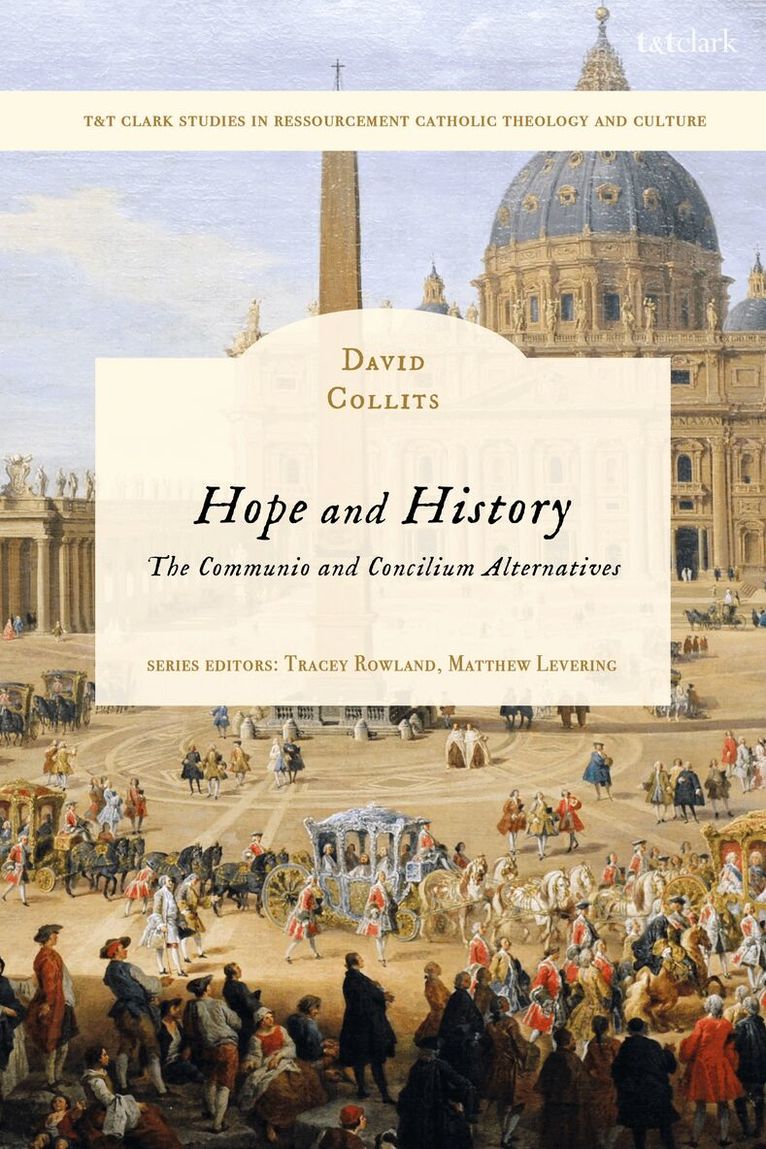
Hope and History
The Communio and Concilium Alternatives
Av David Collits, Matthew Levering
Del i serien T&T Clark Studies in Ressourcement Catholic Theology and Culture
1344 kr
Beställningsvara. Skickas inom 10-15 vardagar. Fri frakt över 249 kr.
Beskrivning
Produktinformation
- Utgivningsdatum: 2026-02-19
- Mått: 158 x 234 x 24 mm
- Vikt: 660 g
- Format: Inbunden
- Språk: Engelska
- Serie: T&T Clark Studies in Ressourcement Catholic Theology and Culture
- Antal sidor: 336
- Förlag: Bloomsbury Publishing PLC
- ISBN: 9780567718525
Utforska kategorier
Mer om författaren
David Collits is an independent scholar and lawyer based in Australia. He was awarded a PhD in Theology from the University of Notre Dame, Australia, in 2021.
Recensioner i media
With Hope and History, David Collits has done the current and future Church a tremendous service, carefully laying out the fundamental division that arose after Vatican II between the Communio and Concilium perspectives, one that has only become more divisive and will undoubtedly continue to mark the fault lines in Catholic theology for the foreseeable future. The two have long been compared and contrasted, but as the author shows, the choice between them is not simply a matter of taste or emphasis, for they are not theologically, philosophically, anthropologically, or morally equivalent. Collits has traced, in detail, the radically different sources that give rise to divergent trajectories that end in visions of the human persons and their relation to God that are ultimately incompatible. At the same time, it is not simply a question of a contradictory “either/or”, as if one must choose, for example, between history or ontology; rather, the Communio perspective sees that polarities point to deeper unities, and that illuminating salvation history under the aspect of eternity is the only thing that gives present history its significance. Thus, this volume makes a vital contribution to the literature on the issue, and, as it unfolds the relation of history to a Christ-centered and Trinitarian eschatological Hope, it is also profoundly beautiful.
Betyg & recensioner
0 recensioner
Inga recensioner tillgängliga.