Terrorism and Global Justice Series - Böcker
Visar alla böcker i serien Terrorism and Global Justice Series. Handla med fri frakt och snabb leverans.
9 produkter
9 produkter
1 122 kr
Skickas inom 3-6 vardagar
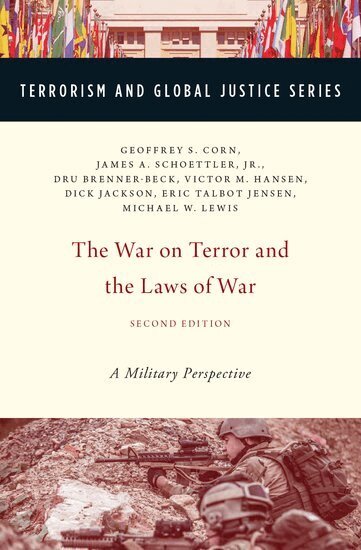
Many years after the United States initiated a military response to the terrorist attacks of September 11th, 2001, the nation continues to prosecute what it considers an armed conflict against transnational terrorist groups. Understanding how the law of armed conflict applies to and regulates military operations executed within the scope of this armed conflict against transnational non-state terrorist groups is as important today as it was in September 2001. In The War on Terror and the Laws of War seven legal scholars, each with experience as military officers, focus on how to strike an effective balance between the necessity of using armed violence to subdue a threat to the nation with the humanitarian interest of mitigating the suffering inevitably associated with that use. Each chapter addresses a specific operational issue, including the national right of self-defense, military targeting and the use of drones, detention, interrogation, trial by military commission of captured terrorist operatives, and the impact of battlefield perspectives on counter-terror military operations, while illustrating how the law of armed conflict influences resolution of that issue. This Second Edition carries on the critical mission of continuing the ongoing dialogue about the law from an unabashedly military perspective, bringing practical wisdom to the contentious topic of applying international law to the battlefield.
1 280 kr
Skickas inom 5-8 vardagar
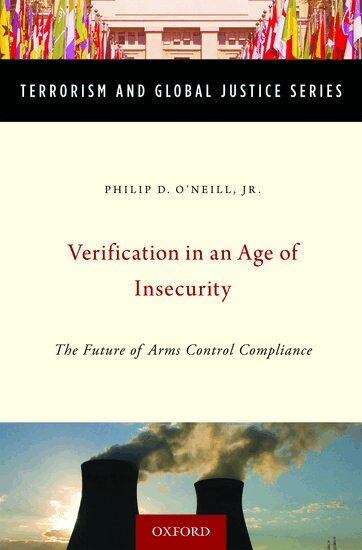
Verification in an Age of Insecurity takes the reader into some of the most urgent arms control issues facing the world community, including the nuclear activities of rogue states and threats from sophisticated non-state actors. In the book, national security expert Philip D. O'Neill, Jr. identifies and addresses issues from the resuscitated disarmament agenda, from the comprehensive test ban to fissile material and biological weapons. O'Neill examines the need for shifts in verification standards and policy suitable for our volatile era and beyond it. He surveys recent history to show how established verification procedures fail to produce the certainty necessary to meet today's threats. Verification in an Age of Insecurity goes beyond a discussion of rogue states like North Korea to offer suggestions on how best to bring compliance policy up to date with modern threats.
1 569 kr
Skickas inom 5-8 vardagar
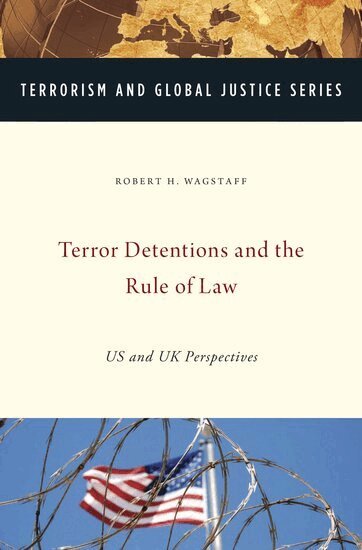
After the 9/11 terrorist attacks, the United States and the United Kingdom detained suspected terrorists in a manner incompatible with the due process, fair trial, and equality requirements of the Rule of Law. The legality of the detentions was challenged and found wanting by the highest courts in the US and UK. The US courts approached these questions as matters within the law of war, whereas the UK courts examined them within a human rights criminal law context. In Terror Detentions and the Rule of Law: US and UK Perspectives, Dr. Robert H. Wagstaff documents President George W. Bush's and Prime Minister Tony Blair's responses to 9/11, alleging that they failed to protect the human rights of individuals suspected of terrorist activity. The analytical focus is on the four US Supreme Court decisions involving detentions in Guantanamo Bay and four House of Lords decisions involving detentions that began in the Belmarsh Prison. These decisions are analyzed within the contexts of history, criminal law, constitutional law, human rights and international law, and various jurisprudential perspectives. In this book Dr. Wagstaff argues that time-tested criminal law is the normatively correct and most effective means for dealing with suspected terrorists. He also suggests that preventive, indefinite detention of terrorist suspects upon suspicion of wrongdoing contravenes the domestic and international Rule of Law, treaties and customary international law. As such, new legal paradigms for addressing terrorism are shown to be normatively invalid, illegal, unconstitutional, counter-productive, and in conflict with the Rule of Law.
1 392 kr
Skickas inom 5-8 vardagar
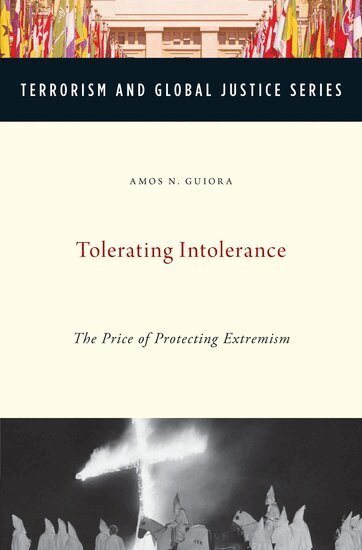
Over the years, numerous tragic events serve as a reminder of the extraordinary power of extremism, both on a religious and secular level. As extremism confronts society on a daily basis, it is essential to analyze, comprehend, and define it. It is also essential to define extremism narrowly in order to avoid the danger of recklessly castigating for mere thoughts alone.Tolerating Intolerance provides readers with a focused definition of extremism, and articulates the tensions faced in casting an arbitrary, capricious net in an effort to protect society, while offering mechanisms to resolve its seemingly intractable conundrum. Professor Guiora examines extremism in six different countries: Germany, Israel, the Netherlands, Norway, the United Kingdom, and the United States through interviews with a wide range of individuals including academics, policy makers, faith leaders, public commentators, national security and law enforcement officials. This enables both an in-depth discussion of extremism in each country, and facilitates a comparative analysis regarding both religious and secular extremism.
1 392 kr
Skickas inom 5-8 vardagar
In recent years, countries around the world introduced numerous national security programs and military campaigns. Despite the complex legal questions they raise, very few of these measures have been the subject of rigorous judicial review. Nevertheless, the absence of real-time review has had an enormous effect on human rights, rule of law, and on national security. The Supreme Court of Israel provides an excellent case study of a different approach, which allows judges to assess military action in real-time and to issue non-binding results of their evaluation. This raises the question: How was the Court actually able to uphold this challenge?In Judicial Review of National Security, David Scharia explains how the Supreme Court of Israel developed unconventional judicial review tools and practices that allowed it to provide judicial guidance to the Executive in real-time. In this book, he argues that courts could play a much more dominant role in reviewing national security, and demonstrates the importance of intensive real-time inter-branch dialogue with the Executive, as a tool used by the Israeli Court to provide such review. This book aims to show that if one Supreme Court was able to provide rigorous judicial review of national security in real-time, then we should reconsider the conventional wisdom regarding the limits of judicial review of national security.
1 440 kr
Skickas inom 7-10 vardagar
In Counterinsurgency Law, William Banks and several distinguished contributors explore from an interdisciplinary legal and policy perspective the multiple challenges that counterinsurgency operations pose today to the rule of law - international, humanitarian, human rights, criminal, and domestic.Addressing the considerable challenges for the future of armed conflict, each contributor in the book explores the premise that in COIN operations, international humanitarian law, human rights law, international law more generally, and domestic national security laws do not provide adequate legal and policy coverage and guidance for multiple reasons, many of which are explored in this book. A second shared premise is that these problems are not only challenges for the law in post-9/11 security environments-but matters of policy with implications for the international community and for global security more generally.
1 280 kr
Skickas inom 5-8 vardagar
Many years after the United States initiated a military response to the terrorist attacks of September 11th, 2001, the nation continues to prosecute what it considers an armed conflict against transnational terrorist groups. Understanding how the law of armed conflict applies to and regulates military operations executed within the scope of this armed conflict against transnational non-state terrorist groups is as important today as it was in September 2001. In The War on Terror and the Laws of War seven legal scholars, each with experience as military officers, focus on how to strike an effective balance between the necessity of using armed violence to subdue a threat to the nation with the humanitarian interest of mitigating the suffering inevitably associated with that use. Each chapter addresses a specific operational issue, including the national right of self-defense, military targeting and the use of drones, detention, interrogation, trial by military commission of captured terrorist operatives, and the impact of battlefield perspectives on counter-terror military operations, while illustrating how the law of armed conflict influences resolution of that issue. This Second Edition carries on the critical mission of continuing the ongoing dialogue about the law from an unabashedly military perspective, bringing practical wisdom to the contentious topic of applying international law to the battlefield.
1 408 kr
Skickas inom 5-8 vardagar
Targeted killings represent both the contemporary weapon of choice and, clearly, the weapon of the future. From the perspective of the nation-state, the benefits of targeted killing are clear: aggressive measures against identified targets can be carried out with minimal, if any, risk to soldiers. But while the threat to soldiers is minimal, there are other risks that must be considered. Particularly, there is a high possibility of collateral damage as well as legitimate concerns regarding how a target is defined. Clearly broad legal, moral, and operational issues are at stake when considering targeted killing. In Legitimate Target, A Criteria Based Approach to Targeted Killing, Amos Guiora proposes that targeted killing decisions must reflect consideration of four distinct elements: law, policy, morality, and operational details, thus ensuring that it complies with principles of domestic and international laws. The author, writing from both personal experience and an academic perspective, offers important criticism and insight into the policy as presently implemented, highlighting the need for a criteria based decision making process in defining and identifying a legitimate target. Legitimate Target, A Criteria-Based Approach to Targeted Killing blends concrete examples with a nuanced study of the current targeted killing paradigm with an emphasis on the dilemmas of morality and the law.
1 216 kr
Skickas inom 5-8 vardagar
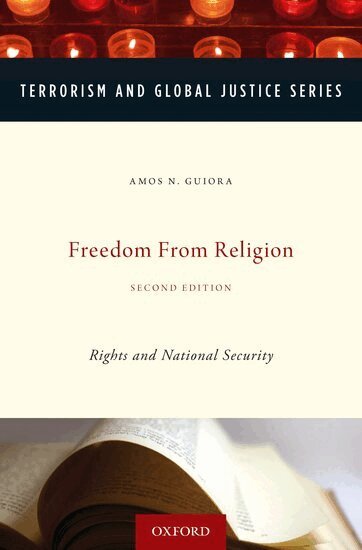
Although many books on terrorism and religious extremism have been published in the years since 9/11, none of them written by Western authors call for the curtailment of religious freedom and freedom of expression for the sake of greater security. Issues like torture, domestic surveillance, and unlawful detentions have dominated the literature in this area, but few, if any, major scholars have questioned the vast allowances made by Western nations for the freedoms of religion and speech. Freedom from Religion challenges the almost sacrosanct inviolability of these two civil liberties. By drawing the connection between politically-correct tolerance of extremist speech and the rise of terrorist activity, this book sets the context for its unique proposal that governments should introduce new limits on religious practice within their borders. To demonstrate the wisdom of this course, the author presents the disparate policies and security circumstances of five countries: the U.S., the UK, the Netherlands, Turkey, and Israel. The book benefits not just from the author's own counter-terrorism experience in Israel and the U.S. but also from an international advisory group of leading scholars from all five of the countries under review.This second edition includes significant new material analyzing the trial of Warren Jeffs, self-censorship in the face of religious sensitivity, religious extremism and violence in Israel, and the complicated tension in the Netherlands between speech and religion. In it, Guiora responds to public discussion and criticism provoked by the proposal presented in the first edition that governments impose limits on religious extremist practices and speech within their borders. In doing so, Guiora sheds new light on the existential and practical predicaments confronting civil democratic society: how much intolerance should the nation-state tolerate and to whom does government owe a duty.