Texas Pan American Literature in Translation Series – serie
Visar alla böcker i serien Texas Pan American Literature in Translation Series. Handla med fri frakt och snabb leverans.
6 produkter
6 produkter
399 kr
Skickas inom 7-10 vardagar
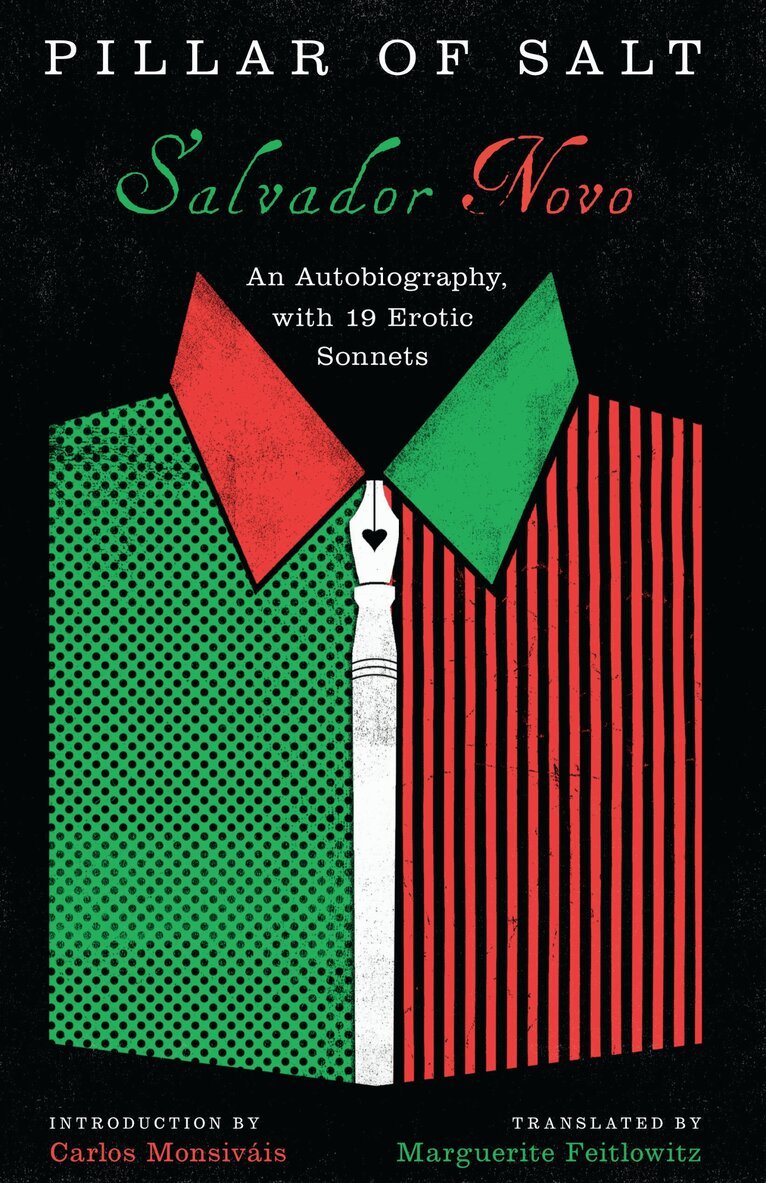
Written with exquisite sensitivity and wit, this memoir by one of Mexico’s foremost men of letters describes coming of age during the violence of the Mexican Revolution and “living dangerously” as an openly homosexual man in a brutally machista society.Salvador Novo (1904–1974) was a provocative and prolific cultural presence in Mexico City through much of the twentieth century. With his friend and fellow poet Xavier Villaurrutia, he cofounded Ulises and ContemporÁneos, landmark avant-garde journals of the late 1920s and 1930s. At once “outsider” and “insider,” Novo held high posts at the Ministries of Culture and Public Education and wrote volumes about Mexican history, politics, literature, and culture. The author of numerous collections of poems, including XX poemas, Nuevo amor, Espejo, DueÑo mÍo, and PoesÍa 1915–1955, Novo is also considered one of the finest, most original prose stylists of his generation.Pillar of Salt is Novo’s incomparable memoir of growing up during and after the Mexican Revolution; shuttling north to escape the Zapatistas, only to see his uncle murdered at home by the troops of Pancho Villa; and his initiations into literature and love with colorful, poignant, complicated men of usually mutually exclusive social classes. Pillar of Salt portrays the codes, intrigues, and dynamics of what, decades later, would be called “a gay ghetto.” But in Novo’s Mexico City, there was no name for this parallel universe, as full of fear as it was canny and vibrant. Novo’s memoir plumbs the intricate subtleties of this world with startling frankness, sensitivity, and potential for hilarity. Also included in this volume are nineteen erotic sonnets, one of which was long thought to have been lost.
288 kr
Skickas inom 10-15 vardagar
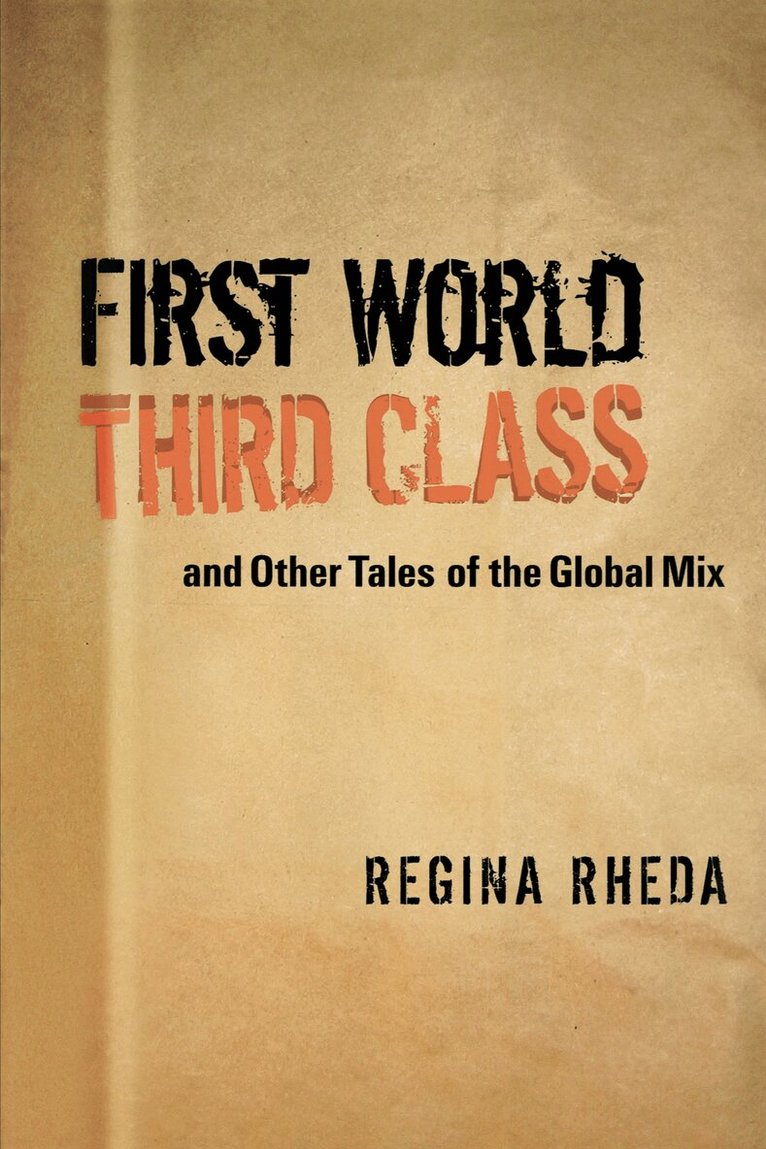
Regina Rheda is a contemporary award-winning Brazilian writer whose original voice and style have won her many admirers. First World Third Class and Other Tales of the Global Mix presents some of her finest and most representative work to an English-speaking readership. Stories from the Copan Building consists of eight tales set in a famous residential building in SÃo Paulo. The stories, like the apartment complex, are a microcosm of modern-day urban Brazil. They are witty, consistently caustic, and never predictable. Also in this volume is the poignant and often hilarious novel First World Third Class. It depicts young middle-class professionals and artists who, as opportunities in Brazil diminished, opted to leave their country, even if it meant taking menial jobs abroad. At the center of the narrative is Rita, a thirty-year-old aspiring filmmaker who migrates to England, and then Italy. She looks for work and love in all the wrong places, moving from city to city and from bed to bed. The last three stories in this collection also happen to be among the author's most recent. "The Enchanted Princess" is an ironic title for a postfeminist tale of a South American woman being wooed to marry an old-world gentleman who promises to take care of her every need. "The Sanctuary" concerns the living conditions of immigrant workers and farm animals. Equally piquant in nature, "The Front" deals with ecology, labor environments, and gender politics.
300 kr
Skickas inom 10-15 vardagar
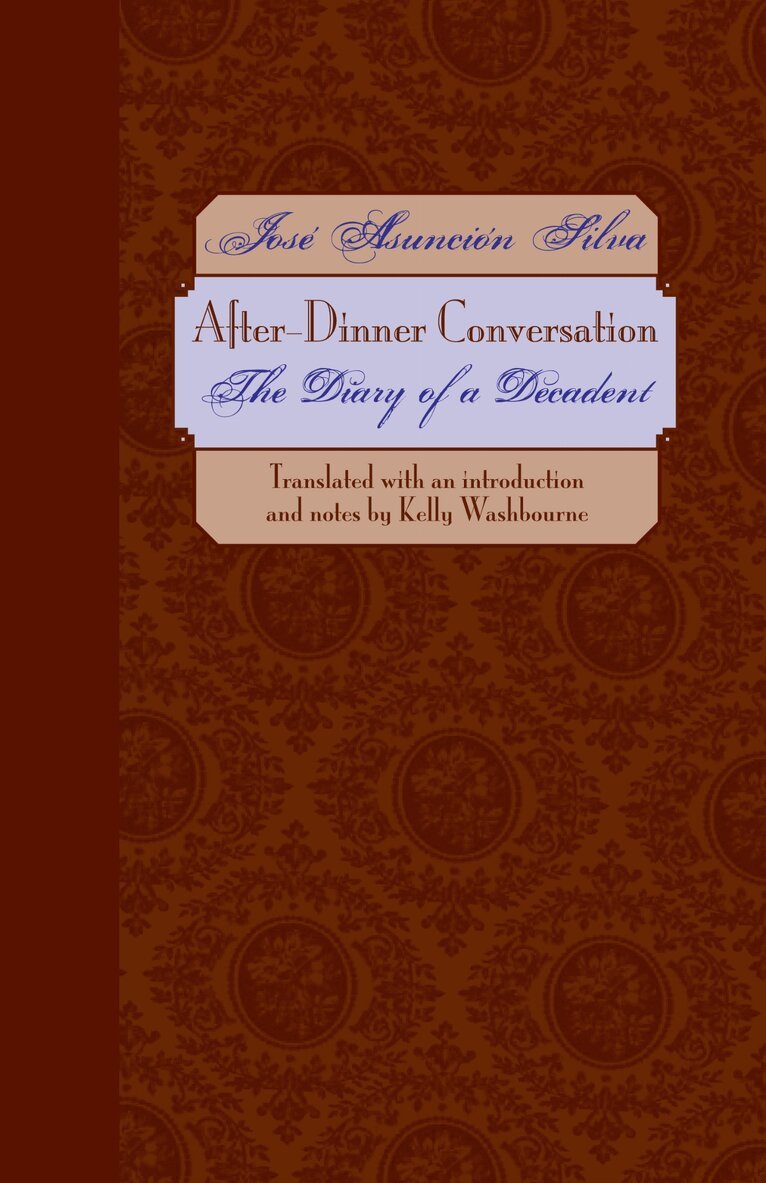
Lost in a shipwreck in 1895, rewritten before the author's suicide in 1896, and not published until 1925, JosÉ AsunciÓn Silva's After-Dinner Conversation (De sobremesa) is one of Latin America's finest fin de siÈcle novels and the first one to be translated into English. Perhaps the single best work for understanding turn-of-the-twentieth-century writing in South America, After-Dinner Conversation is also cited as the continent's first psychological novel and an outstanding example of modernista fiction and the Decadent sensibility. Semi-autobiographical and more important for style than plot, After-Dinner Conversation is the diary of a Decadent sensation-collector in exile in Paris who undertakes a quest to find his beloved Helen, a vision whom his fevered imagination sees as his salvation. Along the way, he struggles with irreconcilable urges and temptations that pull him in every direction while he endures an environment indifferent or hostile to spiritual and intellectual pursuits, as did the modernista writers themselves. Kelly Washbourne's excellent translation preserves Silva's lush prose and experimental style. In the introduction, one of the most wide-ranging in Silva criticism, Washbourne places the life and work of Silva in their literary and historical contexts, including an extended discussion of how After-Dinner Conversation fits within Spanish American modernismo and the Decadent movement. Washbourne's perceptive comments and notes also make the novel accessible to general readers, who will find the work surprisingly fresh more than a century after its composition.
207 kr
Skickas inom 10-15 vardagar
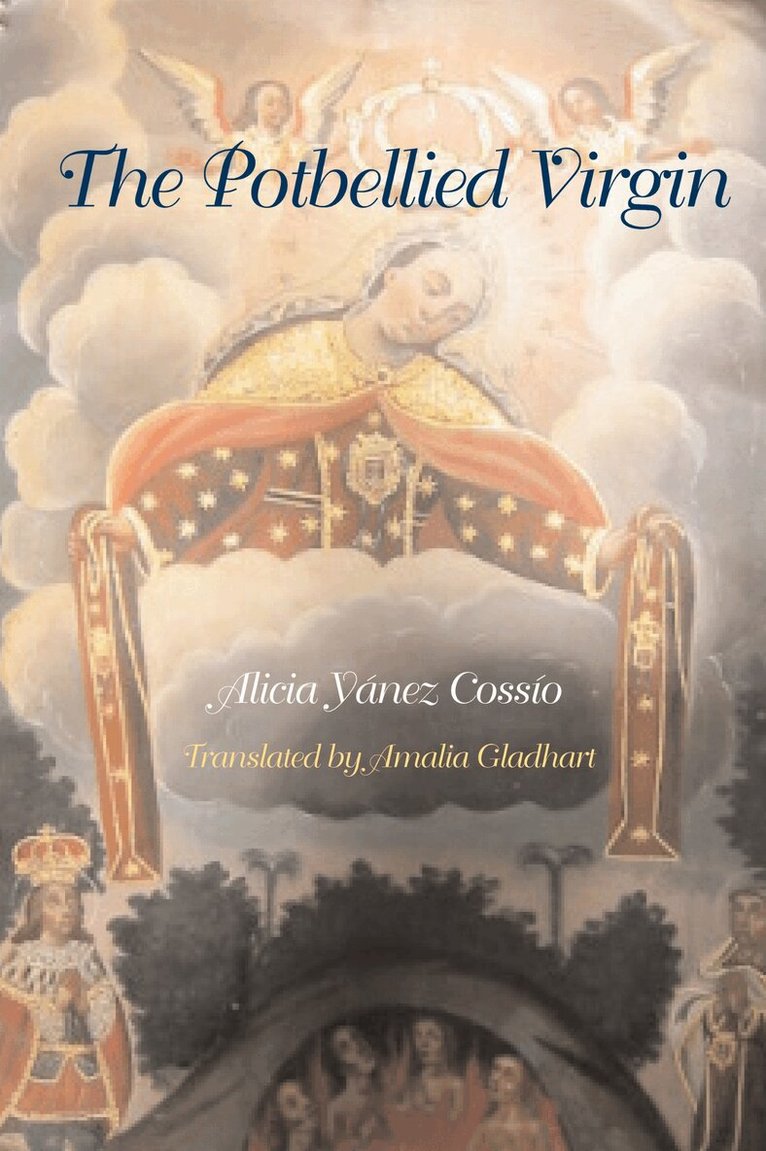
In an unnamed town in the Ecuadorian Andes, a small wooden icon-La Virgen Pipona (the Potbellied Virgin)-conceals the documents that define the town's social history. That history recently has been dominated by the women of the Benavides family, a conservative clan and, not coincidentally, the caretakers of the Virgin. Their rivals are the Pandos, a family led by four old men who spend their days smoking in the park across from the Virgin's cathedral and offering revisionist versions of local and national events. When a military skirmish threatens the Virgin (and the secret in her famous belly), the Benavides women must scramble to preserve their place as local matriarchs-without alerting the old Pandos to the opportunity that might enable them to finally supplant their rivals. One of Ecuador's foremost contemporary writers, Alicia YÁnez CossÍo illuminates the complexity of Andean society by placing disenfranchised players such as women and Amerindians onstage with traditional powers such as the military and the church. Folk wisdom, exemplified in The Potbellied Virgin by the beautifully translated proverbs so popular with the Benavideses and the Pandos alike, stands up to historical record. Such inclusiveness ultimately allows the whole truths of YÁnez CossÍo's subjects to emerge. Only the second of her novels to be translated into English, The Potbellied Virgin (La cofradÍa del mullo del vestido de la Virgen Pipona) is a funny, focused portrait of Ecuadorian life in the twentieth century.
239 kr
Skickas inom 10-15 vardagar
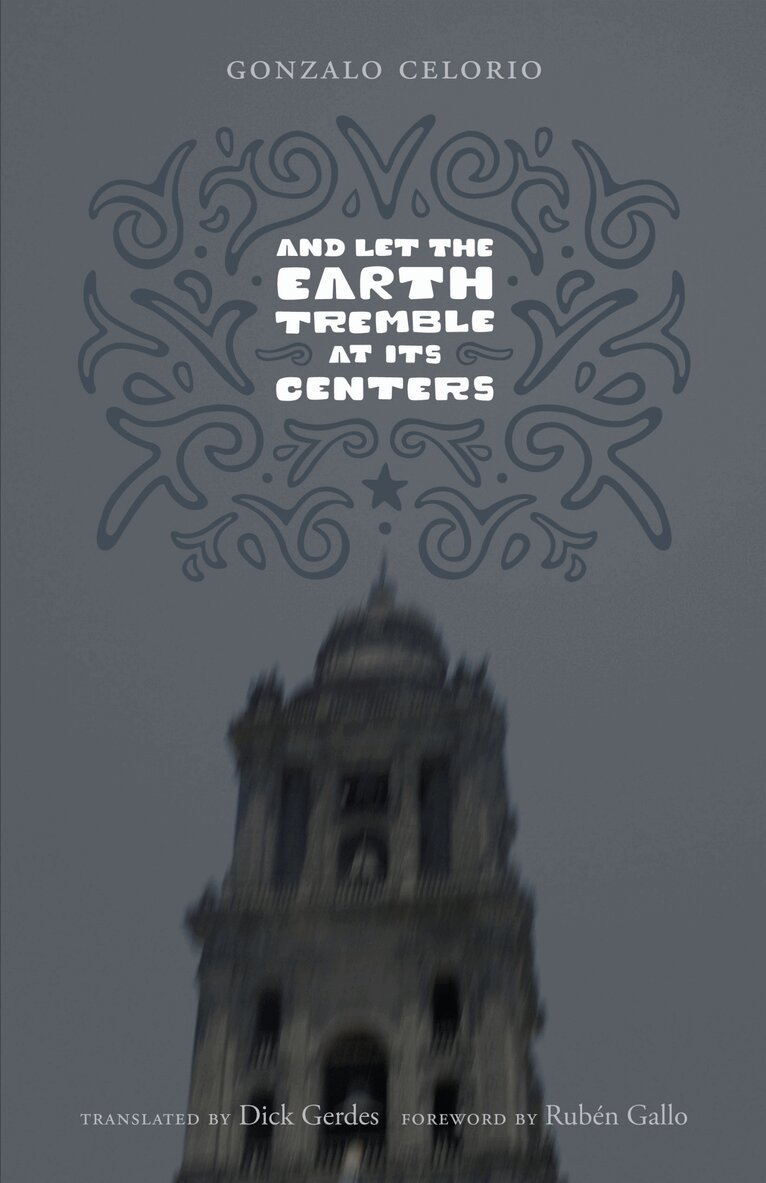
Professor Juan Manuel Barrientos prefers footsteps to footnotes. Fighting a hangover, he manages to keep his appointment to lead a group of students on a walking lecture among the historic buildings of downtown Mexico City. When the students fail to show up, however, he undertakes a solo tour that includes more cantinas than cathedrals. Unable to resist either alcohol itself or the introspection it inspires, Professor Barrientos muddles his personal past with his historic surroundings, setting up an inevitable conclusion in the very center of Mexico City. First published in Mexico in the late 1990s, And Let the Earth Tremble at Its Centers was immediately lauded as a contemporary masterpiece in the long tradition of literary portraits of Mexico City. It is a book worthy of its dramatic title, which is drawn from a line in the Mexican national anthem. Gonzalo Celorio first earned a place among the leading figures of Mexican letters for his scholarship and criticism, and careful readers will recognize a scholar's attention to accuracy within the novel's dyspeptic descriptions of Mexico City. The places described are indeed real (this edition includes a map that marks those visited in the story), though a few have since closed or been put to new uses. Dick Gerdes's elegant translation now preserves them all for a new audience.
296 kr
Skickas inom 7-10 vardagar
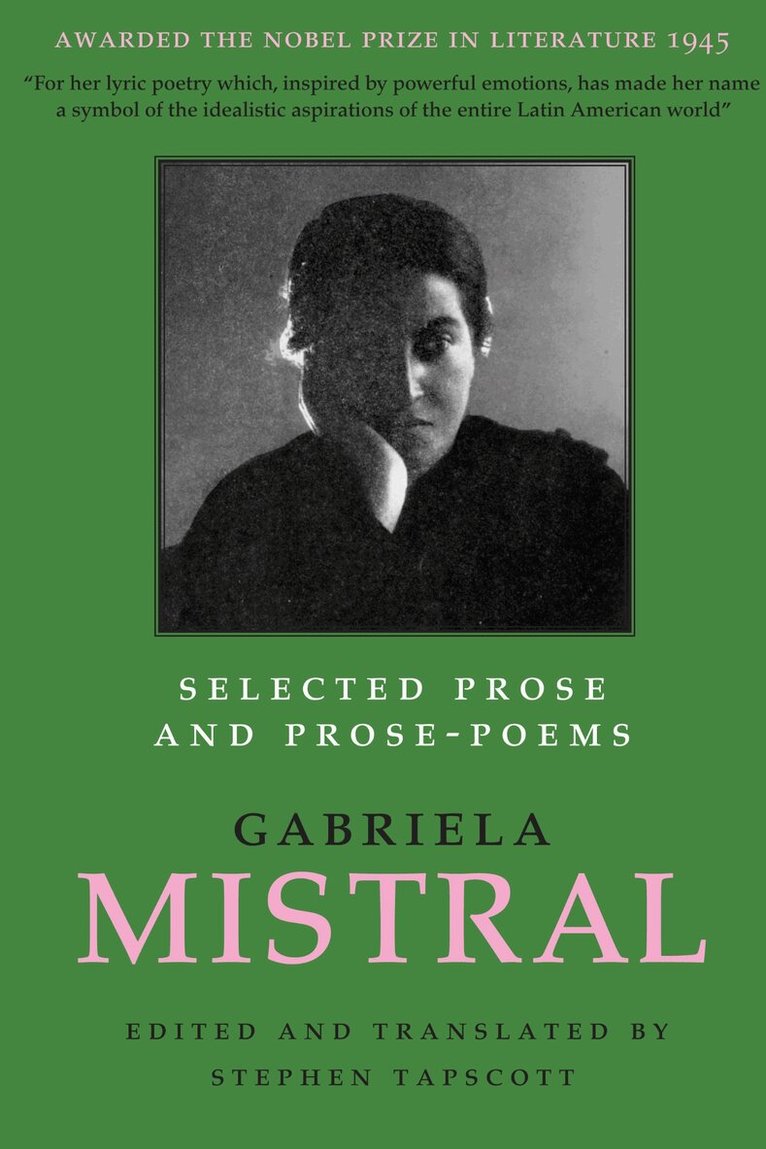
The first Latin American to receive a Nobel Prize for Literature, the Chilean writer Gabriela Mistral (1889-1957) is often characterized as a healing, maternal voice who spoke on behalf of women, indigenous peoples, the disenfranchised, children, and the rural poor. She is that political poet and more: a poet of philosophical meditation, self-consciousness, and daring. This is a book full of surprises and paradoxes. The complexity and structural boldness of these prose-poems, especially the female-erotic prose pieces of her first book, make them an important moment in the history of literary modernism in a tradition that runs from Baudelaire, the North American moderns, and the South American postmodernistas. It's a book that will be eye-opening and informative to the general reader as well as to students of gender studies, cultural studies, literary history, and poetry.This Spanish-English bilingual volume gathers the most famous and representative prose writings of Gabriela Mistral, which have not been as readily available to English-only readers as her poetry. The pieces are grouped into four sections. "Fables, Elegies, and Things of the Earth" includes fifteen of Mistral's most accessible prose-poems. "Prose and Prose-Poems from DesolaciÓn / Desolation [1922]" presents all the prose from Mistral's first important book. "Lyrical Biographies" are Mistral's poetic meditations on Saint Francis and Sor Juana de la Cruz. "Literary Essays, Journalism, 'Messages'" collects pieces that reveal Mistral's opinions on a wide range of subjects, including the practice of teaching; the writers Alfonso Reyes, Alfonsina Storni, Rainer Maria Rilke, and Pablo Neruda; Mistral's own writing practices; and her social beliefs. Editor/translator Stephen Tapscott rounds out the volume with a chronology of Mistral's life and a brief introduction to her career and prose.