
The Great Western Railway ... – serie
Visar alla böcker i serien The Great Western Railway .... Handla med fri frakt och snabb leverans.
5 produkter
5 produkter
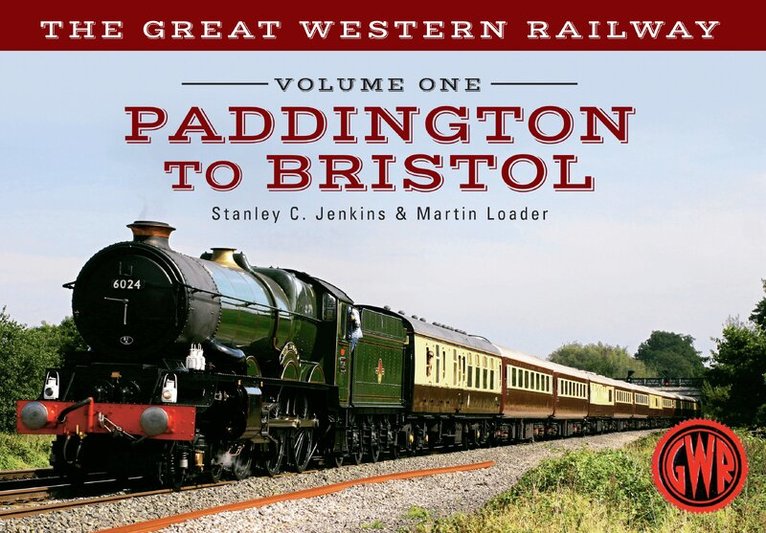
Del 1 - The Great Western Railway ...
Great Western Railway Volume One Paddington to Bristol
Häftad, Engelska, 2014
189 kr
Tillfälligt slut
Incorporated by Act of Parliament in 1835 and completed just six years later, the Great Western Railway was a stupendous technical achievement. Extending for 118 miles from London to Bristol, this magnificently engineered line spanned Southern England from the Thames to the Bristol Channel, and was regarded as the first link in a chain of railways that would ultimately reach Cornwall, Wales and (via steamship) the south of Ireland. The railway, which is virtually flat and has no appreciable curves, has remained in use to the present day, carrying trains that travel from London to Bristol in just 13/4 hours. This present study examines the line from London to Bristol Temple Meads. Around fifty different locations have been included - some of these are busy traffic centres such as Paddington, Southall and Reading, while others are wayside stations such as Pangbourne, Tilehurst and Wantage Road.
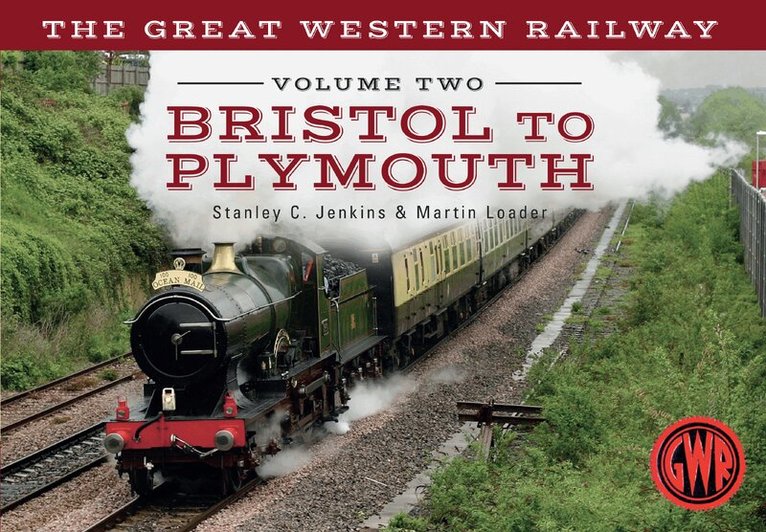
Del 2 - The Great Western Railway ...
Great Western Railway Volume Two Bristol to Plymouth
Häftad, Engelska, 2014
189 kr
Tillfälligt slut
As authorised in 1835, the Great Western Railway extended from London to Bristol, but from the very earliest days, ambitious promoters were planning a whole series of extensions to destinations such as Birmingham, Wolverhampton, Cornwall and South Wales. These extensions were, in most cases, built by allied or subsidiary companies such as the Bristol & Exeter Railway, which, as its name suggested, ran from Bristol to Exeter, and the South Devon Railway, which continued the West of England main line from Exeter to Plymouth.Both of these companies were subsequently absorbed into the parent GWR company, becoming, as far as ordinary travellers were concerned, an integral part of the Great Western system. Although the B&ER is an unspectacular line, the South Devon Railway runs beside estuaries and along the seashore for several miles, the waterside section between Exeter and Teignmouth being one of the most iconic parts of the British railway system.
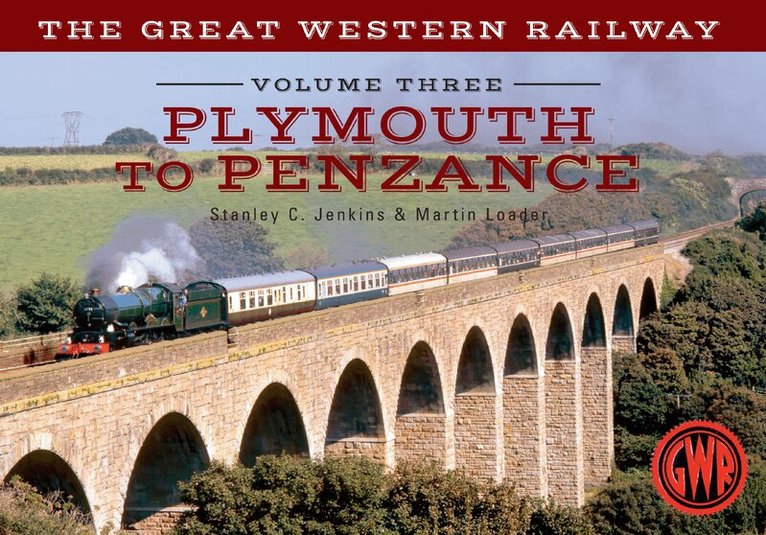
Del 3 - The Great Western Railway ...
Great Western Railway Volume Three Plymouth To Penzance
Häftad, Engelska, 2014
189 kr
Tillfälligt slut
The Cornwall Railway was authorised on 3 August 1846 with the aim of constructing a broad gauge rail link between Plymouth, Truro and Falmouth. After many vicissitudes, the railway was ceremonially opened between Plymouth and Truro on 2 May 1859. Meanwhile, further to the west, an entirely separate undertaking known as the West Cornwall Railway had been sanctioned with powers for the construction of a standard gauge railway between Truro and Penzance, which would incorporate parts of the earlier Hayle Railway.The WCR was completed in 1852, although there was no connection with the Cornwall Railway until 1859. Despite the ‘break-of-gauge’ at Truro, these two railways formed part of a through route between Paddington and Penzance and, as such, they were subsequently absorbed into the GWR system as part of the present-day West of England main line.
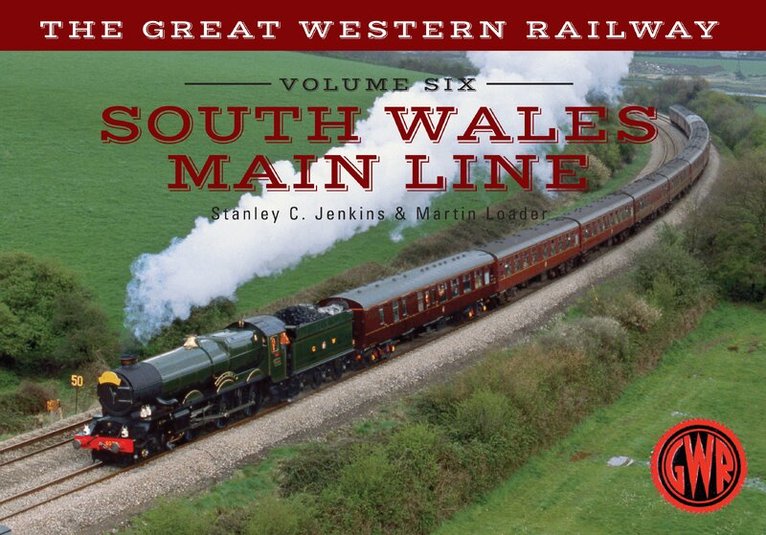
Del 6 - The Great Western Railway ...
Great Western Railway Volume Six South Wales Main Line
Häftad, Engelska, 2016
188 kr
Skickas inom 11-20 vardagar
The South Wales Railway was promoted in the 1840s with the aim of completing a rail link between England, Wales and Ireland. As such, the proposed railway was seen as ‘a great national undertaking to connect the South of Ireland as well as South Wales and the Metropolis’, with many perceived benefits in terms of mutual trading opportunities and greater political integration. Branch lines would serve Pembroke Dock and other destinations, the length of the proposed scheme being around 210 miles. The SWR was intimately connected with the Great Western Railway, and with I. K. Brunel as its engineer, the line was built to the GWR broad gauge of 7 feet 0¼ inch.Although the SWR main line skirted most of the South Wales industrial areas, it connected with a variety of coal-carrying Welsh lines, including the Taff Vale, Cardiff and Barry Railways – all of which eventually passed into Great Western hands as a result of the 1923 grouping. The SWR main line had, in the meantime, been extended to Fishguard Harbour, and this historic line continues to serve as an important rail link between England, Wales and the South of Ireland.
Del 4 - The Great Western Railway ...
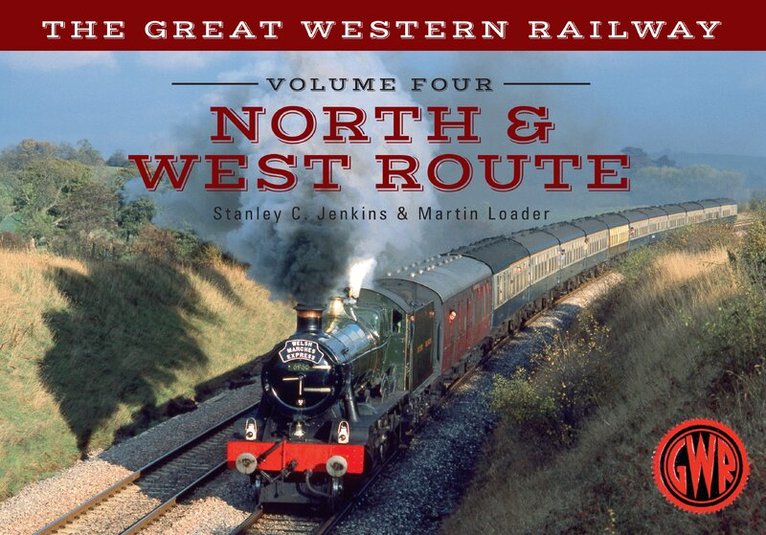
Great Western Railway Volume Four North & West Route
Häftad, Engelska, 2015
189 kr
Tillfälligt slut
The ‘North & West Route’, which, in recent years, has become known as the ‘Welsh Marches Line’, extends from Newport to Chester. Historically, this 137-mile route is an amalgam of three distinct railways: the Shrewsbury & Chester Railway, the Shrewsbury & Hereford Railway and the Newport, Abergavenny & Hereford Railway. All three lines came under Great Western control at a relatively early date, although the Shrewsbury & Hereford section became a joint undertaking, which was owned by the GWR and the London & North Western Railway companies.The line runs through attractive and sometimes spectacular scenery via Abergavenny, Pontrilas, Hereford, Leominster, Ludlow, Craven Arms, Shrewsbury and Ruabon, thereby providing a useful transport link between North and South Wales, while some services run north-eastwards from Shrewsbury to Crewe over a former London & North Western line that forms part of a direct link between South Wales and the Manchester conurbation.