The Romanell Lectures - Böcker
Visar alla böcker i serien The Romanell Lectures. Handla med fri frakt och snabb leverans.
4 produkter
4 produkter
529 kr
Skickas inom 7-10 vardagar
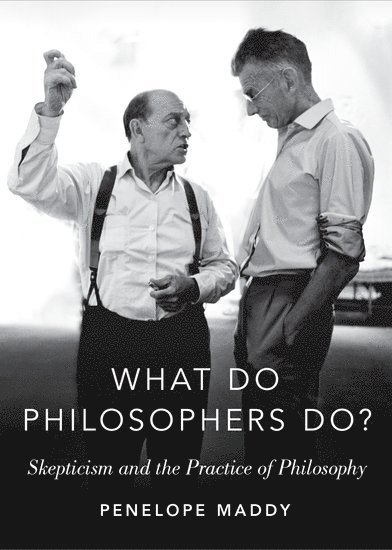
How do you know the world around you isn't just an elaborate dream, or the creation of an evil neuroscientist? If all you have to go on are various lights, sounds, smells, tastes and tickles, how can you know what the world is really like, or even whether there is a world beyond your own mind? Questions like these -- familiar from science fiction and dorm room debates -- lie at the core of venerable philosophical arguments for radical skepticism: the stark contention that we in fact know nothing at all about the world, that we have no more reason to believe any claim -- that there are trees, that we have hands -- than we have to disbelieve it. Like non-philosophers in their sober moments, philosophers, too, find this skeptical conclusion preposterous, but they're faced with those famous arguments: the Dream Argument, the Argument from Illusion, the Infinite Regress of Justification, the more recent Closure Argument. If these can't be met, they raise a serious challenge not just to philosophers, but to anyone responsible enough to expect her beliefs to square with her evidence. What Do Philosophers Do? takes up the skeptical arguments from this everyday point of view, and ultimately concludes that they don't undermine our ordinary beliefs or our ordinary ways of finding out about the world. In the process, Maddy examines and evaluates a range of philosophical methods -- common sense, scientific naturalism, ordinary language, conceptual analysis, therapeutic approaches -- as employed by such philosophers as Thomas Reid, G. E. Moore, Ludwig Wittgenstein, and J. L. Austin. The result is a revealing portrait of what philosophers do, and perhaps a quiet suggestion for what they should do, for what they do best.
425 kr
Skickas inom 5-8 vardagar
The world is awash in chemicals created by fellow citizens, but we know little to nothing about them. Understanding whether even the most prevalent ones are toxic would take decades. Many people have tragically suffered serious diseases and premature death, including children during development. Why has this occurred? Many factors contribute, but two important ones are the laws permitting this and the manner in which science has been used to identify and assess whether or not products are toxic. Both are the outcome of legislative, corporate, and judicial choices. Congress created laws that in fact keep public health officials and the wider population in the dark about the toxicity of virtually all substances other than prescription drugs and pesticides. Facing considerable ignorance about toxic substances, impartially motivated scientists seeking to protect the public health are constrained by the natural pace of studies to reveal toxic effects. Corporate pressures on public health officials and scientific obstruction substantially heighten the barriers to protecting the public. When people have suffered serious as well as life-threatening diseases likely traceable to toxic substances, judicial errors barring relevant science in the personal injury (tort) law can and have frustrated redress of injustices. Under both public health law and the tort law, there are possibilities for improved approaches, provided public leaders make different and better choices. This book describes these issues and suggests how we could be better protected from myriad toxic substances in our midst.
454 kr
Skickas inom 5-8 vardagar
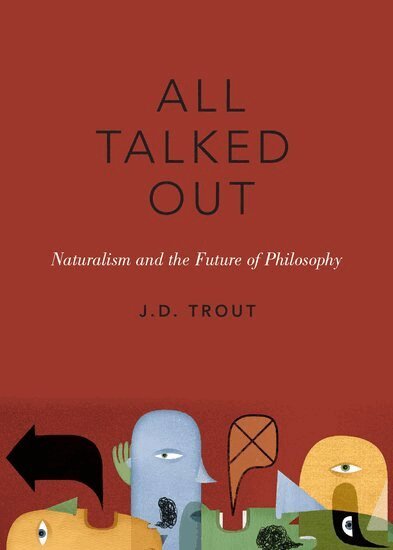
In All Talked Out J.D. Trout exemplifies the power of science in the hands of a philosopher, and the result is a timely and urgent argument about the future of philosophy. Based on his 2013 Phi Beta Kappa Romanell Lectures, Trout here presents a novel and positive view of intellectual advancements with respect to traditional topics in philosophy, and explains why these achievements occurred despite the archaic and often retrograde influence of philosophical doctrine and method.Together, these lines of inquiry lead to a conclusion that while foundational reflection remains as necessary as ever philosophy, as it is conceived in the halls of academia, no longer adds anything distinctively useful. At its best, philosophy is a place to grow new ideas. But many other disciplines can provide such incubation. At the same time, however, Trout argues that we don't have to kill philosophy; we just have to figure out what is worth preserving from it.Following a spirited introduction, the first lecture takes stock of the growing field of evidence-based approaches to reasoning, and in light of these scientific developments, criticizes important failures in epistemology as it is currently practiced in the English speaking world. The second lecture examines the psychological impulse to explain, the resulting sense of understanding, and the natural limits of cognitively appreciating the subject we have explained. The final lecture presents the proper reaction to the idea that scientific evidence matters to responsible governance.
282 kr
Skickas inom 5-8 vardagar
In Intersectionality, philosopher Naomi Zack presents a novel philosophical account of intersectionality - the process by which people already oppressed, experience more oppression because of their intersecting identities. Examples include women who experience racism or poor people who are under-served. Identifying such intersections allows for more precise analysis of oppression, as well as newly recognized identities, such as blackwomen or homeless people of colour. Zack here explores the meaning of intersectionality through analysis of current events and controversies including the #MeToo movement, the COVID-19 pandemic, and class opportunities for minorities in higher education. Her analysis develops a robust definition of intersectionality in terms of inclusion, recognition, and diversity; works out ontological issues about the relationship between persons, labels, and identity; explores the distinction between abstract philosophical thinking and activism; and discusses how intersectionality can be an effective basis for empowerment, as well as understanding. Zack's distinctively philosophical account explains how intersectionality, considered as a method of analysis, works and can be employed in many areas of progressive thought across varying disciplines. She concludes that identifying and challenging the injustice of oppressions logically requires a broad humanistic framework, that intersectionality cannot be reduced to mere talk of diversity and inclusion, and that intersectionality itself is a progressive method of analysis worthy of philosophical attention.