The World In A Life - Böcker
Visar alla böcker i serien The World In A Life. Handla med fri frakt och snabb leverans.
4 produkter
4 produkter
493 kr
Skickas inom 7-10 vardagar
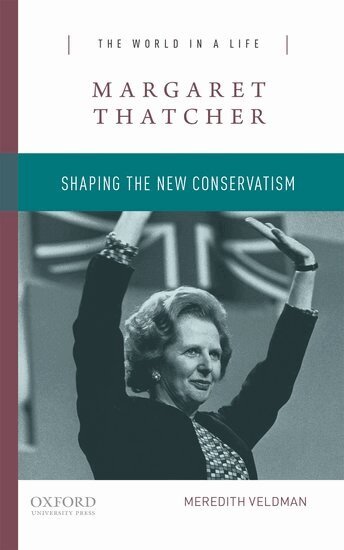
Part of The World in A Life series, this brief, inexpensive text provides insight into the life of Margaret Thatcher. The second daughter of a provincial grocer, Margaret Roberts Thatcher was not born to privilege or power. She was not an original thinker; few of her teachers regarded her as particularly clever. What she did possess, however, was a remarkable physical constitution (she needed little sleep and was never ill), a phenomenal capacity for hard work, and a resolute ideological certainty allied with political adaptability and a populist sensibility. As one of the central founders of New Conservatism, Thatcher fought to shatter the post-World War II political consensus, the mainstream agreement that the central state must regulate national economic and social life in order to ensure full employment and the citizen's welfare from cradle to grave. Thatcher came of age when the postwar consensus was at its strongest. By the time she walked onto the world stage as leader of Britain's Conservative Party in 1975, however, the ideals of social citizenship forged in the tumult of World War II had begun to break down under the pressure of economic crisis. The resulting political confusion gave Thatcher the chance she needed. As prime minister of Britain from 1979 to 1990, she initiated the move of vast areas of the economy from public or state control to private ownership. More generally, Thatcherism both fed and fed upon a growing scepticism about state activism and governmental power--although, paradoxically, under Thatcher's guidance the power of Britain's central state grew, in some areas enormously.We live in a global age where big concepts like "globalization" often tempt us to forget the personal side of the past. The titles in The World in A Life series aim to revive these meaningful lives. Each one shows us what it was like to live on a world historical stage. Brief, inexpensive, and thematic, each book can be read in a week, fit within a wide range of curricula, and shed insight into a particular place or time. Four to six short primary sources at the end of each volume sharpen the reader's view of an individual's impact on world history.
238 kr
Skickas inom 5-8 vardagar
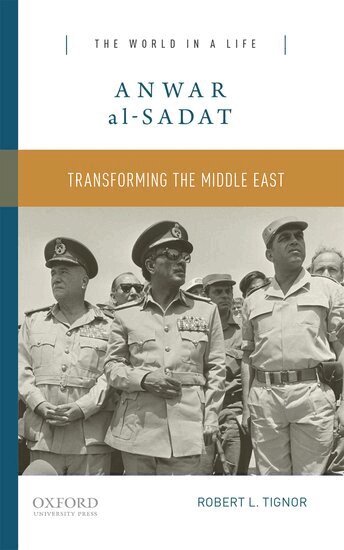
Part of The World in A Life series, this brief, inexpensive text provides insight into the life of Anwar al-Sadat, one of the most transformative figures in Middle Eastern and world history. Little was expected of Sadat, as he came to power after the death of Egypt's powerful modernizing leader, Gamal Abdel Nasser. However, he left an unparalleled mark on Egypt, the Middle East, and Cold War relations. He surprised the Israelis by starting the 1973 war, crossing the Suez Canal into Sinai. Though eventually Egypt was forced to sue for peace, Sadat won the support and praise of the Americans. His chief American supporters at the time were President Richard Nixon and Secretary of State Henry Kissinger. Not content with this partial military success, Sadat traveled to Jerusalem in 1977 to address the Israeli Knesset (parliament), marking the first time that an Arab leader had traveled to Israel and openly negotiated with the Israelis. He followed this trip with a peace treaty with Israel in 1979, signed between Prime Minister Menachem Begin and himself and brokered by President Jimmy Carter. In short, Sadat broke Egypt's dependence on the Soviet Union, established strong relations with the United States, and recognized the state of Israel--all of these transformative events in Middle Eastern and world history.We live in a global age where big concepts like "globalization" often tempt us to forget the personal side of the past. The titles in The World in A Life series aim to revive these meaningful lives. Each one shows us what it was like to live on a world historical stage. Brief, inexpensive, and thematic, each book can be read in a week, fit within a wide range of curricula, and shed insight into a particular place or time. Four to six short primary sources at the end of each volume sharpen the reader's view of an individual's impact on world history.
238 kr
Skickas inom 5-8 vardagar
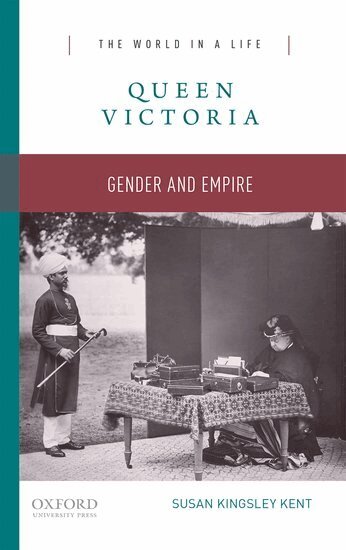
Part of The World in A Life series, this brief, inexpensive text provides insight into the life of Queen Victoria. As one of the longest reigning monarchs in British history, Queen Victoria gave her name to an age filled with enormous possibilities and perplexing contradictions. At the time of Victoria's birth, Britain ruled over what was fast becoming the greatest empire in the world, containing millions of non-white, non-Christian peoples. During her childhood and youth, the kingdom itself became transformed from one dominated by landed aristocrats to one governed according to the principles of bourgeois liberalism. The royal family served as the most visible symbol of domesticity, while at the same time Victoria's very position as queen defied the ideology of separate spheres upon which domesticity rested. Victoria, the ruler of millions of people, opposed women participating in politics or public life. She believed women's suffrage to be a "wicked folly" and a violation of God's laws. She never gave up that belief, even as the fledging feminist movement of mid-century matured and grew to the size of a mass movement by the end of the century. And yet she reigned, with little thought of the contradictions that entailed.We live in a global age where big concepts like "globalization" often tempt us to forget the personal side of the past. The titles in The World in A Life series aim to revive these meaningful lives. Each one shows us what it was like to live on a world historical stage. Brief, inexpensive, and thematic, each book can be read in a week, fit within a wide range of curricula, and shed insight into a particular place or time. Four to six short primary sources at the end of each volume sharpen the reader's view of an individual's impact on world history.
493 kr
Skickas inom 7-10 vardagar
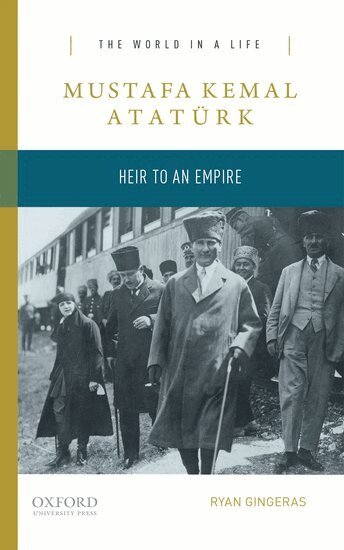
Part of The World in A Life series, this brief text provides insight into the life of Mustafa Kemal Atatürk. By the outbreak of World War II, the Republic of Turkey epitomized more than a state bound for better times; it aspired to represent the essence of modern politics in the twentieth century. To contemporaries of this period, Mustafa Kemal Atatürk-the country's first president-was both the muse and the architect of this radical transformation. By the time of his death in 1938, he was regularly compared alongside other luminary statesmen of the post-Versailles era. Outside of Turkey, his name was synonymous with bold leadership and ambitious reform. Atatürk's reputation as a man both progressive and iconoclastic greatly augmented his already lofty status as Turkey's premier general and war hero. Yet there were some aspects of his life presidency that tempered contemporary admiration for Mustafa Kemal. His acclaim and celebrity came with the understanding that he was a dictator with little patience for liberal democracy. Atatürk's inability to brook compromise and tolerate opposition engendered acts of violence and oppression that resulted in the deaths of large numbers of his fellow citizens. As a whole, the legacies of both his achievements and flaws as a leader remain critical to any understanding of modern-day Turkey.We live in a global age where big concepts like "globalization" often tempt us to forget the personal side of the past. The titles in The World in A Life series aim to revive these meaningful lives. Each one shows us what it was like to live on a world historical stage. Brief, inexpensive, and thematic, each book can be read in a week, fit within a wide range of curricula, and shed insight into a particular place or time. Four to six short primary sources at the end of each volume sharpen the reader's view of an individual's impact on world history.