Themes in Archaeology Series - Böcker
Visar alla böcker i serien Themes in Archaeology Series. Handla med fri frakt och snabb leverans.
14 produkter
14 produkter
592 kr
Skickas inom 10-15 vardagar
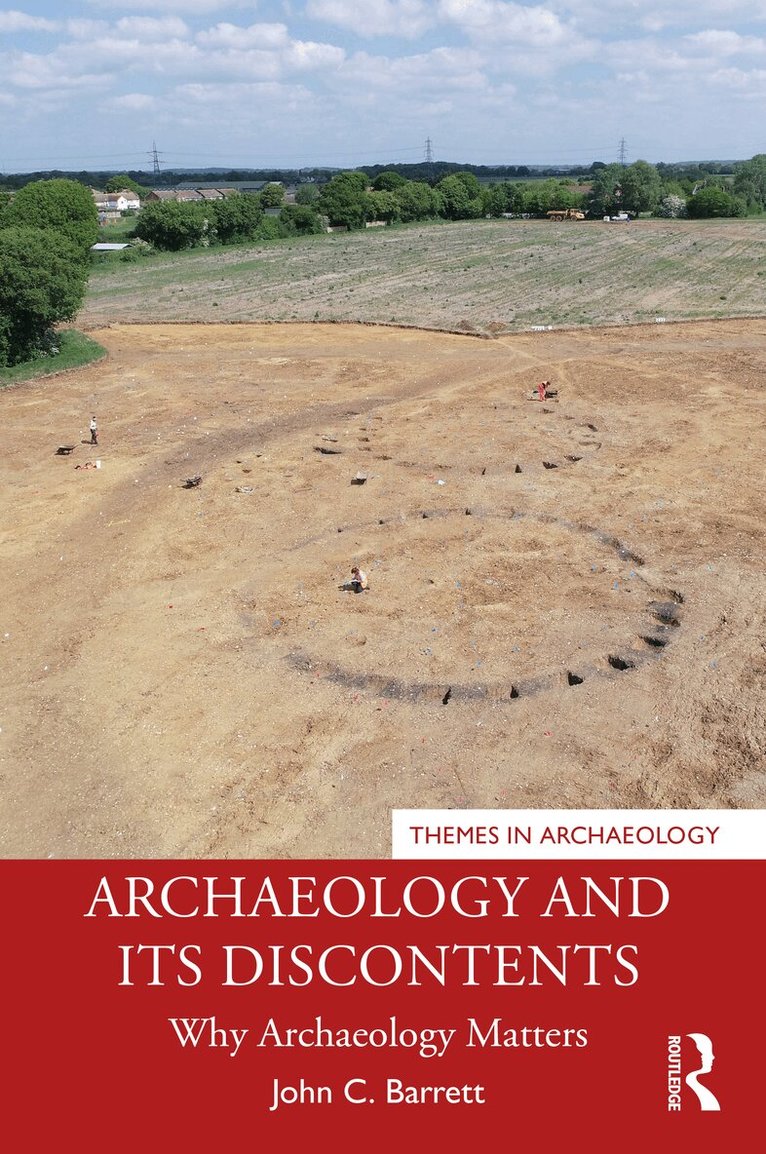
Archaeology and its Discontents examines the state of archaeology today and its development throughout the twentieth century, making a powerful case for new approaches.Surveying the themes of twentieth-century archaeological theory, Barrett looks at their successes, limitations, and failures. Seeing more failures and limitations than successes, he argues that archaeology has over-focused on explaining the human construction of material variability and should instead be more concerned with understanding how human diversity has been constructed. Archaeology matters, he argues, precisely because of the insights it can offer into the development of human diversity. The analysis and argument are illustrated throughout by reference to the development of the European Neolithic.Arguing both for new approaches and for the importance of archaeology as a discipline, Archaeology and its Discontents is for archaeologists at all levels, from student to professor and trainee to experienced practitioner.
2 167 kr
Skickas inom 10-15 vardagar
Archaeology and its Discontents examines the state of archaeology today and its development throughout the twentieth century, making a powerful case for new approaches.Surveying the themes of twentieth-century archaeological theory, Barrett looks at their successes, limitations, and failures. Seeing more failures and limitations than successes, he argues that archaeology has over-focused on explaining the human construction of material variability and should instead be more concerned with understanding how human diversity has been constructed. Archaeology matters, he argues, precisely because of the insights it can offer into the development of human diversity. The analysis and argument are illustrated throughout by reference to the development of the European Neolithic.Arguing both for new approaches and for the importance of archaeology as a discipline, Archaeology and its Discontents is for archaeologists at all levels, from student to professor and trainee to experienced practitioner.
2 104 kr
Skickas inom 10-15 vardagar
The archaeology of religion is a much neglected area, yet religious sites and artefacts constitute a major area of archaeological evidence. Timothy Insoll presents an introductory statement on the archaeology of religion, examining what archaeology can tell us about religion, the problems of defining and theorizing religion in archaeology, and the methodology, or how to 'do', the archaeology of religion.This volume assesses religion and ritual through a range of examples from around the world and across time, including prehistoric religions, shamanism, African religions, death, landscape and even food. Insoll also discusses the history of research and varying theories in this field before looking to future research directions. This book will be a valuable guide for students and archaeologists, and initiate a major area of debate.
562 kr
Skickas inom 10-15 vardagar
The archaeology of religion is a much neglected area, yet religious sites and artefacts constitute a major area of archaeological evidence. Timothy Insoll presents an introductory statement on the archaeology of religion, examining what archaeology can tell us about religion, the problems of defining and theorizing religion in archaeology, and the methodology, or how to 'do', the archaeology of religion.This volume assesses religion and ritual through a range of examples from around the world and across time, including prehistoric religions, shamanism, African religions, death, landscape and even food. Insoll also discusses the history of research and varying theories in this field before looking to future research directions. This book will be a valuable guide for students and archaeologists, and initiate a major area of debate.
2 167 kr
Skickas inom 10-15 vardagar
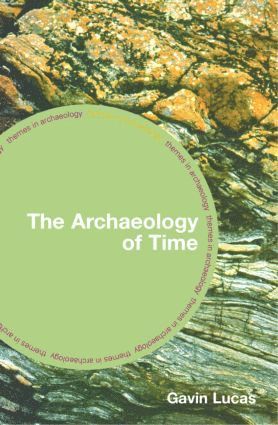
It might seem obvious that time lies at the heart of archaeology, since archaeology is about the past. However, the issue of time is complicated and often problematic, and although we take it very much for granted, our understanding of time affects the way we do archaeology.This book is an introduction not just to the issues of chronology and dating, but time as a theoretical concept and how this is understood and employed in contemporary archaeology. It provides a full discussion of chronology and change, time and the nature of the archaeological record, and the perception of time and history in past societies. Drawing on a wide range of archaeological examples from a variety of regions and periods, The Archaeology of Time provides students with a crucial source book on one of the key themes of archaeology.
578 kr
Skickas inom 10-15 vardagar
It might seem obvious that time lies at the heart of archaeology, since archaeology is about the past. However, the issue of time is complicated and often problematic, and although we take it very much for granted, our understanding of time affects the way we do archaeology.This book is an introduction not just to the issues of chronology and dating, but time as a theoretical concept and how this is understood and employed in contemporary archaeology. It provides a full discussion of chronology and change, time and the nature of the archaeological record, and the perception of time and history in past societies. Drawing on a wide range of archaeological examples from a variety of regions and periods, The Archaeology of Time provides students with a crucial source book on one of the key themes of archaeology.
2 104 kr
Skickas inom 10-15 vardagar
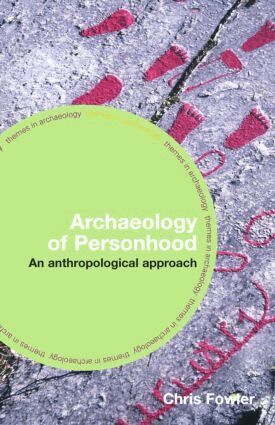
Bringing together a wealth of research in social and cultural anthropology, philosophy and related fields, this is the first book to address the contribution that an understanding of personhood can make to our interpretations of the pastApplying an anthropological approach to detailed case studies from European prehistoric archaeology, the book explores the connection between people, animals, objects, their societies and environments and investigates the relationship that jointly produces bodies, persons, communities and artefacts.The Archaeology of Personhood examines the characteristics that define a person as a category of being, highlights how definitions of personhood are culturally variable and explores how that variation is connected to human uses of material culture.
562 kr
Skickas inom 10-15 vardagar
Bringing together a wealth of research in social and cultural anthropology, philosophy and related fields, this is the first book to address the contribution that an understanding of personhood can make to our interpretations of the pastApplying an anthropological approach to detailed case studies from European prehistoric archaeology, the book explores the connection between people, animals, objects, their societies and environments and investigates the relationship that jointly produces bodies, persons, communities and artefacts.The Archaeology of Personhood examines the characteristics that define a person as a category of being, highlights how definitions of personhood are culturally variable and explores how that variation is connected to human uses of material culture.
2 167 kr
Skickas inom 10-15 vardagar
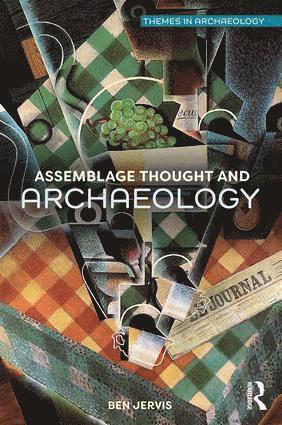
From examinations of prehistoric burial to understanding post-industrial spaces and heritage practices, the writing of Gilles Deleuze and Felix Guattari is gaining increasing importance within archaeological thought. Their concept of ‘assemblages’ allows us to explore the past in new ways, by placing an emphasis on difference rather than similarity, on fluidity rather stasis and unpredictability rather than reproduceable models. Assemblage Thought and Archaeology applies the notion of assemblage to specific archaeological case studies, ranging from early urbanism in Mesopotamia to 19th century military fortifications. It introduces the concept of assemblage within the context of the wider ‘material turn’ in the social sciences, examines its implications for studying materials and urban settlements, and explores its consequences for the practice of archaeological research and heritage management.This innovative book will be of particular interest to postgraduate students of archaeological theory and researchers looking to understand this latest trend in archaeological thought, although the case studies will also have appeal to those whose work focusses on material culture, settlement archaeology and archaeological practice.
592 kr
Skickas inom 10-15 vardagar
From examinations of prehistoric burial to understanding post-industrial spaces and heritage practices, the writing of Gilles Deleuze and Felix Guattari is gaining increasing importance within archaeological thought. Their concept of ‘assemblages’ allows us to explore the past in new ways, by placing an emphasis on difference rather than similarity, on fluidity rather stasis and unpredictability rather than reproduceable models. Assemblage Thought and Archaeology applies the notion of assemblage to specific archaeological case studies, ranging from early urbanism in Mesopotamia to 19th century military fortifications. It introduces the concept of assemblage within the context of the wider ‘material turn’ in the social sciences, examines its implications for studying materials and urban settlements, and explores its consequences for the practice of archaeological research and heritage management.This innovative book will be of particular interest to postgraduate students of archaeological theory and researchers looking to understand this latest trend in archaeological thought, although the case studies will also have appeal to those whose work focusses on material culture, settlement archaeology and archaeological practice.
578 kr
Skickas inom 10-15 vardagar
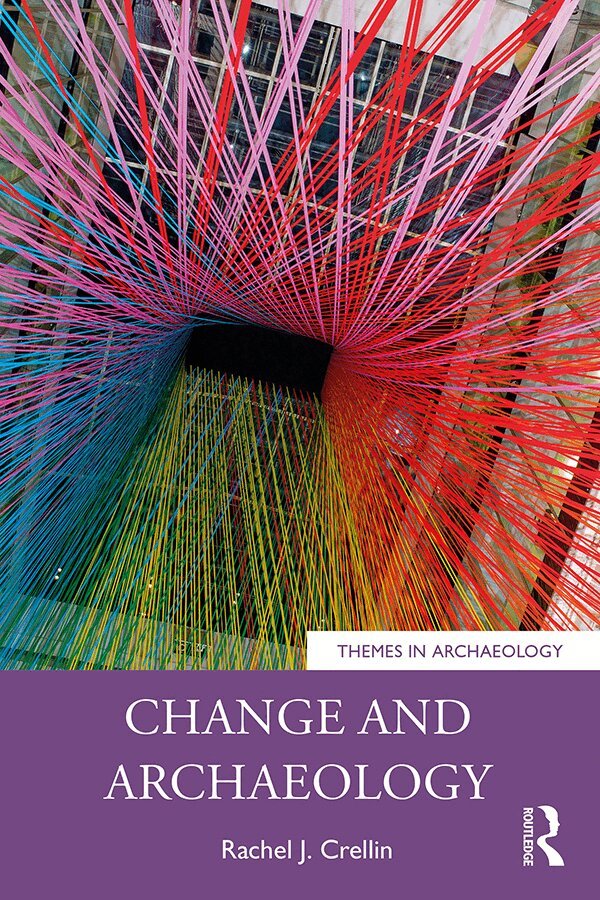
Change and Archaeology explores how archaeologists have historically described, interpreted, and explained change, and argues that change has been under-theorised. The study of change is central to the discipline of archaeology, but change is complex, and this makes it challenging to write about in nuanced ways that effectively capture the nature of our world. Relational approaches offer archaeologists more scope to explore change in complex and subtle ways. Change and Archaeology presents a posthumanist, post-anthropocentric, new materialist approach to change. It argues that our world is constantly in the process of becoming and always on the move. By recasting change as the norm rather than the exception and distributing it between both humans and non-humans, this book offers a new theoretical framework for exploring change in the past that allows us to move beyond block-time approaches where change is located only in transitional moments and periods are characterised by blocks of stasis.Archaeologists, scholars, anthropologists and historians interested in the theoretical frameworks we use to interpret the past will find this book a fascinating new insight into the way our world changes and evolves. The approaches presented within will be of use to anyone studying and writing about the way societies and their environs move through time.
2 167 kr
Skickas inom 10-15 vardagar
Change and Archaeology explores how archaeologists have historically described, interpreted, and explained change, and argues that change has been under-theorised. The study of change is central to the discipline of archaeology, but change is complex, and this makes it challenging to write about in nuanced ways that effectively capture the nature of our world. Relational approaches offer archaeologists more scope to explore change in complex and subtle ways. Change and Archaeology presents a posthumanist, post-anthropocentric, new materialist approach to change. It argues that our world is constantly in the process of becoming and always on the move. By recasting change as the norm rather than the exception and distributing it between both humans and non-humans, this book offers a new theoretical framework for exploring change in the past that allows us to move beyond block-time approaches where change is located only in transitional moments and periods are characterised by blocks of stasis.Archaeologists, scholars, anthropologists and historians interested in the theoretical frameworks we use to interpret the past will find this book a fascinating new insight into the way our world changes and evolves. The approaches presented within will be of use to anyone studying and writing about the way societies and their environs move through time.
592 kr
Skickas inom 10-15 vardagar
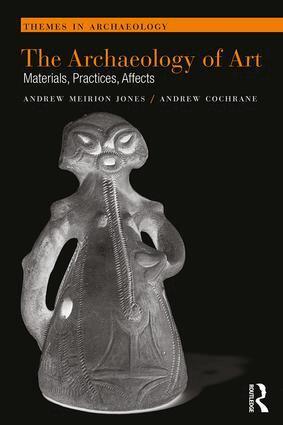
How can archaeologists interpret ancient art and images if they do not treat them as symbols or signifiers of identity? Traditional approaches to the archaeology of art have borrowed from the history of art and the anthropology of art by focusing on iconography, meaning, communication and identity. This puts the archaeology of art at a disadvantage as an understanding of iconography and meaning requires a detailed knowledge of historical or ethnographic context unavailable to many archaeologists. Rather than playing to archaeology’s weaknesses, the authors argue that an archaeology of art should instead play to archaeology’s strength: the material character of archaeological evidence. Using case studies - examining rock art, figurines, beadwork, murals, coffin decorations, sculpture and architecture from Europe, the Americas, Asia, Australia, and north Africa -the authors develop an understanding of the affective and effective nature of ancient art and imagery. An analysis of a series of material-based practices, from gesture and improvisation to miniaturisation and gigantism, assembly and disassembly and the use of distinctions in colour enable key concepts, such as style and meaning, to be re-imagined as affective practices. Recasting the archaeology of art as the study of affects offers a new prospectus for the study of ancient art and imagery.
2 167 kr
Skickas inom 10-15 vardagar
How can archaeologists interpret ancient art and images if they do not treat them as symbols or signifiers of identity? Traditional approaches to the archaeology of art have borrowed from the history of art and the anthropology of art by focusing on iconography, meaning, communication and identity. This puts the archaeology of art at a disadvantage as an understanding of iconography and meaning requires a detailed knowledge of historical or ethnographic context unavailable to many archaeologists. Rather than playing to archaeology’s weaknesses, the authors argue that an archaeology of art should instead play to archaeology’s strength: the material character of archaeological evidence. Using case studies - examining rock art, figurines, beadwork, murals, coffin decorations, sculpture and architecture from Europe, the Americas, Asia, Australia, and north Africa -the authors develop an understanding of the affective and effective nature of ancient art and imagery. An analysis of a series of material-based practices, from gesture and improvisation to miniaturisation and gigantism, assembly and disassembly and the use of distinctions in colour enable key concepts, such as style and meaning, to be re-imagined as affective practices. Recasting the archaeology of art as the study of affects offers a new prospectus for the study of ancient art and imagery.