TOPA Topics in Paleobiology - Böcker
Visar alla böcker i serien TOPA Topics in Paleobiology. Handla med fri frakt och snabb leverans.
10 produkter
10 produkter
1 579 kr
Skickas inom 11-20 vardagar
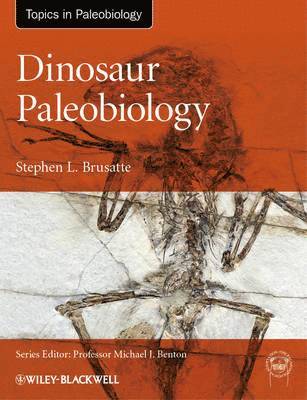
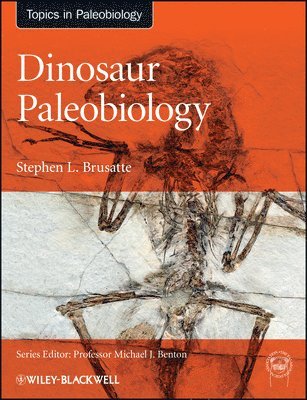
The study of dinosaurs has been experiencing a remarkable renaissance over the past few decades. Scientific understanding of dinosaur anatomy, biology, and evolution has advanced to such a degree that paleontologists often know more about 100-million-year-old dinosaurs than many species of living organisms. This book provides a contemporary review of dinosaur science intended for students, researchers, and dinosaur enthusiasts. It reviews the latest knowledge on dinosaur anatomy and phylogeny, how dinosaurs functioned as living animals, and the grand narrative of dinosaur evolution across the Mesozoic. A particular focus is on the fossil evidence and explicit methods that allow paleontologists to study dinosaurs in rigorous detail. Scientific knowledge of dinosaur biology and evolution is shifting fast, and this book aims to summarize current understanding of dinosaur science in a technical, but accessible, style, supplemented with vivid photographs and illustrations. The Topics in Paleobiology Series is published in collaboration with the Palaeontological Association, and is edited by Professor Mike Benton, University of Bristol.Books in the series provide a summary of the current state of knowledge, a trusted route into the primary literature, and will act as pointers for future directions for research. As well as volumes on individual groups, the series will also deal with topics that have a cross-cutting relevance, such as the evolution of significant ecosystems, particular key times and events in the history of life, climate change, and the application of a new techniques such as molecular palaeontology.The books are written by leading international experts and will be pitched at a level suitable for advanced undergraduates, postgraduates, and researchers in both the paleontological and biological sciences.Additional resources for this book can be found at: http://www.wiley.com/go/brusatte/dinosaurpaleobiology.
831 kr
Skickas inom 7-10 vardagar
The study of dinosaurs has been experiencing a remarkable renaissance over the past few decades. Scientific understanding of dinosaur anatomy, biology, and evolution has advanced to such a degree that paleontologists often know more about 100-million-year-old dinosaurs than many species of living organisms. This book provides a contemporary review of dinosaur science intended for students, researchers, and dinosaur enthusiasts. It reviews the latest knowledge on dinosaur anatomy and phylogeny, how dinosaurs functioned as living animals, and the grand narrative of dinosaur evolution across the Mesozoic. A particular focus is on the fossil evidence and explicit methods that allow paleontologists to study dinosaurs in rigorous detail. Scientific knowledge of dinosaur biology and evolution is shifting fast, and this book aims to summarize current understanding of dinosaur science in a technical, but accessible, style, supplemented with vivid photographs and illustrations. The Topics in Paleobiology Series is published in collaboration with the Palaeontological Association, and is edited by Professor Mike Benton, University of Bristol.Books in the series provide a summary of the current state of knowledge, a trusted route into the primary literature, and will act as pointers for future directions for research. As well as volumes on individual groups, the series will also deal with topics that have a cross-cutting relevance, such as the evolution of significant ecosystems, particular key times and events in the history of life, climate change, and the application of a new techniques such as molecular palaeontology.The books are written by leading international experts and will be pitched at a level suitable for advanced undergraduates, postgraduates, and researchers in both the paleontological and biological sciences.Additional resources for this book can be found at: http://www.wiley.com/go/brusatte/dinosaurpaleobiology.
1 024 kr
Kommande
The expert guide to the evolution and fossil record of cephalopods In Paleobiology of Ammonoids and their Relatives, Dr. McGowan delivers an up-to-date and comprehensive exploration of the evolution and biology of cephalopods that is written for non-specialists and experts in invertebrate biology and paleobiology alike. The book bridges the biology-paleontology divide, challenging some established thinking about cephalopod evolution and highlighting new research methods and results. The author explores areas of controversy, as well as the focus of current research, as he discusses the contributions of cephalopod research to discoveries in macroevolution and paleobiology. The only text to cover both extant and extinct cephalopod groups, this book also offers: A thorough introduction to the major cephalopod groups, including their fossil recordComprehensive explorations of the hard and soft tissues of cephalopods, including internal and external shells, as well as cephalopod brains and sensory systemsDetailed surveys of the growth and form of cephalopods, as well as their locomotion and feedingInsightful discussions of cephalopod reproduction and life history, phylogeny and classification, and cephalopod biogeographyWritten for students and researchers in cephalopod biology and paleobiology, Paleobiology of Ammonoids and their Relatives will also earn a place in the library of every ammonoid fossil collector.
1 608 kr
Skickas inom 7-10 vardagar
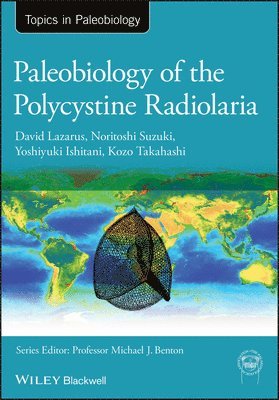
Polycystine radiolaria are exclusively marine protists and are found in all ocean waters, from polar regions to the tropics, and at all water depths. There are approximately 600 distinct described living species and several thousand fossil species of polycystines. Radiolarians in general, and polycystines in particular, have recently been shown to be a major component of the living plankton and important to the oceanic carbon cycle. As fossils radiolarians are also fairly common, and often occur in sediments where other types of fossils are absent. This has made them very valuable for certain types of geologic research, particularly estimating the geologic age of the sediments containing them, and as guides to past oceanic water conditions. As our current understanding of the biology, and even taxonomy of the living fauna is still very incomplete, evolutionary studies based on living polycystines are still rare. However, the common occurrence of numerous specimens for many species, and in a wide variety of oceanic environments, provides an excellent opportunity to study the processes of biologic evolution in the fossil record. Paleobiology of the Polycystine Radiolaria is the first major book on radiolarians to appear in the western literature since 2001. Focusing on living and fossil siliceous shelled radiolarians, it is notable for its emphasis not upon morphologic or taxonomic detail but on concepts and applications. The book attempts to provide a balanced, critical review of what is known of the biology, ecology, and fossil record of the group, as well as their use in evolutionary, biostratigraphic and paleoceanographic research. Full chapters on the history of study, and molecular biology, are the first ever in book form. Written for an audience of advanced undergraduate to doctoral students, as well as for a broad range of professionals in the biological and Earth sciences, Paleobiology of the Polycystine Radiolaria summarizes current understanding of the marine planktonic protist group polycystine radiolaria, both in living and fossil form.
608 kr
Skickas inom 7-10 vardagar
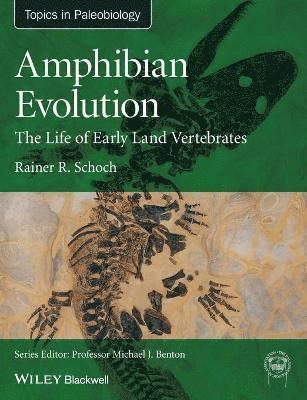
This book focuses on the first vertebrates to conquer land and their long journey to become fully independent from the water. It traces the origin of tetrapod features and tries to explain how and why they transformed into organs that permit life on land. Although the major frame of the topic lies in the past 370 million years and necessarily deals with many fossils, it is far from restricted to paleontology. The aim is to achieve a comprehensive picture of amphibian evolution. It focuses on major questions in current paleobiology: how diverse were the early tetrapods? In which environments did they live, and how did they come to be preserved? What do we know about the soft body of extinct amphibians, and what does that tell us about the evolution of crucial organs during the transition to land? How did early amphibians develop and grow, and which were the major factors of their evolution?The Topics in Paleobiology Series is published in collaboration with the Palaeontological Association, and is edited by Professor Mike Benton, University of Bristol.Books in the series provide a summary of the current state of knowledge, a trusted route into the primary literature, and will act as pointers for future directions for research. As well as volumes on individual groups, the series will also deal with topics that have a cross-cutting relevance, such as the evolution of significant ecosystems, particular key times and events in the history of life, climate change, and the application of a new techniques such as molecular palaeontology.The books are written by leading international experts and will be pitched at a level suitable for advanced undergraduates, postgraduates, and researchers in both the paleontological and biological sciences.
1 084 kr
Skickas inom 7-10 vardagar
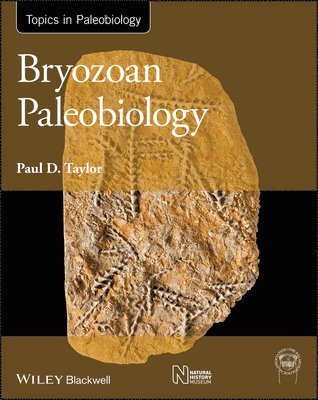
Bryozoa are among the most abundant yet least understood of phyla in the fossil record. These exclusively colonial animals can be traced back to the Ordovician as fossils and are common elements of sediments deposited in shallow marine environments. On occasion their calcareous skeletons are sufficiently numerous to produce bryozoan limestones. The potential of bryozoans in facies analysis, and their use in macroevolutionary studies, have both been widely recognised, but to date have been incompletely exploited. Bryozoan Paleobiology brings together the scattered research on living and fossil bryozoans in broad and profusely illustrated overview that will help students and researchers alike in understanding this fascinating group of animals. Beginning with the basics of bryozoan morphology, ecology and classification, the book progresses from the smallest scale of skeletal ultrastructure, to the largest of bryozoan distributions in time and space. On the way, topics such as the origin of zooidal polymorphism and macroevolutionary trends in colony forms are covered. Case studies illuminate these topics, and areas in which further research is particularly required are highlighted.
1 572 kr
Tillfälligt slut
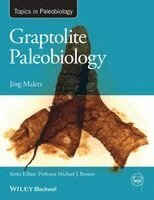
The graptolites constitute one of the geologically most useful taxonomic groups of fossils for dating rock successions, understanding paleobiogeography and reconstructing plate tectonic configurations in the Lower Palaeozoic. Graptolites were largely planktic, marine organisms, and as one of the first groups that explored the expanses of the world’s oceans are vital for understanding Palaeozoic ecology. They are the best and often the only fossil group for dating Lower Palaeozoic rock successions precisely. Thousands of taxa have been described from all over the planet and are used for a wide variety of geological and palaeontological (biological) research topics. The recent recognition of the modern pterobranch Rhabdopleura as a living benthic graptolite enables a much better understanding and interpretation of the fossil Graptolithina.In the decades since the latest edition of the Graptolite Treatise, the enormous increase of knowledge on this group of organisms has never been synthesised in a compelling and coherent way, and information is scattered in scientific publications and difficult to sort through. This volume provides an up-to-date insight into research on graptolites. Such research has advanced considerably with the use of new methods of investigation and documentation. SEM investigation and research on ultrastructure of the tubaria has made it possible to compare extant and extinct taxa in much more detail. Cladistic interpretation of graptolite taxonomy and evolution has advanced the understanding of this group of organisms considerably in the last two decades, and has highlighted their importance in our understanding of evolutionary processes. This book will show graptolites, including their modern, living relatives, in a quite new and fascinating light, and will demonstrate the impact that the group has had on the evolution of the modern marine ecosystem.This book is aimed not only at earth scientists but also at biologists, ecologists and oceanographers. It is a readable and comprehensible volume for students at the MSc level, while remaining accessible to undergraduates and non-specialists seeking up-to-date information about this fascinating topic in palaeobiology.
692 kr
Skickas inom 5-8 vardagar
The graptolites constitute one of the geologically most useful taxonomic groups of fossils for dating rock successions, understanding paleobiogeography and reconstructing plate tectonic configurations in the Lower Palaeozoic. Graptolites were largely planktic, marine organisms, and as one of the first groups that explored the expanses of the world’s oceans are vital for understanding Palaeozoic ecology. They are the best and often the only fossil group for dating Lower Palaeozoic rock successions precisely. Thousands of taxa have been described from all over the planet and are used for a wide variety of geological and palaeontological (biological) research topics. The recent recognition of the modern pterobranch Rhabdopleura as a living benthic graptolite enables a much better understanding and interpretation of the fossil Graptolithina.In the decades since the latest edition of the Graptolite Treatise, the enormous increase of knowledge on this group of organisms has never been synthesised in a compelling and coherent way, and information is scattered in scientific publications and difficult to sort through. This volume provides an up-to-date insight into research on graptolites. Such research has advanced considerably with the use of new methods of investigation and documentation. SEM investigation and research on ultrastructure of the tubaria has made it possible to compare extant and extinct taxa in much more detail. Cladistic interpretation of graptolite taxonomy and evolution has advanced the understanding of this group of organisms considerably in the last two decades, and has highlighted their importance in our understanding of evolutionary processes. This book will show graptolites, including their modern, living relatives, in a quite new and fascinating light, and will demonstrate the impact that the group has had on the evolution of the modern marine ecosystem.This book is aimed not only at earth scientists but also at biologists, ecologists and oceanographers. It is a readable and comprehensible volume for students at the MSc level, while remaining accessible to undergraduates and non-specialists seeking up-to-date information about this fascinating topic in palaeobiology.
608 kr
Skickas inom 7-10 vardagar
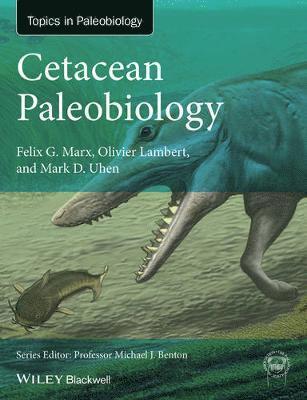
Cetaceans (whales, dolphins, and porpoises) have fascinated and bewildered humans throughout history. Their mammalian affinities have been long recognized, but exactly which group of terrestrial mammals they descend from has, until recently, remained in the dark. Recent decades have produced a flurry of new fossil cetaceans, extending their fossil history to over 50 million years ago. Along with new insights from genetics and developmental studies, these discoveries have helped to clarify the place of cetaceans among mammals, and enriched our understanding of their unique adaptations for feeding, locomotion and sensory systems. Their continuously improving fossil record and successive transformation into highly specialized marine mammals have made cetaceans a textbook case of evolution - as iconic in its own way as the origin of birds from dinosaurs. This book aims to summarize our current understanding of cetacean evolution for the serious student and interested amateur using photographs, drawings, charts and illustrations.
Avian Evolution
The Fossil Record of Birds and its Paleobiological Significance
Inbunden, Engelska, 2016
976 kr
Skickas inom 5-8 vardagar
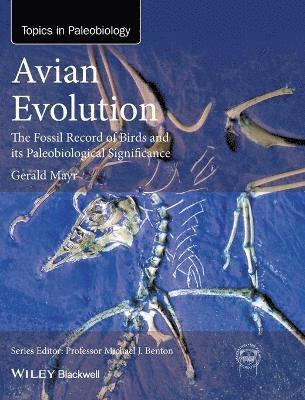
Knowledge of the evolutionary history of birds has much improved in recent decades. Fossils from critical time periods are being described at unprecedented rates and modern phylogenetic analyses have provided a framework for the interrelationships of the extant groups. This book gives an overview of the avian fossil record and its paleobiological significance, and it is the only up-to-date textbook that covers both Mesozoic and more modern-type Cenozoic birds in some detail. The reader is introduced to key features of basal avians and the morphological transformations that have occurred in the evolution towards modern birds. An account of the Cenozoic fossil record sheds light on the biogeographic history of the extant avian groups and discusses fossils in the context of current phylogenetic hypotheses. This review of the evolutionary history of birds not only addresses students and established researchers, but it may also be a useful source of information for anyone else with an interest in the evolution of birds and a moderate background in biology and geology.