Topics in Contemporary Archaeology - Böcker
Visar alla böcker i serien Topics in Contemporary Archaeology. Handla med fri frakt och snabb leverans.
10 produkter
10 produkter
Del 4 - Topics in Contemporary Archaeology
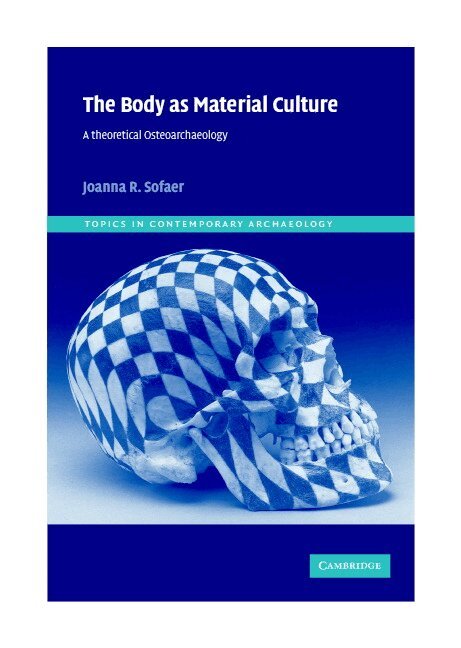
The Body as Material Culture
A Theoretical Osteoarchaeology
Häftad, Engelska, 2006
360 kr
Skickas inom 7-10 vardagar
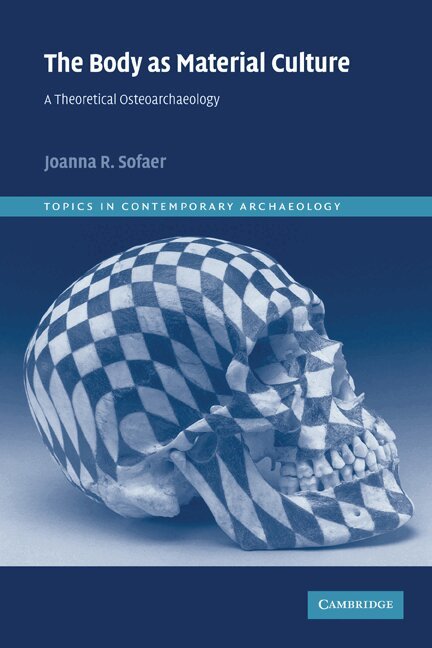
Bodies intrigue us. They promise windows into the past that other archaeological finds cannot by bringing us literally face to face with history. Yet 'the body' is also highly contested. Archaeological bodies are studied through two contrasting perspectives that sit on different sides of a disciplinary divide. On one hand lie science-based osteoarchaeological approaches. On the other lie understandings derived from recent developments in social theory that increasingly view the body as a social construction. Through a close examination of disciplinary practice, Joanna Sofaer highlights the tensions and possibilities offered by one particular kind of archaeological body, the human skeleton, with particular regard to the study of gender and age. Using a range of examples, she argues for reassessment of the role of the skeletal body in archaeological practice, and develops a theoretical framework for bioarchaeology based on the materiality and historicity of human remains.
318 kr
Skickas inom 7-10 vardagar
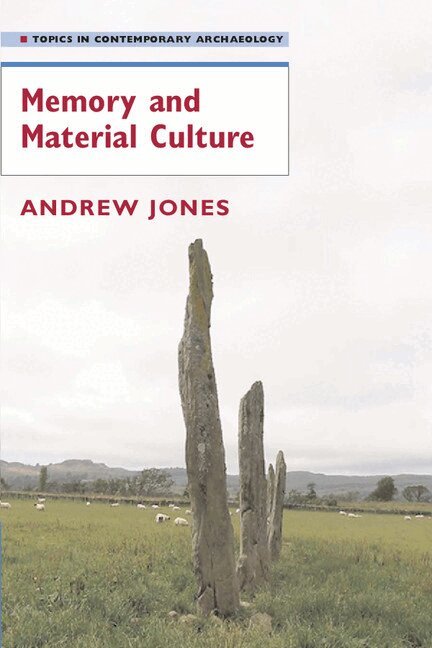
We take for granted the survival into the present of artifacts from the past. Indeed the discipline of archaeology would be impossible without the survival of such artifacts. What is the implication of the durability or ephemerality of past material culture for the reproduction of societies in the past? In this book, Andrew Jones argues that the material world offers a vital framework for the formation of collective memory. He uses the topic of memory to critique the treatment of artifacts as symbols by interpretative archaeologists and artifacts as units of information (or memes) by behavioral archaeologists, instead arguing for a treatment of artifacts as forms of mnemonic trace that have an impact on the senses. Using detailed case studies from prehistoric Europe, he further argues that archaeologists can study the relationship between mnemonic traces in the form of networks of reference in artifactual and architectural forms.
370 kr
Skickas inom 7-10 vardagar
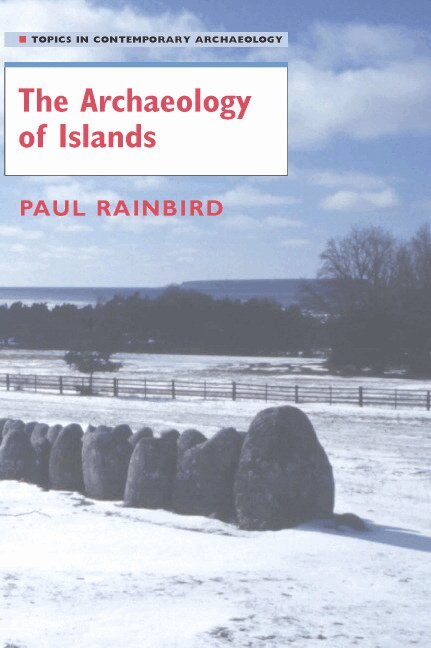
Archaeologists have traditionally considered islands as distinct physical and social entities. In this book, Paul Rainbird discusses the historical construction of this characterization and questions the basis for such an understanding of island archaeology. Through a series of case studies of prehistoric archaeology in the Mediterranean, Pacific, Baltic, and Atlantic seas and oceans, he argues for a decentering of the land in favor of an emphasis on the archaeology of the sea and, ultimately, a new perspective on the making of maritime communities. The archaeology of islands is thus unshackled from approaches that highlight boundedness and isolation, and replaced with a new set of principles - that boundaries are fuzzy, islanders are distinctive in their expectation of contacts with people from over the seas, and that island life can tell us much about maritime communities. Debating islands, thus, brings to the fore issues of identity and community and a concern with Western construction of other peoples.
Del 2 - Topics in Contemporary Archaeology
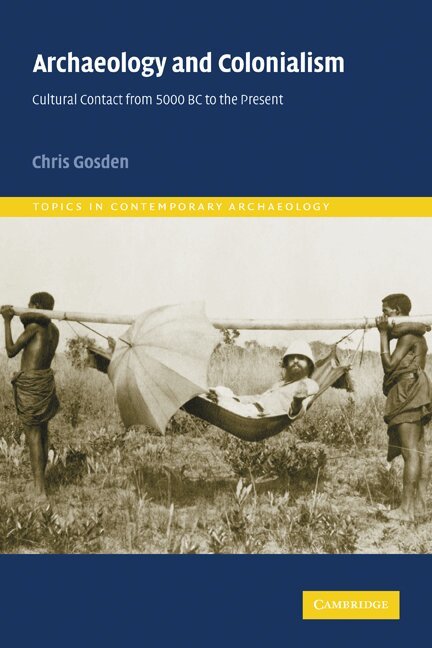
Archaeology and Colonialism
Cultural Contact from 5000 BC to the Present
Inbunden, Engelska, 2004
1 065 kr
Skickas inom 7-10 vardagar
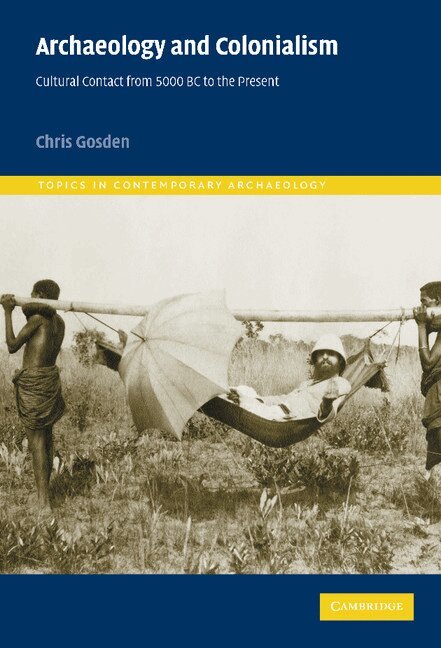
Archaeology is the only discipline that allows us to take a long-term view across all forms of colonialism, from the Uruk cities of early Mesopotamia, through the empires of the Romans and the Aztecs, to the colonies of modern European states. In this innovative study, Chris Gosden presents a comparative survey of 5000 years of colonialism. Defining colonialism as, crucially, a relationship with material culture, destabilising of older values, changing both incomers and natives, Gosden attempts to understand the history of power, how it is exercised through material culture and how this understanding can generate new notions of interaction and encounter. By defining colonialism through its relationship with material culture, Gosden argues that modern colonialism, giving rise to settler societies, is historically unusual. Synthesising theoretical approaches and evidence from a broad span of colonial regions, this book provides an important new field of enquiry connecting historic and prehistoric archaeology.
Del 2 - Topics in Contemporary Archaeology
Archaeology and Colonialism
Cultural Contact from 5000 BC to the Present
Häftad, Engelska, 2004
305 kr
Skickas inom 7-10 vardagar
Archaeology is the only discipline that allows us to take a long-term view across all forms of colonialism, from the Uruk cities of early Mesopotamia, through the empires of the Romans and the Aztecs, to the colonies of modern European states. In this innovative study, Chris Gosden presents a comparative survey of 5000 years of colonialism. Defining colonialism as, crucially, a relationship with material culture, destabilising of older values, changing both incomers and natives, Gosden attempts to understand the history of power, how it is exercised through material culture and how this understanding can generate new notions of interaction and encounter. By defining colonialism through its relationship with material culture, Gosden argues that modern colonialism, giving rise to settler societies, is historically unusual. Synthesising theoretical approaches and evidence from a broad span of colonial regions, this book provides an important new field of enquiry connecting historic and prehistoric archaeology.
Del 1 - Topics in Contemporary Archaeology
Archaeological Theory and Scientific Practice
Inbunden, Engelska, 2001
1 024 kr
Skickas inom 7-10 vardagar
Is archaeology an art or a science? This question has been hotly debated over the last few decades with the rise of archaeological science. At the same time, archaeologists have seen a change in the intellectual character of their discipline, as many writers have adopted approaches influenced by social theory. The discipline now encompasses both archaeological scientists and archaeological theorists, and discussion regarding the status of archaeology remains polarised. In this 2001 book, Andrew Jones argues that we need to analyse the practice of archaeology. Through an analysis of archaeological practice, influenced by recent developments in the field of science studies, and with the aid of extensive case studies, he develops a new framework which allows the interpretative and methodological components of the discipline to work in tandem. His reassessment of the status and character of archaeology will be of interest to students, scholars and professionals.
Del 1 - Topics in Contemporary Archaeology
Archaeological Theory and Scientific Practice
Häftad, Engelska, 2001
448 kr
Skickas inom 7-10 vardagar
Is archaeology an art or a science? This question has been hotly debated over the last few decades with the rise of archaeological science. At the same time, archaeologists have seen a change in the intellectual character of their discipline, as many writers have adopted approaches influenced by social theory. The discipline now encompasses both archaeological scientists and archaeological theorists, and discussion regarding the status of archaeology remains polarised. In this 2001 book, Andrew Jones argues that we need to analyse the practice of archaeology. Through an analysis of archaeological practice, influenced by recent developments in the field of science studies, and with the aid of extensive case studies, he develops a new framework which allows the interpretative and methodological components of the discipline to work in tandem. His reassessment of the status and character of archaeology will be of interest to students, scholars and professionals.
Del 4 - Topics in Contemporary Archaeology
The Body as Material Culture
A Theoretical Osteoarchaeology
Inbunden, Engelska, 2006
1 034 kr
Skickas inom 7-10 vardagar
Bodies intrigue us. They promise windows into the past that other archaeological finds cannot by bringing us literally face to face with history. Yet 'the body' is also highly contested. Archaeological bodies are studied through two contrasting perspectives that sit on different sides of a disciplinary divide. On one hand lie science-based osteoarchaeological approaches. On the other lie understandings derived from recent developments in social theory that increasingly view the body as a social construction. Through a close examination of disciplinary practice, Joanna Sofaer highlights the tensions and possibilities offered by one particular kind of archaeological body, the human skeleton, with particular regard to the study of gender and age. Using a range of examples, she argues for reassessment of the role of the skeletal body in archaeological practice, and develops a theoretical framework for bioarchaeology based on the materiality and historicity of human remains.
726 kr
Skickas inom 7-10 vardagar
We take for granted the survival into the present of artifacts from the past. Indeed the discipline of archaeology would be impossible without the survival of such artifacts. What is the implication of the durability or ephemerality of past material culture for the reproduction of societies in the past? In this book, Andrew Jones argues that the material world offers a vital framework for the formation of collective memory. He uses the topic of memory to critique the treatment of artifacts as symbols by interpretative archaeologists and artifacts as units of information (or memes) by behavioral archaeologists, instead arguing for a treatment of artifacts as forms of mnemonic trace that have an impact on the senses. Using detailed case studies from prehistoric Europe, he further argues that archaeologists can study the relationship between mnemonic traces in the form of networks of reference in artifactual and architectural forms.
699 kr
Skickas inom 7-10 vardagar
Archaeologists have traditionally considered islands as distinct physical and social entities. In this book, Paul Rainbird discusses the historical construction of this characterization and questions the basis for such an understanding of island archaeology. Through a series of case studies of prehistoric archaeology in the Mediterranean, Pacific, Baltic, and Atlantic seas and oceans, he argues for a decentering of the land in favor of an emphasis on the archaeology of the sea and, ultimately, a new perspective on the making of maritime communities. The archaeology of islands is thus unshackled from approaches that highlight boundedness and isolation, and replaced with a new set of principles - that boundaries are fuzzy, islanders are distinctive in their expectation of contacts with people from over the seas, and that island life can tell us much about maritime communities. Debating islands, thus, brings to the fore issues of identity and community and a concern with Western construction of other peoples.