Topoi Library - Böcker
Visar alla böcker i serien Topoi Library. Handla med fri frakt och snabb leverans.
12 produkter
12 produkter
1 064 kr
Skickas inom 10-15 vardagar
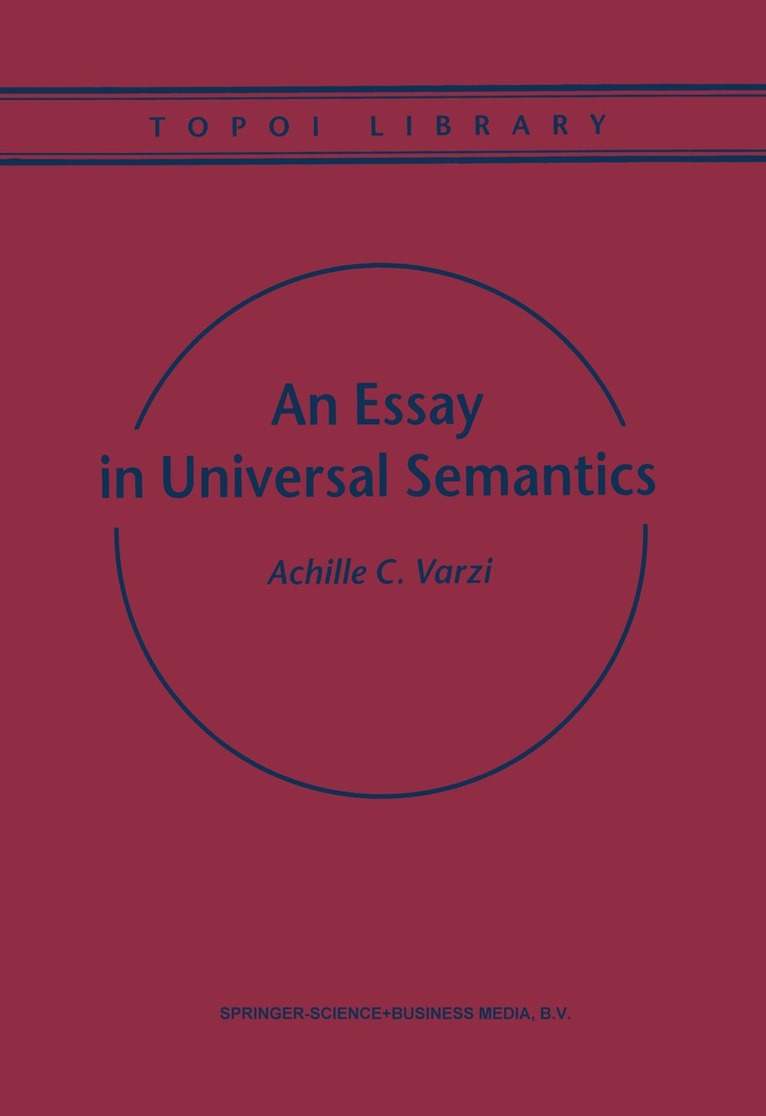
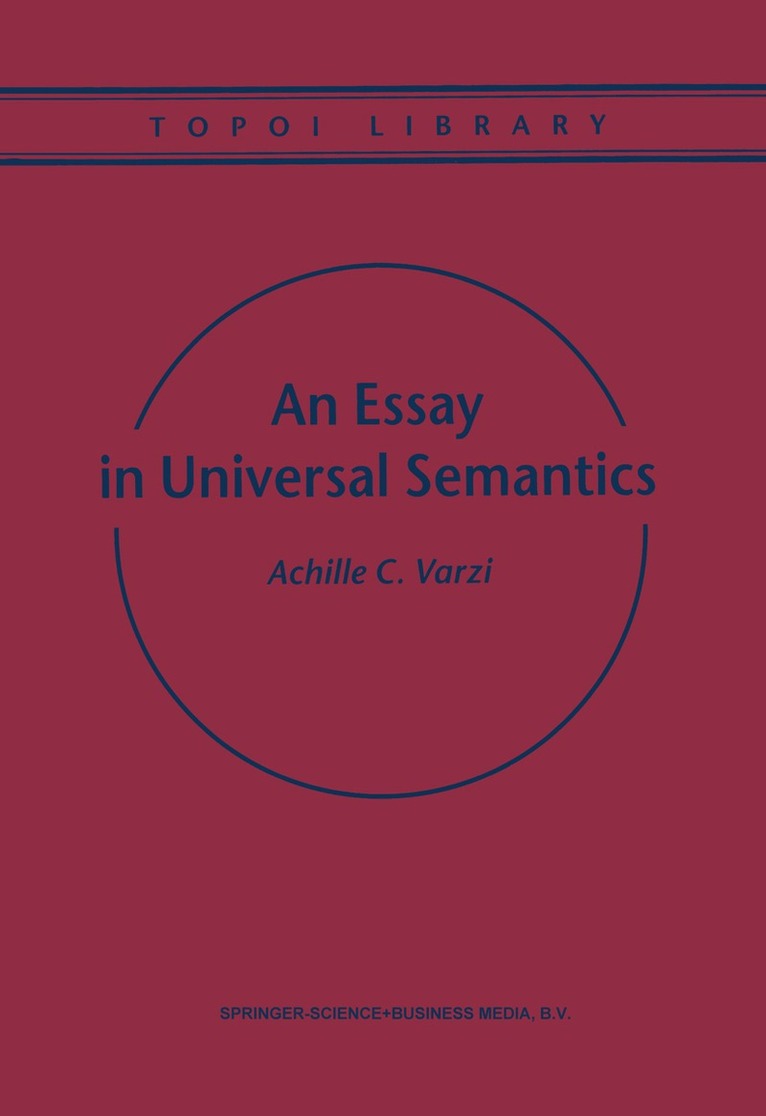
This volume is a study of the foundations of model-theoretic semantics. Its central thesis is that one does not need to assume a perfect structural fit between languages and their models in order to characterize the basic semantic notions. In particular, truth-value gaps and gluts can be explained away as local phenomena that do not bring logical disaster in their wake. Varzi's detailed account is based on a generalization of supervaluationary techniques and is illustrated with reference to a range of different types of examples, from sentential logic to type theory.
Del 2 - Topoi Library
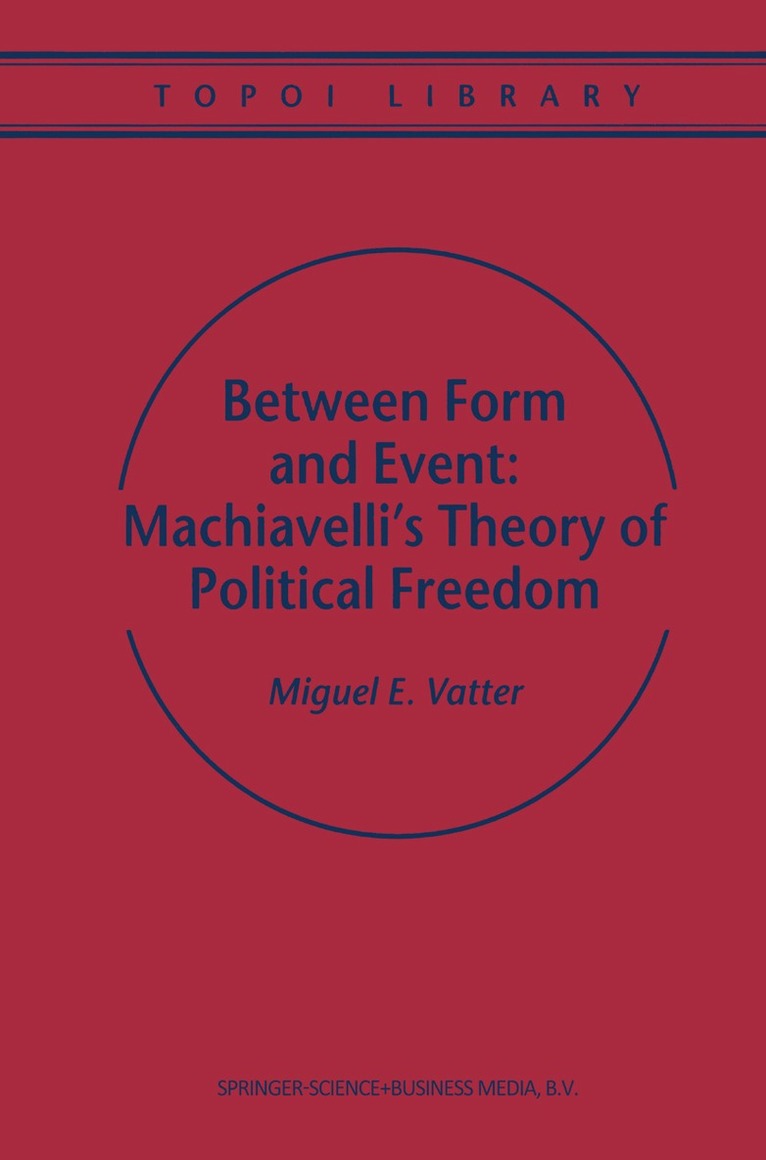
Between Form and Event: Machiavelli's Theory of Political Freedom
Inbunden, Engelska, 2000
1 593 kr
Skickas inom 10-15 vardagar
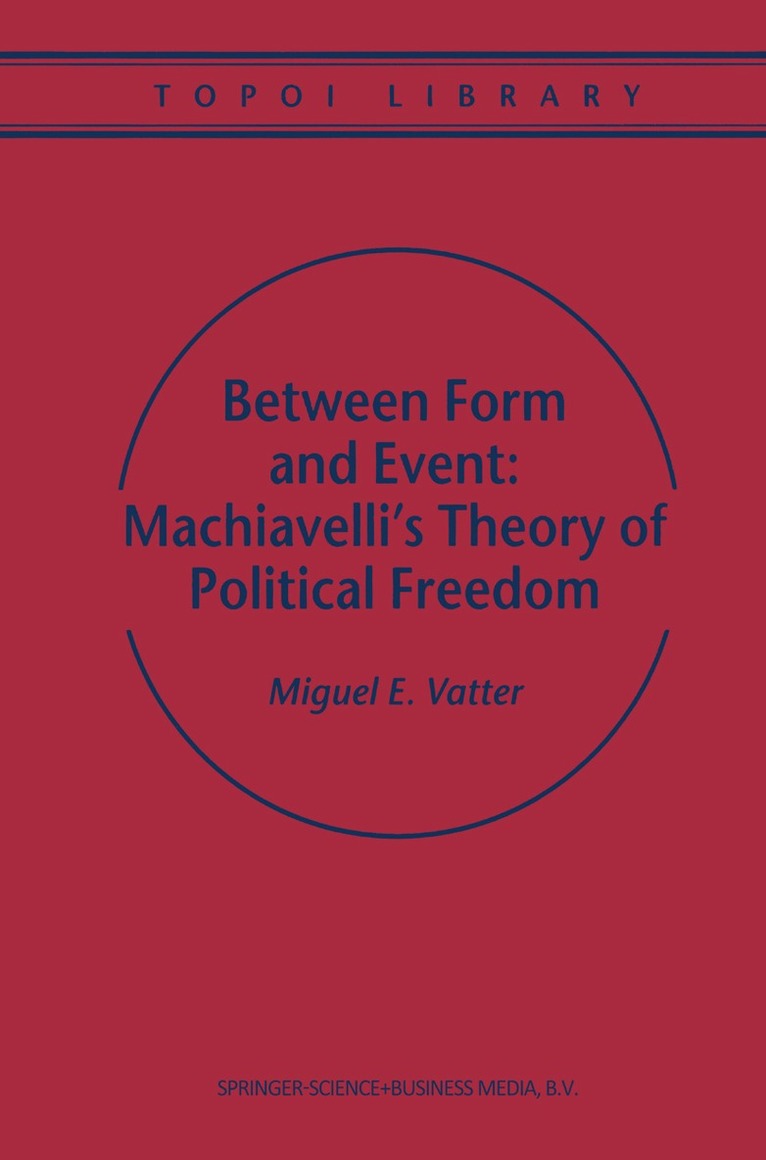
Before Machiavelli, political freedom was approached as a problem of the best distribution of the functions of ruler and ruled. Machiavelli changed the terms of freedom, requiring that its discourse address the demand for no-rule or non-domination. Political freedom would then develop only through a strategy of antagonism to every form of legitimate domination. This leads to the emergence of modern political life: any institution that wishes to rule legitimately must simultaneously be inscribed with its immanent critique and imminent subversion. For Machiavelli, the possibility of instituting the political form is conditioned by the possibility of changing it in an event of political revolution. This book shows Machiavelli as a philosopher of the modern condition. For him, politics exists in the absence of those absolute moral standards that are called upon to legitimate the domination of man over man. If this understanding lies open to relativism and historicism, it does so in order to render effective the project of reinventing the sense of human freedom.Machiavelli's legacy to modernity is the recognition of an irreconcilable tension between the demands of freedom and the imperatives of morality.
1 064 kr
Skickas inom 10-15 vardagar
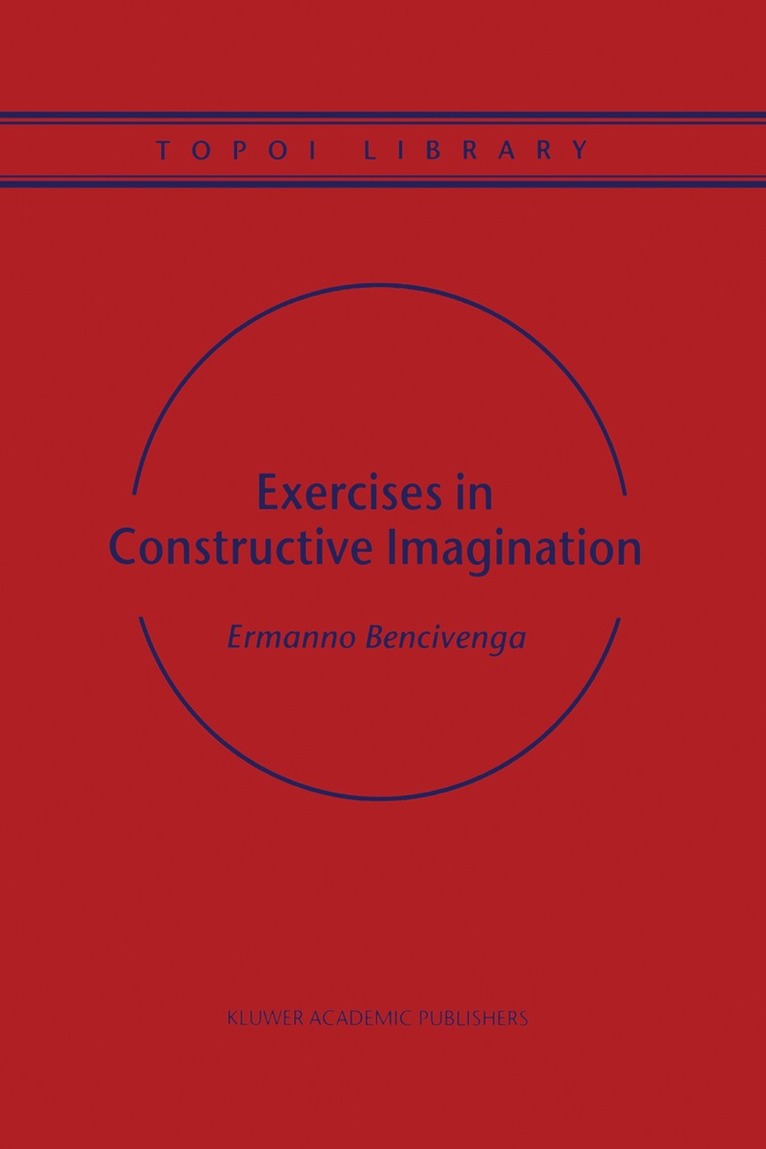
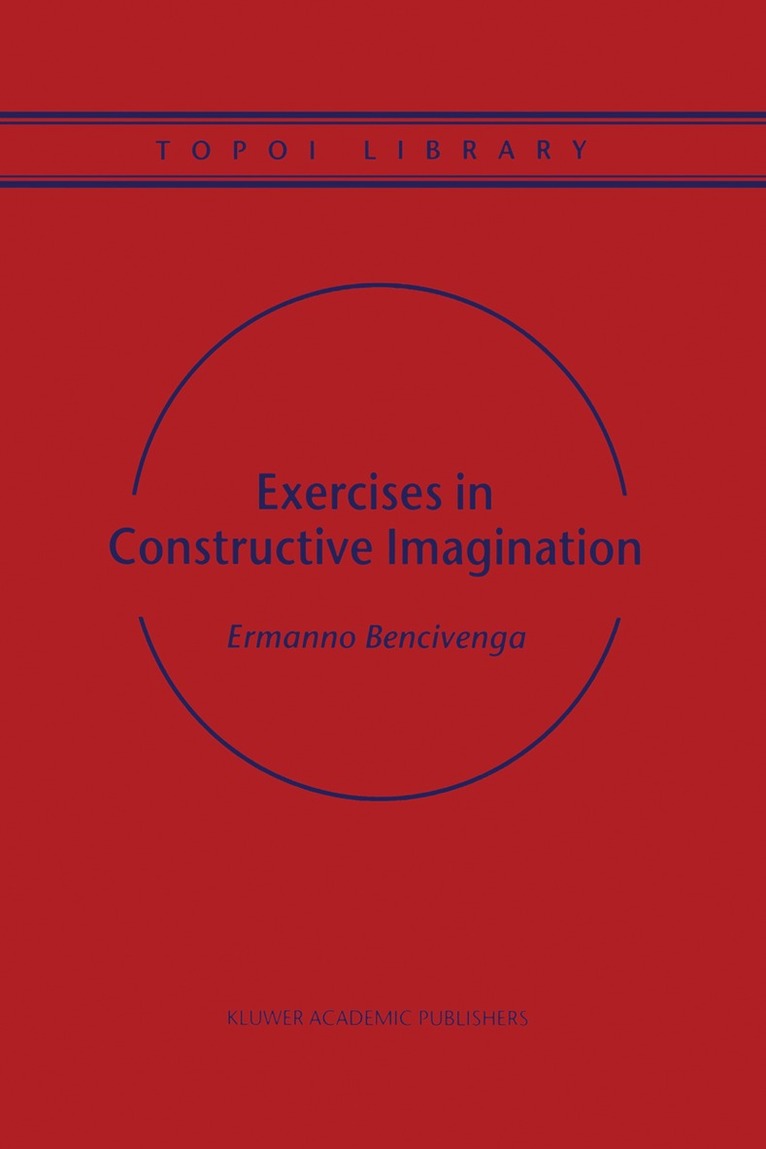
Philosophy in the 20th century has often self-consciously presented itself as aiming at the destruction or deconstruction of the philosophical tradition or even of theorizing as such. The basis for such self-description may well be a deep-seated anxiety about death; but whatever its grounds, the procession of distinguished intellectuals who seem mostly concerned with who gets to turn off the light on philosophy on his/her way out is one main reason why philosophy seems to have lost its grip on public opinion and public policy. Which is ironical, because there is often considerable constructive work going on under the pretence of all this "destruction", but the superficial rhetoric has more currency and impact than the substance of that work.This book brings back the spirit of bold, imaginative, even outrageous theorizing into philosophy, and contains a series of examples of it, venturing playfully into quantum mechanics and political theory, psychoanalysis and environmental ethics, philosophy of language and sociology, without any attempt at "systematically exhausting" these disparate fields but rather using them as suggestive excuses and arenas for the display of intellectual creativity. There are numerous echoes among the various pieces, and between them and other works by the same author; but again these resonances are not systematized. The result is more to be seen as a collection of snapshots of an intellectual landscape than as a hierarchical regimentation of it.
2 121 kr
Skickas inom 10-15 vardagar
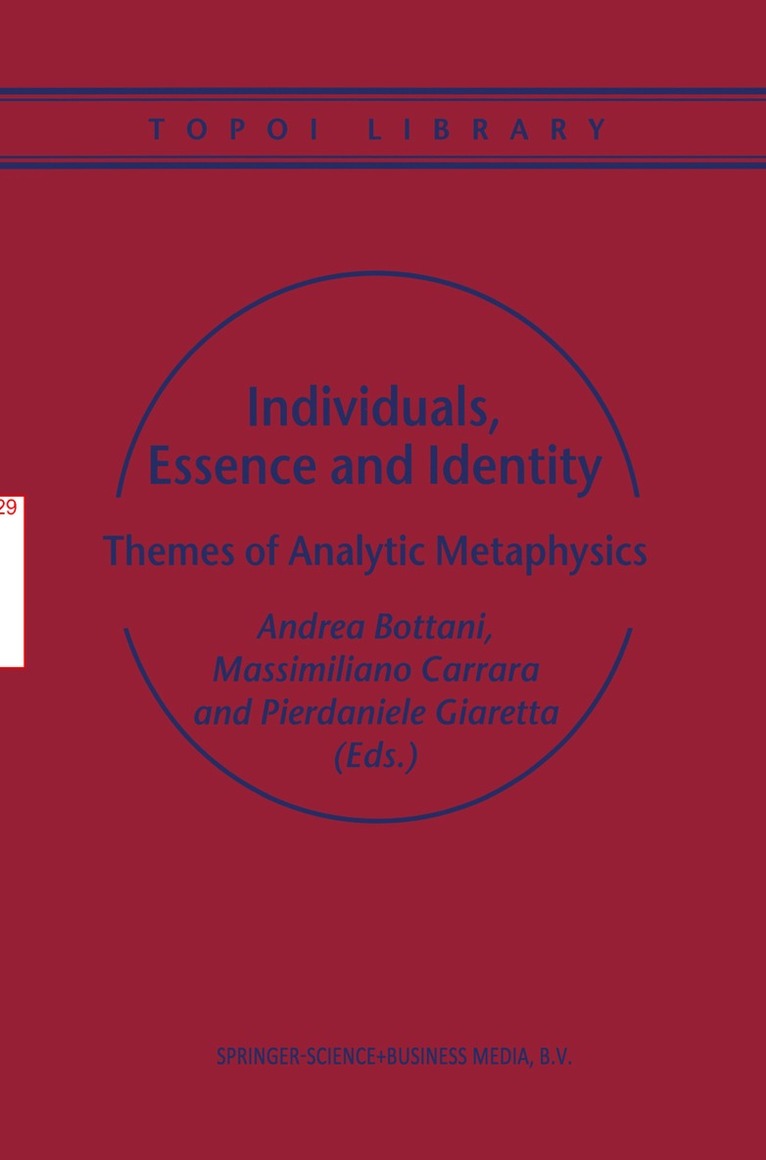
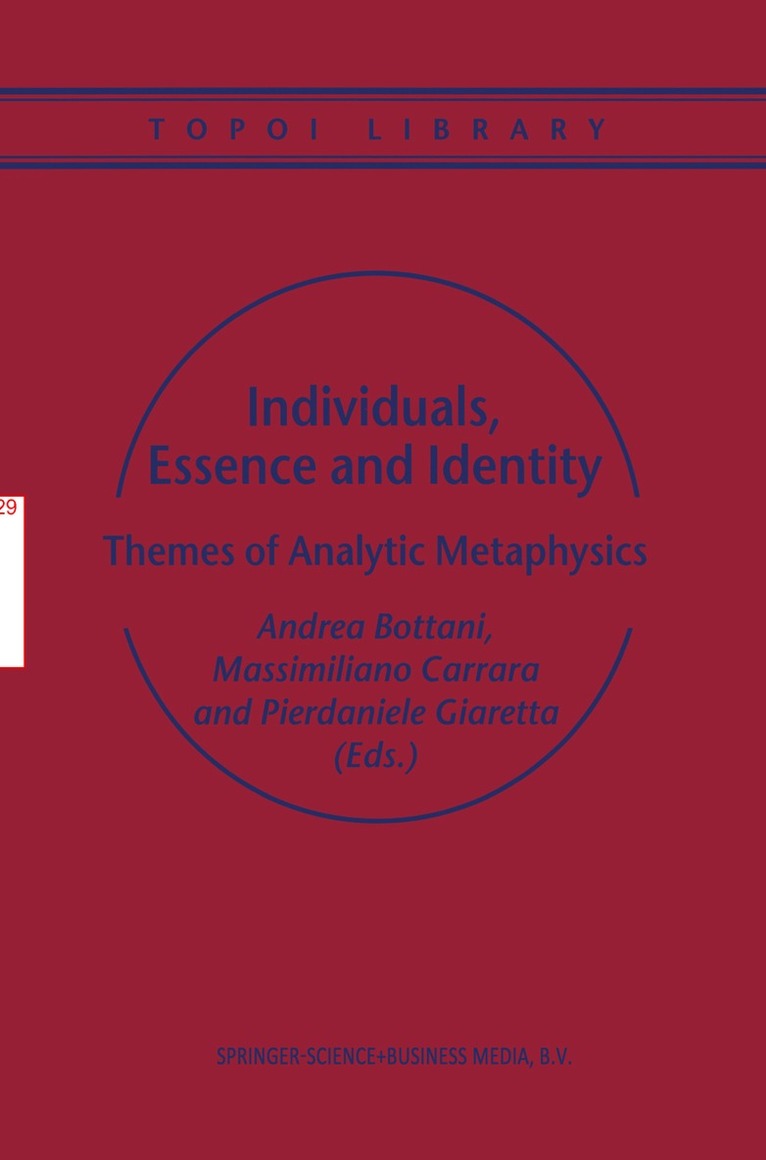
The aim of this book is to give a working representation of what metaphysics is ta the beginning of the 21st century. The historical contributions reveal the roots of metaphysical themes and how today's methods are linked to their Aristotelian and Leibnizian past. The volume also touches on: the relationships between ontological and linguistic analysis; the questions of realism and ontological commitment; the nature of abstract objects, the existential meaning of particular quantification; the primitiveness of identity; the question of epistemic versus ontological vagueness, the necessity of origin, the nature of natural necessity; the possibility of intermittent existence; the notion of a temporal part and its place in an account of persistence; the question of identity and change across time and possible worlds, and many more.
1 064 kr
Skickas inom 10-15 vardagar
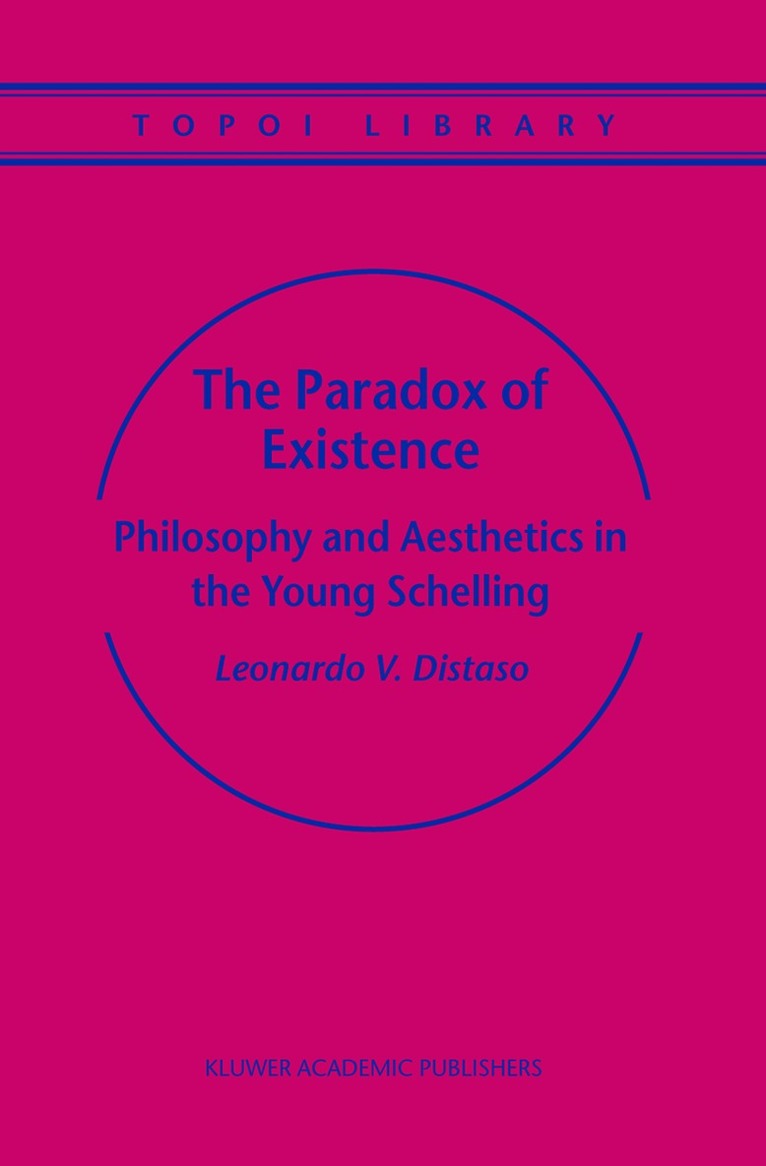
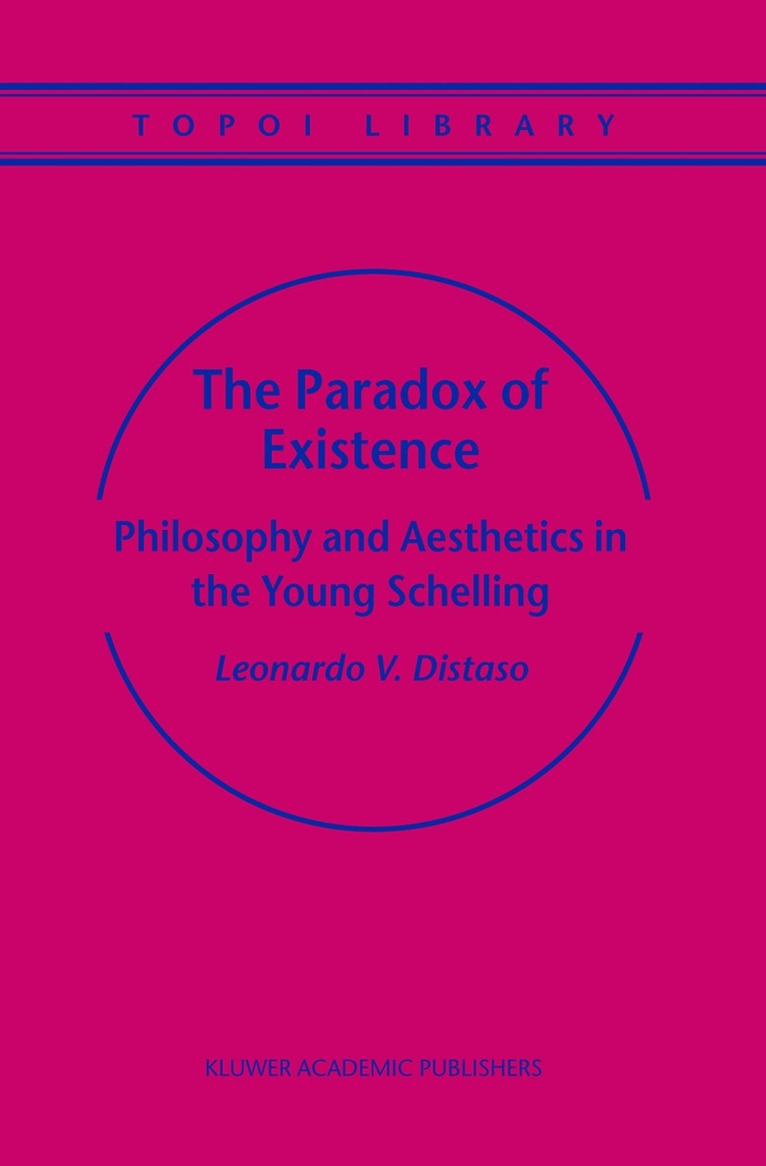
This book is not a merely historical reconstruction of Schelling’s thought; its main goal is to provide a contribution for a better comprehension of the importance of the philosophical quest of the young German philosopher from within, which represents a turning point for the whole thought of modernity. I did not describe the various fields of Schelling’s work, but I pointed out the central position of his Aesthetics, through the analysis of the inner mechanisms of his concepts. This mechanism, in my opinion, shows the reason why an Aesthetic philosophy is possible, and why its origin can be traced to Kant’s Aesthetics (particularly in Kant’s Critique of Judgement) and in the speculations of the early post-Kantian philosophy. The young Schelling’s philosophical problems precede his encounter with Fichte’s philosophy. Schelling discovers these problems, related to Plato, Aristotle, Spinoza, Wolff, Leibniz and Kant, in the protestant college of the Stift in Tübingen. Fichte confirmed the necessity of an urgent reform of transcendental philosophy, and offered to the young philosopher a philosophical dictionary and an orientation. Schelling exploited these resources with a great degree of autonomy, independence and originality. In these years Hölderlin’s influence on Schelling was much greater. Schelling’s and Hölderlin’s speculations, in these crucial years, were tightly connected.
1 593 kr
Skickas inom 10-15 vardagar
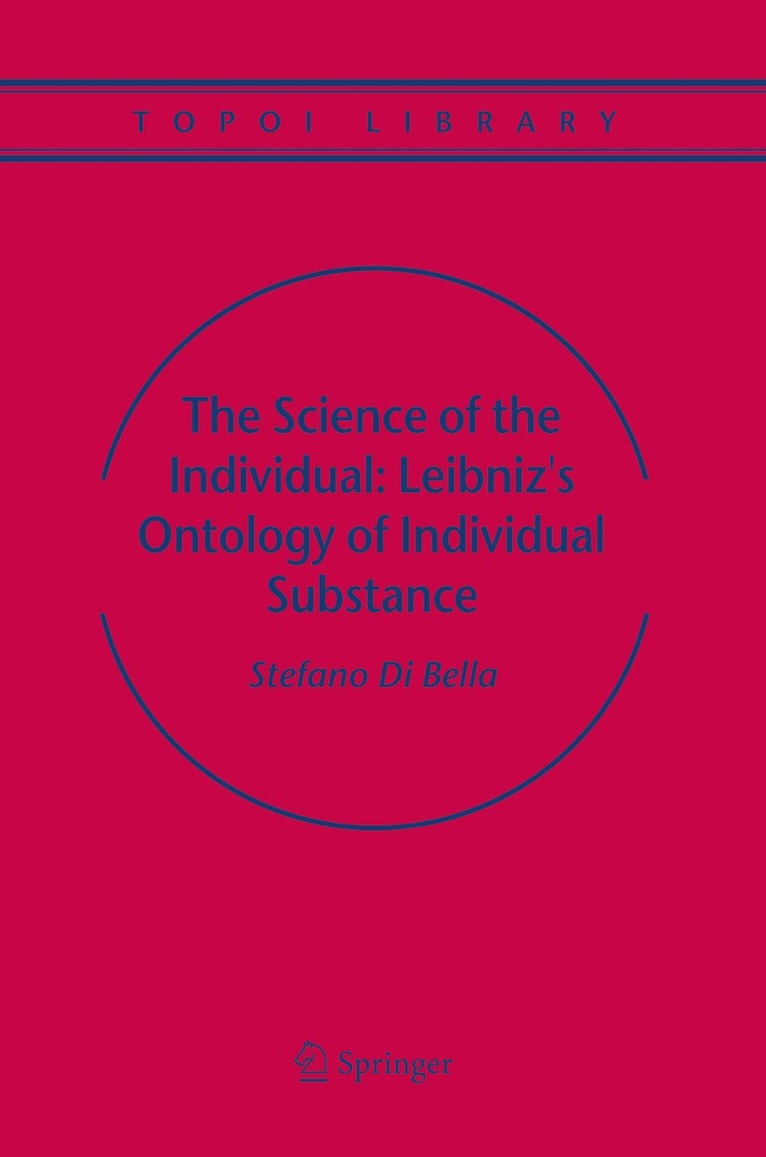
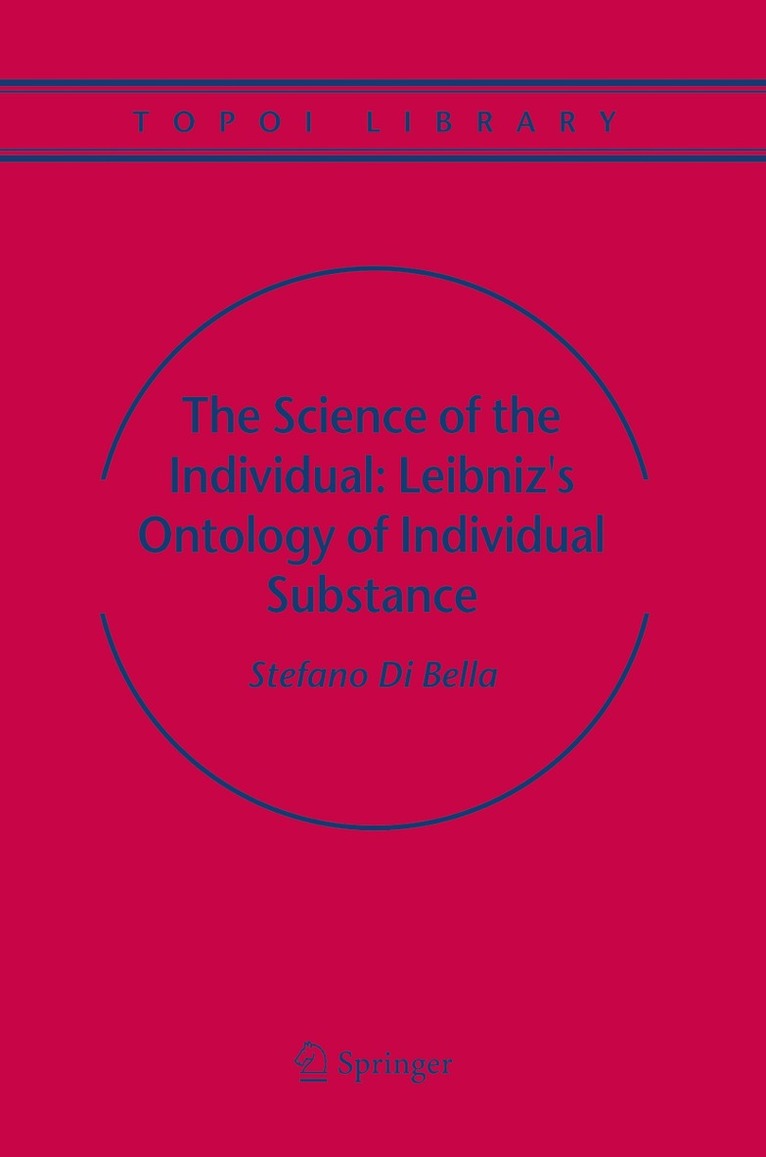
In his well-known Discourse on Metaphysics, Leibniz puts individual substance at the basis of metaphysical building. In so doing, he connects himself to a venerable tradition. His theory of individual concept, however, breaks with another idea of the same tradition, that no account of the individual as such can be given.Contrary to what has been commonly accepted, Leibniz’s intuitions are not the mere result of the transcription of subject-predicate logic, nor of the uncritical persistence of some old metaphysical assumptions. They grow, instead, from an unprejudiced inquiry about our basic ontological framework, where logic of truth, linguistic analysis, and phenomenological experience of the mind’s life are tightly interwoven. Leibniz’s struggle for a concept capable of grasping concrete individuals as such is pursued in an age of great paradigm changes – from the Scholastic background to Hobbes’s nominalism to the Cartesian ‘way of ideas’ or Spinoza’s substance metaphysics – when the relationships among words, ideas and things are intensively discussed and wholly reshaped.This is the context where the genesis and significance of Leibniz’s theory of ‘complete being’ and its concept are reconstrued. The result is a fresh look at some of the most perplexing issues in Leibniz scholarship, like his ideas about individual identity and the thesis that all its properties are essential to an individual. The questions Leibniz faces, and to which his theory of individual substance aims to answer, are yet, to a large extent, those of contemporary metaphysics: how to trace a categorial framework? How to distinguish concrete and abstract items? What is the metaphysical basis of linguistic predication? How is trans-temporal sameness assured? How to make sense of essential attributions? In this ontological framework Leibniz’s further questions about the destiny of human individuals and their history arespelt out. Maybe his answers also have something to tell us.This book is aimed at all who are interested in Leibniz’s philosophy, history of early modern philosophy and metaphysical issues in their historical development.
1 096 kr
Skickas inom 10-15 vardagar
This book is a study of the foundations of model-theoretic semantics. Its central thesis is that one does not need to assume a perfect structural fit between languages and their models in order to characterise the basic semantic notions. In particular, truth-value gaps and gluts can be explained away as local phenomena that do not bring logical disaster in their wake. Varzi's detailed and original account is based on a generalisation of supervaluationary techniques and is illustrated with reference to a range of different types of examples, from sentential logic to type theory. Audience: The book is self-contained and will appeal to philosophers, logicians, linguists and computer scientists.
1 593 kr
Skickas inom 10-15 vardagar
Before Machiavelli, political freedom was approached as a problem of the best distribution of the functions of ruler and ruled. Machiavelli changed the terms of freedom, requiring that its discourse address the demand for no-rule or non-domination. Political freedom would then develop only through a strategy of antagonism to every form of legitimate domination. This leads to the emergence of modern political life: any institution that wishes to rule legitimately must simultaneously be inscribed with its immanent critique and imminent subversion. For Machiavelli, the possibility of instituting the political form is conditioned by the possibility of changing it in an event of political revolution. This book shows Machiavelli as a philosopher of the modern condition. For him, politics exists in the absence of those absolute moral standards that are called upon to legitimate the domination of man over man. If this understanding lies open to relativism and historicism, it does so in order to render effective the project of reinventing the sense of human freedom. Machiavelli's legacy to modernity is the recognition of an irreconcilable tension between the demands of freedom and the imperatives of morality.
2 121 kr
Skickas inom 10-15 vardagar
The book's aim is to give a working representation of what metaphysics is today. The historical contributions reveal the roots of metaphysical themes and how today's methods are linked to their Aristotelian and Leibnizian past. The volume also touches on the relationships between ontological and linguistic analysis, the questions of realism and ontological commitment, the nature of abstract objects, the existential meaning of particular quantification, the primitiveness of identity, the question of epistemic versus ontological vagueness, the necessity of origin, the nature of natural necessity, the possibility of intermittent existence, the notion of a temporal part and its place in an account of persistence, the question of identity and change across time and possible worlds, and many more. Readership: A toolbox for any researcher in metaphysics and an essential source for any PhD student with ontological interests.
1 064 kr
Skickas inom 10-15 vardagar
This essay reconstructs Schelling's philosophical development during the years 1794-1800. It emphasizes the role of Kant's heritage within Schelling's early philosophy, and the strong relationship between Schelling and Holderlin during their Tubingen years. The central question it explores is how the Absolute relates to Finiteness - a relation that constitutes the basis of transcendental idealism as well as the essence of a transcendental philosophy, here radically understood as a philosophy of finitude and as a critical aesthetics. The essay shows the young Schelling as he presents a rich and novel field of inquiry, which provides a credible and engaging alternative to Hegelian thinking and anticipates themes from twentieth-century philosophy (Phenomenology, Existentialism, Critical Thinking). The volume thus provides both a historical and a contemporary look at Schelling's early philosophy, and at its original and speculative approach.
1 593 kr
Skickas inom 10-15 vardagar
In his well-known Discourse on Metaphysics, Leibniz puts individual substance at the basis of metaphysical building. In so doing, he connects himself to a venerable tradition. His theory of individual concept, however, breaks with another idea of the same tradition, that no account of the individual as such can be given. Contrary to what has been commonly accepted, Leibniz's intuitions are not the mere result of the transcription of subject-predicate logic, nor of the uncritical persistence of some old metaphysical assumptions. They grow, instead, from an unprejudiced inquiry about our basic ontological framework, where logic of truth, linguistic analysis, and phenomenological experience of the mind's life are tightly interwoven. Leibniz's struggle for a concept capable of grasping concrete individuals as such is pursued in an age of great paradigm changes -- from the Scholastic background to Hobbes's nominalism to the Cartesian 'way of ideas' or Spinoza's substance metaphysics -- when the relationships among words, ideas and things are intensively discussed and wholly reshaped.This is the context where the genesis and significance of Leibniz's theory of 'complete being' and its concept are reconstrued. The result is a fresh look at some of the most perplexing issues in Leibniz scholarship, like his ideas about individual identity and the thesis that all its properties are essential to an individual. The questions Leibniz faces, and to which his theory of individual substance aims to answer, are yet, to a large extent, those of contemporary metaphysics: how to trace a categorial framework? How to distinguish concrete and abstract items? What is the metaphysical basis of linguistic predication? How is trans-temporal sameness assured? How to make sense of essential attributions? In this ontological framework Leibniz's further questions about the destiny of human individuals and their history are spelt out. Maybe his answers also have something to tell us. This book is aimed at all who are interested in Leibniz's philosophy, history of early modern philosophy and metaphysical issues in their historical development.
1 064 kr
Skickas inom 10-15 vardagar
Philosophy in this century has often self-consciously presented itself as aiming at the destruction or deconstruction of the philosophical tradition or even of theorizing as such. The basis for such self-description may well be a deep-seated anxiety about death; but whatever its grounds, the procession of distinguished intellectuals who seem mostly concerned with who gets to turn off the light on philosophy on his/her way out is one main reason why philosophy seems to have lost its grip on public opinion and public policy. Which is ironical, because there is often considerable constructive work going on under the pretence of all this `destruction', but the superficial rhetoric has more currency and impact than the substance of that work. This book brings back the spirit of bold, imaginative, even outrageous theorizing into philosophy, and contains a series of examples of it, venturing playfully into quantum mechanics and political theory, psychoanalysis and environmental ethics, philosophy of language and sociology, without any attempt at `systematically exhausting' these disparate fields but rather using them as suggestive excuses and arenas for the display of intellectual creativity. There are numerous echoes among the various pieces, and between them and other works by the same author; but again these resonances are not systematized. The result is more to be seen as a collection of snapshots of an intellectual landscape than as a hierarchical regimentation of it.