Transforming Legal Histories - Böcker
Visar alla böcker i serien Transforming Legal Histories. Handla med fri frakt och snabb leverans.
8 produkter
8 produkter
1 966 kr
Skickas inom 10-15 vardagar
Provocative, audacious and challenging, this book rejuvenates not only the historical study of law but also the role of Law Schools by asking which stories we tell and which stories we forget.It argues that a historical approach to law should be at the beating heart of the Law School curriculum. Far from being archaic, elitist and dull, historical perspectives on law are and should be subversive. Comparison with the past underscores: how the law and legal institutions are not fixed but are constructed; that every line drawn in the law and everything the law holds as sacred is actually arbitrary; and how the environment into which law students are socialised is a historical construct. A subversive approach is needed to highlight, question, de-construct and re-construct the authored nature of the law, revealing that legal change on a larger scale is possible. Far from being archaic, this recasts legal history as being anarchic. Subversive Legal History is not a type of Legal History but is its defining characteristic if it is to be a central part of Law School life. It describes a legal method that should not be the preserve only of specialist legal historians but rather should be part of the toolkit of all law students, teachers and researchers. This book will be essential reading for all who work and study in Law Schools, proposing a radical new approach not only to the historical study of law but also to the content, purpose and ambition of legal education. A subversive approach can revolutionise Law Schools providing a more ambitious legal education which is grounded in the socio-legal reality, helping to ensure that today’s law students are better equipped to be the professionals and citizens of tomorrow.
531 kr
Skickas inom 10-15 vardagar
Provocative, audacious and challenging, this book rejuvenates not only the historical study of law but also the role of Law Schools by asking which stories we tell and which stories we forget.It argues that a historical approach to law should be at the beating heart of the Law School curriculum. Far from being archaic, elitist and dull, historical perspectives on law are and should be subversive. Comparison with the past underscores: how the law and legal institutions are not fixed but are constructed; that every line drawn in the law and everything the law holds as sacred is actually arbitrary; and how the environment into which law students are socialised is a historical construct. A subversive approach is needed to highlight, question, de-construct and re-construct the authored nature of the law, revealing that legal change on a larger scale is possible. Far from being archaic, this recasts legal history as being anarchic. Subversive Legal History is not a type of Legal History but is its defining characteristic if it is to be a central part of Law School life. It describes a legal method that should not be the preserve only of specialist legal historians but rather should be part of the toolkit of all law students, teachers and researchers. This book will be essential reading for all who work and study in Law Schools, proposing a radical new approach not only to the historical study of law but also to the content, purpose and ambition of legal education. A subversive approach can revolutionise Law Schools providing a more ambitious legal education which is grounded in the socio-legal reality, helping to ensure that today’s law students are better equipped to be the professionals and citizens of tomorrow.
Law and the Medieval Village Community
Reinvigorating Historical Jurisprudence
Inbunden, Engelska, 2023
2 106 kr
Skickas inom 10-15 vardagar
This book expands on established doctrine in legal history and sets out a challenge for legal philosophers. The English medieval village community offers a historical and philosophical lens on the concept of custom which challenges accepted notions of what law is. The book traces the study of the medieval village community from early historical works in the nineteenth century through to current research. It demonstrates that some law-making can and has been ‘bottom-up’ in English law, with community-led decisionmaking having a particularly important role in the early common law. The detailed consideration of law in the English village community reveals alternative ways of making and conceiving of law which are not dependent on state authority, particularly in relation to customary and communal property rights. Acknowledging this poses challenges for legal theory: the legal positivism that dominates Western legal philosophy tends to reject custom as a source of law. However, this book argues that medieval customary law ought to be considered ‘law’ if we are ever going to fully understand law – both then and now. The book will be a valuable resource for researchers and academics working in the areas of Legal History, Legal Theory, and Jurisprudence.
637 kr
Skickas inom 10-15 vardagar
This book expands on established doctrine in legal history and sets out a challenge for legal philosophers. The English medieval village community offers a historical and philosophical lens on the concept of custom which challenges accepted notions of what law is. The book traces the study of the medieval village community from early historical works in the nineteenth century through to current research. It demonstrates that some law-making can and has been ‘bottom-up’ in English law, with community-led decisionmaking having a particularly important role in the early common law. The detailed consideration of law in the English village community reveals alternative ways of making and conceiving of law which are not dependent on state authority, particularly in relation to customary and communal property rights. Acknowledging this poses challenges for legal theory: the legal positivism that dominates Western legal philosophy tends to reject custom as a source of law. However, this book argues that medieval customary law ought to be considered ‘law’ if we are ever going to fully understand law – both then and now. The book will be a valuable resource for researchers and academics working in the areas of Legal History, Legal Theory, and Jurisprudence.
2 430 kr
Skickas inom 10-15 vardagar
This book presents a fresh approach to the writing of legal history as an essentially textual enterprise. It argues that to write any history is to tell a story. In doing so, it appreciates the place not just of context and contingency in the history of law but also of humanity. Law is a human creation, for which reason it accommodates both reason and romance. Absent sensibility, it makes no sense. This book accordingly tells four stories about law. A first revisits a familiar institution, the English monarchy. A second reads history through the lens of a particular author, Daniel Defoe. A third writes a history of a few hundred yards of Bristol, eighteenth-century England’s premier slave-port. A fourth investigates a peculiar, and hideous, fantasy. Engaging texts drawn from literature, philosophy, and politics, as well as law, this work will appeal to any scholar or student interested not just in the past of law but also in its imagining and inscription.
Legal History in the Curriculum
Comparative Perspectives, Critical Approaches and Future Directions
Inbunden, Engelska, 2025
2 176 kr
Skickas inom 10-15 vardagar
As legal education faces fresh challenges and opportunities, and a growing literature calls for subversive new approaches, this book engages with vital questions about the place of history in the law school. How and why should we teach legal history? What is its place in the curriculum? What can different jurisdictions learn from each other?This collection offers an overview and examples of cutting-edge practice in teaching legal history across the law curriculum, challenging expectations of its place and potential. The book’s three sections explore practices and possibilities in the core curriculum, in dedicated legal history courses and in law schools across the world. They highlight how legal history offers diverse and inclusive content, global perspectives, and transnational understandings to students. By exploring contributors’ own purposes and practices, they provide insight and fresh ideas on how and why readers can incorporate legal histories into their own teaching.The volume will be an invaluable resource for all those involved in the teaching of law and the law school curriculum.
1 944 kr
Skickas inom 10-15 vardagar
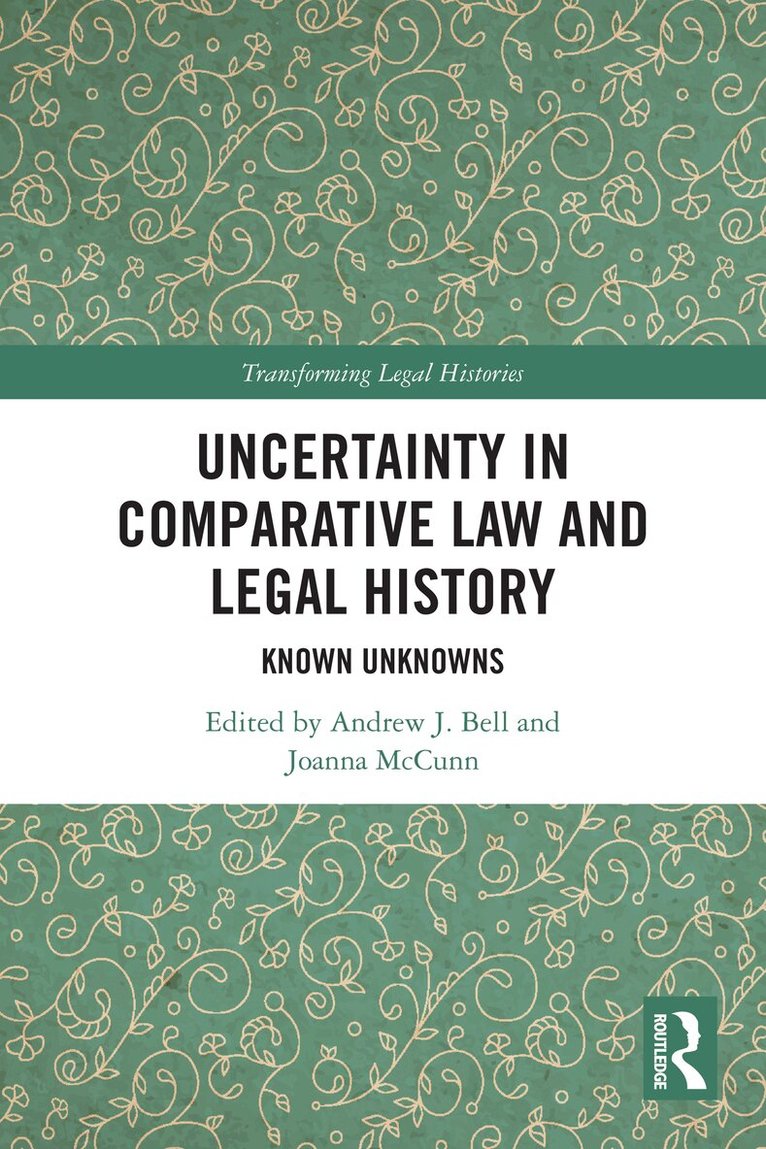
Laws are imposed on facts. But what is the law to do when its rules for establishing facts do not—because they cannot—produce a satisfactory answer? Scenarios that raise this intractable uncertainty problem have been treated as isolated concerns, but are in fact endemic across legal systems. They can cross jurisdictional and doctrinal boundaries, have recurred throughout history, and demand creative thinking from those faced with them. This book explores the law’s understandings of and responses to such situations from a comparative historical perspective. It investigates how the law has framed these most difficult problems of uncertainty; dealt with uncertainty’s often unclear boundaries; and developed a broad range of different responses to solve or avoid it, across doctrine, time, and jurisdiction. The work examines a selection of key uncertainty problems across private law as elements of a singular uncertainty issue endemic in legal systems. This analysis will be of interest to historians and comparatists, but also to doctrinal, theoretical, and other scholars and practitioners. The analysis leaves us better informed and better equipped for dealing with future scenarios where uncertainty arises, including insights beyond national and doctrinal confines.
1 944 kr
Skickas inom 10-15 vardagar
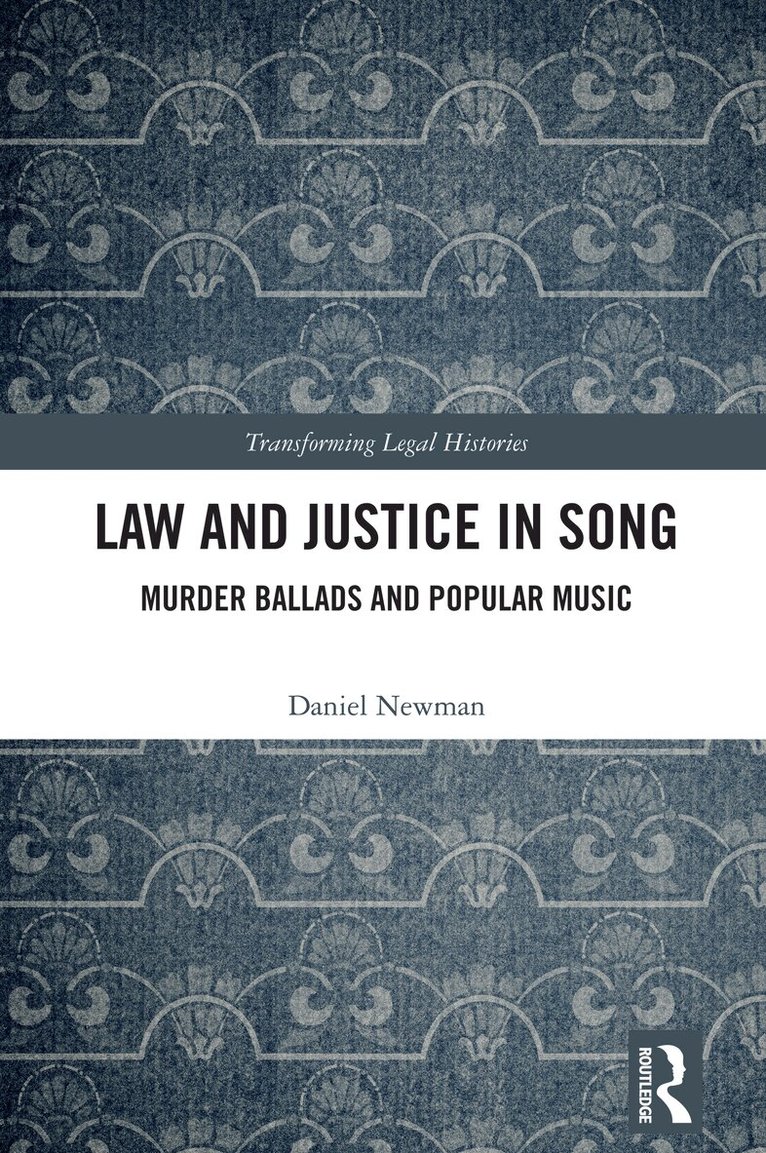
This book examines the murder ballad form, songs about death and killing, from a legal history perspective. It is held that taking on the long history of the murder ballad is a way that we can understand how death and killing in song has a function in dealing with the world around us. The book integrates law and humanities scholarship with diverse musical case studies to construct a typology of murder ballads and thus conceptualise the central messages of how murder ballads have treated death and killing. Drawing on a cultural form in which assessment and consideration of death and killing are so vigorously and richly enacted gives lawyers a guide to how those who do not see these matters through a primarily legal lens might understand this part of their world. The study will be of interest to academics and researchers working in the areas of Criminal Law, Legal History, Socio-Legal Studies, Criminology, and Musicology.