Transitions to Democracy - Böcker
Visar alla böcker i serien Transitions to Democracy. Handla med fri frakt och snabb leverans.
2 produkter
2 produkter
488 kr
Skickas inom 10-15 vardagar
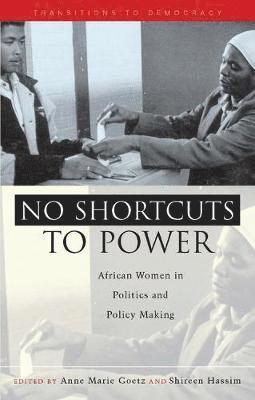
Whatever the other shortcomings of representative democracy in the world today, one issue that remains only partially resolved is the political participation and policy impact of one half of the population -- women. This book examines this question in the context of two countries, South Africa and Uganda, which in this regard have accomplished much more than most (including the Western democracies).How did women achieve some 30% representation in both national and local political institutions in these countries? How far did women's mobilization in civil society play a part? How sustainable are these gains likely to be? And of equal importance, there are the questions around the impact of women politicians on policy. Here the volume examines two litmus test pieces of legislation -- around land in Uganda and gender violence in South Africa. What emerges is that the political routes to increased female participation vary and the solidity of the gains made depends much on the strength of the gender-equity lobby in society at large. What is more, participation does not necessarily translate into effective policy influence enhancing the position and interests of women.
Can Democracy be Designed?
The Politics of Institutional Choice in Conflict-Torn Societies
Häftad, Engelska, 2003
434 kr
Skickas inom 10-15 vardagar
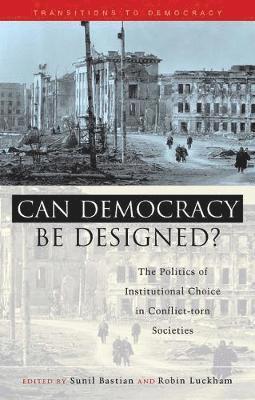
Constitution-making for democracy has always been a highly political and contested process. It has never been more ambitious, or more difficult, than today as politicians and experts attempt to build democratic institutions that will foster peace and stability in countries torn by violent conflict. The extended investigation out of which this book has grown has ranged across three continents. It has examined such apparently intractable cases as Bosnia-Herzegovina, Sri Lanka and Fiji, as well as apparent 'success stories' like South Africa, Ghana and Uganda.The authors, while regarding democracy as a general entitlement, refuse to subscribe to a triumphalist view which sees it as a universal panacea. Instead they seek to understand how democratic institutions actually facilitate (or sometimes fail to facilitate) improved governance and the management of conflict in a variety of national settings.This thoughtful and empirical set of explorations is highly relevant to other societies wrestling with similar problems of institutional design in situations of democratic transition and/or deep-seated social conflict.