Travellers in the Wider Levant – serie
Visar alla böcker i serien Travellers in the Wider Levant. Handla med fri frakt och snabb leverans.
7 produkter
7 produkter
336 kr
Skickas inom 5-8 vardagar
Miss Tully's Letters form a clear and eminently readable narrative of her years in Tripoli and the political situation there in the late 18th c, as well as a unique account of relationships within the harem of the ruler. She and her nieces had free access to the women of the family of the Bashaw (Pasha) and an intimate relationship developed. The Preface to the first edition of 1816, tells us that Miss Tully's nieces had spoken Arabic all their lives, and she herself clearly learned some, but it would still be fascinating to know whether this was the only common language of the harem or whether they also made use of the lingua franca in use at the time. The ruler's wife was a Georgian, his favourite was a local, presumably Arabic-speaking, Jewish woman, his daughters were married to renegade south Italians and the other inmates of the harem were of European, Circassian and possibly Berber origin, together with numerous Africans from various points south of the Sahara. Not much is known of the Tully family and a summary of the little available background is given below.The following notes attempt to provide a historical context for some of the main issues mentioned by Miss Tully: nomad raids, piracy, slaving and famine had been problems on and off for a couple of thousand years.Miss Tully sets down the story of the bitter quarrels among the young Karamanli brothers and their conclusion has been added for the sake of completeness and because of its broader historical interest. The period between the writing of the letters and their publication saw major changes in Europe, among them the French Revolution, the Napoleonic Wars and the abolition of slavery; optimism and the hope of political advance was in the air. The words of the 1816 Preface, explaining why Miss Tully's view of Tripoli is of particular interest, seem to echo a very modern preoccupation: "...the expectation of seeing there a nearer approximation to the enlightened principles of other nations, with regard to the personal rights and liberties of mankind..."
318 kr
Skickas inom 5-8 vardagar
In the year 1400 the princes of Europe sympathetically were much bestirred, fearing the imminent fall of Constantinople and the extinction of the Eastern Empire. The Ottoman Sultan Bazayid (otherwise Bajazet) was already in possession of almost the whole of what subsequently became Turkey in Europe. The Emperor Manuel still was lord of Constantinople, but beyond the city walls possessed a mere strip of territory along the north coast of the Sea of Marmora, and extending to the Black Sea, a strip some fifty miles in length but under thirty in breadth. Four years before (September 1396) an immense composite crusading army under the leadership of the Count of Nevers (a cousin of king Charles VI of France) had marched against the Turks to the support of king Sigismund of Hungary. But the Christians had been completely routed by Sultan Bayazid at Nicopolis on the lower Danube, an immense number of them had been killed, a lesser number made prisoners (who later had to be ransomed at heavy cost), and Europe in terror, the Emperor Manuel now shut up in Constantinople, all were waiting to learn what the Sultan next would do.From their capital established at Brusa the Turkish Sultans, past and present, had fomented many conspiracies at the Imperial Court.The father of Manuel had been the Emperor John Palaologus (1341a'1391) and Manuel's elder brother Andronicus had at an early age been proclaimed Emperor elect.1 In the days of Bayazid's father Sultan Murad (1360 to 1389) his eldest son Savaji had made a conspiracy with Andronicus whereby these two young princes had purposed to dethrone their respective fathers. The conspiracy miscarried, Savaji was put to death which brought his younger brother Bayazid later to be Sultan, and Andronicus (in company with his young son John) was shut up in the Constantinople State prison, the celebrated Tower of the Anemas. As a result Manuel his younger brother then became heira'apparent and coa'Emperor. But in Constantinople after two years the tables were turned by a palace plot. The Emperor John Palaologus and Manuel found themselves in the Anemas Tower, while Andronicus (with John the younger) assumed the purple.Kaleidoscopic changes again ensued; the old Emperor and Manuel after two years' detention managed to make their escape from durance and regained power: Andronicus was outlawed and banished.Later, however, with John the younger, he was established in the government of Selymbria, a city on the Sea of Marmora, a few miles west of Constantinople, and the peace lasted some years.
289 kr
Skickas inom 5-8 vardagar
Odette du Puigaudeau is best known for her major ethnographic work, Arts et Coutumes des Maures, a detailed study, in words and drawings, of the cultural world of the nomads of Mauretania. The present work explains how she came to write it. Barefoot Through Mauretania is an account of her first journey across the country by camel in 1933-4, with her life-long companion, Marion Senones. The book records the adventures of the two women during that year, often with a touch of humour. Above all, however, it presents a picture of a way of life that has, as they feared, almost vanished, and their determination that it should be recorded. Odette du Puigaudeau wrote a number of other books on different aspects of nomad life, such as the salt caravans and date markets, as well as articles on prehistoric rock-drawings, and a charming tribute to her pet leopard, Rachid.
288 kr
Skickas inom 5-8 vardagar
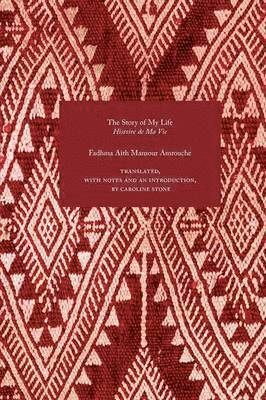
This moving autobiography of a Berber woman from the village of Tizi-Hibel in the Kabilie Mountains of Algeria is unique on a number of levels. Illegitimate, Fadhma Amrouche would have been killed with her mother to preserve the honour of the family, but for the intervention of the French authorities. Because of this, she received an education and eventually married a Christian convert, although they remained closely linked to their families of origin. Her account of battling poverty, illness and exile is a gripping story. Fadhma's fight for an education in a world of almost universal female illiteracy was nothing short of heroic. She and her children moved from the harsh, fixed hierarchies of a traditional Berber village with archaic means of production to become cosmopolitan Parisians. The journey was filled with heartbreak, and Fadhma never overcame her nostalgia for what she had lost, but never doubted that the journey had to be made. Her unassuming narrative throws an unforgettable light on Berber life, women's position in traditional societies and the tensions between governed and governors in the colonial world.
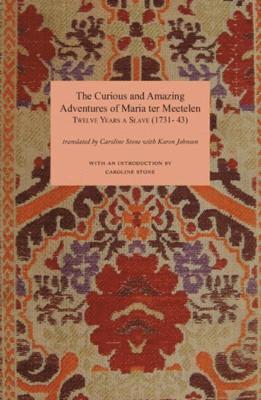
Curious and Amazing Adventures of Maria Ter Meetelen; Twelve Years a Slave, The (1731- 43)
Häftad, Engelska, 2010
260 kr
Skickas inom 5-8 vardagar
"From the age of thirteen I wandered abroad and at twenty-one I decided to take a little trip across France dressed as a man..." Maria ter Meetelen tells the story of her capture by Barbary pirates and twelve years as a slave at Meknes in Morocco. Straightforward and with no literary pretensions, her voice comes down the centuries, robust, clear, personal and often surprising: "I do not complain at having been so far across the world, nor of my twelve years of slavery, nor of the suffering the Turks caused me, I can rise above that. But the spitefulnessand derision that my husband and I suffered from our fellow-countrymen cannot be forgotten, and is impossible for me to set it down here in writing."
336 kr
Skickas inom 5-8 vardagar
In 1608, Roderigo de Vivero, soldier and administrator, set out from Acapulco to take up his post as interim Governor of the Philippines. On the way home, his ship was wrecked off the coast of Japan and he lost everything. While in the Philippines, he had been in communication with the Shogun, Tokugawa Ieyasu, who now treated him as an honoured guest and informal ambassador. Trade, security for the expanding Christian population, mining technology and the problem of Dutch piracy were all discussed. When Vivero left Japan - in a ship built by the Englishman, Will Adams - he took with him the first Japanese trade delegation to the New World. Enormously impressed by Japan and the Japanese, he wrote an account of his stay and a series of 'recommendations' to the King, Philip III of Spain - who, of course, ignored them. This new translation aims to make accessible an account that is unusual for being written by a military man rather than one in Holy Orders, and for bringing an extraordinary number of different civilizations into contact.Short, introductory, pieces to the account itself provide fascinating background information on some of the lesser known aspects of the region and period, including piracy, trade and the introduction of firearms into Japan.
303 kr
Skickas inom 5-8 vardagar
The origins of 'Aladdin' continue to fascinate scholars and readers of the tales. The story is believed to have first been written in French, by Antoine Galland, having been told to him in Paris in 1709 by Hanna Diyab - the author of this travel memoir. Written some five decades after this encounter, 'The Life and Times of Hanna Diyab' is part autobiography and part storytelling, a fascinating record of experiences, cultural observations, international relations, medicine, and hearsay. It traces a journey across land and sea from the author's home in Aleppo - through early eighteenth-century Lebanon, Jabal Druze, Cyprus, Egypt, Libya, Tunis, Livorno, Genoa and Marseille - to Paris in the time of Louis XIV; and the author's return to Aleppo across the 'lands of the East', now Turkey. The Foreword explains how this important translation into English came about and the Introduction provides background to some of the features of the memoir, including the Maronite Christian community of the period, the consular system of the Republics of Venice and Genoa, the role of Ottoman ambassadors, and of the French merchant, naturalist and traveller, Paul Lucas. Notes at the end of the book also help the non-specialist reader, and there are two bibliographies.