Under the Sign of Nature: Studies in Ecocriticism – serie
Visar alla böcker i serien Under the Sign of Nature: Studies in Ecocriticism. Handla med fri frakt och snabb leverans.
10 produkter
10 produkter
931 kr
Skickas inom 10-15 vardagar
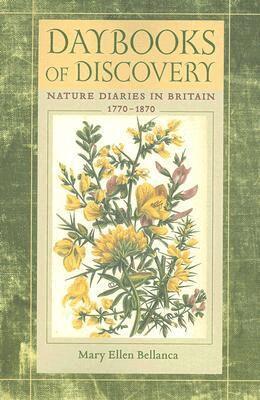
Rooted in a thriving culture of amateur natural history, the keeping of nature journals and diaries flourished in late-eighteenth-and early-nineteenth-century Britain. As prescientific worldviews ceded to a more materialist outlook informed by an explosion of factual knowledge, lovers of nature both famous and obscure began to use daily composition as a quest for information about and a celebration of their surroundings. A central site of encounter, discovery, and expression, nature diaries took part in a vigorous cultural dialogue, performing, in an era called the ""golden age"" of nature writing, an engaging alchemy of language, science, and art. In ""Daybooks of Discovery: Nature Diaries in Britain, 1770-1870"", Mary Ellen Bellanca offers the first critical study of this genre. In looking at the diaries of Gilbert White, Dorothy Wordsworth, Emily Shore, George Eliot, and Gerard Manley Hopkins, as well as those of lesser-known figures, she explores the writers' pursuit of empirical knowledge of nature for its own sake, rather than focusing on Romantic nature philosophy or on 'ecology' as a metaphor for spiritual connectedness. Each chapter situates an individual author's journals amid contemporary discourses of natural history, examining how journal writing enabled and mediated the diarist's practice as naturalist. A melange of fact, narrative, and imaginative re-creation, the nature diary played a crucial role in literature and science in a period of burgeoning knowledge about the natural world. For students and scholars of environmental history, the history of science, ecocriticism, and Victorian studies, ""Daybooks of Discovery"" will prove an essential tool for understanding this distinct genre.
341 kr
Skickas inom 7-10 vardagar
Rooted in a thriving culture of amateur natural history, the keeping of nature journals and diaries flourished in late-eighteenth-and early-nineteenth-century Britain. As prescientific worldviews ceded to a more materialist outlook informed by an explosion of factual knowledge, lovers of nature both famous and obscure began to use daily composition as a quest for information about and a celebration of their surroundings. A central site of encounter, discovery, and expression, nature diaries took part in a vigorous cultural dialogue, performing, in an era called the ""golden age"" of nature writing, an engaging alchemy of language, science, and art. In ""Daybooks of Discovery: Nature Diaries in Britain, 1770-1870"", Mary Ellen Bellanca offers the first critical study of this genre. In looking at the diaries of Gilbert White, Dorothy Wordsworth, Emily Shore, George Eliot, and Gerard Manley Hopkins, as well as those of lesser-known figures, she explores the writers' pursuit of empirical knowledge of nature for its own sake, rather than focusing on Romantic nature philosophy or on 'ecology' as a metaphor for spiritual connectedness. Each chapter situates an individual author's journals amid contemporary discourses of natural history, examining how journal writing enabled and mediated the diarist's practice as naturalist. A melange of fact, narrative, and imaginative re-creation, the nature diary played a crucial role in literature and science in a period of burgeoning knowledge about the natural world. For students and scholars of environmental history, the history of science, ecocriticism, and Victorian studies, ""Daybooks of Discovery"" will prove an essential tool for understanding this distinct genre.
863 kr
Skickas inom 10-15 vardagar
435 kr
Skickas inom 10-15 vardagar
Postcolonial Green brings together scholarship bridging ecocriticism and postcolonialism. Since its inception, ecocriticism has been accused of being inattentive to the complexities that colonialism poses for ideas of nature and environmentalism. Postcolonial discourse, on the other hand, has been so immersed in theoretical questions of nationalism and identity that it has been seen as ignoring environmental or ecological concerns. This collection demonstrates that ecocriticism and postcolonialism must be understood as parallel projects if not facets of the very same project―a struggle for global justice and sustainability.The essays in this collection span the globe, and cover such issues as international environmental policy, land and water rights, food production, poverty, women’s rights, indigenous activism, and ecotourism. They consider all manner of texts, from oral tradition to literary fiction to web discourse. Contributors bring postcolonial theory to literary traditions, such as that of the United States, not typically seen in this light, and, conversely, bring ecocriticism to literary traditions, such as those of India and China, that have seen little ecological analysis. Postcolonial Green boasts a global geographical breadth, diversity of critical approach, and increasing relevance to the issues we face on a world stage.
405 kr
Skickas inom 10-15 vardagar
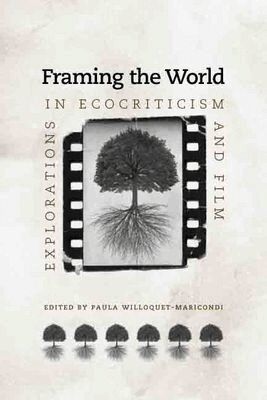
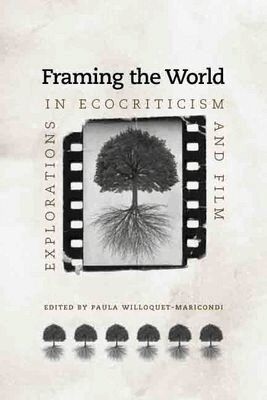
The essays in this collection make a contribution to the greening of film studies and expand the scope of ecocriticism as a discipline traditionally rooted in literary studies. In addition to highlighting particular films as productive tools for raising awareness and educating us about environmental issues, Framing the World: Explorations in Ecocriticism and Film encourages its readers to become more ecologically minded viewers, sensitive to the ways in which films reflect, shape, reinforce, and challenge our perceptions of nature, of human/nature relations, and of environmental issues.The contributors to this volume offer in-depth analyses of a broad range of films, including fictional and documentary, Hollywood and independent, domestic and foreign, experimental and indigenous. Drawing from disciplines including film theory, ecocriticism, philosophy, rhetoric, environmental justice, and American and Indigenous studies, Framing the World offers new and original approaches to the ecocritical study of cinema. The twelve essays are gathered in four parts, focusing on ecocinema as activist cinema; the representation of environmental justice issues in Hollywood, independent, and foreign films; the representation of animals, ecosystems, and natural and human-made landscapes in live action and animation; and ecological themes in the films of two eco-auteurs, Kiyoshi Kurosawa and Peter Greenaway. Willoquet-Maricondi’s introduction provides an overview of the field of ecocriticism and offers both philosophical and theoretical foundations for the ecocritical study of films.
408 kr
Skickas inom 10-15 vardagar
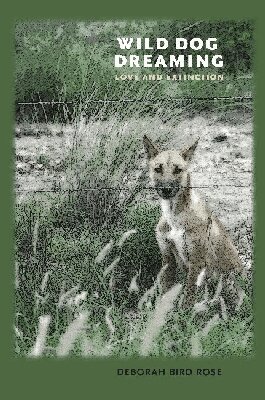
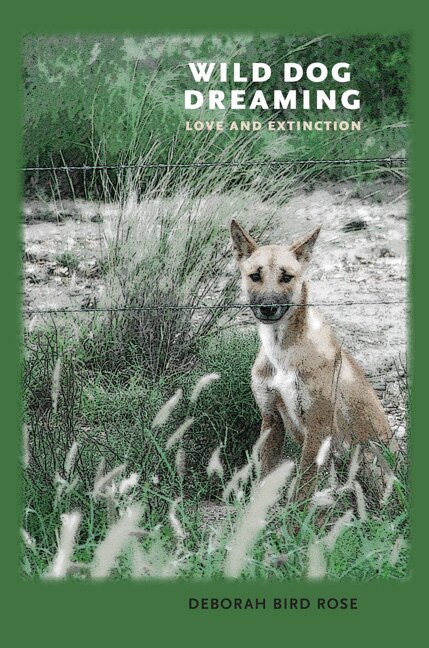
We are living in the midst of the Earth’s sixth great extinction event, the first one caused by a single species: our own. In Wild Dog Dreaming, Deborah Bird Rose explores what constitutes an ethical relationship with nonhuman others in this era of loss. She asks, Who are we, as a species? How do we fit into the Earth’s systems? Amidst so much change, how do we find our way into new stories to guide us? Rose explores these questions in the form of a dialogue between science and the humanities. Drawing on her conversations with Aboriginal people, for whom questions of extinction are up-close and very personal, Rose develops a mode of exposition that is dialogical, philosophical, and open-ended.An inspiration for Rose—and a touchstone throughout her book—is the endangered dingo of Australia. The dingo is not the first animal to face extinction, but its story is particularly disturbing because the threat to its future is being actively engineered by humans. The brazenness with which the dingo is being wiped out sheds valuable, and chilling, light on the likely fate of countless other animal and plant species."People save what they love," observed Michael Soulé, the great conservation biologist. We must ask whether we, as humans, are capable of loving—and therefore capable of caring for—the animals and plants that are disappearing in a cascade of extinctions. Wild Dog Dreaming engages this question, and the result is a bold account of the entangled ethics of love, contingency, and desire.
1 069 kr
Skickas inom 10-15 vardagar
Offers a comprehensive collection of sophisticated but accessible essays that productively investigate the relationship between European theory and ecocritique. Bringing together approaches and orientations based on the work of European philosophers and cultural theorists, this volume is designed to open new pathways for ecocritical theory and practice in the twenty-first century.
531 kr
Skickas inom 10-15 vardagar
One of the more frequently lodged, serious, and justifiable complaints about ecocritical work is that it is insufficiently theorised. Ecocritical Theory puts such claims decisively to rest by offering readers a comprehensive collection of sophisticated but accessible essays that productively investigate the relationship between European theory and ecocritique. With its international roster of contributors and subjects, it also militates against the parochialism of ecocritics who work within the limited canon of the American West. Bringing together approaches and orientations based on the work of European philosophers and cultural theorists, this volume is designed to open new pathways for ecocritical theory and practice in the twenty-first century.
234 kr
Skickas inom 10-15 vardagar
We are living in the midst of the Earth’s sixth great extinction event, the first one caused by a single species: our own. In Wild Dog Dreaming, Deborah Bird Rose explores what constitutes an ethical relationship with nonhuman others in this era of loss. She asks, Who are we, as a species? How do we fit into the Earth’s systems? Amidst so much change, how do we find our way into new stories to guide us? Rose explores these questions in the form of a dialogue between science and the humanities. Drawing on her conversations with Aboriginal people, for whom questions of extinction are up-close and very personal, Rose develops a mode of exposition that is dialogical, philosophical, and open-ended.An inspiration for Rose—and a touchstone throughout her book—is the endangered dingo of Australia. The dingo is not the first animal to face extinction, but its story is particularly disturbing because the threat to its future is being actively engineered by humans. The brazenness with which the dingo is being wiped out sheds valuable, and chilling, light on the likely fate of countless other animal and plant species.""People save what they love,"" observed Michael Soulé, the great conservation biologist. We must ask whether we, as humans, are capable of loving—and therefore capable of caring for—the animals and plants that are disappearing in a cascade of extinctions. Wild Dog Dreaming engages this question, and the result is a bold account of the entangled ethics of love, contingency, and desire.
402 kr
Skickas inom 7-10 vardagar
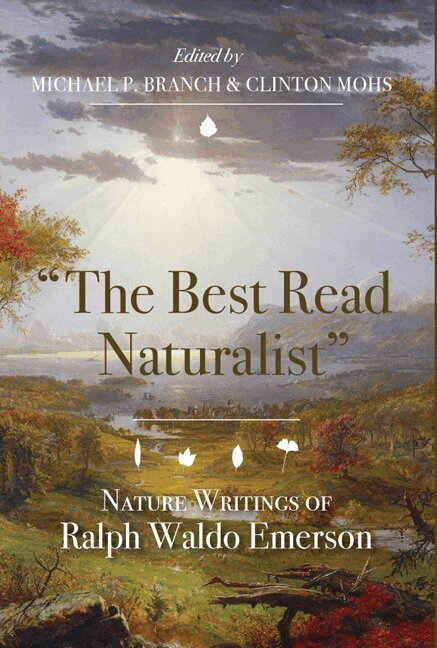
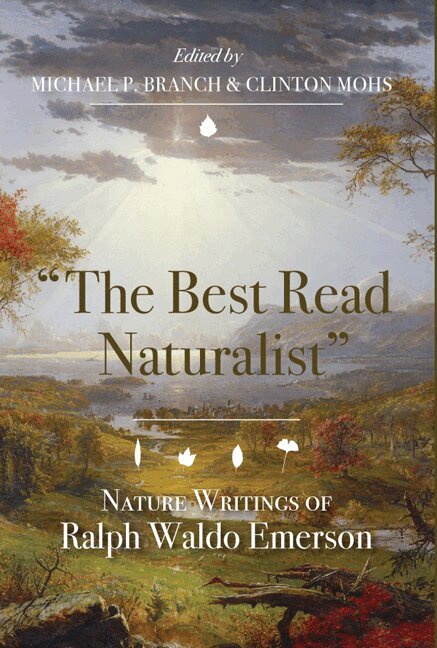
Ralph Waldo Emerson is one of the most important figures in American nature writing, yet until now readers have had no book devoted to this central theme in his work. The Best Read Naturalist fills this lacuna, placing several of Emerson’s lesser-known pieces of nature writing in conversation with his canonical essays. Organized chronologically, the thirteen selections—made up of sermons, lectures, addresses, and essays—reveal an engagement with natural history that spanned Emerson’s career. As we watch him grapple with what he called the “book of nature,” a more environmentally connected thinker emerges—a “green” Emerson deeply concerned with the physical world and fascinated with the ability of science to reveal a correspondence between the order of nature and that of the mind. The Best Read Naturalist illuminates the vital influence that the study of natural history had on the development of Emerson’s mature philosophy.