Undergraduate Texts in Contemporary Physics - Böcker
Visar alla böcker i serien Undergraduate Texts in Contemporary Physics. Handla med fri frakt och snabb leverans.
10 produkter
10 produkter
533 kr
Skickas inom 10-15 vardagar
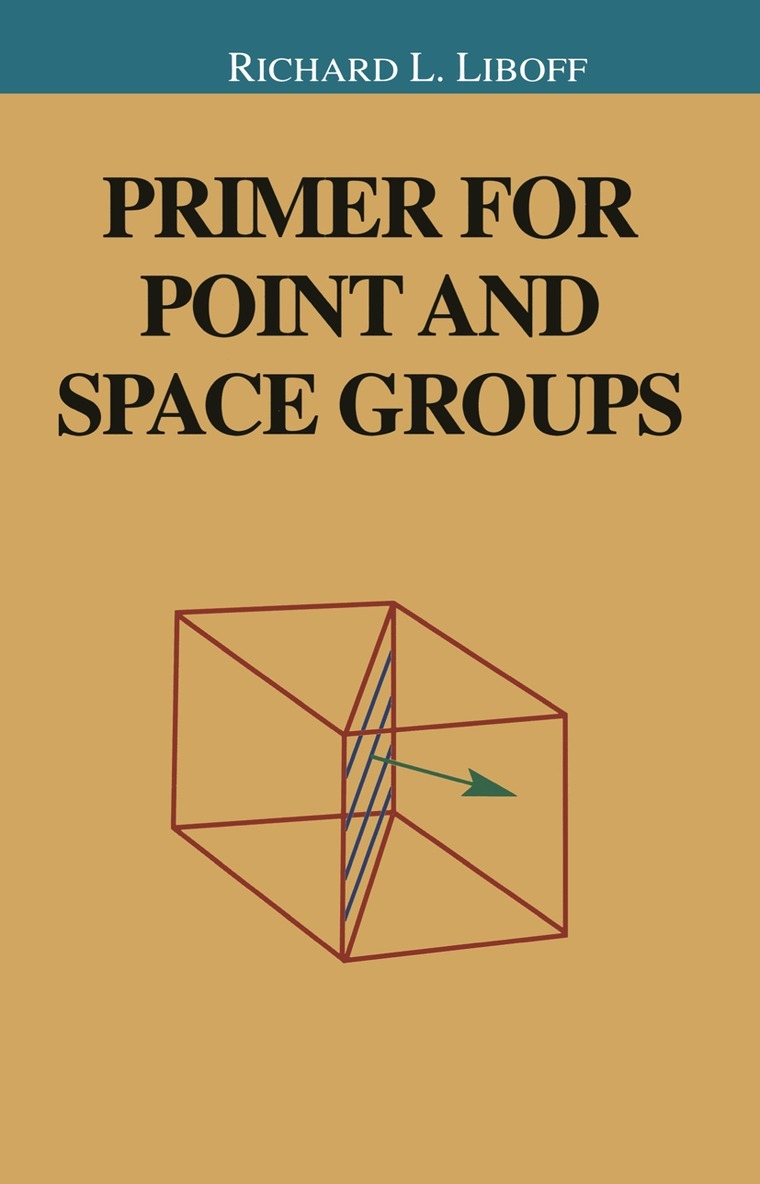
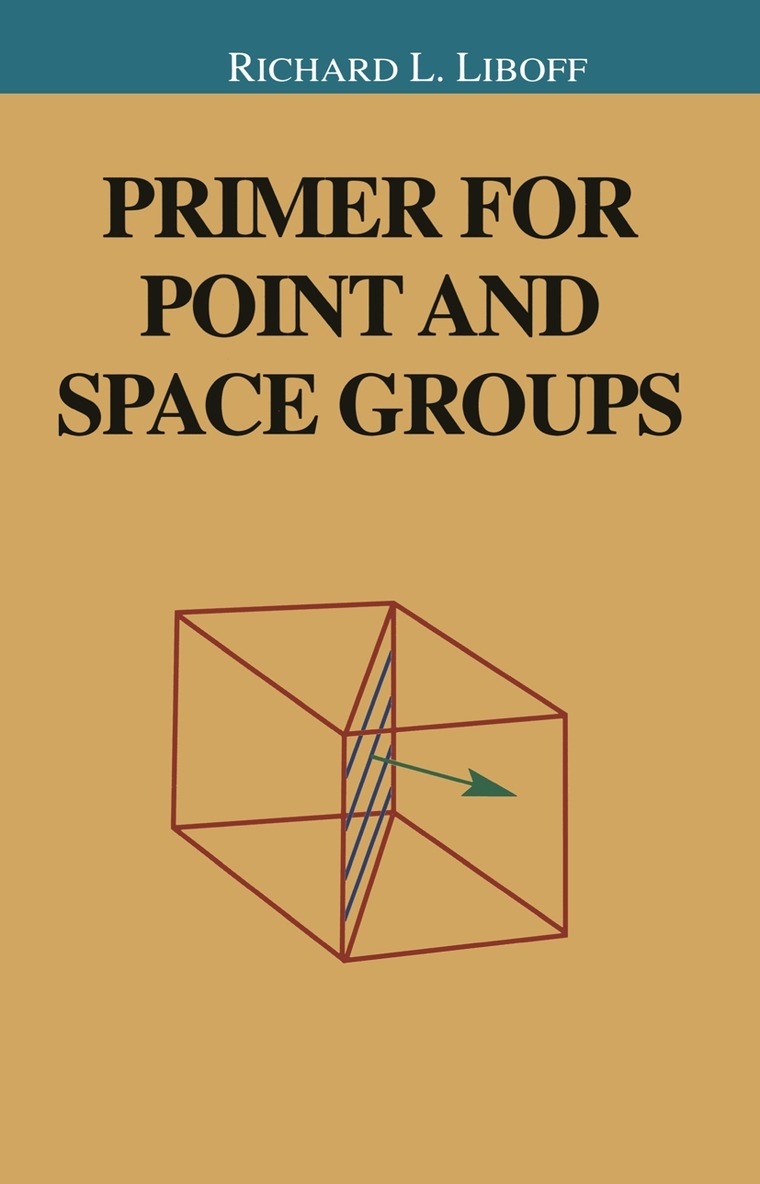
Written in the spirit of Liboff's acclaimed text on Quantum Mechanics, this introduction to group theory offers an exceptionally clear presentation with a good sense of what to explain, which examples are most appropriate, and when to give a counter-example. Primer for Point and Space Groups is an ideal introductory text for undergraduates in physics, engineering, materials science, and chemistry. It should also provide a good background for those students who go on to use group theory in such applications as nuclear and particle physics. Liboff covers the standard topics, but in a way that allows students to see the physical implications of the defined concept. Among the many introductions to group theory pitched at the undergraduate level, few can match this text for the logic and lucidity of its presentation.
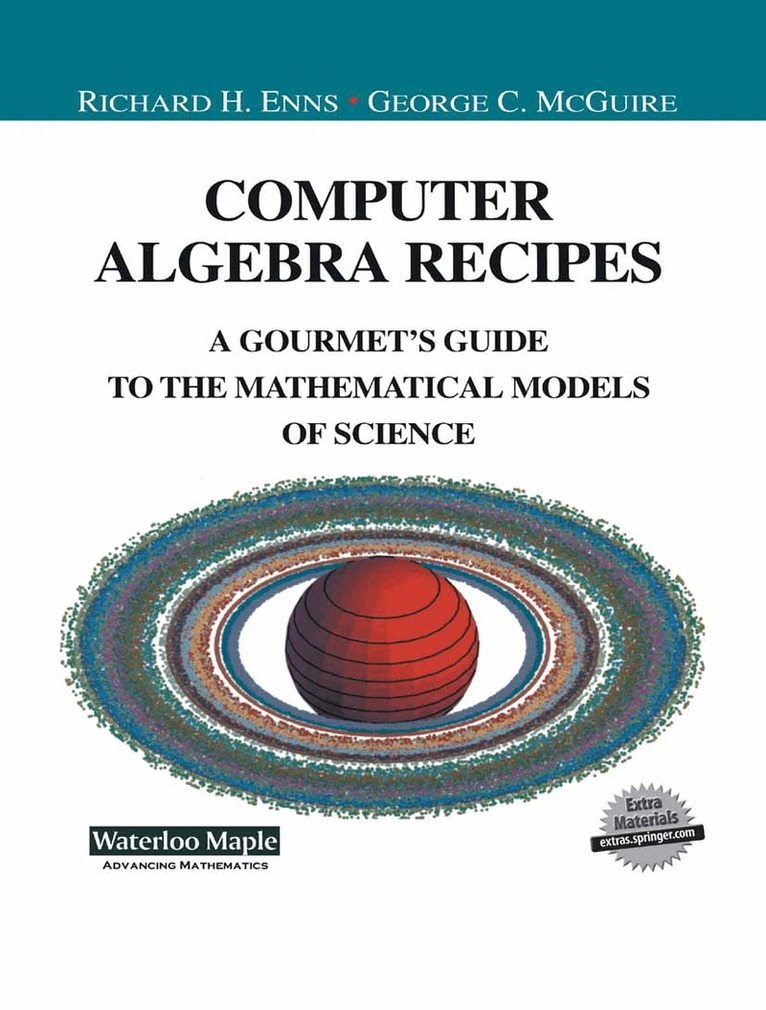
Computer Algebra Recipes
A Gourmet’s Guide to the Mathematical Models of Science
Inbunden, Engelska, 2001
1 059 kr
Skickas inom 10-15 vardagar
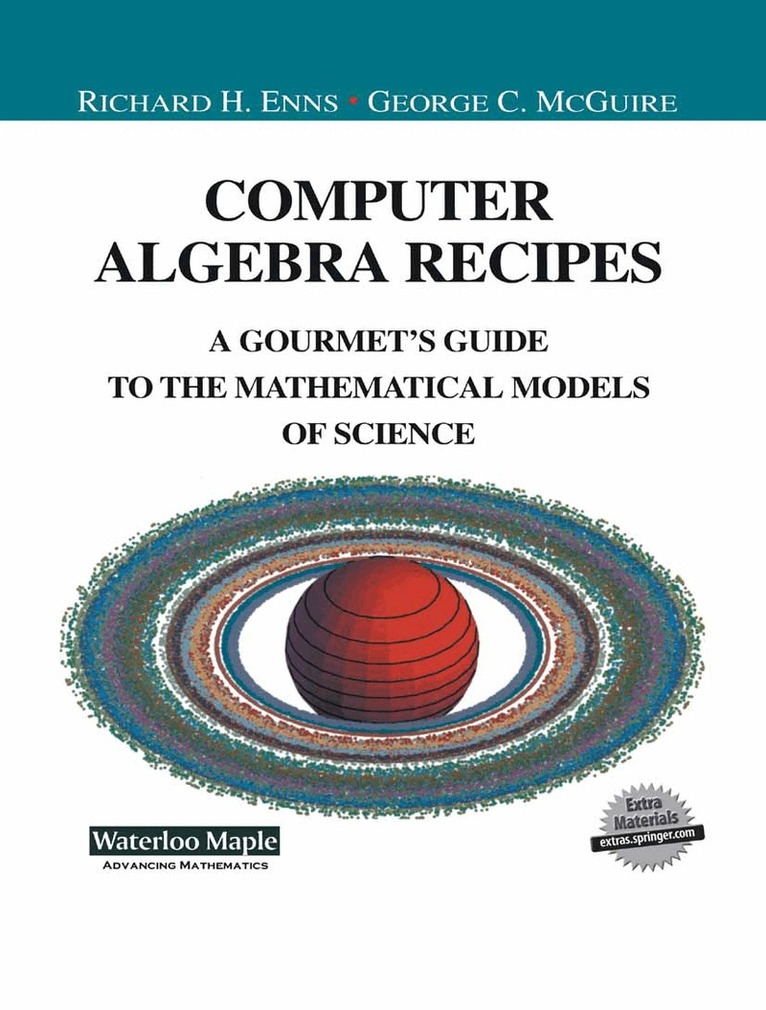
Computer algebra systems have the potential to revolutionize the teaching of and learning of science. Not only can students work thorough mathematical models much more efficiently and with fewer errors than with pencil and paper, they can also work with much more complex and computationally intensive models. Thus, for example, in studying the flight of a golf ball, students can begin with the simple parabolic trajectory, but then add the effects of lift and drag, of winds, and of spin. Not only can the program provide analytic solutions in some cases, it can also produce numerical solutions and graphic displays. Aimed at undergraduates in their second or third year, this book is filled with examples from a wide variety of disciplines, including biology, economics, medicine, engineering, game theory, physics, chemistry. The text is organized along a spiral, revisiting general topics such as graphics, symbolic computation, and numerical simulation in greater detail and more depth at each turn of the spiral. The heart of the text is a large number of computer algebra recipes.These have been designed not only to provide tools for problem solving, but also to stimulate the reader's imagination. Associated with each recipe is a scientific model or method and a story that leads the reader through steps of the recipe. The recipes are also included on the CD-ROM enclosed with the book. Each section of recipes is followed by a set of problems that readers can use to check their understanding or to develop the topic further.
533 kr
Skickas inom 10-15 vardagar
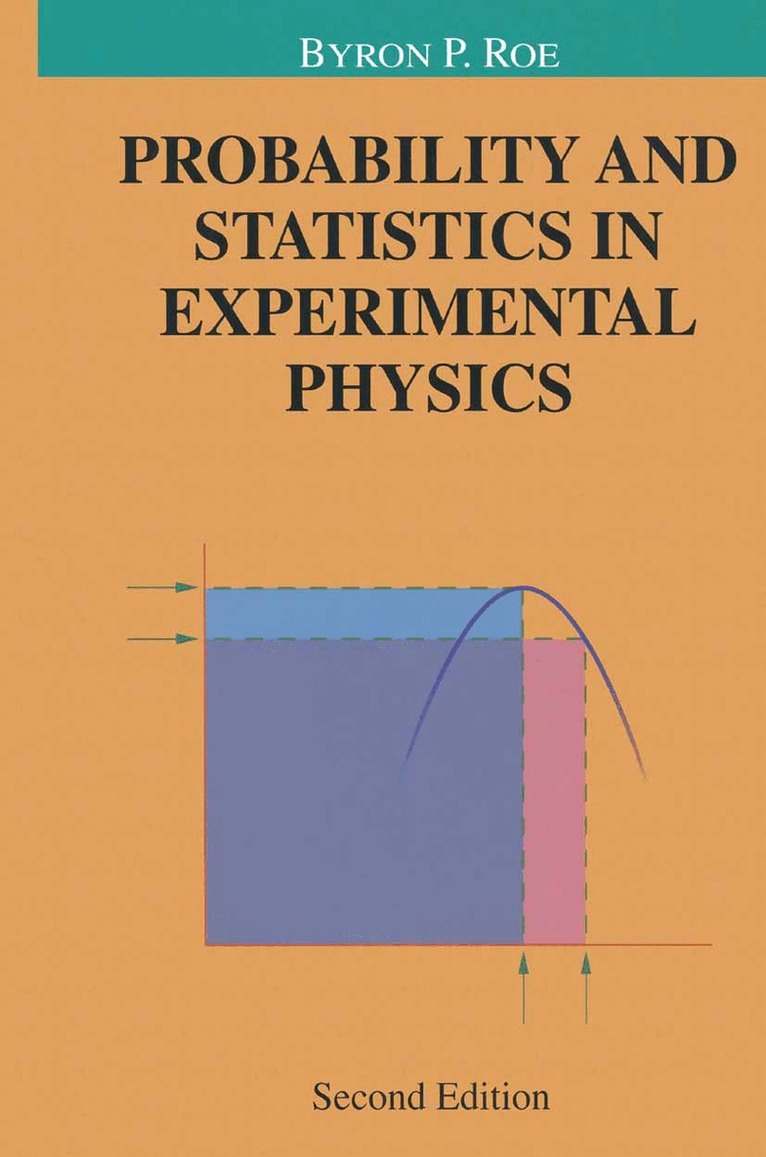
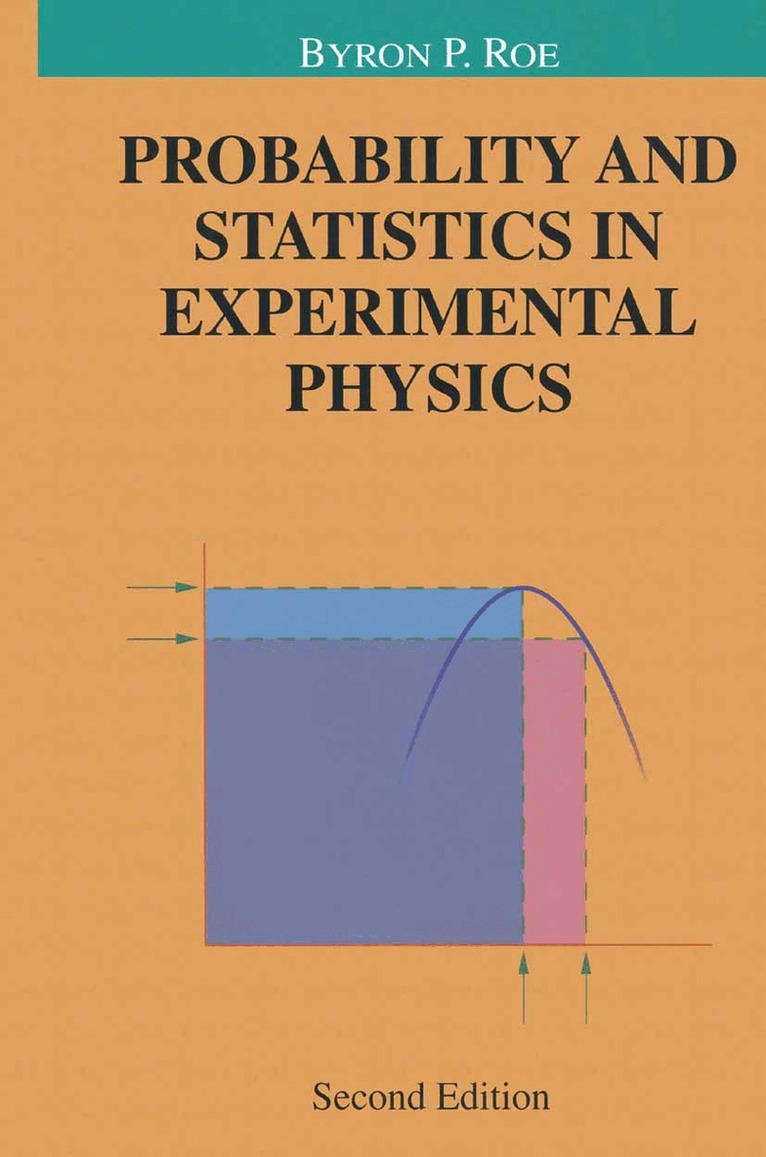
Intended for advanced undergraduates and graduate students, this book is a practical guide to the use of probability and statistics in experimental physics. The emphasis is on applications and understanding, on theorems and techniques actually used in research. The text is not a comprehensive text in probability and statistics; proofs are sometimes omitted if they do not contribute to intuition in understanding the theorem. The problems, some with worked solutions, introduce the student to the use of computers; occasional reference is made to routines available in the CERN library, but other systems, such as Maple, can also be used. Topics covered include: basic concepts; definitions; some simple results independent of specific distributions; discrete distributions; the normal and other continuous distributions; generating and characteristic functions; the Monte Carlo method and computer simulations; multi-dimensional distributions; the central limit theorem; inverse probability and confidence belts; estimation methods; curve fitting and likelihood ratios; interpolating functions; fitting data with constraints; robust estimation methods. This second edition introduces a new method for dealing with small samples, such as may arise in search experiments, when the data are of low probability. It also includes a new chapter on queuing problems (including a simple, but useful buffer length example). In addition new sections discuss over- and under-coverage using confidence belts, the extended maximum-likelihood method, the use of confidence belts for discrete distributions, estimation of correlation coefficients, and the effective variance method for fitting y = f(x) when both x and y have measurement errors.
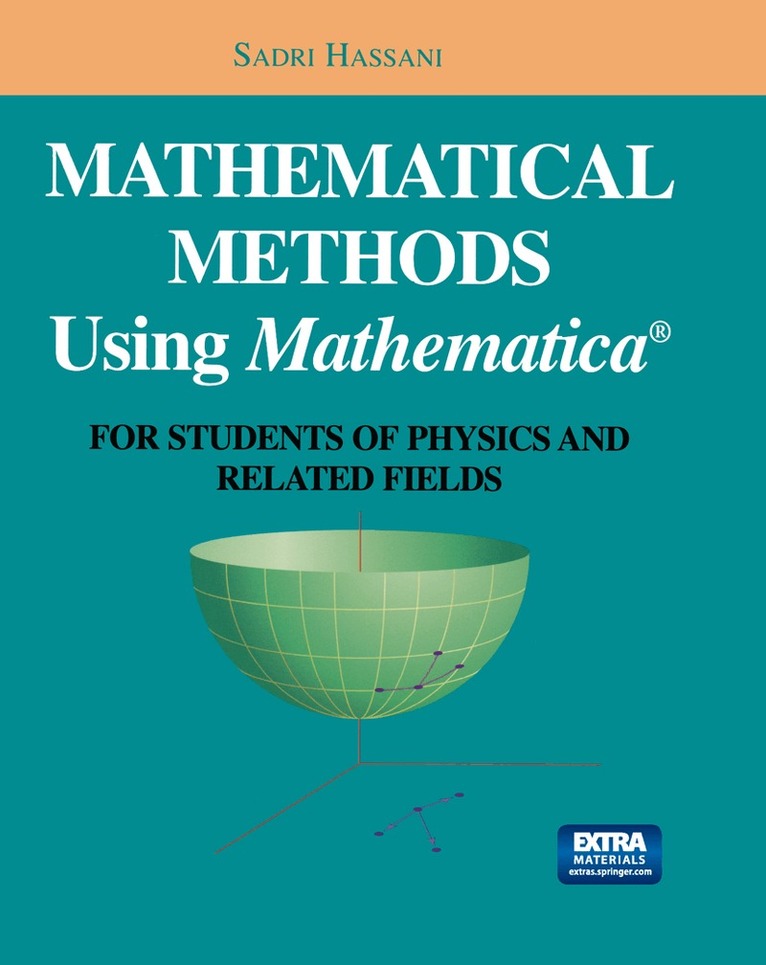
Mathematical Methods Using Mathematica®
For Students of Physics and Related Fields
Häftad, Engelska, 2003
549 kr
Skickas inom 10-15 vardagar
Intended as a companion for textbooks in mathematical methods for science and engineering, this book presents a large number of numerical topics and exercises together with discussions of methods for solving such problems using Mathematica. The accompanying CD contains Mathematica Notebooks for illustrating most of the topics in the text and for solving problems in mathematical physics. Although it is primarily designed for use with the author's "Mathematical Methods: For Students of Physics and Related Fields," the discussions in the book sufficiently self-contained that the book can be used as a supplement to any of the standard textbooks in mathematical methods for undergraduate students of physical sciences or engineering.
480 kr
Skickas inom 10-15 vardagar
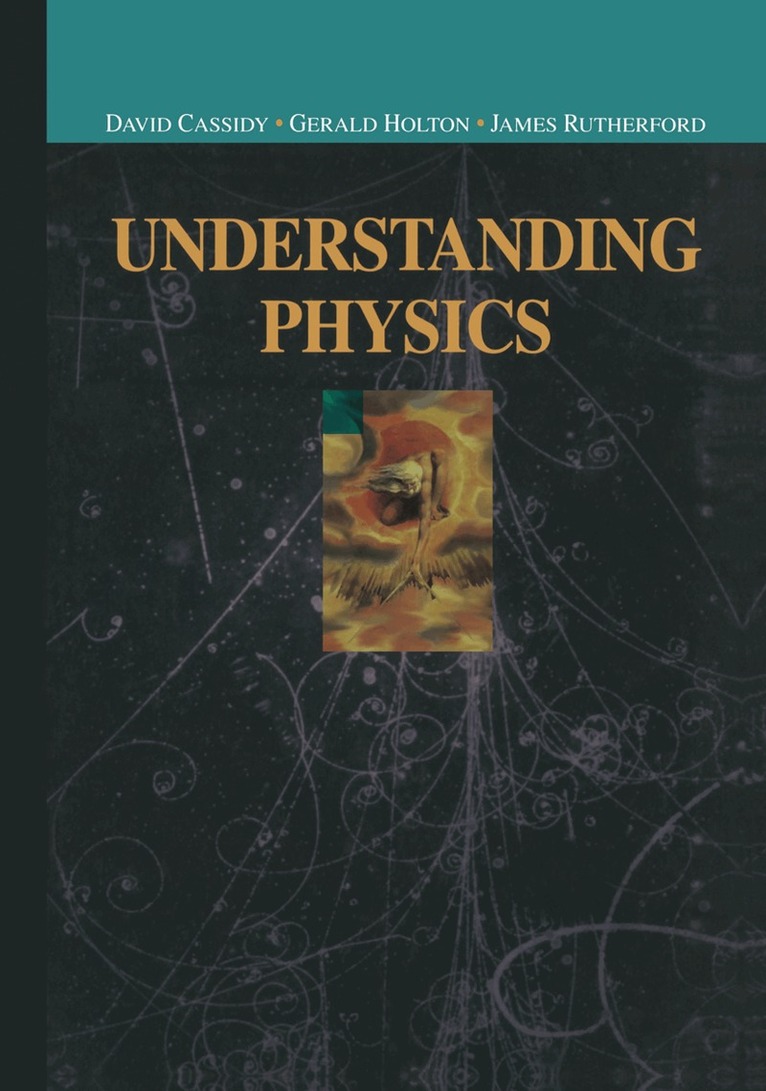
Understanding Physics is an innovative undergraduate course designed for students preparing to enter careers in fields outside of science or engineering, including students planning to teach, or already teaching, in K-12 classrooms. It is inspired by the famous Project Physics Course, which became known for placing the concepts of physics within the broader humanistic contexts in which they arose. The course materials comprise * The textbook, which is divided into two parts that may be studied in either order * This Student Guide, containing inquiry-based laboratory investigations and additional materials * An Instructor Guide with examination questions, resources, and other helpful information These components work together to provide an integrated educational experience in physics. The text contains questions designed to help students confirm what they have learned and to encourage them to explore further, by reading, by experimenting, and in group discussions.The inquiry-based laboratory investigations include in-depth explorations, student-designed inquiries, and text-related mini- laboratory explorations that may be used as hands-on activities or as demonstrations with student participation. The suggested equipment is deliberately "low tech" in order to afford students maximum experience with the phenomena. The apparatus is inexpensive and common to most instructional laboratories. Some ways to incorporate computer usage are suggested as students gain familiarity with the laboratory apparatus and methods.
901 kr
Skickas inom 10-15 vardagar
Understanding Physics provides a thorough grounding in contemporary physics while placing physics into its social and historical context. Based in large part on the highly respected Project Physics Course developed by two of the authors, it also integrates the results of recent pedagogical research. The text thus: - teaches about the basic phenomena in the physical world and the concepts developed to explain them - shows that science is a rational human endeavor with a long and continuing tradition, involving many different cultures and people - develops facility in critical thinking, reasoned argumentation, evaluation of evidence, mathematical modeling, and ethical values The treatment emphasizes not only what we know but also how we know it, why we believe it, and what effects that knowledge has: - Why do we believe the Earth and planets revolve around the Sun? - Why do we believe that matter is made of atoms? - How do relativity theory and quantum mechanics alter our conception of Nature and in what ways do they leave the classical concepts unchanged? - What impact does the knowledge of finite energy resources have on our society?- How have applications of fundamental science (such as the steam engine, the laser, the electric generator, the transistor) affected our lives? - How does the evidence for non-scientific ideas, such as UFOs, ESP, and the like, differ from the evidence for accepted scientific results?
1 176 kr
Skickas inom 5-8 vardagar
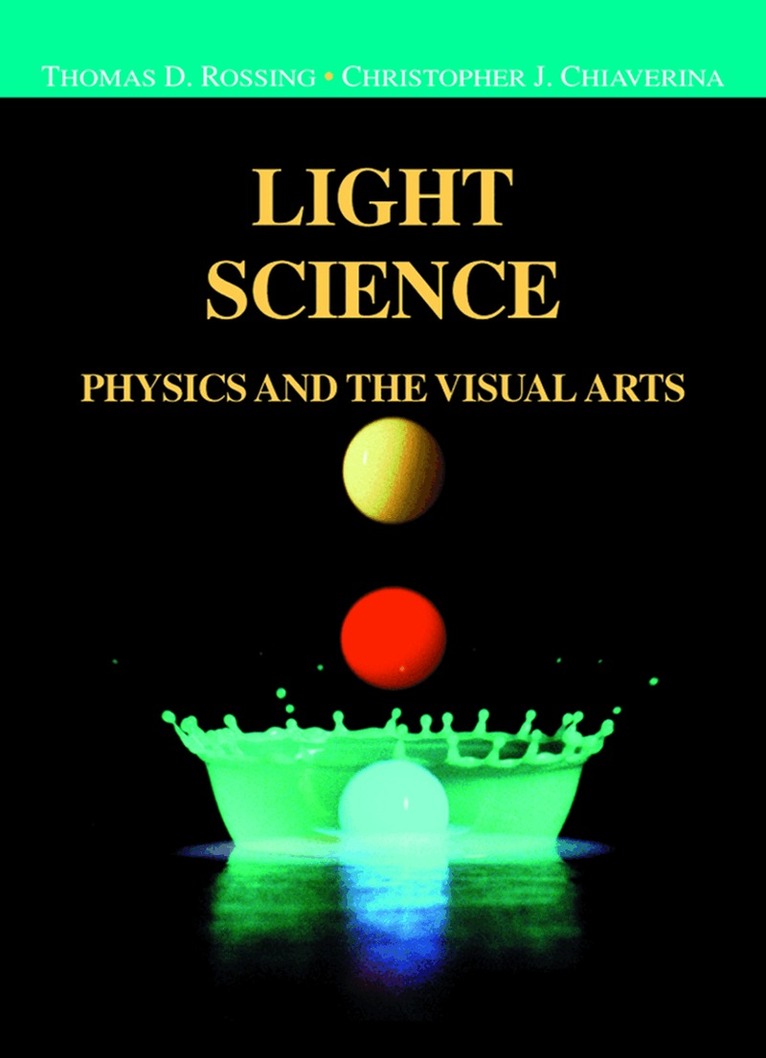
Visual arts depend on light to communicate, and an understanding of the physical properties of light and color should enhance the communication for both the artist and the viewer.This book is intended for students in the visual arts and for others with an interest in art, but with no prior knowledge of physics. It presents the science of light - that is, the science behind what and how we see. The approach emphasizes phenomena rather than mathematical theories and the joy of discovery rather than the drudgery of derivations - the opposite of "heavy science".The text includes numerous problems, questions for discussion, and suggestions for simple experiments. It considers such questions as- why is the sky blue?- what is the nature of light?- how do mirrors and prisms affect the color of light?- how do compact disks work?- what can visual illusions tell us about the nature of perception. And it discusses such topics as: the optics of the eye and camera; the physiology of the eye and the nature of color vision; the different kinds of sources of light; photography and holography; symmetry in art and nature; color in printing and painting; computer imaging and processing.
534 kr
Skickas inom 10-15 vardagar
This text stems from a course I have taught a number of times, attended by students of material science, electrical engineering, physics, chemistry, physical chemistry and applied mathematics. It is intended as an intro ductory discourse to give the reader a first encounter with group theory. The work concentrates on point and space groups as these groups have the principal application in technology. Here is an outline of the salient features of the chapters. In Chapter 1, basic notions and definitions are introduced including that of Abelian groups, cyclic groups, Sylow's theorems, Lagrange's subgroup theorem and the rearrangement theorem. In Chapter 2, the concepts of classes and direct products are discussed. Applications of point groups to the Platonic solids and non-regular dual polyhedra are described. In Chapter 3, matrix representation of operators are introduced leading to the notion of irreducible representations ('irreps'). The Great Orthogonal ity Theorem (GOT) is also introduced, followed by six important rules relating to dimensions of irreps. Schur's lemma and character tables are described. Applications to quantum mechanics are discussed in Chapter 4 including descriptions of the rotation groups in two and three dimensions, the symmetric group, Cayley's theorem and Young diagrams. The relation of degeneracy of a quantum state of a system to dimensions of irreps of the group of symmetries of the system are discussed, as well as the basis properties of related eigenfunctions.
534 kr
Skickas inom 10-15 vardagar
Intended for advanced undergraduates and graduate students, this book is a practical guide to the use of probability and statistics in experimental physics. The emphasis is on applications and understanding, on theorems and techniques actually used in research. The text is not a comprehensive text in probability and statistics; proofs are sometimes omitted if they do not contribute to intuition in understanding the theorem. The problems, some with worked solutions, introduce the student to the use of computers; occasional reference is made to routines available in the CERN library, but other systems, such as Maple, can also be used. Topics covered include: basic concepts; definitions; some simple results independent of specific distributions; discrete distributions; the normal and other continuous distributions; generating and characteristic functions; the Monte Carlo method and computer simulations; multi-dimensional distributions; the central limit theorem; inverse probability and confidence belts; estimation methods; curve fitting and likelihood ratios; interpolating functions; fitting data with constraints; robust estimation methods. This second edition introduces a new method for dealing with small samples, such as may arise in search experiments, when the data are of low probability. It also includes a new chapter on queuing problems (including a simple, but useful buffer length example). In addition new sections discuss over- and under-coverage using confidence belts, the extended maximum-likelihood method, the use of confidence belts for discrete distributions, estimation of correlation coefficients, and the effective variance method for fitting y = f(x) when both x and y have measurement errors.
Computer Algebra Recipes
A Gourmet’s Guide to the Mathematical Models of Science
Häftad, Engelska, 2013
534 kr
Skickas inom 10-15 vardagar
Computer algebra systems have the potential to revolutionize the teaching of and learning of science. Not only can students work thorough mathematical models much more efficiently and with fewer errors than with pencil and paper, they can also work with much more complex and computationally intensive models. Thus, for example, in studying the flight of a golf ball, students can begin with the simple parabolic trajectory, but then add the effects of lift and drag, of winds, and of spin. Not only can the program provide analytic solutions in some cases, it can also produce numerical solutions and graphic displays. Aimed at undergraduates in their second or third year, this book is filled with examples from a wide variety of disciplines, including biology, economics, medicine, engineering, game theory, physics, chemistry. The text is organized along a spiral, revisiting general topics such as graphics, symbolic computation, and numerical simulation in greater detail and more depth at each turn of the spiral.The heart of the text is a large number of computer algebra recipes. These have been designed not only to provide tools for problem solving, but also to stimulate the reader's imagination. Associated with each recipe is a scientific model or method and a story that leads the reader through steps of the recipe. Each section of recipes is followed by a set of problems that readers can use to check their understanding or to develop the topic further.