United States and the Americas – serie
Visar alla böcker i serien United States and the Americas. Handla med fri frakt och snabb leverans.
20 produkter
20 produkter
Häftad, Engelska, 1991
511 kr
Skickas inom 5-8 vardagar
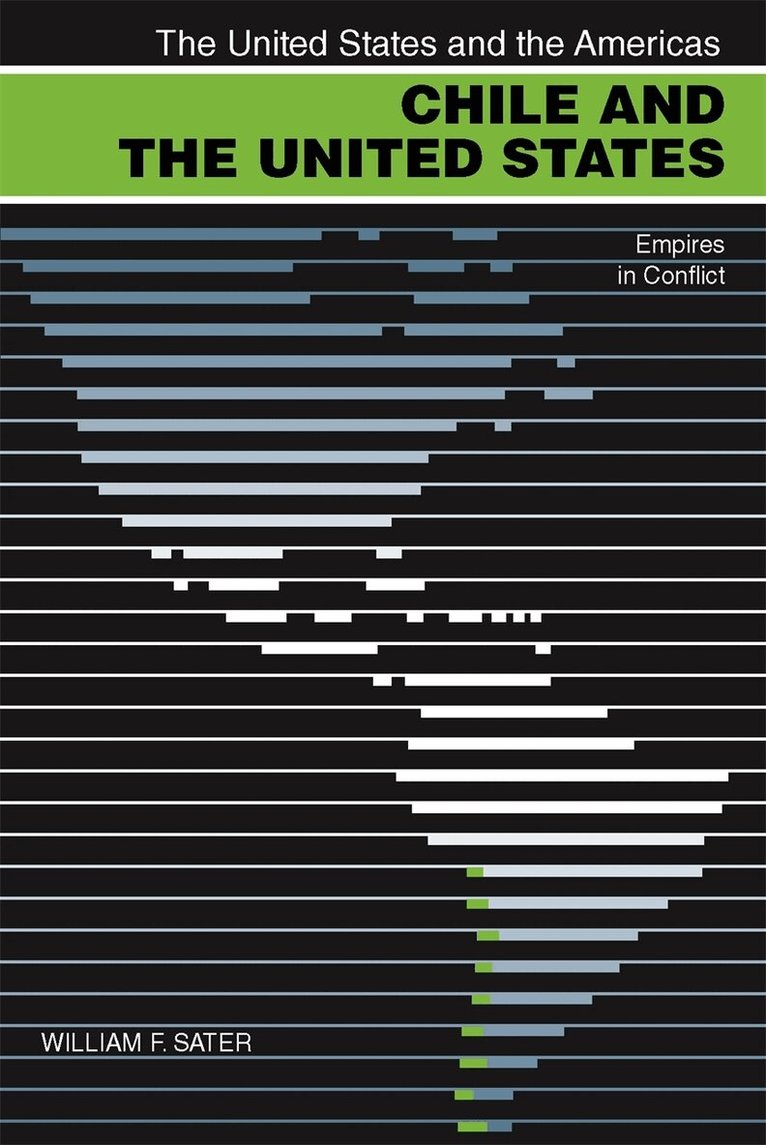
From virtually the onset of its independence in the early nineteenth century, Chile took a superior attitude toward its racially mixed and less organized neighbors. This stance was not unlike that of another young republic in the hemisphere: the United States. With their relatively stable governments and prosperous economies, the two countries claimed amoral right to impose their will on nearby nations. Given this shared imperial impulse, it is not surprising that they became rivals.In Chile and the United States, the third volume to appear in the series The United States and the Americas, William F. Sater traces the often stormy course of U.S.-Chilean relations, covering not only policy decisions but also the overall political, cultural, and economic developments that formed the context in which those policies unfolded.As Sater explains, the Chileans initially believed that they could triumph in the event of a clash with the Americans because of their superior moral commitment and willingness to endure sacrifice. Unintimidated by the size of the United States, Chile found its sense of mission bolstered by the American government's inconsistent enforcement of the Monroe Doctrine and grudging acceptance of Chilean dominance over Peru and Bolivia. Yet, Sater shows, by the end of the nineteenth century Chile had to face reality: its organizational skills could no longer compensate for a limited population and resource base. Worse, just as both the United States and Chile's neighbor Argentina became wealthier and more populous, Chile sank into a political morass that paralyzed its ability to govern itself. Once the premier power of the Pacific, it fell to second-rate status--a fact that nevertheless did little to mitigate the Chileans' sense of cultural superiority.In the early twentieth century, Sater notes, Chile scored several economic and diplomatic victories over the United States and, after World War II, resorted to various new doctrines and strategies in hopes of regaining its lost glory. When the efforts of strongmen failed, Chileans turned to Christian Democracy, Socialism, and finally military rule--none of which succeeded in restoring the country's political unity and self-esteem. Yet, Sater contends, rather than accept that geopolitical and economic realities had limited their nation's place in the world, Chileans blamed the United States for whatever ills befell them, even as they continued to expect American aid. For its part, the United States insisted that Chile accept its counsel in order to receive U.S. economic assistance. This frustrating standoff, Sater shows, is but the latest phase of a contentious relationship, nearly two centuries in the making, that shows no ready signs of disappearing.
Häftad, Engelska, 1992
511 kr
Skickas inom 5-8 vardagar
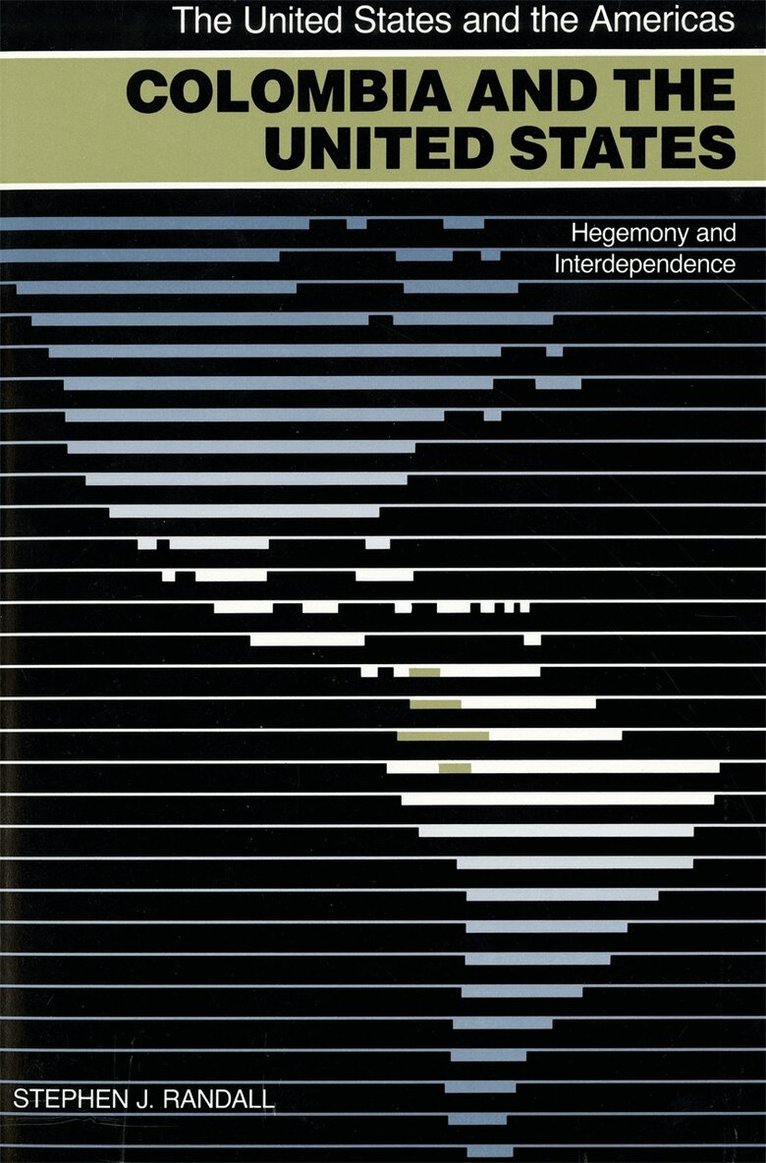
Strategically located at the gateway to the South American continent, Colombia has long been a key player in shaping the United States' involvement with its Latin American neighbors. In this book Stephen J. Randall examines the course of U.S.-Colombian relations over two centuries, taking into account the broad spectrum of political, social, cultural, and economic contacts that have figured in the interaction.A leader in the movement for independence from Spain in the early nineteenth century, Colombia shared with the United States the aspiration of becoming a leader for the entire hemisphere. Its early efforts in this direction—notably its initiation in the 1820s of the first Pan-American Conference—soon languished, however, as the unequal growth between the two countries took its toll. By the turn of the century, after years of destructive civil war, Colombia had slipped far behind its northern neighbor militarily, economically, and politically. The United States, meanwhile, had emerged as a great power, and the first major manifestation of the two countries' divergence came with the U.S.-supported secession of Panama in 1903—an event that deeply shocked Colombians and tainted their view of the United States for subsequent generations.During the twentieth century, Randall explains, a tension in Colombian politics and culture has persisted between those who advocate an independent, even antagonistic, stance toward the United State
Häftad, Engelska, 1996
480 kr
Skickas inom 5-8 vardagar
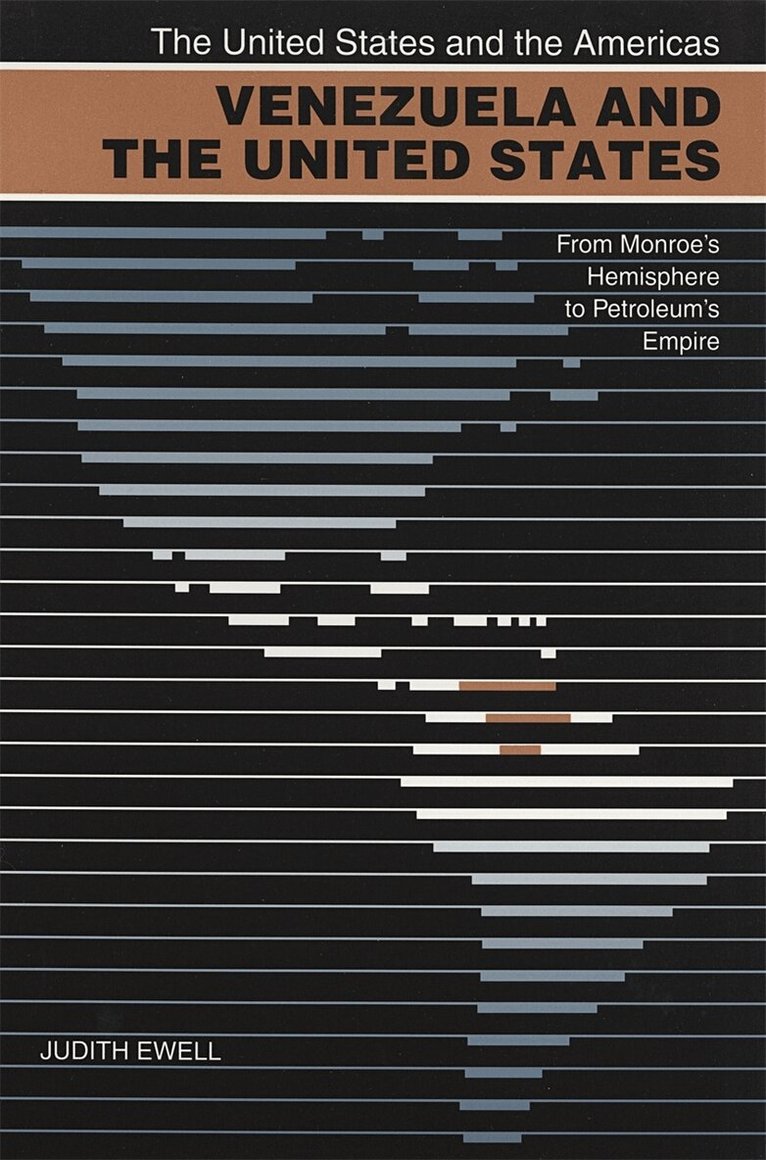
Long before sea power, the Panama Canal, and petroleum drew the world's attention to the Caribbean coast, United States leaders recognized Venezuela's potential as the linchpin of the Caribbean's southern rim. In Venezuela and the United States, Judith Ewell provides a historical analysis of the main themes and directions of U.S.-Venezuelan relations from the early 1800s, when Simon Bolivar declared an American Republican identity and Monroe proclaimed U.S. responsibility for the hemisphere to the present, when Venezuelan relations with the United States reflect the growing importance of the developing world and its multilateral challenges to U.S. global hegemony.Authoritatively treating the political, economic, and cross-cultural dynamics of two nations, Ewell approaches her subject from both a Venezuelan and U.S. perspective. Her careful understanding of conflicting interests and purposes shows how other players, from Great Britain to OPEC, have affected the course of the nations' diplomatic relationship. Ewell demonstrates that Venezuela's two-hundred-year history with the United States reflects all of the key moments and issues in inter-American relations, from the Roosevelt and Olney Corollaries to the Monroe Doctrine, the Good Neighbor Policy, the Cold War, the North-South dialogues, the debt controversies, and the post-Cold War era.Using popular literature, folklore, and travel accounts, Ewell examines how Venezuelans and yanquis have perceived each other over the years and relates how the strong U.S. presence in business and popular culture has created in Venezuelans feelings of both love and hatred for the "American way of life." The author argues, however, that in a hemisphere clearly dominated by the U.S., a new international order has arisen, giving weak nations like Venezuela greater influence while creating a complex mosaic of alliances. A model history of binational relations, Venezuela and the
Häftad, Engelska, 1998
511 kr
Skickas inom 5-8 vardagar
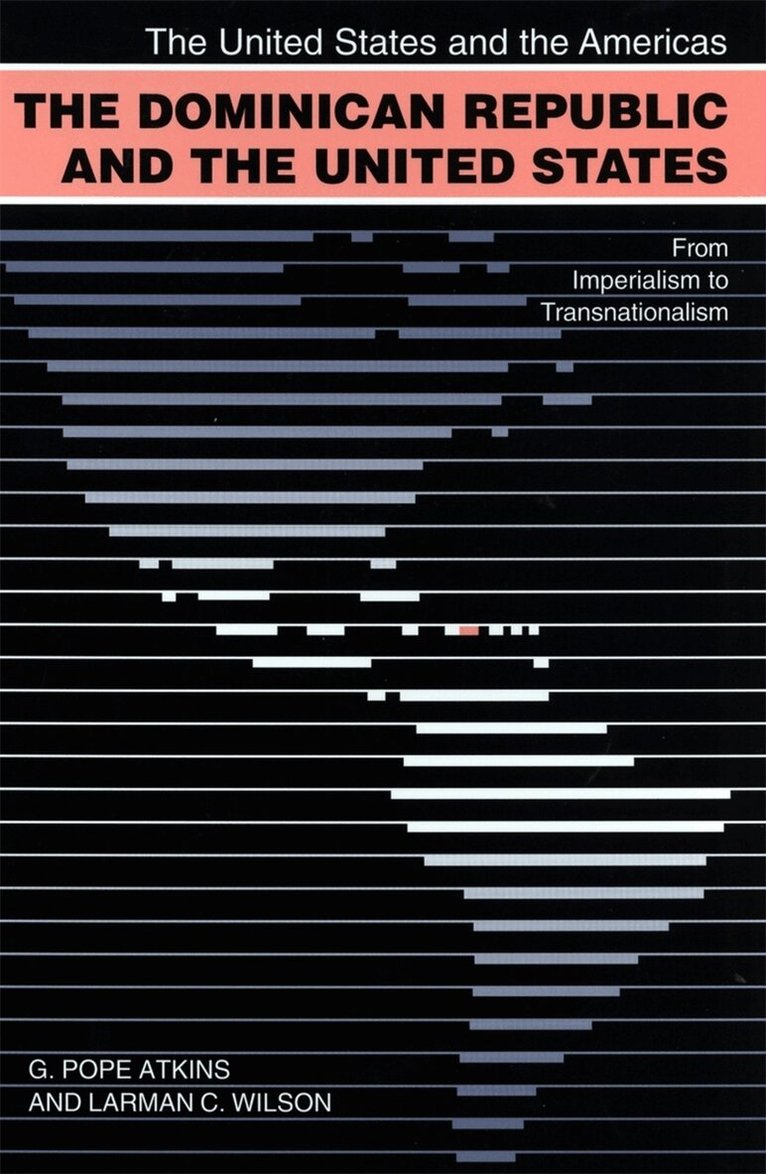
This study of the political, economic, and sociocultural relationship between the Dominican Republic and the United States follows its evolution from the middle of the nineteenth century to the mid-1990s. It deals with the interplay of these dimensions from each country's perspective and in both private and public interactions.From the U.S. viewpoint, important issues include interpretation of the rise and fall of the Dominican Republic's strategic importance, the legacy of military intervention and occupation, the problem of Dominican dictatorship and instability, and vacillating U.S. efforts to "democratize" the country. From the Dominican perspective, the essential themes involve foreign policies adopted from a position of relative weakness, ambivalent love-hate views toward the United States, emphasis on economic interests and the movement of Dominicans between the two countries, international political isolation, the adversarial relationship with neighboring Haiti, and the legacy of dictatorship and the uneven evolution of a Dominican-style democratic system.The Dominican Republic and the United States is the eleventh book in The United States and the Americas series, volumes suitable for classroom use.
Häftad, Engelska, 1999
511 kr
Skickas inom 5-8 vardagar
This comprehensive account of U.S.-Bolivian relations presents startling contrasts between the histories, mythologies, and economies of the two countries, debunking the pop-culture myth that Bolivia is a poorer and less modern version of the United States. Kenneth D. Lehman focuses primarily on the countries' relationship during the twentieth century, highlighting periods when Bolivia became important to the United States as a provider of tin during World War II, as a potential source of regional instability during the Cold War, and as a supplier of cocaine to the U.S. market in recent years. While the partnerships forged in these situations have been rooted in mutual self-interest, the United States was—and is—clearly dominant. Repeatedly, the U.S. policy toward Bolivia has moved from assistance to frustration and imposition, and the Bolivian response has intensified from submission to resentment and resistance. Bolivia and the United States presents an illuminating discussion of the real as well as mythical bonds that link these most distant and different neighbors, simultaneously providing an abundance of evidence to show how factors of culture and power complicate and limit true partnership.
Häftad, Engelska, 2003
511 kr
Skickas inom 5-8 vardagar
In a prescient remark made at the turn of the century, U.S. Secretary of State Elihu Root said that establishing "the right sort of relations" with Haiti must await "the psychological moment." Indeed, as Brenda Gayle Plummer notes, much of the Haitian-U.S. relationship has turned on matters of perception. For many in the United States, tales of voodoo, political violence, and stark deprivation have made Haiti appear to be a doomed land, beyond comprehension and help. Haitians, meanwhile, have often seen the United States as persistently racist, grossly materialist, and lacking in spiritual values.In Haiti and the United States, Plummer pays special attention to the role of social and cultural factors in the two countries' views of each other and the manner in which relations have developed as a result of those perceptions. The disparities between the two republics, she notes, are all the more remarkable in that their experiences of anticolonial rebellion and nationhood converged in some striking ways. Despite the parallels, however, the varying cultural and racial identities of Haiti and the United States and the sociohistorical context in which those identities have been construed forced them to confront the challenges of slavery, republicanism, democracy, and economic development quite differently.Stressing the importance of domestic policy and the character of civil society in the formation of foreign policy, Plummer illuminates the various factors that figured in the relationship between the two countries throughout the nineteenth century. She discussed the aspirations of Haiti's founders in building a self-governing black society, Haitian responses to the transatlantic abolition movement, the development of Haiti's creole culture, and the country's shrewd negotiations with the United States over commercial and strategic issues. The late 1800s, Plummer shows, proved a turning point in Haitian-U.S. relations as Washington's assumption of regional hegemony changed the balance of power for a Haiti long committed to a multilateralist diplomacy.In the twentieth century, tensions between traditional and reformist elements in Haitian society erupted in a crisis that brought U.S. intervention and long-term military occupation. Plummer examines the consequences of this intervention as they were incorporated into the later interactions between the United States and Haiti and shows how these troubled relations contributed to the rise of the repressive Duvalier regime. The recent fall of that regime, Plummer suggests, now presents the "psychological moment" to which Elihu Root referred so many years ago.Haiti and the United States is the first history of the relationship between the two countries to be published since the 1940s. Utilizing a wealth of Haitian sources as well as the voluminous state papers in the National Archives of the United States and the Library of Congress, the book also benefits from methodological and conceptual advances in diplomatic history over the past half-century.
Häftad, Engelska, 2003
511 kr
Skickas inom 5-8 vardagar
The Times Literary Supplement calls Louis A. Pérez Jr. "the foremost historian of Cuba writing in English." In this new edition of his acclaimed 1990 volume, he brings his expertise to bear on the history and direction of relations between Cuba and the United States.Of all the peoples in Latin America, the author argues, none have been more familiar to the United States than Cubans—who in turn have come to know their northern neighbors equally well. Focusing on what President McKinley called "the ties of singular intimacy" linking the destinies of the two societies, Pérez examines the points at which they have made contact—politically, culturally, economically—and explores the dilemmas that proximity to the United States has posed to Cubans in their quest for national identity.This edition has been updated to cover such developments of recent years as the renewed debate over American trade sanctions against Cuba, the Elián González controversy, and increased cultural exchanges between the two countries. Also included are a new preface and an updated bibliographical essay.
Inbunden, Engelska, 2010
1 139 kr
Skickas inom 5-8 vardagar
Although Brazil and the United States have long regarded each other sympathetically, relations between the two countries have been adversely affected by geographical distance, language barriers, and cultural indifference. In this comprehensive overview, Joseph Smith examines the history of Brazil-U.S. relations from the early nineteenth century to the present day.With the exception of commerce, notably the coffee trade, there was relatively little contact between the countries during the nineteenth century. A convergence of national interests took place during the first decade of the twentieth century and was exemplified in Brazil’s strategy of “approximating” its foreign policy to that pursued by the United States. In return, Brazil expected economic gains and diplomatic support for its ambition to be the leading power in South America. But U.S. leaders were cautious and self-serving. Brazil was treated as a special ally, according to Smith, but only at times of major crisis such as the two world wars.As the twentieth century progressed, friction developed over programs of U.S. financial assistance and efforts to deal with the threat of communism. Recently there have been disagreements over Brazil’s determination to take its rightful place as a global economic player and regional leader. Nonetheless history reveals that these two giant nations of the Western Hemisphere share national interests that they realize are best served by maintaining a friendly, cooperative relationship.
Häftad, Engelska, 2010
448 kr
Skickas inom 5-8 vardagar
Although Brazil and the United States have long regarded each other sympathetically, relations between the two countries have been adversely affected by geographical distance, language barriers, and cultural indifference. In this comprehensive overview, Joseph Smith examines the history of Brazil-U.S. relations from the early nineteenth century to the present day.With the exception of commerce, notably the coffee trade, there was relatively little contact between the countries during the nineteenth century. A convergence of national interests took place during the first decade of the twentieth century and was exemplified in Brazil’s strategy of “approximating” its foreign policy to that pursued by the United States. In return, Brazil expected economic gains and diplomatic support for its ambition to be the leading power in South America. But U.S. leaders were cautious and self-serving. Brazil was treated as a special ally, according to Smith, but only at times of major crisis such as the two world wars.As the twentieth century progressed, friction developed over programs of U.S. financial assistance and efforts to deal with the threat of communism. Recently there have been disagreements over Brazil’s determination to take its rightful place as a global economic player and regional leader. Nonetheless history reveals that these two giant nations of the Western Hemisphere share national interests that they realize are best served by maintaining a friendly, cooperative relationship.
Inbunden, Engelska, 2010
1 218 kr
Skickas inom 5-8 vardagar
In this completely revised and updated edition of America and the Americas, Lester D. Langley covers the long period from the colonial era into the twenty-first century, providing an interpretive introduction to the history of U.S. relations with Latin America, the Caribbean, and Canada. Langley draws on the other books in the series to provide a more richly detailed and informed account of the role and place of the United States in the hemisphere. In the process, he explains how the United States, in appropriating the values and symbolism identified with “America,” has attained a special place in the minds and estimation of other hemispheric peoples.Discussing the formal structures and diplomatic postures underlying U.S. policy making, Langley examines the political, economic, and cultural currents that often have frustrated inter-American progress and accord. Most important, the greater attention given to U.S. relations with Canada in this edition provides a broader and deeper understanding of the often controversial role of the nation in the hemisphere and, particularly, in North America.Commencing with the French-British struggle for supremacy in North America in the French and Indian War, Langley frames the story of the American experience in the Western Hemisphere through four distinct eras. In the first era, from the 1760s to the 1860s, the fundamental character of U.S. policy in the hemisphere and American values about other nations and peoples of the Americas took form. In the second era, from the 1870s to the 1930s, the United States fashioned a continental and then a Caribbean empire. From the mid-1930s to the early 1960s, the paramount issues of the inter-American experience related to the global crisis. In the final part of the book, Langley details the efforts of the United States to carry out its political and economic agenda in the hemisphere from the early 1960s to the onset of the twenty-first century, only to be frustrated by governments determined to follow an independent course. Over more than 250 years of encounter, however, the peoples of the Americas have created human bonds and cultural exchanges that stand in sharp contrast to the formal and often conflictive hemisphere crafted by governments.
Häftad, Engelska, 2010
495 kr
Skickas inom 5-8 vardagar
In this completely revised and updated edition of America and the Americas, Lester D. Langley covers the long period from the colonial era into the twenty-first century, providing an interpretive introduction to the history of U.S. relations with Latin America, the Caribbean, and Canada. Langley draws on the other books in the series to provide a more richly detailed and informed account of the role and place of the United States in the hemisphere. In the process, he explains how the United States, in appropriating the values and symbolism identified with “America,” has attained a special place in the minds and estimation of other hemispheric peoples.Discussing the formal structures and diplomatic postures underlying U.S. policy making, Langley examines the political, economic, and cultural currents that often have frustrated inter-American progress and accord. Most important, the greater attention given to U.S. relations with Canada in this edition provides a broader and deeper understanding of the often controversial role of the nation in the hemisphere and, particularly, in North America.Commencing with the French-British struggle for supremacy in North America in the French and Indian War, Langley frames the story of the American experience in the Western Hemisphere through four distinct eras. In the first era, from the 1760s to the 1860s, the fundamental character of U.S. policy in the hemisphere and American values about other nations and peoples of the Americas took form. In the second era, from the 1870s to the 1930s, the United States fashioned a continental and then a Caribbean empire. From the mid-1930s to the early 1960s, the paramount issues of the inter-American experience related to the global crisis. In the final part of the book, Langley details the efforts of the United States to carry out its political and economic agenda in the hemisphere from the early 1960s to the onset of the twenty-first century, only to be frustrated by governments determined to follow an independent course. Over more than 250 years of encounter, however, the peoples of the Americas have created human bonds and cultural exchanges that stand in sharp contrast to the formal and often conflictive hemisphere crafted by governments.
Häftad, Engelska, 2007
606 kr
Skickas inom 3-6 vardagar
Ranging from the 1840s through the early twenty-first century, this study of shared political, economic, and cultural histories fills significant gaps in our understanding of Paraguayan-U.S. relations. Frank O. Mora and Jerry W. Cooney tell how an initially rocky beginning between the two countries, marked by diplomatic posturing, shows of military force, and failed business schemes, gave way to a calmer period during which the United States backed Paraguay's territorial claims against its neighbors, prospects grew brighter for American entrepreneurs, and Paraguay embraced Pan-Americanism.It was not until the 1930s that the two countries engaged in earnest as the United States attempted to mediate the Chaco War between Paraguay and Bolivia. Then, as the authors write, "hemispheric solidarity in World War II, the cold war in Latin America, the 'balance of power' among states in the Río de la Plata, and the question of U.S. support for, or aid to, Latin American dictators" became matters of mutual interest.The dictatorship of Alfredo Stroessner (1954-89) spanned much of this era, and a shared attitude of realpolitik typified U.S.-Paraguayan relations during his rule. Post-Stroessner, the United States has stood by Paraguay during its transition to democracy, despite lingering concerns about such issues as drug trafficking and intellectual piracy. The countries should grow closer with time, the authors conclude, if Paraguay resists the continent's leftward political shift and remains a solid partner in U.S. antiterror initiatives in South America.
Häftad, Engelska, 2007
495 kr
Skickas inom 5-8 vardagar
This history of relations between Ecuador and the United States is a revealing case study of how a small, determined country has exploited its marginal status when dealing with a global superpower. Ranging from Ecuador’s struggle for independence in the 1820s and 1830s to the present day, the book examines the misunderstandings, tensions, and—from the U.S. perspective—often unintended consequences that have sometimes arisen in relations between the two countries.Such interactions included U.S. efforts in Ecuador to stem yellow fever, build railroads, and institute economic reforms. Many of the two countries’ exchanges in the twentieth century stemmed from the global disruptions of World War II and the cold war. More recently, Ecuadorian and U.S. interests have been in contest over fishing rights, foreign development of Ecuadorian oil resources, and Ecuador’s emergence as a transit country in the drug trade.Ronn Pineo looks at these and other issues within the context of how the United States, usually preoccupied with other concerns, has often disregarded Ecuador’s internal race, class, and geographical divisions when the two countries meet on the global stage. On the whole, argues Pineo, the two countries have operated effectively as “useful strangers” throughout their mutual history. Ecuador has never been merely a passive recipient of U.S. policy or actions, and factions within Ecuador, especially regional ones, have long seen the United States as a potential ally in domestic political disputes. The United States has influenced Ecuador, but often only in ways Ecuadorians themselves want. This book is about the dynamics of power in the relations between a very large if distracted nation when dealing with a very small but determined nation, an investigation that reveals a great deal about both.
Häftad, Engelska, 2008
496 kr
Skickas inom 5-8 vardagar
The United States and Canada have the world’s largest trading relationship and the longest shared border. Spanning the period from the American Revolution to post-9/11 debates over shared security, Canada and the United States offers a current, thoughtful assessment of relations between the two countries. Distilling a mass of detail concerning cultural, economic, and political developments of mutual importance over more than two centuries, this survey enables readers to grasp quickly the essence of the shared experience of these two countries.This edition of Canada and the United States has been extensively rewritten and updated throughout to reflect new scholarly arguments, emphases, and discoveries. In addition, there is new material on such topics as energy, the environment, cultural and economic integration, the wars in Iraq and Afghanistan, border security, missile defense, and the second administration of George W. Bush.
Häftad, Engelska, 2010
496 kr
Skickas inom 5-8 vardagar
Drug wars, NAFTA, presidential politics, and heightened attention to Mexican immigration are just some of the recent issues that are freshly interpreted in this updated survey of Mexican-U.S. relations.The fourth edition has been completely revised and offers a lively, engaging, and up-to-date analysis of historical patterns of change and continuity as well as contemporary issues. Ranging from Mexican antiquity and the arrival of the Spanish and British to the present-day administrations of Felipe Calderón and Barack Obama, historians Dirk Raat and Michael Brescia evaluate the political, economic, and cultural trends and events that have shaped the ways that Mexicans and Americans have regarded each other over the centuries. Raat and Brescia pay special attention to the factors that have subordinated Mexico not only to "the colossus of the North" but to many other players in the global economy. They also provide a unique look at the cultural dynamics of Gran Chichimeca or Mexamerica, the borderlands where the two countries share a common history. The bibliographical essay has been revised to reflect current research and scholarship.
Häftad, Engelska, 2012
495 kr
Skickas inom 5-8 vardagar
After Panama assumed control of the Panama Canal in 1999, its relations with the United States became those of a friendly neighbor. In this third edition, Michael L. Conniff describes Panama’s experience as owner-operator of one of the world’s premier waterways and the United States’ adjustment to its new, smaller role. He finds that Panama has done extremely well with the canal and economic growth but still struggles to curb corruption, drug trafficking, and money laundering. Historically, Panamanians aspired to have their country become a crossroads of the world, while Americans sought to tame a vast territory and protect their trade and influence around the globe. The building of the Panama Canal (1904–14) locked the two countries in their parallel quests but failed to satisfy either fully. Drawing on a wide array of sources, Conniff considers the full range of factors—political, social, strategic, diplomatic, economic, and intellectual—that have bound the two countries together.
Inbunden, Engelska, 2017
1 454 kr
Skickas inom 5-8 vardagar
This comprehensive account of U.S.-Bolivian relations presents startling contrasts between the histories, mythologies, and economies of the two countries, debunking the pop-culture myth that Bolivia is a poorer and less modern version of the United States. Kenneth D. Lehman focuses primarily on the countries' relationship during the twentieth century, highlighting periods when Bolivia became important to the United States as a provider of tin during World War II, as a potential source of regional instability during the Cold War, and as a supplier of cocaine to the U.S. market in recent years. While the partnerships forged in these situations have been rooted in mutual self-interest, the United States was—and is—clearly dominant. Repeatedly, the U.S. policy toward Bolivia has moved from assistance to frustration and imposition, and the Bolivian response has intensified from submission to resentment and resistance. Bolivia and the United States presents an illuminating discussion of the real as well as mythical bonds that link these most distant and different neighbors, simultaneously providing an abundance of evidence to show how factors of culture and power complicate and limit true partnership.
Inbunden, Engelska, 2017
1 454 kr
Skickas inom 5-8 vardagar
Strategically located at the gateway to the South American continent, Colombia has long been a key player in shaping the United States' involvement with its Latin American neighbors. In this book Stephen J. Randall examines the course of U.S.-Colombian relations over two centuries, taking into account the broad spectrum of political, social, cultural, and economic contacts that have figured in the interaction.A leader in the movement for independence from Spain in the early nineteenth century, Colombia shared with the United States the aspiration of becoming a leader for the entire hemisphere. Its early efforts in this direction—notably its initiation in the 1820s of the first Pan-American Conference—soon languished, however, as the unequal growth between the two countries took its toll. By the turn of the century, after years of destructive civil war, Colombia had slipped far behind its northern neighbor militarily, economically, and politically. The United States, meanwhile, had emerged as a great power, and the first major manifestation of the two countries' divergence came with the U.S.-supported secession of Panama in 1903—an event that deeply shocked Colombians and tainted their view of the United States for subsequent generations.During the twentieth century, Randall explains, a tension in Colombian politics and culture has persisted between those who advocate an independent, even antagonistic, stance toward the United State
Inbunden, Engelska, 2017
1 375 kr
Skickas inom 5-8 vardagar
This study of the political, economic, and sociocultural relationship between the Dominican Republic and the United States follows its evolution from the middle of the nineteenth century to the mid-1990s. It deals with the interplay of these dimensions from each country's perspective and in both private and public interactions.From the U.S. viewpoint, important issues include interpretation of the rise and fall of the Dominican Republic's strategic importance, the legacy of military intervention and occupation, the problem of Dominican dictatorship and instability, and vacillating U.S. efforts to "democratize" the country. From the Dominican perspective, the essential themes involve foreign policies adopted from a position of relative weakness, ambivalent love-hate views toward the United States, emphasis on economic interests and the movement of Dominicans between the two countries, international political isolation, the adversarial relationship with neighboring Haiti, and the legacy of dictatorship and the uneven evolution of a Dominican-style democratic system.The Dominican Republic and the United States is the eleventh book in The United States and the Americas series, volumes suitable for classroom use.
Inbunden, Engelska, 2017
1 375 kr
Skickas inom 5-8 vardagar
Long before sea power, the Panama Canal, and petroleum drew the world's attention to the Caribbean coast, United States leaders recognized Venezuela's potential as the linchpin of the Caribbean's southern rim. In Venezuela and the United States, Judith Ewell provides a historical analysis of the main themes and directions of U.S.-Venezuelan relations from the early 1800s, when Simon Bolivar declared an American Republican identity and Monroe proclaimed U.S. responsibility for the hemisphere to the present, when Venezuelan relations with the United States reflect the growing importance of the developing world and its multilateral challenges to U.S. global hegemony.Authoritatively treating the political, economic, and cross-cultural dynamics of two nations, Ewell approaches her subject from both a Venezuelan and U.S. perspective. Her careful understanding of conflicting interests and purposes shows how other players, from Great Britain to OPEC, have affected the course of the nations' diplomatic relationship. Ewell demonstrates that Venezuela's two-hundred-year history with the United States reflects all of the key moments and issues in inter-American relations, from the Roosevelt and Olney Corollaries to the Monroe Doctrine, the Good Neighbor Policy, the Cold War, the North-South dialogues, the debt controversies, and the post-Cold War era.Using popular literature, folklore, and travel accounts, Ewell examines how Venezuelans and yanquis have perceived each other over the years and relates how the strong U.S. presence in business and popular culture has created in Venezuelans feelings of both love and hatred for the "American way of life." The author argues, however, that in a hemisphere clearly dominated by the U.S., a new international order has arisen, giving weak nations like Venezuela greater influence while creating a complex mosaic of alliances. A model history of binational relations, Venezuela and the