William F. Sater - Böcker
Visar alla böcker från författaren William F. Sater. Handla med fri frakt och snabb leverans.
5 produkter
5 produkter
594 kr
Skickas inom 10-15 vardagar
The Grand Illusion analyzes the impact of European military institutions on Hispanic America in general and examines the putative "Prussianization" of the Chilean army in particular. The authors focus on Chile's attempt to import and assimilate foreign military methods, doctrine, and matériel. They incorporate research from Chilean, Austrian, German, British, and American archives to offer a new interpretation of Chile's military reforms. The authors argue that the Chilean army adopted only the most superficial aspects of the German military ethos, which eventually led to the creation of a large but ineffective army. The transfer of technology and doctrine failed because German institutions and policies did not suit Chile. Political infighting, greed, and corruption further encumbered the assimilation process. The authors' findings call into question the widely accepted thesis that developed nations could, and in fact did, change the nature of the military in developing countries.
490 kr
Skickas inom 10-15 vardagar
The year 1879 marked the beginning of one of the longest, bloodiest conflicts of nineteenth-century Latin America. The War of the Pacific pitted Peru and Bolivia against Chile in a struggle initiated over a festering border dispute. The conflict saw Chile's and Peru's armored warships vying for control of sea lanes and included one of the first examples of the use of naval torpedoes. On land, large armies using the most modern weapons—breech-loading rifles, Gatling guns, and steel-barreled artillery—clashed in battles that left thousands of men dead on the battlefields. Eventually, the warring parties revamped their respective military establishments, creating much needed, civilian-supported supply, transportation, and medical units. Chile ultimately prevailed. Bolivia lost its seacoast along with valuable nitrate and copper deposits to Chile, and Peru was forced to cede mineral rich Tarapaca and the province of Arica to the victor. Employing the primary and secondary sources of the countries involved, William F. Sater offers the definitive analysis of the conflict's naval and military campaigns. Andean Tragedy not only places the war in a crucial international context, but also explains why this devastating conflict resulted in a Chilean victory.
518 kr
Skickas inom 5-8 vardagar
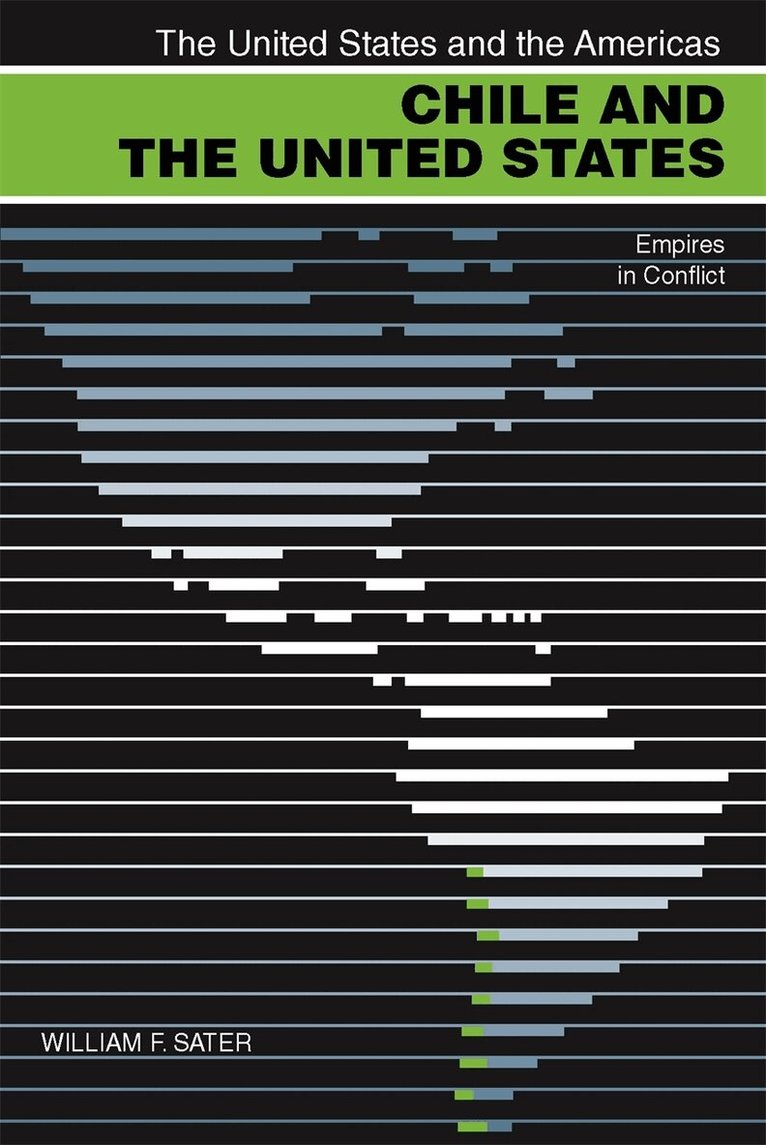
From virtually the onset of its independence in the early nineteenth century, Chile took a superior attitude toward its racially mixed and less organized neighbors. This stance was not unlike that of another young republic in the hemisphere: the United States. With their relatively stable governments and prosperous economies, the two countries claimed amoral right to impose their will on nearby nations. Given this shared imperial impulse, it is not surprising that they became rivals.In Chile and the United States, the third volume to appear in the series The United States and the Americas, William F. Sater traces the often stormy course of U.S.-Chilean relations, covering not only policy decisions but also the overall political, cultural, and economic developments that formed the context in which those policies unfolded.As Sater explains, the Chileans initially believed that they could triumph in the event of a clash with the Americans because of their superior moral commitment and willingness to endure sacrifice. Unintimidated by the size of the United States, Chile found its sense of mission bolstered by the American government's inconsistent enforcement of the Monroe Doctrine and grudging acceptance of Chilean dominance over Peru and Bolivia. Yet, Sater shows, by the end of the nineteenth century Chile had to face reality: its organizational skills could no longer compensate for a limited population and resource base. Worse, just as both the United States and Chile's neighbor Argentina became wealthier and more populous, Chile sank into a political morass that paralyzed its ability to govern itself. Once the premier power of the Pacific, it fell to second-rate status--a fact that nevertheless did little to mitigate the Chileans' sense of cultural superiority.In the early twentieth century, Sater notes, Chile scored several economic and diplomatic victories over the United States and, after World War II, resorted to various new doctrines and strategies in hopes of regaining its lost glory. When the efforts of strongmen failed, Chileans turned to Christian Democracy, Socialism, and finally military rule--none of which succeeded in restoring the country's political unity and self-esteem. Yet, Sater contends, rather than accept that geopolitical and economic realities had limited their nation's place in the world, Chileans blamed the United States for whatever ills befell them, even as they continued to expect American aid. For its part, the United States insisted that Chile accept its counsel in order to receive U.S. economic assistance. This frustrating standoff, Sater shows, is but the latest phase of a contentious relationship, nearly two centuries in the making, that shows no ready signs of disappearing.
1 282 kr
Skickas inom 7-10 vardagar
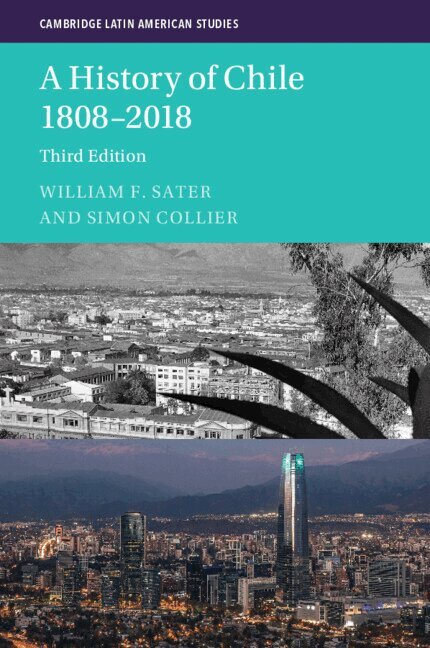
As Chile has continued to grow and prosper in the twenty-first century, this new edition of the definitive history of the country brings the story of its political, social and cultural development up to date. It describes how Ricardo Lagos and Michelle Bachelet, both highly educated Socialists, modernized the country and integrated new interests into Chilean political life, and how the billionaire, Harvard-trained economist Sebastian Piñera, who succeeded Bachelet, addressed the problems caused by the 2010 tsunami. In the last twenty years Chile diversified its economy, replaced a number of Pinochet's organizations with more inclusive institutions, cultivated Chilean culture, modernized its constitution, and fomented reconciliation of the various political factions - until economic crisis in early 2018 caused political chaos and occasionally violent public protest. Based on new statistics to measure Chile's economic and social development, this volume celebrates Chile's achievements and dissects its failures.
409 kr
Skickas inom 7-10 vardagar
As Chile has continued to grow and prosper in the twenty-first century, this new edition of the definitive history of the country brings the story of its political, social and cultural development up to date. It describes how Ricardo Lagos and Michelle Bachelet, both highly educated Socialists, modernized the country and integrated new interests into Chilean political life, and how the billionaire, Harvard-trained economist Sebastian Piñera, who succeeded Bachelet, addressed the problems caused by the 2010 tsunami. In the last twenty years Chile diversified its economy, replaced a number of Pinochet's organizations with more inclusive institutions, cultivated Chilean culture, modernized its constitution, and fomented reconciliation of the various political factions - until economic crisis in early 2018 caused political chaos and occasionally violent public protest. Based on new statistics to measure Chile's economic and social development, this volume celebrates Chile's achievements and dissects its failures.