University of Arkansas Press – serie
Visar alla böcker i serien University of Arkansas Press. Handla med fri frakt och snabb leverans.
4 produkter
4 produkter
Häftad, Engelska, 1985
231 kr
Skickas inom 5-8 vardagar
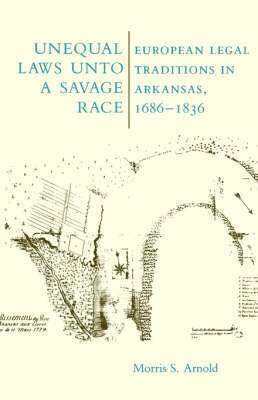
Partly because its colonial settlements were tiny, remote, and inconsequential, the early history of Arkansas has been almost entirely neglected. Even Arkansas Post, the principal eighteenth-century settlement, served mainly as a temporary place of residence for trappers and voyageurs. It was also an entrepot for travelers on the Mississippi—a place to be while on the way elsewhere. Only a very few inhabitants, true agricultural settlers, ever established themselves a or around the Post.For most of the eighteenth century, Arkansas’s non-Indian population was less than one hundred, and never much exceeded five or six hundred. Its European residents of that era, mostly French, have left virtually no physical trace: the oldest buildings and the oldest marked graves in the state date from the 1820s. Drawing on original French and Spanish archival sources, Morris Arnold chronicles for the first time the legal institutions of colonial Arkansas, the attitude of its population towards European legal ideas as were current in Arkansas when Louisiana was transferred to the United States in 1803. Because he views the clash of legal traditions in the upper reaches of the Jefferson’s Louisiana as part of a more general cultural conflict, Arnold closely examines the social and economic characteristics of Arkansas’s early residents in order to explain why, following the American takeover, the common law was introduced into Arkansas with such relative ease.
Häftad, Engelska, 1993
316 kr
Skickas inom 5-8 vardagar
The critic Norman Granz called tenor saxophonist Lester Young "the greatest musician I have heard on the instrument." Douglas Ramsey speaks of Young as "the gentle bedeviled genius whose vision of beauty found expression even though he was hounded throughout his life by nearly every demon the twentieth century had managed to spawn." This is his story, told with love and candor.
Häftad, Engelska, 1997
435 kr
Skickas inom 5-8 vardagar
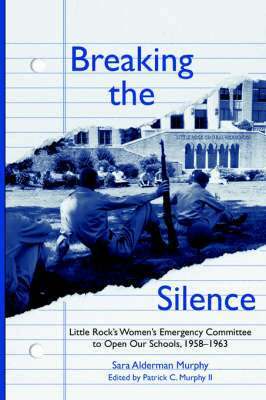
The Little Rock Central High School integration crisis did not end in1957 when President Eisenhower sent a portion of the first Airborne Division to protect nine black students. The turmoil was entering its second year in 1958 when Arkansas governor Orval Faubus invoked a hastily passed state law to close the high schools rather than obey the federal court orders that would integrate them.A group of respectable, middle-class white women, faced with the prospect of no schools as well as the further loss of their city’s good name, turned militant. Led by Adolphine Fletcher Terry, a prominent, “old family” civic leader in her seventies, the wome n quickly put together the Women’s Emergency Committee to Open Our Schools (WEC), a highly effective organization that bombarded the city with ads, fliers, and statements challenging Faubus’s action. At peak membership, the WEC mustered two thousand to their cause. Largely inexperienced in politics when they joined the WEC, these women became articulate, confident promoters of public schools and helped others to understand that those schools must be fully integrated.Forty years later, Sara Murphy, a key member of the WEC, recounts the rarely told sto1y of these courageous women who formed a resistance movement. With passion and sensitivity, she reconstructs the challenges and triumphs of that battle, which issued from the mutual link Southern white women shared with disfranchised African Americans in their common goal for full citizenship.
Häftad, Engelska, 2012
314 kr
Skickas inom 5-8 vardagar
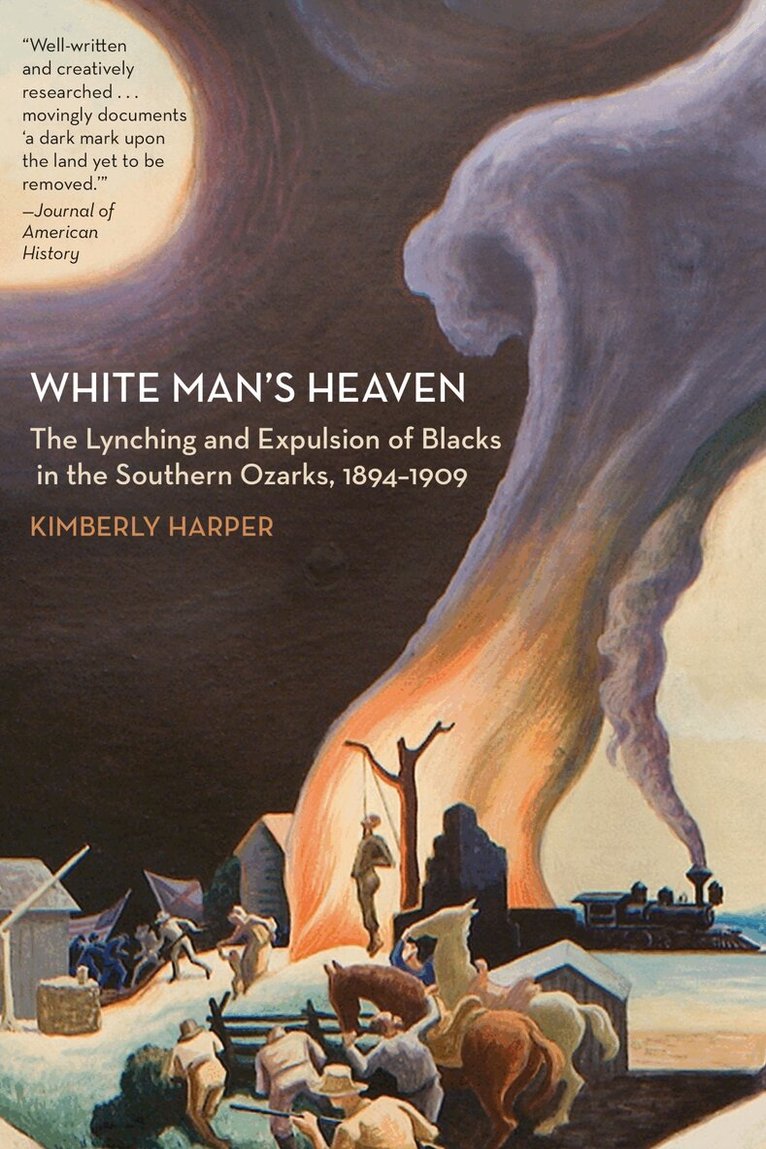
White Man's Heaven is the first book to investigate the lynching and expulsion of African Americans in the Missouri and Arkansas Ozarks in the late nineteenth and early twentieth centuries. Kimberly Harper shows how an established tradition of extralegal violence and the rapid political, economic, and social change of the New South era combined to create an environment that resulted in interracial violence. Even though some whites tried to stop the violence and bring the lynchers to justice, many African Americans fled the Ozarks, leaving only a resilient few behind and forever changing the racial composition of the region.