Morris S. Arnold – författare
Visar alla böcker från författaren Morris S. Arnold. Handla med fri frakt och snabb leverans.
7 produkter
Unequal Laws Unto a Savage Race
European Legal Traditions in Arkansas, 1686-1836
Häftad, 1985
246 kr
Lägg i varukorg
Partly because its colonial settlements were tiny, remote, and inconsequential, the early history of Arkansas has been almost entirely neglected. Even Arkansas Post, the principal eighteenth-century settlement, served mainly as a temporary place of residence for trappers and voyageurs. It was also …
Arkansas: a Narrative History
A Narrative History
Av Jeannie M Whayne, Thomas A. DeBlack m. fl.
Inbunden, 2013
565 kr
Lägg i varukorg
Arkansas: A Narrative History is a comprehensive history of the state that has been invaluable to students and the general public since its original publication. Four distinguished scholars cover prehistoric Arkansas, the colonial period, and the nineteenth and twentieth centuries and incorporate …
Arkansas
A Concise History
Av Jeannie M. Whayne, Thomas A. DeBlack m. fl.
Häftad, 2019
437 kr
Lägg i varukorg
Distilled from Arkansas: A Narrative History, the definitive work on the subject since its original publication in 2002, Arkansas: A Concise History is a succinct one-volume history of the state from the prehistory period to the near-present. Featuring four historians who have published extensively …
Colonial Arkansas, 1686-1804
A Social and Cultural History
Häftad, 1993
295 kr
Tillfälligt slut
Before Arkansas was acquired by the United States as part of the Louisiana Purchase in 1803, it was claimed first by France, then later by Spain. Both of these cultures profoundly influenced the development of the region and its inhabitants, as evidenced in the many cultural artifacts that …
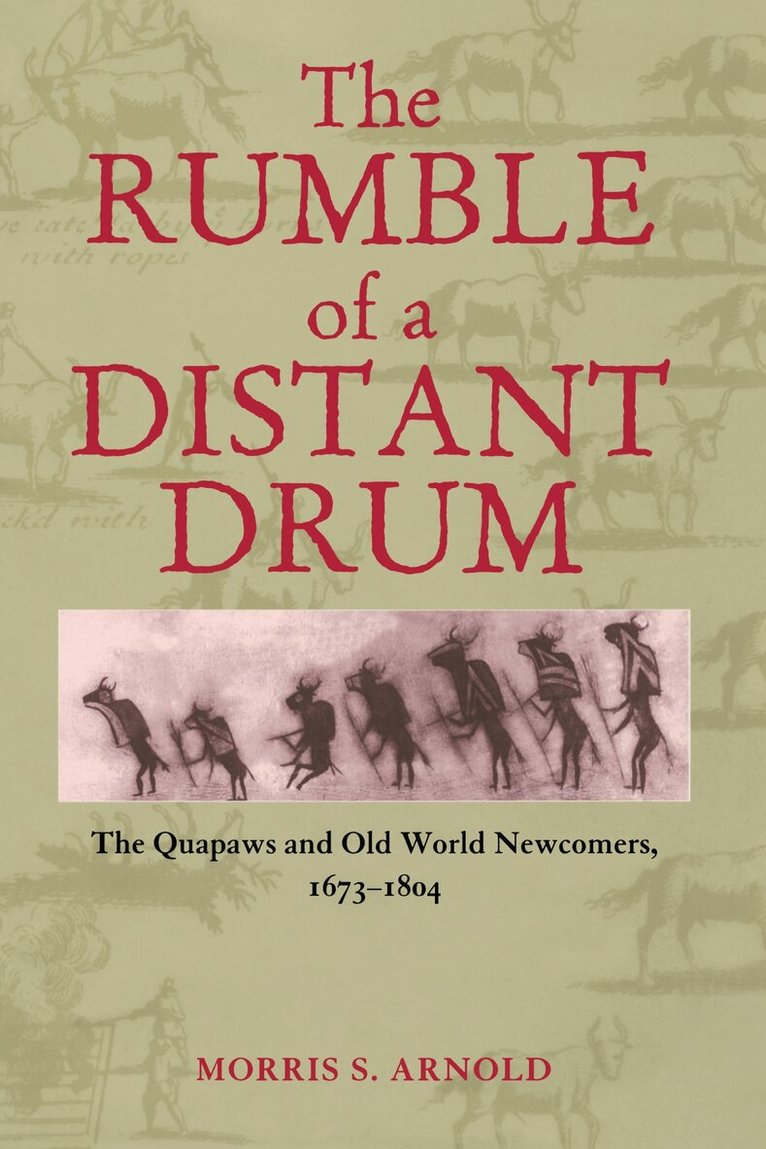
Rumble of a Distant Drum
The Quapaws and Old World Newcomers, 1673-1804
Häftad, 2007
238 kr
Tillfälligt slut
The Rumble of a Distant Drum opens in 1673 when Marquette and Jolliet sailed down the Mississippi River and found the Quapaw already in residence in the Arkansas Post, where the Arkansas River flowed into the Mississippi. Here, they established the first European settlement in this part of the …
Arkansas Post of Louisiana
Inbunden, 2017
511 kr
Tillfälligt slut
Arkansas Post, the first European settlement in what would become Jefferson’s Louisiana, had an important mission as the only settlement between Natchez and the Illinois Country, a stretch of more than eight hundred miles along the Mississippi River. The Post was a stopping point for shelter and …