Voices In International Relations - Böcker
Visar alla böcker i serien Voices In International Relations. Handla med fri frakt och snabb leverans.
5 produkter
5 produkter
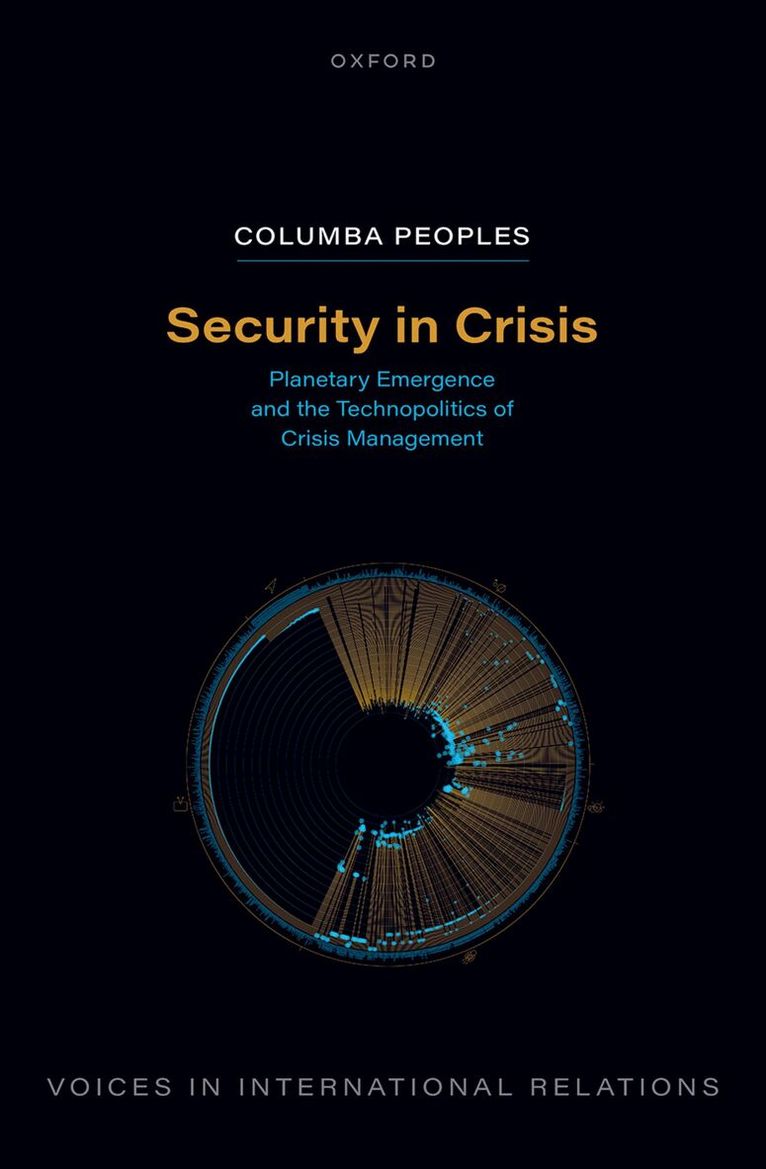
Security in Crisis
Planetary Emergence and the Technopolitics of Crisis Management
Inbunden, Engelska, 2024
1 024 kr
Skickas inom 5-8 vardagar
The concept of crisis is a recurrent staple in representations of modern forms of insecurity - from nuclear proliferation to cyber-security, armed conflict, the instability of political institutions, from pandemics to risks of social and financial collapse. Amidst this seeming ubiquity and ever-presence, the onset of climate and ecological emergencies as potential planetary-scale threats to the habitability of the Earth raise particularly urgent questions for how we conceive of and deal with crisis insecurity. How these forms of planetary insecurity come to be known, understood, and managed is thus of pressing importance. Security in Crisis seeks to provide an analysis of the complex combinations of political and technological understandings entailed in what it terms as 'planetary crisis management'. Arguing that the emergence, scope and scale of planetary insecurity and crisis management challenge traditional disciplinary boundaries of the study of International Relations and security, the book adopts an interdisciplinary outlook. It integrates ideas and approaches from across political theory and anthropology (on conceptions of crisis) including climate science and the wider study of environment and ecology in the 'Anthropocene' (on planetary insecurities and ideas of geoengineering); science and technology studies (on the 'technopolitics' of crisis management and the 'sociotechnical imagination' of planetary futures); and critical security studies (on critical approaches to the international and to security). In the process, the book considers how technopolitical 'fixes' for planetary crisis and emergency are often bound up with vexed questions of who 'we' are, and what it means to imagine and secure a planetary future.ABOUT THE SERIES: Voices in International Relations, published under the auspices of the European International Studies Association (EISA), furthers the development of research at the frontiers of International Relations (IR). It expands the remit of the field by including innovative scholarship that broadens key debates in the discipline, but it is more interested in reconfiguring such debates by approaching them from inside and outside the conventional core. Thematically, we aim to publish research that pushes the limits of IR conventionally defined from within and connects it to debates developing outside the discipline. We are committed to furthering diversity and inclusion in terms of authorship, location, topics and approaches from both inside and outside Europe. We have an inclusive approach to neighbouring disciplines, be it sociology, history, anthropology, geography, economics, political theory or law.Series editors: Debbie Lisle, Tanja Aalberts, Anna Leander, and Laura Sjoberg.
1 608 kr
Skickas inom 3-6 vardagar
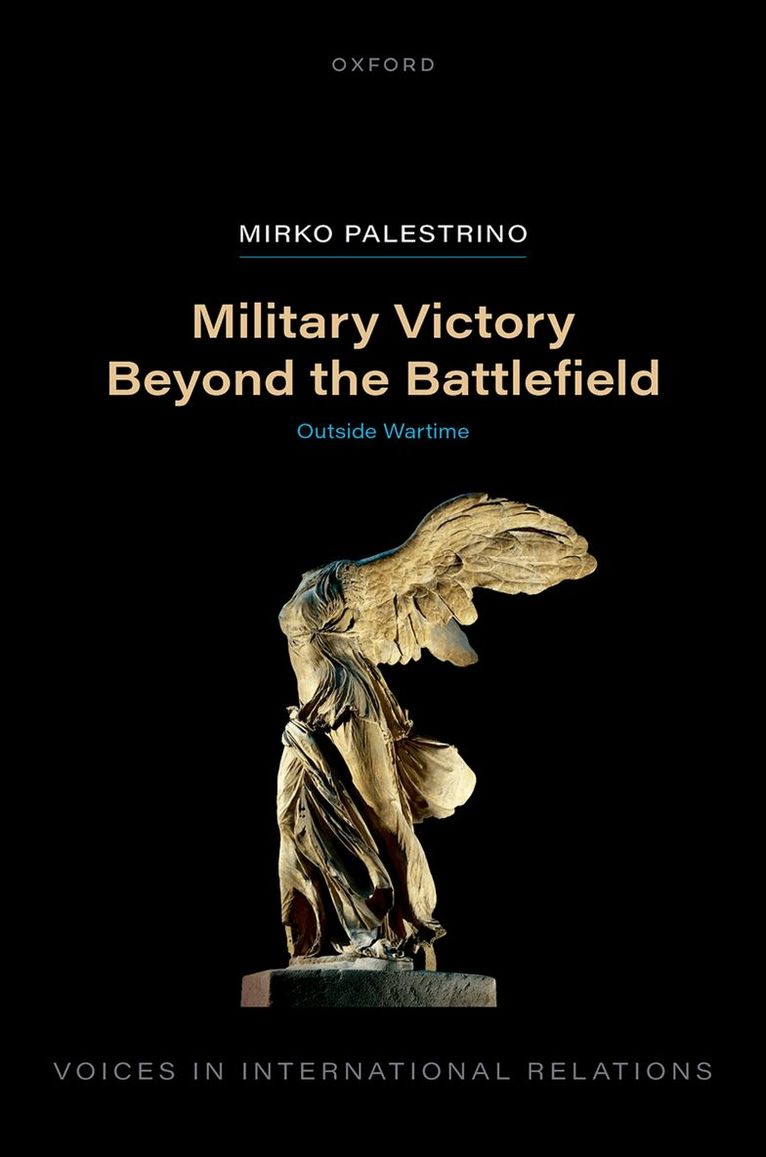
Military Victory Beyond the Battlefield rethinks hegemonic understandings of military victory as the outcome of war by focusing on the relationship between victory and time. While International Relations and War Studies increasingly recognise that the boundaries between war and peace are blurry, military victory is still conceptualised as an event that brings war to cessation and restores peace. Instead, this book argues that victory is a temporal, sense-making device. It shows that victory is produced just as much outside the battlefield as on it, during both wartime and peacetime. Palestrino demonstrates that the end of war has little to do with warfighting. Wars are made to end through a series of victory practices that seek to clearly mark a conflict's temporal boundaries to convince key audiences of its definitive outcome. Analysing exhibitions of military tattoos, war memorials, commemoration rituals, doctrine manuals, history textbooks and videogames, this book shows that, as soon as we stop looking for victory in the usual places, a plurality of wartimes comes to the surface and the assumption that victory ends war is cast into doubt. It also shows that attending to these victory practices and their politics is important because they can appear to be peaceful yet conceal overlooked forms of violence. Military Victory Beyond the Battlefield offers an innovative account of what victory means, explains victory's conceptual, affective and international politics, and sheds light on understudied victory practices that straddle the lines between war and peace, politics and military strategy, narratives and materiality.ABOUT THE SERIES: Voices in International Relations, published under the auspices of the European International Studies Association (EISA), furthers the development of research at the frontiers of International Relations (IR). It expands the remit of the field by including innovative scholarship that broadens key debates in the discipline, but it is more interested in reconfiguring such debates by approaching them from inside and outside the conventional core. Thematically, we aim to publish research that pushes the limits of IR conventionally defined from within and connects it to debates developing outside the discipline. We are committed to furthering diversity and inclusion in terms of authorship, location, topics and approaches from both inside and outside Europe. We have an inclusive approach to neighbouring disciplines, be it sociology, history, anthropology, geography, economics, political theory or law.Series editors: Debbie Lisle, Tanja Aalberts, Anna Leander, and Laura Sjoberg.
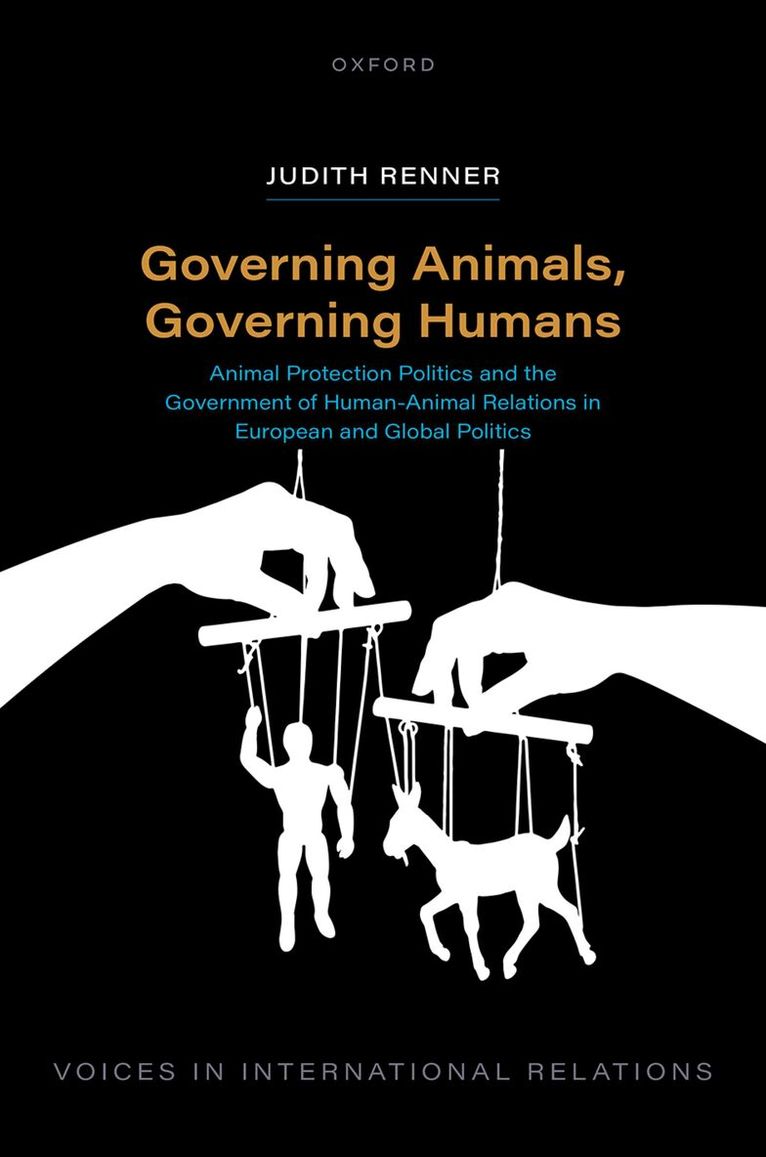
Governing Animals, Governing Humans
Animal Protection Politics and the Government of Human—Animal Relations in European and Global Politics
Inbunden, Engelska, 2025
1 200 kr
Skickas inom 5-8 vardagar
Governing Animals, Governing Humans explores how the global politics of animal protection works as the government of human-animal relations. Responding to recent calls by scholars coming from post-humanist, new materialist, or post-anthropocentric backgrounds who criticize the discipline's human-centred outlook it suggests a way how animals can be analyzed as targets of government by bringing into conversation Foucauldian scholarship within IR, political science and Critical Animal Studies (CAS). Empirically, the book is driven by an interest to understand and theorize two contradicting global tendencies in regard to how humans relate to animals: on the one hand, a growing global concern for animals which has led to animal protection and animal welfare turning into issues of international relevance. On the other hand, the growing use and exploitation of animals as means of human convenience which manifests in the increase of the global trade in animal products, in the numbers of animals used worldwide and in the conditions under which these animals are kept. The book argues that whereas these tendencies seem to be conflicting on the first view, they are in fact closely intertwined as animal welfare, which has emerged as the dominant strategy of global animal protection, establishes the intensive production and use of animals along animal welfare standards as the primary practice of animal protection, coopts animals and humans into this strategy as subjects of animal welfare and animal consumption and thus governs human-animal relations along the seemingly contradicting but intertwined tendencies of animal protection and animal use.ABOUT THE SERIES: Voices in International Relations, published under the auspices of the European International Studies Association (EISA), furthers the development of research at the frontiers of International Relations (IR). It expands the remit of the field by including innovative scholarship that broadens key debates in the discipline, but it is more interested in reconfiguring such debates by approaching them from inside and outside the conventional core. Thematically, we aim to publish research that pushes the limits of IR conventionally defined from within and connects it to debates developing outside the discipline. We are committed to furthering diversity and inclusion in terms of authorship, location, topics and approaches from both inside and outside Europe. We have an inclusive approach to neighbouring disciplines, be it sociology, history, anthropology, geography, economics, political theory or law.Series editors: Debbie Lisle, Tanja Aalberts, Anna Leander, and Laura Sjoberg.
1 056 kr
Kommande
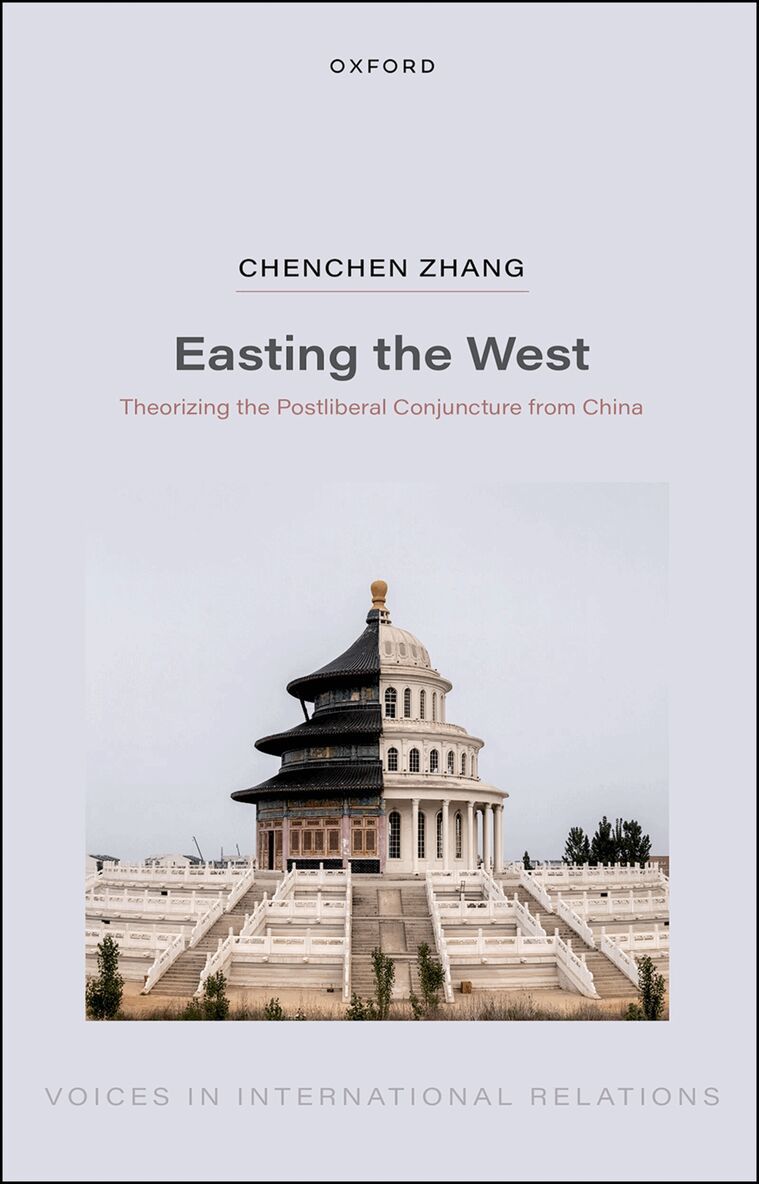
From intellectual history to the dazzling, chaotic, and jargon-laden world of digital culture, this book explores how ideas of 'the West' and articulations of China/West difference are produced and mobilized in Chinese political discourse. It foregrounds not only the co-construction and appropriation of civilizational binaries from the 'peripheries' of the international social order, but also the entanglement between ostensibly 'pro-Western' and 'anti-Western' narratives in Chinese nationalism. The book offers an in-depth study of digital reactionary discourse on Chinese social media, analysed within globally interconnected and locally embedded reinvigorations of racial nationalism, authoritarianism, and backlash against social justice movements. Theorizing the postliberal conjuncture from digital China, Zhang delineates how postliberal political sensibilities converge across conventional geopolitical and ideological fault lines. Employing identity markers such as 'East' and 'West' as flexible transnational codes, geopolitically opposed actors capitalize on structurally similar narratives to justify oppression at home and perpetuate logics of civilizational rivalry through mutual othering. As the legitimacy of liberal orders erodes, the political valence of critique is unstable. The anticolonial language may be mobilized not for emancipatory ends, but to consolidate authoritarian control and legitimate violence against racialized and marginalized groups.This book makes an original contribution to the international cultural politics of reaction by centring Chinese digital narratives as a constitutive site of ideological production in our shared global present. It deepens understanding of transversal alignment and the repurposing of critique in the postliberal conjuncture and in digital reactionary formations. ABOUT THE SERIES: Voices in International Relations, published under the auspices of the European International Studies Association (EISA), furthers the development of research at the frontiers of International Relations (IR). It expands the remit of the field by including innovative scholarship that broadens key debates in the discipline, but it is more interested in reconfiguring such debates by approaching them from inside and outside the conventional core. Thematically, we aim to publish research that pushes the limits of IR conventionally defined from within and connects it to debates developing outside the discipline. We are committed to furthering diversity and inclusion in terms of authorship, location, topics and approaches from both inside and outside Europe. We have an inclusive approach to neighbouring disciplines, be it sociology, history, anthropology, geography, economics, political theory or law.Series editors: Debbie Lisle, Tanja Aalberts, Anna Leander, and Laura Sjoberg.
1 417 kr
Kommande
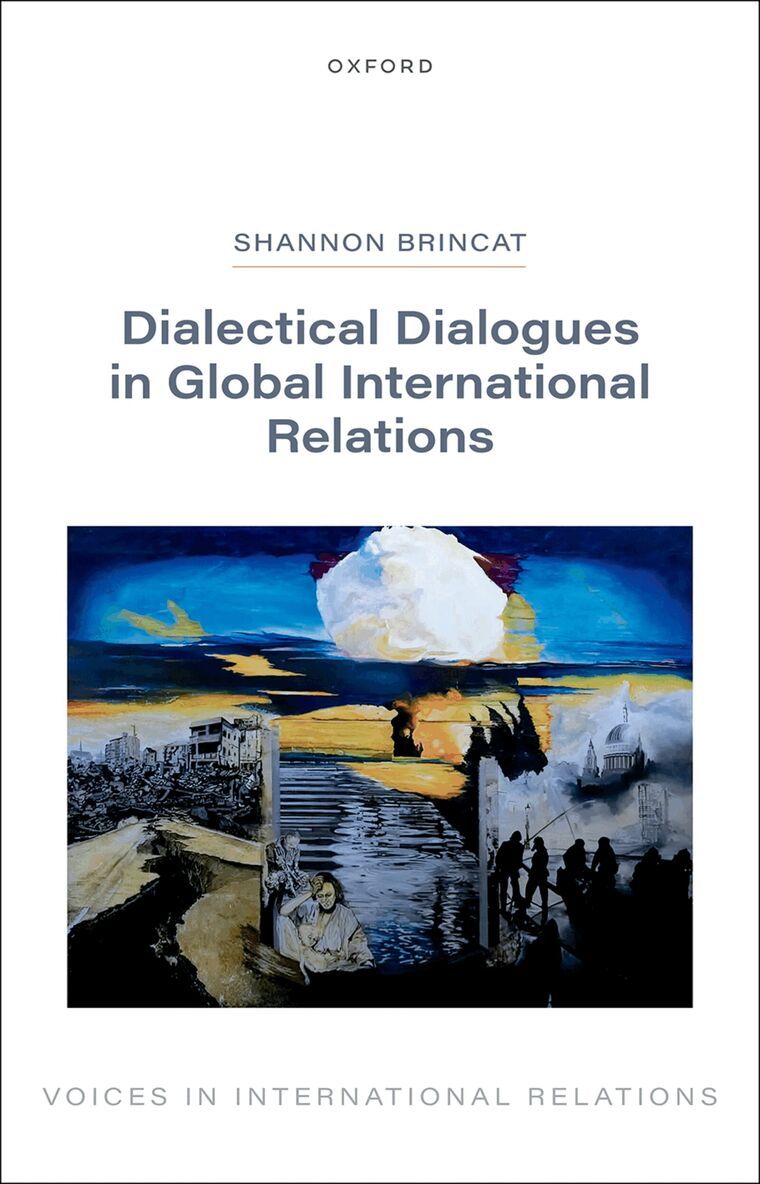
Dialectical Dialogues in Global International Relations brings together scholars who use dialectical methods from a variety of philosophical and civilizational systems to examine core problems in world politics. These range from democracy, human rights, political economy, ecology, and world order to the metaphysics of Ancient India, philosophy in the Islamic Golden Age, and the theories of emancipation today. It offers a fresh perspective on dialectics, revealing it as a universal mode of thought spanning global transcultural, philosophical traditions.The book is a sustained dialogue between Marxian-Hegelian, Advaita, Buddhist, Daoist, Islamic, and Critical Realist traditions of theorizing within International Relations. Across the five chapters, experts explore how dialectics helps us understand a world that is in constant change, deeply interconnected, and full of contradictions. Each dialogue explores elements of dialectical thinking and its application to Global International Relations, illustrating how each tradition, in their unique ways, understand the interrelations and conditions in global social life and the potential for transformation this engenders. It highlights how many different civilizations developed their own systems of dialectical thinking, how each was made to respond to particular philosophical and social problems, and reveals that many of these approaches still resonate within the context of the many challenges facing humanity today. By challenging rigid, Western-centric thinking and transcending simplistic dualisms, the book provides vital tools for analysing complex global challenges and in dialectics finds a means of shared understanding between different cultures. In doing so, this book offers vital insights for 'worlding' Global International Relations and pursuing universal well-being in our deeply interconnected world.ABOUT THE SERIES: Voices in International Relations, published under the auspices of the European International Studies Association (EISA), furthers the development of research at the frontiers of International Relations (IR). It expands the remit of the field by including innovative scholarship that broadens key debates in the discipline, but it is more interested in reconfiguring such debates by approaching them from inside and outside the conventional core. Thematically, we aim to publish research that pushes the limits of IR conventionally defined from within and connects it to debates developing outside the discipline. We are committed to furthering diversity and inclusion in terms of authorship, location, topics and approaches from both inside and outside Europe. We have an inclusive approach to neighbouring disciplines, be it sociology, history, anthropology, geography, economics, political theory or law.Series editors: Debbie Lisle, Tanja Aalberts, Anna Leander, and Laura Sjoberg.