Women in Culture & Society Series WCS (CHUP) – serie
Visar alla böcker i serien Women in Culture & Society Series WCS (CHUP). Handla med fri frakt och snabb leverans.
3 produkter
3 produkter
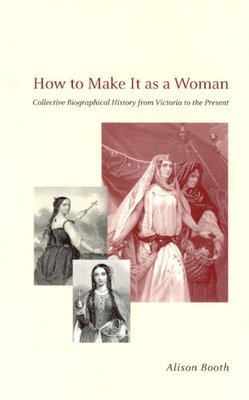
How to Make It as a Woman – Collective Biographical History from Victoria to the Present
Häftad, Engelska, 2004
343 kr
Skickas inom 7-10 vardagar
How to Make It as a Woman outlines the history of prosopography or group biography, focusing on the all-female collections that took hold in nineteenth-century Britain and America. The queens, nurses, writers, reformers, adventurers, even assassins in these collective female biographies served as models to guide the moral development of young women. But often these famous historical women presented untrustworthy examples.Beginning in the fifteenth century with Christine de Pizan, Alison Booth traces the long tradition of this genre, investigating the varied types and stories most often grouped together in illustrated books designed for entertainment and instruction. She claims that these group biographies have been instrumental in constructing modern subjectivities as well as relations among classes, races, and nations.From Joan of Arc to Virginia Woolf, Booth examines a host of models of womanhood—both bad and good. Incorporating a bibliography that includes more than 900 all-female collections published in English between 1830 and 1940, Booth uses collective biographies to decode the varied advice on how to make it as a woman.
331 kr
Skickas inom 7-10 vardagar
In this study of the manner in which medieval nuns lived, Penelope Johnson challenges facile stereotypes of nuns living passively under monastic rule, finding instead that collectively they were empowered by their communal privileges and status to think and act without many of the subordinate attitudes of secular women. In the words of one abbess comparing nuns with monks, they were "different as to their sex but equal in their monastic profession." Johnson researched more than two dozen nunneries in northern France from the eleventh century through the thirteenth century, balancing a qualitative reading of medieval monastic documents with a quantitative analysis of a lengthy thirteenth-century visitation record which allows an important comparison of nuns and monks. A fascinating look at the world of medieval spirituality, this work enriches our understanding of women's role in premodern Europe and in church history.
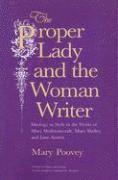
Proper Lady and the Woman Writer – Ideology as Style in the Works of Mary Wollstonecraft, Mary Shelley, and Jane Austen
Häftad, Engelska, 1985
345 kr
Skickas inom 7-10 vardagar
"A brilliant, original, and powerful book. . . . This is the most skillful integration of feminism and Marxist literary criticism that I know of." So writes critic Stephen Greenblatt about The Proper Lady and the Woman Writer, Mary Poovey's study of the struggle of three prominent writers to accommodate the artist's genius to the late eighteenth- and early nineteenth-century ideal of the modest, self-effacing "proper lady." Interpreting novels, letters, journals, and political tracts in the context of cultural strictures, Poovey makes an important contribution to English social and literary history and to feminist theory. "The proper lady was a handy concept for a developing bourgeois patriarchy, since it deprived women of worldly power, relegating them to a sanctified domestic sphere that, in complex ways, nourished and sustained the harsh 'real' world of men. With care and subtle intelligence, Poovey examines this 'guardian and nemesis of the female self' through the ways it is implicated in the style and strategies of three very different writers."—Rachel M. Brownstein, The Nation "The Proper Lady and the Woman Writer is a model of . . . creative discovery, providing a well-researched, illuminating history of women writers at the turn of the nineteenth century. [Poovey] creates sociologically and psychologically persuasive accounts of the writers: Wollstonecraft, who could never fully transcend the ideology of propriety she attacked; Shelley, who gradually assumed a mask of feminine propriety in her social and literary styles; and Austen, who was neither as critical of propriety as Wollstonecraft nor as accepting as Shelley ultimately became."—Deborah Kaplan, Novel