Women's Diaries and Letters of the South – serie
Visar alla böcker i serien Women's Diaries and Letters of the South. Handla med fri frakt och snabb leverans.
5 produkter
5 produkter
462 kr
Skickas inom 10-15 vardagar
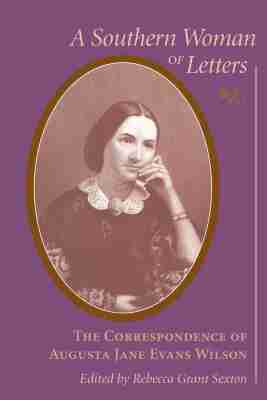
Augusta Jane Evans Wilson (1835-1909) was one of nineteenth-century America's most popular novelists and outspoken supporters of the Confederacy. Her nine novels include the recently reissued Beulah, the stridently pro-Confederate Macaria, and the extremely successful St. Elmo, which rivaled Uncle Tom's Cabin and Ben-Hur in sales. In addition to writing best-selling books, Wilson was a powerful letter-writer whose correspondents included prominent Confederate leaders. Wilson's epistles, 112 of which are gathered in this volume, reveal the depth of her ambitions for herself and the Confederacy. Wilson worked hard to place herself at the center of action during the Civil War and after the surrender assiduously maintained her correspondence with prominent people of her day. In addition to writing Confederate propaganda, her wartime activities included an extended correspondence with General P. G. T. Beauregard and Confederate congressman Jabez L. M. Curry. In her letters Wilson reviews battle plans and military policy, offers political advice, and illumines the hardships suffered by southerners. Her correspondence portrays her as an assertive, well-educated woman who addressed powerful men on equal terms and only occasionally lapsed into traditional feminine deference. Of equal interest, the volume includes Wilson's writings to friends, publishers, fans, and family members. Wilson's working correspondence with her editors and myriad admirers captures her views on the purposes of fiction, the trials of publishing during the war, and the difficulties of combining career and family.
511 kr
Skickas inom 7-10 vardagar
Emmala Reed (1839-1893) may not have watched the unfolding of the Civil War from the front lines, but she nonetheless witnessed the collapse of the Confederacy. With the fall of Charleston and the burning of Columbia, waves of refugees flooded into her hometown of Anderson, South Carolina. Returning Confederate soldiers passed through this isolated settlement to get rations of cornmeal on their journey home, and eventually Union troops occupied the town. All the while this twenty-five-year-old, unmarried woman recorded what she observed from Echo Hall, her family home on Anderson's Main Street. Reed's journals from 1865 and 1866 present a detailed account of life in western South Carolina as war turned to reconstruction. Reed's postwar writings are particularly important given their rarity - many Civil War diarists stopped writing at war's end. As the daughter of Judge Jacob Pinckney Reed, a prominent lawyer, merchant, and prewar Unionist, Reed offers a perspective different from the usual ardent secessionist. Also unlike many diarists of the period, Reed lived in a small town rather than on a plantation or in an urban center. In her journals Reed captures the disheartening, chaoti
324 kr
Skickas inom 10-15 vardagar
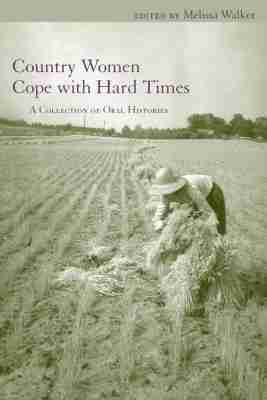
It was hard times, French Carpenter Clark recalls, a sentiment unanimously echoed by the sixteen other women who talk about their lives in Country Women Cope with Hard Times. Born between 1890 and 1940 in eastern Tennessee and western South Carolina, these women grew up on farms, in labor camps, and in remote towns during an era when the region's agricultural system changed dramatically. As daughters and wives, they milked cows, raised livestock, planted and harvested crops, worked in textile mills, sold butter and eggs, preserved food, made cloth, sewed clothes, and practiced remarkable resourcefulness. Their recollections paint a vivid picture of rural life in the first half of the twentieth century for a class of women underrepresented in historical accounts.Through her edited interviews with these women, Melissa Walker provides firsthand descriptions of the influence of modernization on ordinary people struggling through the agricultural depression of the 1920s and 1930s and its aftermath. Their oral histories make plain the challenges such women faced and the self-sacrificing ways they found to confront hardship. While the women detail the difficulties of their existence--the drought years, early freezes, low crop prices, and tenant farming--they also recall the good times and the neighborly assistance of well-developed mutual aid networks, of which women were the primary participants.
622 kr
Skickas inom 11-20 vardagar
From 1871 to 1883, Eliza Lucy Irion Neilson (1843-1913) composed and saved more than 130 letters documenting family and domestic life in Columbus, Mississippi. A New Southern Woman features 80 letters from Neilson's correspondence, providing readers with a glimpse into the recovery of domestic culture in postwar Mississippi, the impact of the war on marriage and education, and a reflection on family relationships after the conflict ended. Lucy Irion married farmer John Abert Neilson (1842-1922) in April 1871, and together the couple created an agricultural partnership out of the scrimping modesty of a new Southern ethos. As Lucy built her life around visions of a domestic ideal, she also watched her widowed sister, Lizzie, her single sister, Cordele, and her schoolgirl niece, Bess, search for their own ways of becoming women of the New South. When it came to turning the war-torn vestiges of antebellum femininity into a workable postwar reality, white Southern women no longer looked to one ideal. Instead Neilson's correspondence suggests that elite white womanhood remained a fluid and negotiated territory where submissive wives, memorial crusaders, and single and self-sufficient women created a new Southern consciousness under a broader rubric of genteel postwar femininity. Fashioning their contrasting individual stories within the collective bonds of family and community, the Irion women met and overcame the generational challenges of postwar life together and, by celebrating both the traditional and nondependent ideals of womanhood, they made a dynamic contribution to the creation of a New South.
511 kr
Skickas inom 7-10 vardagar
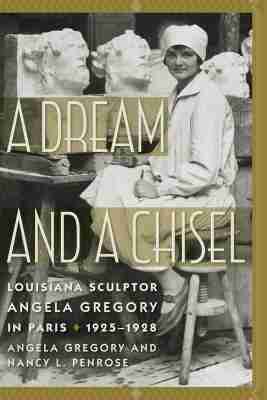
A portrait of a young artist’s formative years studying sculpture in Paris, recounted in her own words.Angela Gregory is considered by many the doyenne of Louisiana sculpture and is a notable twentieth century American sculptor. In A Dream and a Chisel, Angela Gregory and Nancy Penrose explore Gregory’s desire, even as a teenager, to learn the art of cutting stone and to become a sculptor. Through sheer grit and persistence, Gregory achieved her dream of studying with French artist Antoine Bourdelle, one of Auguste Rodin’s most trusted assistants and described by critics of the era as France’s greatest living sculptor. In Bourdelle’s Paris studio, Gregory learned not only sculpting techniques but also how to live life as an artist. Her experiences in Paris inspired a prolific sixty-year career in a field dominated by men.After returning to New Orleans from Paris, Gregory established her own studio in 1928 and began working in earnest. She created bas-relief profiles for the Louisiana State Capitol built in 1932 and sculpted the Bienville Monument, a bronze statue honoring the founder of New Orleans, in the 1950s. Her works also include two other monuments, sculptures incorporated into buildings, portrait busts, medallions, and other forms that appear in museums and public spaces throughout the state. She was the first Louisiana woman sculptor to achieve international recognition, and, at the age of thirty-five, became one of the few women recognized as a fellow of the National Sculpture Society. Gregory’s work appeared in group shows at many prestigious museums and in exhibitions, including the Salon des Tuileries and the Salon d’Automne in Paris, the Palace of the Legion of Honor in San Francisco, the National Collection of Fine Arts in the Smithsonian in Washington, D.C., and the Metropolitan Museum of Art in New York.This memoir is based on Penrose’s oral history interviews with Gregory, as well as letters and diaries compiled before Gregory’s death in 1990. A Dream and a Chisel demonstrates the importance of mentorships, offers a glimpse into the realities of an artist’s life and studio, and captures the vital early years of an extraordinary woman who carved a place for herself in Louisiana’s history.