Wormsloe Foundation Publications – serie
Visar alla böcker i serien Wormsloe Foundation Publications. Handla med fri frakt och snabb leverans.
17 produkter
17 produkter
Häftad, Engelska, 2000
401 kr
Skickas inom 3-6 vardagar
This popular guide enables users to quickly and confidently identify any of the trees of the southeastern United States, from the common loblolly pine or red mulberry to the rare Pinckneya (fever-tree) or goat willow. The guide treats more than 300 species—every one known to occur in the region, from the Coastal Plain to the highest elevations. Included are trees native to the region as well as those introduced and now reproducing.Helpful features include easy identification keys, common and scientific names, distribution maps, an introductory section on basic leaf, flower, and stem structures, and a glossary of descriptive and identifying terms.
Häftad, Engelska, 2005
595 kr
Skickas inom 3-6 vardagar
This flowing, instantly engaging narrative tells the story of Savannah from the hopeful arrival of its first permanent English settlers in 1733 to the uncertainties faced by its Civil War survivors in 1865. Alongside the many women and men of European, African, and Native American heritage who helped shaped Savannah's first century and a half, Walter J. Fraser Jr. also shows how war, disease, market forces, fire, and other circumstances left their marks on the city and its people.Among other major developments in Savannah's history, Fraser recalls the hardships of its first residents; the depredations of the Revolutionary War; the relocation of Georgia's capital away from the city; the growth of commerce through railroads and steamships; the establishment of public institutions such as the Female Asylum for orphaned and abandoned girls and the Poor House and Hospital; and the emergence of public education, a professional police force, and other elements of an urban infrastructure.More than any previous history of the city, Savannah in the Old South points out how whites and blacks, bondpeople and free men and women often interacted in ways that smoothed away the rough edges of racism. From Savannah's physical layout to its cosmopolitan culture, from its social services network to its racially diverse poor neighborhoods, the city offered opportunities for daily contact between blacks and whites that did not exist in the surrounding rural areas.By the eve of the Civil War, Savannah had become Georgia's major commercial and cultural center and the region's sixth largest city. The story of its remarkable growth is told here with an eye for telling facts and human drama.
Häftad, Engelska, 2008
431 kr
Skickas inom 5-8 vardagar
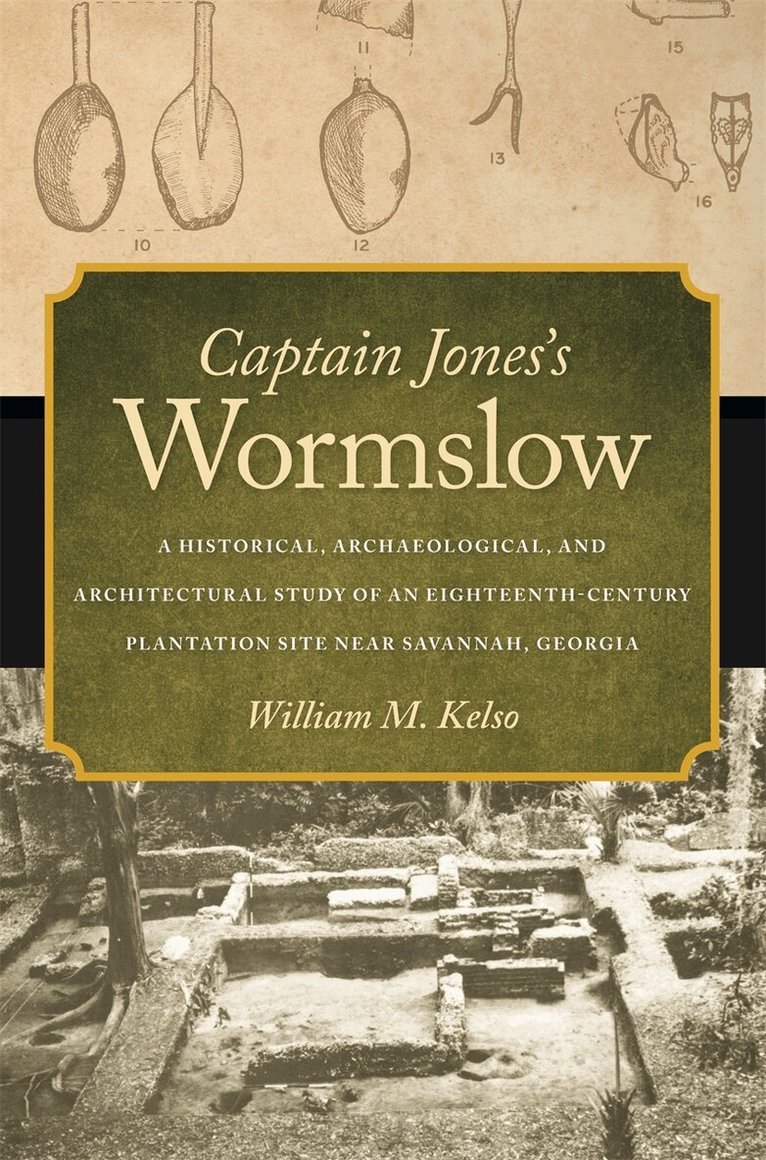
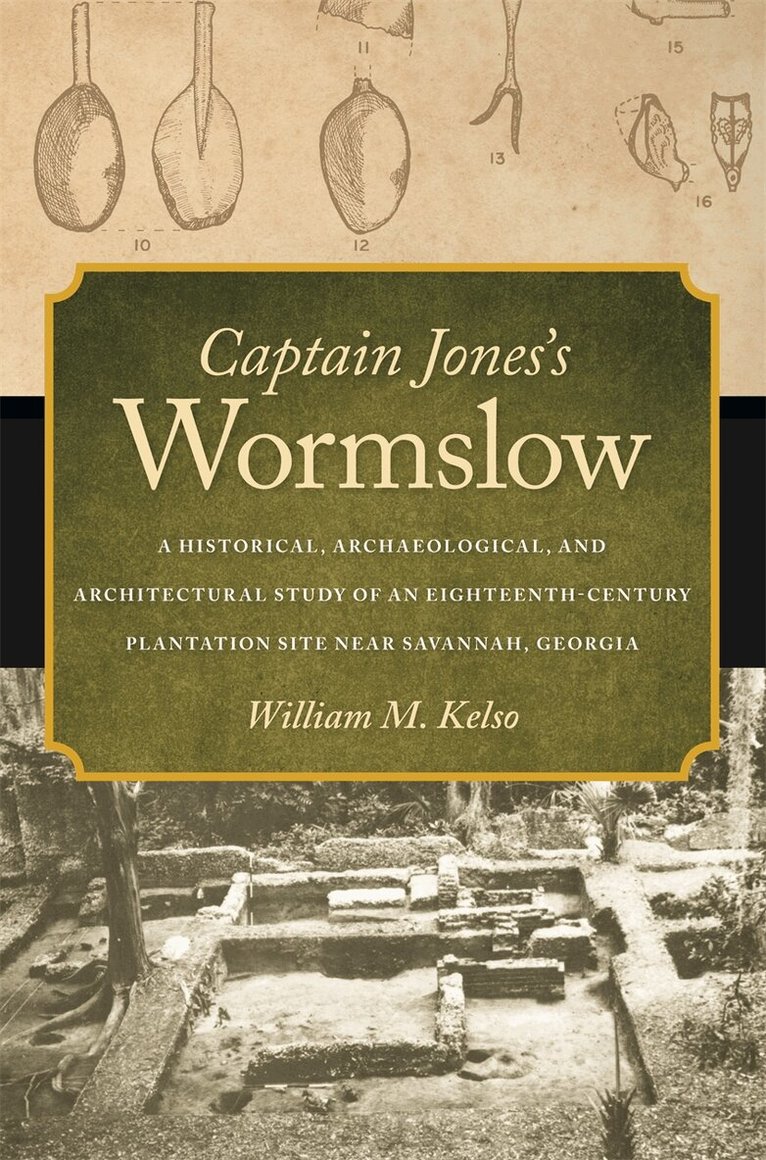
During the fall of 1968 and the summer of 1969, William Kelso conducted archaeological excavations at the site of eighteenth-century ruins at Wormslow, near Savannah, Georgia. Historical records indicated that the ruins were the remains of Fort Wimberly, most likely constructed by Noble Jones, an original settler of Georgia. Records further suggested that Fort Wimberly had been constructed on the site of Jones's earlier fortification, a timber guardhouse known as Jones's Fort, built in 1739 and 1740.The existence of these two structures, built at different times on the same location, made possible an archaeological study of two periods of Georgia coastal fortifications. The earlier was built as a major link in General James Oglethorpe's chain of defenses against the Spanish threat from Florida in the 1740s and the later presumably was built to repel the French. The project also presented another important opportunity—the chance to define what effect the semitropical, hostile border environment of colonial Georgia had on the plantation development scheme of at least one English settler.Mr. Kelso's report of his excavations begins with a documentary history of Wormslow, followed by a presentation of the archaeological evidence that correlates it with the historical documents. Ultimately he reconstructs the site based on the historical and archaeological evidence, an architectural study of the ruins, and information about early Georgia architecture in general and other eighteenth-century buildings in particular. The report concludes with a detailed study of the artifacts with illustrations, descriptions, and identifications of the important pieces.
Häftad, Engelska, 2009
342 kr
Skickas inom 3-6 vardagar
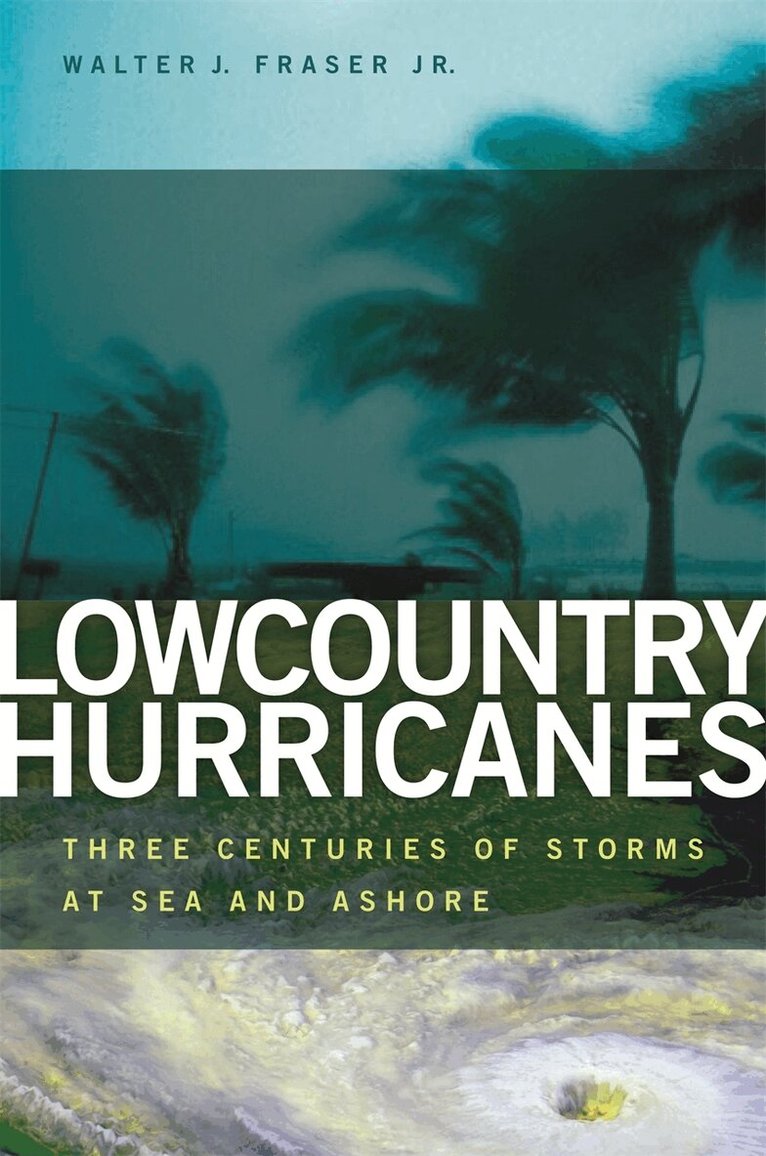
At once sobering and thrilling, this illustrated history recounts how, for the past three hundred years, hurricanes have altered lives and landscapes along the Georgia-South Carolina seaboard. A prime target for the fierce storms that develop in the Atlantic, the region is especially vulnerable because of its shallow, gradually sloping sea floor and low-lying coastline.With an eye on both natural and built environments, Fraser's narrative ranges from the first documented storm in 1686 to recent times in describing how the lowcountry has endured some of the severest effects of wind and water. This chronology of the most notable lowcountry storms is also a useful primer on the basics of hurricane dynamics.Fraser tells how the 800-ton Rising Sun foundered in open water near Charles Town during the hurricane of 1700. About one hundred persons were aboard. All perished. Drawing on eyewitness accounts, he describes the storm surge of an 1804 hurricane that submerged most of Tybee Island and swept over the fort on nearby Cockspur Island, drowning soldiers and civilians. Readers may have their own memories of Hurricanes Andrew, Opal, and Hugo. Although hurricanes frequently lead to significant loss of life, Fraser recounts numerous gripping instances of survival and rescue at sea and ashore.The author smoothly weaves the lowcountry's long social, political, and economic history with firsthand reports and data accumulated by the National Weather Service and the National Oceanic and Atmospheric Administration. Generously illustrated with contemporary and historical photographs, this is a readable and informative resource on one of nature's most awesome forces.
Häftad, Engelska, 2014
359 kr
Skickas inom 3-6 vardagar
From the foremost authority on the famed Georgia barrier island, here is the first in-depth look at Jekyll Island’s early history. Much of what defines our view of the place dates from the Jekyll Island Club era. Founded in 1886, the Club was the private resort of America’s moneyed elite, including the Vanderbilts, Rockefellers, and Pulitzers. In her new book that ranges from pre-Columbian times through the Civil War and its aftermath, June Hall McCash shows how the environment, human conflict, and a desire for refuge shaped the island long before the Club’s founding.Jekyll’s earliest identifiable inhabitants were the Timucua, a flourishing group of Native Americans who became extinct within two hundred years after their first contact with Europeans. Caught up in the New World contests among France, Spain, and England, the island eventually became part of a thriving English colony. In subsequent stories of Jekyll and its residents, the drama of our nation plays out in microcosm. The American Revolution, the War of 1812, the slavery era, and the Civil War brought change to the island, as did hurricanes and cotton farming. Personality conflicts and unsanctioned love affairs also had an impact, and McCash’s narrative is filled with the names of Jekyll’s powerful and often colorful families, including Horton, Martin, Leake, and du Bignon.Bringing insight and detail to a largely untold chapter of Jekyll’s past, June Hall McCash breathes life into a small part of Georgia that looms large in the state’s history.
Inbunden, Engelska, 2017
1 343 kr
Skickas inom 5-8 vardagar
During the fall of 1968 and the summer of 1969, William Kelso conducted archaeological excavations at the site of eighteenth-century ruins at Wormslow, near Savannah, Georgia. Historical records indicated that the ruins were the remains of Fort Wimberly, most likely constructed by Noble Jones, an original settler of Georgia. Records further suggested that Fort Wimberly had been constructed on the site of Jones's earlier fortification, a timber guardhouse known as Jones's Fort, built in 1739 and 1740.The existence of these two structures, built at different times on the same location, made possible an archaeological study of two periods of Georgia coastal fortifications. The earlier was built as a major link in General James Oglethorpe's chain of defenses against the Spanish threat from Florida in the 1740s and the later presumably was built to repel the French. The project also presented another important opportunity—the chance to define what effect the semitropical, hostile border environment of colonial Georgia had on the plantation development scheme of at least one English settler.Mr. Kelso's report of his excavations begins with a documentary history of Wormslow, followed by a presentation of the archaeological evidence that correlates it with the historical documents. Ultimately he reconstructs the site based on the historical and archaeological evidence, an architectural study of the ruins, and information about early Georgia architecture in general and other eighteenth-century buildings in particular. The report concludes with a detailed study of the artifacts with illustrations, descriptions, and identifications of the important pieces.
Häftad, Engelska, 2017
496 kr
Skickas inom 5-8 vardagar
William Stephens was Secretary of the Province of Georgia from 1737 to 1750 and was President from 1741 for ten years. He was sent to America by the Trustees of Georgia, who resided in London, to keep them informed on conditions in the colony. Besides writing numerous letters to the Trustees, Stephens kept a journal which he sent to them periodically. The journal down to 1741 was printed by the Trustees. Here in this volume (and the volume for 1743–1745) the continuation of the journal is published for the first time.Through his journal Stephens undertook to inform the Trustees of everything which happened in Georgia, from the most trivial to the most important. This close-up view of Georgia, the details of the everyday life of the people, and the record of significant development in the colony all make his journal a valuable document in American colonial history.
Inbunden, Engelska, 2017
1 455 kr
Skickas inom 3-6 vardagar
William Stephens was Secretary of the Province of Georgia from 1737 to 1750 and was President from 1741 for ten years. He was sent to America by the Trustees of Georgia, who resided in London, to keep them informed on conditions in the colony. Besides writing numerous letters to the Trustees, Stephens kept a journal which he sent to them periodically. The journal down to 1741 was printed by the Trustees. Here in this volume (and the volume for 1741–1743) the continuation of the journal is published for the first time.Through his journal Stephens undertook to inform the Trustees of everything which happened in Georgia, from the most trivial to the most important. This close-up view of Georgia, the details of the everyday life of the people, and the record of significant development in the colony all make his journal a valuable document in American colonial history.
Häftad, Engelska, 2021
623 kr
Skickas inom 3-6 vardagar
The Journal of Peter Gordon, 1732–1735, provides a rare first-hand account of one of the original Georgia colonists. In his journal, Gordon, who served as chief bailiff of Savannah, Georgia, documents the challenges faced by the original settlers, criticism of the Trustees’ policies for the colony, and interactions with indigenous peoples. His journal provides unique insight into the establishment of one of America’s oldest colonies.The Georgia Open History Library has been made possible in part by a major grant from the National Endowment for the Humanities: Democracy demands wisdom. Any views, findings, conclusions, or recommendations expressed in this collection, do not necessarily represent those of the National Endowment for the Humanities.
Inbunden, Engelska, 2021
2 085 kr
Skickas inom 3-6 vardagar
The Journal of Peter Gordon, 1732–1735, provides a rare first-hand account of one of the original Georgia colonists. In his journal, Gordon, who served as chief bailiff of Savannah, Georgia, documents the challenges faced by the original settlers, criticism of the Trustees’ policies for the colony, and interactions with indigenous peoples. His journal provides unique insight into the establishment of one of America’s oldest colonies.The Georgia Open History Library has been made possible in part by a major grant from the National Endowment for the Humanities: Democracy demands wisdom. Any views, findings, conclusions, or recommendations expressed in this collection, do not necessarily represent those of the National Endowment for the Humanities.
Häftad, Engelska, 2021
603 kr
Skickas inom 3-6 vardagar
Henry Newman’s Salzburger Letterbooks contains correspondence between Henry Newman and Samuel Urlsperger, a German Lutheran minister in Ausburg. These two men were heavily involved in the settlement of the Salzburgers in Georgia. Their letters, which contain both inward and outward correspondence, provide a unique journal of the settlement of Salzburg and colonial life in Georgia. The Georgia Open History Library has been made possible in part by a major grant from the National Endowment for the Humanities: Democracy demands wisdom. Any views, findings, conclusions, or recommendations expressed in this collection, do not necessarily represent those of the National Endowment for the Humanities.
Häftad, Engelska, 2021
623 kr
Skickas inom 3-6 vardagar
The eighteen volumes of Detailed Reports on the Salzburger Emigrants Who Settled in America (reproduced in sixteen discrete books) contain the diaries and letters of Lutheran pastors who ministered to the Salzburgers, German-speaking Protestant refugees, in Georgia. Samuel Urlsperger collected and edited these writings into the Urlsperger Reports printed at Orphanage Press, Halle, Germany, from 1735 to 1760. The original German publication, Ausführliche Nachricht von den saltzburgischen Emigranten, is available through the Internet Archive, but this English-language translation has not been available online until now.In the mid-eighteenth century, Samuel Urlsperger of the Lutheran Ministry in Augsburg edited the German edition of the Detailed Reports after having distributed the many reports to the faithful in Germany. He made major deletions for both diplomatic and economic reasons and suppressed proper names. His son, Johann August Urlsperger, succeeded him. He took even greater liberties with the text, deleting large sections and rearranging others. The English version, translated and edited by George Fenwick Jones, a German scholar, restores the deleted sections and the proper names and provides the original sequencing of the material.The Detailed Reports offer insight into daily life in colonial Georgia and provide precious details and vignettes on subjects that receive less attention in other sources, notably African Americans, women, silk production, and the cost of goods in a frontier colony. The Reports are an underutilized resource for the study of this period and an unparalleled source for the evolution of a rural community during the early years of the colony. The Georgia Open History Library has been made possible in part by a major grant from the National Endowment for the Humanities: Democracy demands wisdom. Any views, findings, conclusions, or recommendations expressed in this collection, do not necessarily represent those of the National Endowment for the Humanities.
Häftad, Engelska, 2021
623 kr
Skickas inom 3-6 vardagar
The eighteen volumes of Detailed Reports on the Salzburger Emigrants Who Settled in America (reproduced in sixteen discrete books) contain the diaries and letters of Lutheran pastors who ministered to the Salzburgers, German-speaking Protestant refugees, in Georgia. Samuel Urlsperger collected and edited these writings into the Urlsperger Reports printed at Orphanage Press, Halle, Germany, from 1735 to 1760. The original German publication, Ausführliche Nachricht von den saltzburgischen Emigranten, is available through the Internet Archive, but this English-language translation has not been available online until now.In the mid-eighteenth century, Samuel Urlsperger of the Lutheran Ministry in Augsburg edited the German edition of the Detailed Reports after having distributed the many reports to the faithful in Germany. He made major deletions for both diplomatic and economic reasons and suppressed proper names. His son, Johann August Urlsperger, succeeded him. He took even greater liberties with the text, deleting large sections and rearranging others. The English version, translated and edited by George Fenwick Jones, a German scholar, restores the deleted sections and the proper names and provides the original sequencing of the material.The Detailed Reports offer insight into daily life in colonial Georgia and provide precious details and vignettes on subjects that receive less attention in other sources, notably African Americans, women, silk production, and the cost of goods in a frontier colony. The Reports are an underutilized resource for the study of this period and an unparalleled source for the evolution of a rural community during the early years of the colony. The Georgia Open History Library has been made possible in part by a major grant from the National Endowment for the Humanities: Democracy demands wisdom. Any views, findings, conclusions, or recommendations expressed in this collection, do not necessarily represent those of the National Endowment for the Humanities.
Inbunden, Engelska, 2026
2 085 kr
Skickas inom 3-6 vardagar
Learning from Savannah bridges the mostly separate worlds of the history of Savannah’s famed urban plan and the history of the city’s architecture. The authors analyze the history of the urban plan, how it functions, and how it has shaped the city’s buildings in distinctive ways. Distilling over two decades of original research on the history of Savannah’s built environment, as well as the daily experience of it, Gobel and Williams uncover the complex and illusive qualities that have enthralled visitors since the nineteenth century and architects and planners since the mid-twentieth. The book includes many previously unpublished historic maps and images, as well as numerous original analytical diagrams that interpret the city in fresh ways.
Häftad, Engelska, 2026
528 kr
Kommande
Learning from Savannah bridges the mostly separate worlds of the history of Savannah’s famed urban plan and the history of the city’s architecture. The authors analyze the history of the urban plan, how it functions, and how it has shaped the city’s buildings in distinctive ways. Distilling over two decades of original research on the history of Savannah’s built environment, as well as the daily experience of it, Gobel and Williams uncover the complex and illusive qualities that have enthralled visitors since the nineteenth century and architects and planners since the mid-twentieth. The book includes many previously unpublished historic maps and images, as well as numerous original analytical diagrams that interpret the city in fresh ways.
Inbunden, Engelska, 2026
441 kr
Kommande
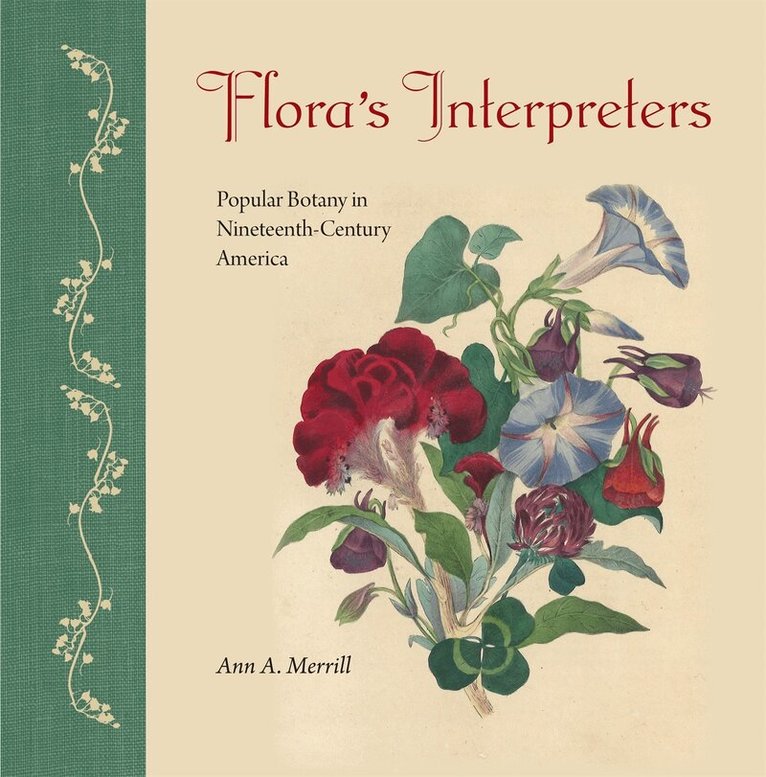
Flora’s Interpreters explores how everyday Americans in the nineteenth century interacted with common plants and recorded these relationships in diaries, books, and material artifacts. Through extensive archival research, Merrill uncovers genres not typically considered by scholars of environmental literature and history, including botany textbooks, herbaria, and flower language dictionaries. These genres shared a commitment to place-based knowledge, encouraging readers to discover, identify, and preserve the plants around them. Popular botany books also celebrated the diversity and abundance of American flora in detailed illustrations and lavish bindings. Beyond their printed contents are the inscriptions, marginalia, sketches, and pressed specimens that provide fascinating evidence of individual botanical encounters. A dialogic structure of genre surveys followed by “From the Archives” chapters highlight the interplay of general and particular that characterizes popular botany.Combining approaches from environmental humanities, plant studies, material culture analysis, and history of the book, Merrill offers a unique perspective on sources relevant to nineteenth-century American environmentalism. Distinctive for its combination of visual, textual, and material analyses, Flora’s Interpreters is beautifully illustrated with images from primary sources and will appeal to anyone interested in the significance of plants for early American conservation, citizen science, and creative expression.
Inbunden, Engelska, 2026
453 kr
Skickas inom 3-6 vardagar
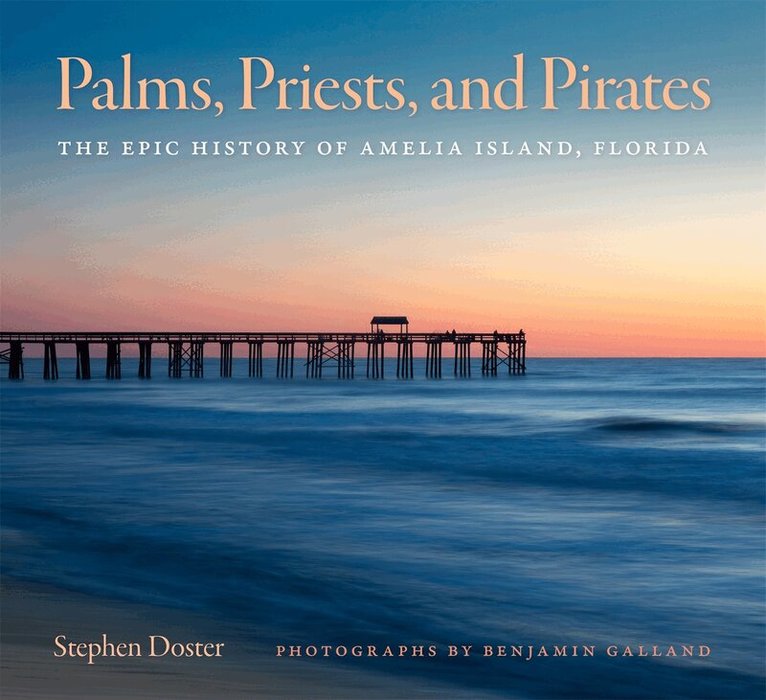
In Palms, Priests, and Pirates: The Epic History of Amelia Island, Florida, Stephen Doster offers the first comprehensive examination of the rich and captivating history of this unique barrier island off the northeast coast of Florida. Drawing on extensive research and a deep personal connection to the region, Doster has chronicled Amelia Island’s remarkable story—from its initial Native American settlement, through the Spanish colonial era and the founding of Fernandina, to the island’s tumultuous periods of pirate raids, American “patriot” invasions, Civil War upheaval, and devastating yellow fever outbreaks.By weaving together these diverse threads of Amelia Island’s past, with spectacular images by acclaimed photographer Benjamin Galland, Doster aims to offer readers an unparalleled understanding of the island’s pivotal role in the broader history of Florida and the early formation of the United States. From the cultural clashes between Indigenous populations and European colonizers to the strategic military significance of this Atlantic coastal outpost, Doster’s book provides a fresh and illuminating perspective on an often-overlooked corner of American history. Ultimately, Palms, Priests, and Pirates celebrates the remarkable resilience and enduring spirit of Amelia Island, a place whose dramatic saga from its earliest occupation to the present has remained largely untold—until now.