Yale Musical Instrument Series - Böcker
Visar alla böcker i serien Yale Musical Instrument Series. Handla med fri frakt och snabb leverans.
8 produkter
8 produkter
805 kr
Skickas inom 5-8 vardagar
This book tells the story of the flute in the musical life of Europe and North America from the twelfth century to the present day. It is the first history to illustrate the relationship that has bound the instrument, its music, and performance technique together through eight centuries of shifting musical tastes and practices.In a comprehensive and authoritative account of the flute’s development, Ardal Powell takes full account of recent research: on military flutes and fifes of the fifteenth century, the renaissance consort flute, baroque and classical instruments, mechanically advanced nineteenth-century designs by Theobald Boehm and others, and further innovations that led to the modern flute. All these transformations are related to revolutions in playing style and repertoire, in the lives of flute players and makers, and in the uses of the instrument to play military, religious, consort, solo, chamber, opera, symphony, jazz, popular, and flute band music. For the first time the role of amateur flutists receives due consideration alongside the influence of famous players and teachers. The ultimate guide to the heritage of the flute, this volume will delight both those who play the flute and those who love its music.
531 kr
Skickas inom 11-20 vardagar
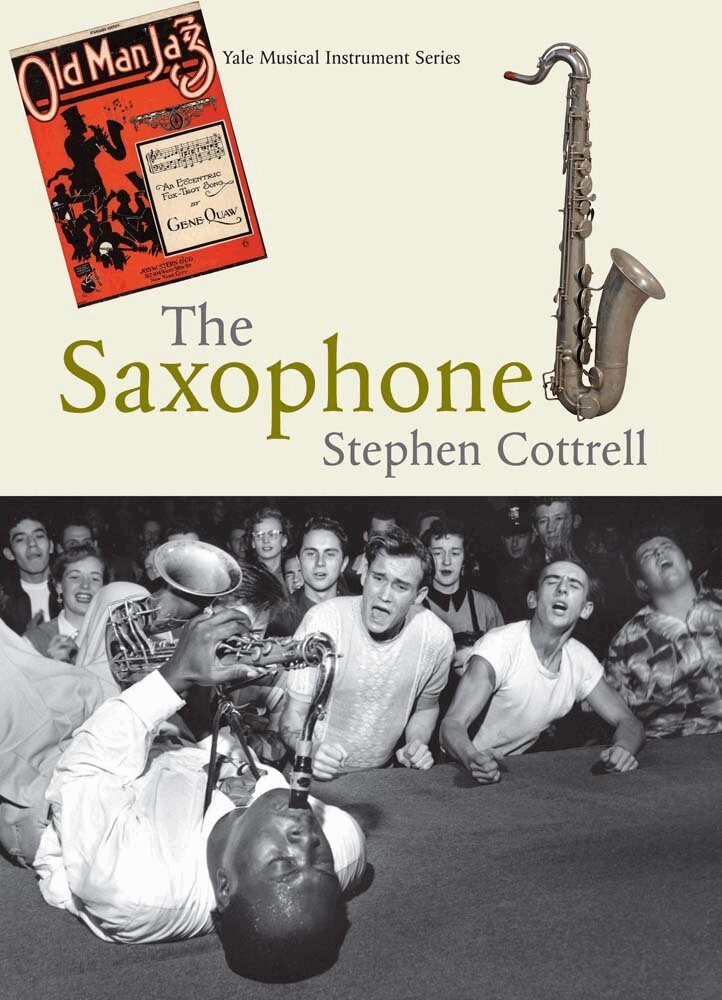
In the first fully comprehensive study of one of the world’s most iconic musical instruments, Stephen Cottrell examines the saxophone’s various social, historical, and cultural trajectories, and illustrates how and why this instrument, with its idiosyncratic shape and sound, became important for so many different music-makers around the world. After considering what led inventor Adolphe Sax to develop this new musical wind instrument, Cottrell explores changes in saxophone design since the 1840s before examining the instrument's role in a variety of contexts: in the military bands that contributed so much to the saxophone's global dissemination during the nineteenth century; as part of the rapid expansion of American popular music around the turn of the twentieth century; in classical and contemporary art music; in world and popular music; and, of course, in jazz, a musical style with which the saxophone has become closely identified.
261 kr
Skickas inom 7-10 vardagar
The oboe, including its earlier forms the shawm and the hautboy, is an instrument with a long and rich history. In this book two distinguished oboist-musicologists trace that history from its beginnings to the present time, discussing how and why the oboe evolved, what music was written for it, and which players were prominent. Geoffrey Burgess and Bruce Haynes begin by describing the oboe’s prehistory and subsequent development out of the shawm in the mid-seventeenth century. They then examine later stages of the instrument, from the classical hautboy to the transition to a keyed oboe and eventually the Conservatoire-system oboe. The authors consider the instrument’s place in Romantic and Modernist music and analyze traditional and avant-garde developments after World War II. Noting the oboe’s appearance in paintings and other iconography, as well as in distinctive musical contexts, they examine what this reveals about the instrument’s social function in different eras. Throughout the book they discuss the great performers, from the pioneers of the seventeenth century to the traveling virtuosi of the eighteenth, the masters of the romantic period and the legends of the twentieth century such as Gillet, Goossens, Tabuteau, and Holliger. With its extensive illustrations, useful technical appendices, and discography, this is a comprehensive and authoritative volume that will be the essential companion for every woodwind student and performer.
377 kr
Skickas inom 7-10 vardagar
The story of the trumpet from prehistory to the present day, written by two of its outstanding performers and teachersIn the first major book devoted to the trumpet in more than two decades, John Wallace and Alexander McGrattan trace the surprising evolution and colorful performance history of one of the world's oldest instruments. They chart the introduction of the trumpet and its family into art music, and its rise to prominence as a solo instrument, from the Baroque "golden age," through the advent of valved brass instruments in the nineteenth century, and the trumpet's renaissance in the jazz age. The authors offer abundant insights into the trumpet's repertoire, with detailed analyses of works by Haydn, Handel, and Bach, and fresh material on the importance of jazz and influential jazz trumpeters for the reemergence of the trumpet as a solo instrument in classical music today.Wallace and McGrattan draw on deep research, lifetimes of experience in performing and teaching the trumpet in its various forms, and numerous interviews to illuminate the trumpet's history, music, and players. Copiously illustrated with photographs, facsimiles, and music examples throughout, The Trumpet will enlighten and fascinate all performers and enthusiasts.
469 kr
Skickas inom 7-10 vardagar
An authoritative account of the 500-year history of the bassoon, with new research findings and dozens of rare illustrationsThis welcome volume encompasses the entire history of the bassoon, from its origins five centuries ago to its place in twenty-first-century music. James Kopp draws on new archival research and many years’ experience playing the instrument to provide an up-to-date and lively portrait of today’s bassoon and its intriguing predecessors. He discusses the bassoon’s makers, its players, its repertory, its myths, and its audiences, all in unprecedented detail.The bassoon was invented in Italy in response to the need for a bass-register double-reed woodwind suitable for processionals and marching. Composers were quick to exploit its agility and unique timbre. Later, during the reign of Louis XIV, the instrument underwent a major redesign, giving voice to its tenor register. In the early 1800s new scientific precepts propelled a wave of invention and design modifications. In the twentieth century, the multiplicity of competing bassoon designs narrowed to a German (or Heckel) type and a French type, the latter now nearly extinct. The author examines the acoustical consequences of these various redesigns. He also offers new coverage of the bassoon’s social history, including its roles in the military and church and its global use during the European Colonial period. Separate historical chapters devoted to contrabassoons and smaller bassoons complete the volume.Published in association with the William Waterhouse Archive
475 kr
Skickas inom 7-10 vardagar
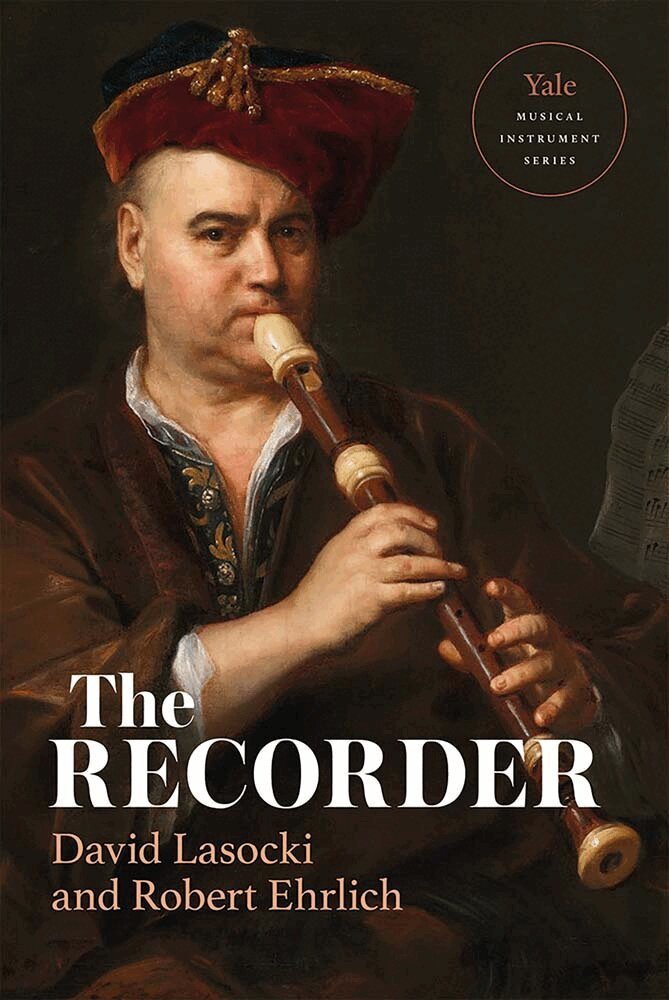
The fascinating story of a hugely popular instrument, detailing its rich and varied history from the Middle Ages to the presentThe recorder is perhaps best known today for its educational role. Although it is frequently regarded as a stepping-stone on the path toward higher musical pursuits, this role is just one recent facet of the recorder’s fascinating history—which spans professional and amateur music-making since the Middle Ages. In this new addition to the Yale Musical Instrument Series, David Lasocki and Robert Ehrlich trace the evolution of the recorder. Emerging from a variety of flutes played by fourteenth-century soldiers, shepherds, and watchmen, the recorder swiftly became an artistic instrument for courtly and city minstrels. Featured in music by the greatest Baroque composers, including Bach and Handel, in the twentieth century it played a vital role in the Early Music Revival and achieved international popularity and notoriety in mass education. Overall, Lasocki and Ehrlich make a case for the recorder being surprisingly present, and significant, throughout Western music history.
423 kr
Skickas inom 7-10 vardagar
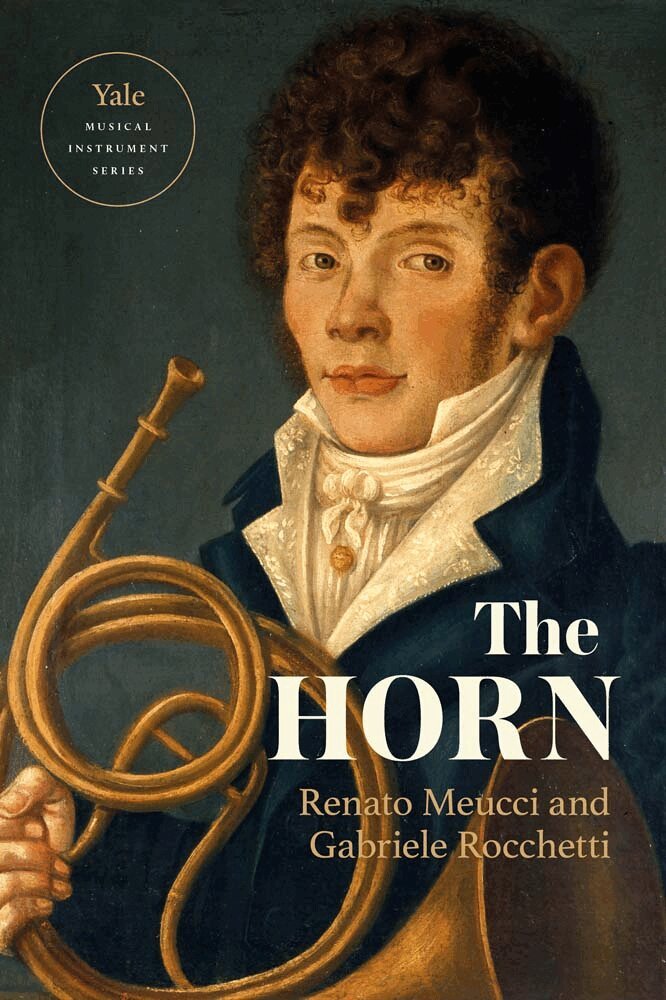
A rich and fascinating account of one of music history’s most ancient, varied, and distinctive instruments From its origins in animal horn instruments in classical antiquity to the emergence of the modern horn in the seventeenth century, the horn appears wherever and whenever humans have made music. Its haunting, timeless presence endures in jazz and film music, as well as orchestral settings, to this day. In this welcome addition to the Yale Musical Instrument Series, Renato Meucci and Gabriele Rocchetti trace the origins of the modern horn in all its variety. From its emergence in Turin and its development of political and diplomatic functions across European courts, to the revolutionary invention of valves, the horn has presented in innumerable guises and forms. Aided by musical examples and newly discovered sources, Meucci and Rocchetti’s book offers a comprehensive account of an instrument whose history is as complex and fascinating as its music.
913 kr
Skickas inom 5-8 vardagar
This is the first comprehensive study of the trombone in English. It covers the instrument, its repertoire, the way it has been played, and the social, cultural, and aesthetic contexts within which it has developed. The book explores the origins of the instrument, its invention in the fifteenth century, and its story up to modern times, also revealing hidden aspects of the trombone in different eras and countries.The book looks not only at the trombone within classical music but also at its place in jazz, popular music, popular religion, and light music. Trevor Herbert examines each century of the trombone’s development and details the fundamental impact of jazz on the modern trombone. By the late twentieth century, he shows, jazz techniques had filtered into the performance idioms of almost all styles of music and transformed ideas about virtuosity and lyricism in trombone playing.