Yale Studies on White-Collar Crime Series - Böcker
Visar alla böcker i serien Yale Studies on White-Collar Crime Series. Handla med fri frakt och snabb leverans.
4 produkter
4 produkter
433 kr
Skickas inom 5-8 vardagar
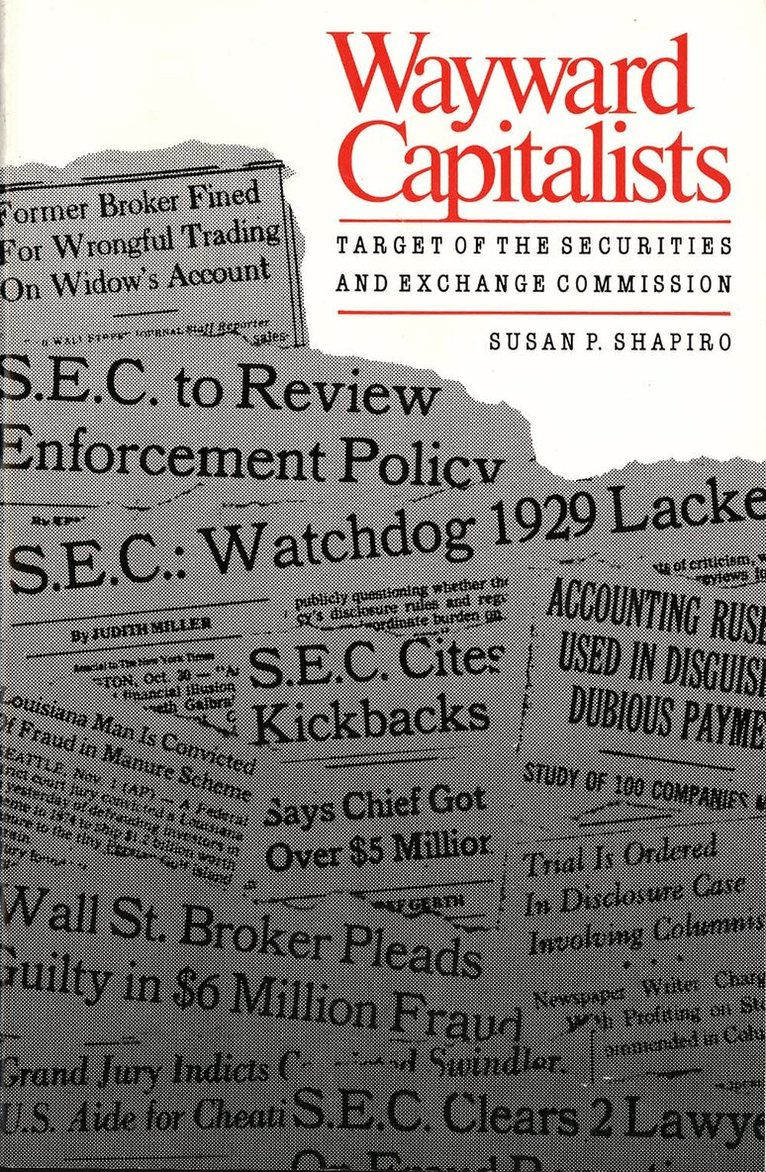
This pathbreaking book not only reveals how "wayward capitalists"—representatives of publicly held corporations, stock buyers and sellers, stockbrokers, investment advisers, accountants, and attorneys—defraud investors but also explains how Securities and Exchange Commission enforcers catch, investigate, and prosecute these offenders. "The book is a valuable source for grasping the intricacies of corporate deviance. an attractive feature is the author's discussion of research design and execution. . . . An excellent reference section is provided for the inquiring reader. I recommend the book for both the practitioner and academician. The author blends the fields of business and criminology, which should be of interest to anyone studying private justice and white collar crime."—Robert J. Meadows, Security Administration "An important book."—USA Today "The book contains many interesting anecdotes in addition to the research findings and is bound to be controversial."—Stephen L. Fogg, Journal of Accountancy
463 kr
Skickas inom 5-8 vardagar
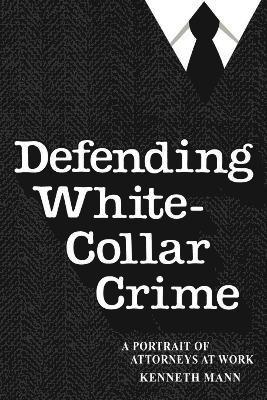
The first inside look at how the elite white-collar crime defense bar goes about its work. Mann's book reveals that these lawyers see their main task as controlling information about their clients, especially the flow of harmful information to government investigators. As both lawyer and sociologist, Mann was able to gain access only rarely available to scholars. His book raises important questions for the bar and for the administration of justice. "A pioneering study. . . . This is a splendid book. I think it is destined to become the classic study of the white-collar crime defense bar." —George C. Kiser, Social Science Quarterly"An excellent introduction to white-collar criminal defense for practitioners, law students, and potential clients. . . . I would make this book required reading for all prosecutors."—Lawrence B. Pedowitz, former federal prosecutor, Legal Times of New York"Analytical, detailed, well illustrated, and an authoritative portrait of American white-collar crime attorneys at work."—M. David Ermann, Contemporary Sociology"Sheds light on some of the most fundamental ethical questions that can arise in law practice. For this reason, [Mann's] book is not only a significant contribution to the sociology of the legal profession, but a sociological study with special value for lawyers."—Ted Schneyer, American Bar Foundation Research Journal
366 kr
Skickas inom 5-8 vardagar
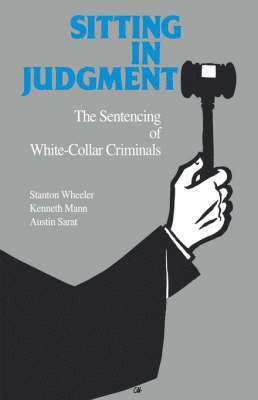
This is the first book to describe in detail how judges sentence white-collar criminals. Drawing from lengthy, in-depth interviews with fifty-one judges in seven federal districts, the authors explore such topics as the information available to sentencing judges and how they work with it; the principles of harm, blameworthiness, and consequence that affect judges' decisions; and the conceptual problems that make it difficult to convert a basic agreement on principle into a system of consistent sentences. "Sitting In Judgment will continue to have an impact on the academic and professional community, as well as on sentencing policy and legislation. . . . An eye opener. The presentation is cogent and persuasive. It moves the debate about sentencing to a more informed and less abstract level."—Charles M. Carberry, White-Collar Crime Reporter "Sitting in Judgement hits the bull's-eye in describing a judge's thinking process as to the sentencing of criminal defendants. Its analysis should be of great value to lawyers and other professions dealing with this important subject."—Judge Morris E. Lasker, United States District Court, Southern District of New York "This book should go a considerable way toward rehabilitating the standing of federal judges in the eyes of those who regarded them, in the words of Wheeler and his co-authors, as 'a miscellany of individuals each heading off in his or her own ideological or emotional direction.' And it is valuable in presenting, in their own words, the views of the judges as to how they arrive at the sentences they give to white-collar criminals."—Gilbert Geis, Judicature "Unique and invaluable as a resource for social theory, the book is also quite provocative for policy development. Nonlawyers will not have the slightest difficulty in reading this book."—Jack Katz, Contemporary Sociology
402 kr
Skickas inom 3-6 vardagar
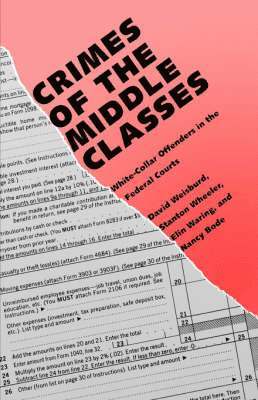
White-collar criminals are often assumed to be wealthy and powerful individuals who receive lenient treatment from the courts. This book—a major study of convicted white-collar offenders in America—provides a radically different portrait of these criminals and their punishments. Weisburd, Wheeler, Waring, and bode argue that the majority of white-collar criminals come from the middle classes and that judges often punish wrongdoers of higher status more harshly than less socially privileged criminals. Drawing from a large research project that had special access to confidential federal pre-sentence investigations, the authors are able to give a particularly rich and detailed view of white-collar crime—from securities fraud and anti-trust violations to embezzlement and tax fraud. Following offenders from their crimes through conviction and sentencing, their book provides a fresh look at a number of questions that have become central research and policy concerns. Fro example, they find that the most important factor that makes it possible to commit costly and damaging white-collar crimes is use of organizational resources. They state that, when sentencing white-collar criminals, judges consider the blameworthiness of defendants and the harm they inflict upon the community. The authors argue that the vast middle of our increasingly bureaucratic society has both more opportunities for financial wrongdoing and more susceptibility to it. They predict that white-collar crimes committed by these Americans will grow in significance as the nation approaches the twenty-first century.