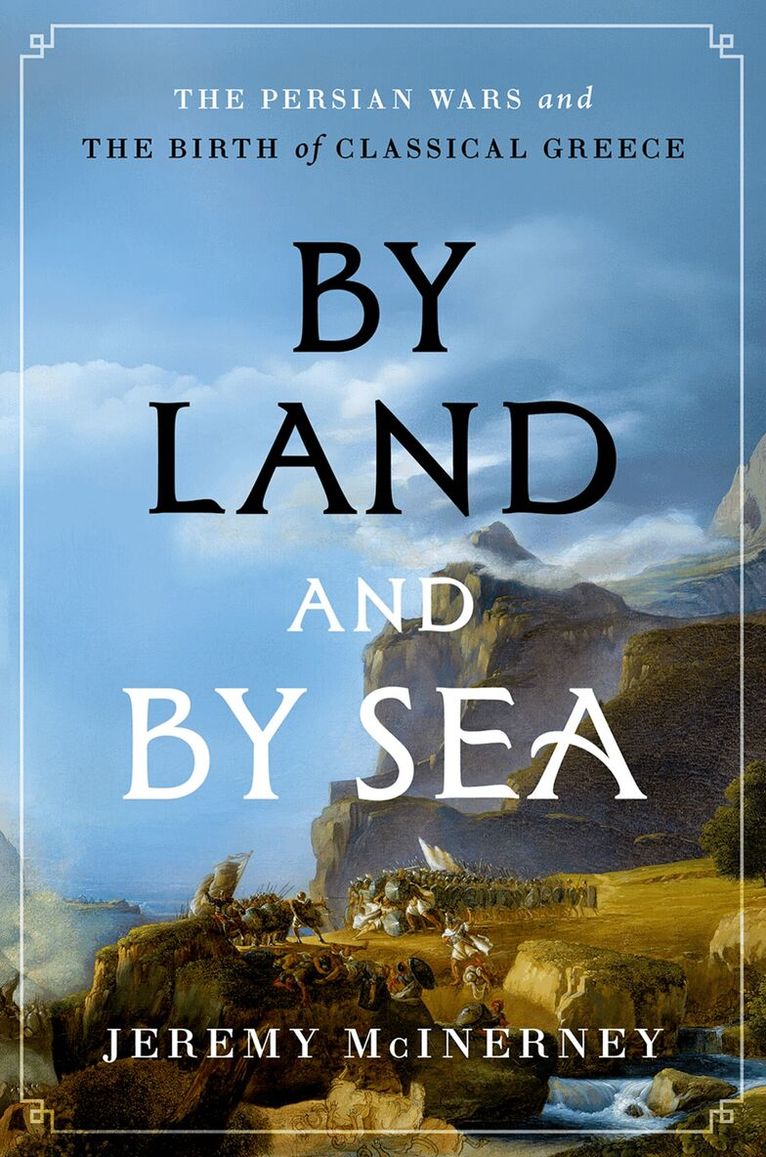
Inbunden, Engelska, 2027
By Land and by Sea
333 kr
Kommande
Beskrivning
A bold new history of the Persian Wars that overturns long-held assumptions and reveals the surprising truths behind one of antiquity's most iconic conflictsMany who champion the idea of "Western Civilization" have only the loosest grasp of its history and of the Persian Wars, often portrayed as the heroic defense of "Western" values. Popular narratives frame these wars as East versus West, Greeks versus barbarians, with Greeks cast as defenders of freedom and Persians as cruel despots. This view echoes in pop culture, from textbooks to the graphic novel 300, where Leonidas of Sparta declares: "A new age has begun, an age of great deeds, an age of reason, an age of justice, an age of law..."As stirring as this vision may be, it is deeply flawed. It does not account for the fact that the Persian Empire was one of the largest and most stable of the ancient world, marked by religious tolerance and stunning cultural accomplishments. Stories of Greek exceptionalism overlook that while the Athenians lavishly praised their democratic victory over supposed Persian autocracy in the 5th century, they exercised tyrannical rule over other Greeks.By Land and by Sea offers a fresh, balanced look at both Persians and Greeks. Here, the Greeks emerge not as unified heroes but as fractious, short-sighted rivals, riven by internal conflicts. This account reveals that the Persian Wars were not an inevitable clash of civilizations but the product of miscalculations, logistical challenges, unpredictable politics, and a fatal inability to understand the other side's intentions. It is a story of mistrust and misunderstanding, far more complex and fascinating than the familiar tale of Greek heroism.
Produktinformation
- Utgivningsdatum: 2027-02-16
- Mått: 165 x 235 x 27 mm
- Vikt: 671 g
- Format: Inbunden
- Språk: Engelska
- Serie: Ancient Warfare and Civilization
- Antal sidor: 336
- Förlag: OUP USA
- ISBN: 9780197818763
Utforska kategorier
Betyg & recensioner
0 recensioner
Inga recensioner tillgängliga.