Ancient Warfare and Civilization - Böcker
Visar alla böcker i serien Ancient Warfare and Civilization. Handla med fri frakt och snabb leverans.
17 produkter
17 produkter
277 kr
Skickas inom 5-8 vardagar
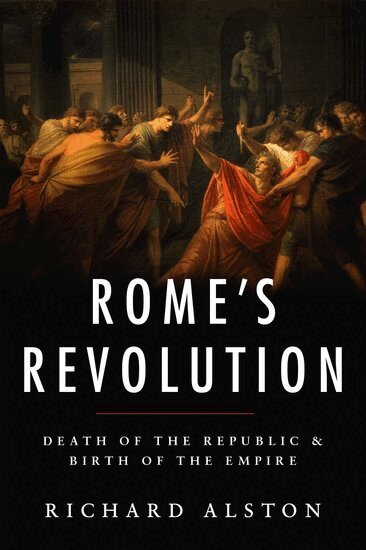
Novelized, televised, and endlessly scrutinized by scholars, the fall of the Roman Republic marks one of history's great turning points. Historians have studied the descent of the Republic into civil war as a great political tragedy, a warning from the past about the unsustainability of empires; political scientists have labeled it a parable about militarism, populism, moral decay, or the inevitable corruption of political systems. Yet the familiar story of the Roman Republic's downfall continues to be the story of its elites. What if we started thinking about Roman politics not from the perspectives of Caesar and Cicero, but from the point of view of the soldier, the peasant, or the pauper? In an original account of what he calls Rome's revolution, Richard Alston reinscribes these humble protagonists into their tumultuous era. They, like the ruthless aristocrats they swore allegiance to, were political agents, negotiating their positions in the context of a "failed state."Rome's Revolution blends riveting historical narrative with socio-economic analysis, restoring a rich context to the cataclysmic violence of the period. In addition to chronicling the drama of aristocratic rivalries, the book digs beneath the high politics of Cicero, Caesar, Antony and Octavian to examine the problems of making a living in first-century BC Italy. Portraying the revolution as the crisis of a violent society--both among the citizenry and among a ruling class whose legitimacy was dwindling--Rome's Revolution provides new insight into the motivations that drove men to march on their capital city and slaughter their compatriots.
By the Spear
Philip II, Alexander the Great, and the Rise and Fall of the Macedonian Empire
Häftad, Engelska, 2017
178 kr
Skickas
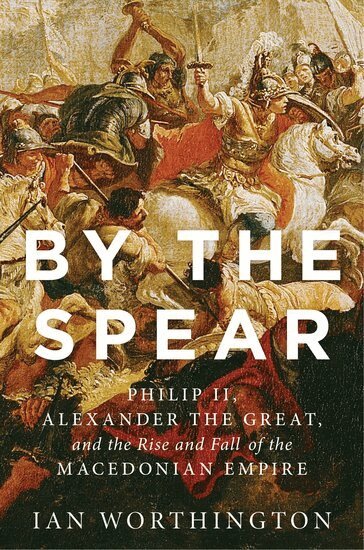
Alexander the Great, arguably the most exciting figure from antiquity, waged war as a Homeric hero and lived as one, conquering native peoples and territories on a superhuman scale. From the time he invaded Asia in 334 to his death in 323, he expanded the Macedonian empire from Greece in the west to Asia Minor, the Levant, Egypt, Central Asia and "India" (Pakistan and Kashmir) in the east. Although many other kings and generals forged empires, Alexander produced one that was without parallel, even if it was short-lived.And yet, Alexander could not have achieved what he did without the accomplishments of his father, Philip II (r. 359-336). It was Philip who truly changed the course of Macedonian history, transforming a weak, disunited, and economically backward kingdom into a military powerhouse. A warrior king par excellence, Philip left Alexander with the greatest army in the Greek world, a centralized monarchy, economic prosperity, and a plan to invade Asia.For the first time, By the Spear offers an exhilarating military narrative of the reigns of these two larger-than-life figures in one volume. Ian Worthington gives full breadth to the careers of father and son, showing how Philip was the architect of the Macedonian empire, which reached its zenith under Alexander, only to disintegrate upon his death. By the Spear also explores the impact of Greek culture in the East, as Macedonian armies became avatars of social and cultural change in lands far removed from the traditional sphere of Greek influence. In addition, the book discusses the problems Alexander faced in dealing with a diverse subject population and the strategies he took to what might be called nation building, all of which shed light on contemporary events in culturally dissimilar regions of the world. The result is a gripping and unparalleled account of the role these kings played in creating a vast empire and the enduring legacy they left behind.
223 kr
Skickas inom 5-8 vardagar
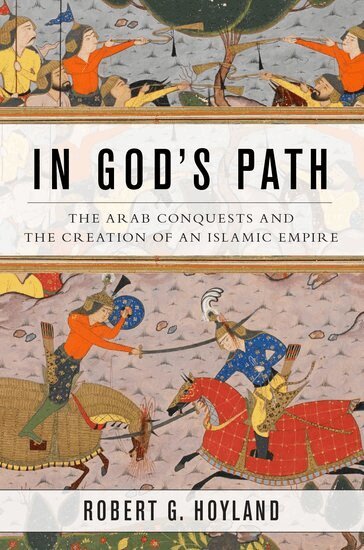
In just over a hundred years--from the death of the Mohammed in 632 to the beginning of the Abbasid Caliphate in 750--the followers of the Prophet swept across the whole of the Middle East, North Africa, and Spain. The conquered territory was larger than the Roman Empire at its greatest expansion, and it was claimed for the Arabs in roughly half the time. How they were able to engulf so many empires, states, and armies in such a short period of time is a question which has engaged historians since at least the ninth century. Most recent popular accounts have been based almost solely on the early Muslim sources, which were, in short, salvation history, composed for the purpose of demonstrating that God had chosen the Arabs as his vehicle for spreading Islam throughout the world. While exploiting the rich biographical and geographical information of the early Muslim sources, this groundbreaking work delivers a fresh account of the Arab conquests and the establishment of an Islamic Empire by incorporating different approaches and different bodies of evidence. Robert G. Hoyland, a leading Late Antique scholar, accomplishes this by first examining the wider world from which Mohammed and his followers emerged. For Muslim sources, the revelation of Islam to Muhammad is the starting point for their history, and modern university departments have tended to reinforce this approach. Late Antique studies have done us the service of shedding much needed light on the 4th to 6th centuries, thus giving us a better view of the nature of Middle Eastern society in the decades before the Arab conquests. In particular, Hoyland narrates the emergence of a distinct Arab identity in the region of the Roman province Arabia and western (Saudi) Arabia, which is at least as important for explaining the Arab conquests as Muhammad's revelation. The Arabs are the principal, almost sole, focus of the Muslim conquest narratives, and this is the norm for modern works on this subject. Yet, in the same period the Khazars, Bulgars, Avars and Turks established polities on the edges of the superpowers of Byzantium and Iran; in fact, the Khazars and Turks continued to be major rivals of the Arabs in the seventh and eighth centuries. The role of these peripheral states in the Arab success story is underscored in the narrative. Innovative and accessible, In God's Path is a welcome account of a transformative period in ancient history.
223 kr
Skickas inom 5-8 vardagar
To say the Punic Wars (264-146 BC) were a turning-point in world history is a vast understatement. These vicious battles pitted two flourishing Mediterranean powers against one another, leaving one an unrivaled giant and the other a literal pile of ash. To later observers, a collision between these civilizations seemed inevitable and yet, to the Romans and Carthaginians at the time, war erupted seemingly out of nowhere and was expected to be a short and trivial skirmish. Mastering the West offers a superlative narrative of all three wars as they are generally divided, while treating a full range of themes: the antagonists' military, naval, economic, and demographic resources and strategic opportunities; the political structures of both republics; questions of leadership and the contributions of leaders like Hannibal, Fabius the Delayer, Scipio Africanus, Masinissa, and Scipio Aemilianus; and the postwar impact of the conflicts on the participants and victims. Dexter Hoyos, a leading expert of the period, treats the two great powers evenly, without forgetting the important roles played by Syracuse, Macedon, and especially Numidia. Written with verve in a clear, accessible style, with a range of illustrations and newly-commissioned maps, Mastering the West is sure to restructure our understanding of this critical period in ancient history.
223 kr
Skickas inom 5-8 vardagar
Novelized, televised, and endlessly scrutinized by scholars, the fall of the Roman Republic marks one of history's great turning points. Historians have studied the descent of the Republic into civil war as a great political tragedy, a warning from the past about the unsustainability of empires; political scientists have labeled it a parable about militarism, populism, moral decay, or the inevitable corruption of political systems. Yet the familiar story of the Roman Republic's downfall continues to be the story of its elites. What if we started thinking about Roman politics not from the perspectives of Caesar and Cicero, but from the point of view of the soldier, the peasant, or the pauper? In an original account of what he calls Rome's revolution, Richard Alston reinscribes these humble protagonists into their tumultuous era. They, like the ruthless aristocrats they swore allegiance to, were political agents, negotiating their positions in the context of a "failed state."Rome's Revolution blends riveting historical narrative with socio-economic analysis, restoring a rich context to the cataclysmic violence of the period. In addition to chronicling the drama of aristocratic rivalries, the book digs beneath the high politics of Cicero, Caesar, Antony and Octavian to examine the problems of making a living in first-century BC Italy. Portraying the revolution as the crisis of a violent society--both among the citizenry and among a ruling class whose legitimacy was dwindling--Rome's Revolution provides new insight into the motivations that drove men to march on their capital city and slaughter their compatriots.
302 kr
Skickas
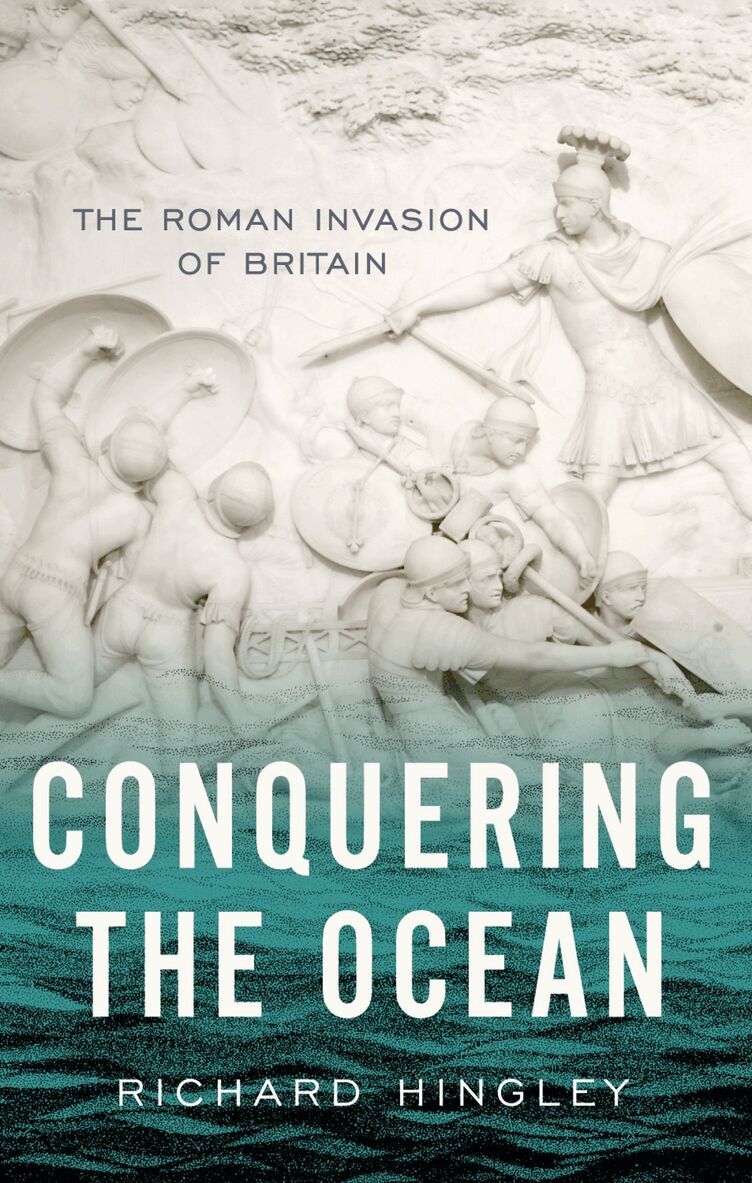
An authoritative new history of the Roman conquest of BritainWhy did Julius Caesar come to Britain? His own account suggests that he invaded to quell a resistance of Gallic sympathizers in the region of modern-day Kent -- but there must have been personal and divine aspirations behind the expeditions in 55 and 54 BCE. To the ancients, the Ocean was a body of water that circumscribed the known world, separating places like Britain from terra cognita, and no one, not even Alexander the Great, had crossed it. While Caesar came and saw, he did not conquer. In the words of the historian Tacitus, "he revealed, rather than bequeathed, Britain to Rome." For the next five hundred years, Caesar's revelation was Rome's remotest imperial bequest.Conquering the Ocean provides a new narrative of the Roman conquest of Britain, from the two campaigns of Caesar up until the construction of Hadrian's Wall across the Tyne-Solway isthmus during the 120s CE. Much of the ancient literary record portrays this period as a long march of Roman progress but recent archaeological discoveries reveal that there existed a strong resistance in Britain, Boudica's short lived revolt being the most celebrated of them, and that Roman success was by no means inevitable. Richard Hingley here draws upon an impressive array of new information from archaeological research and recent scholarship on the classical sources to provide a balanced picture of the military activities and strategies that led to the conquest and subjugation of Britain. Conquering the Ocean is the fullest picture to date of a chapter in Roman military history that continues to captivate the public.
178 kr
Skickas
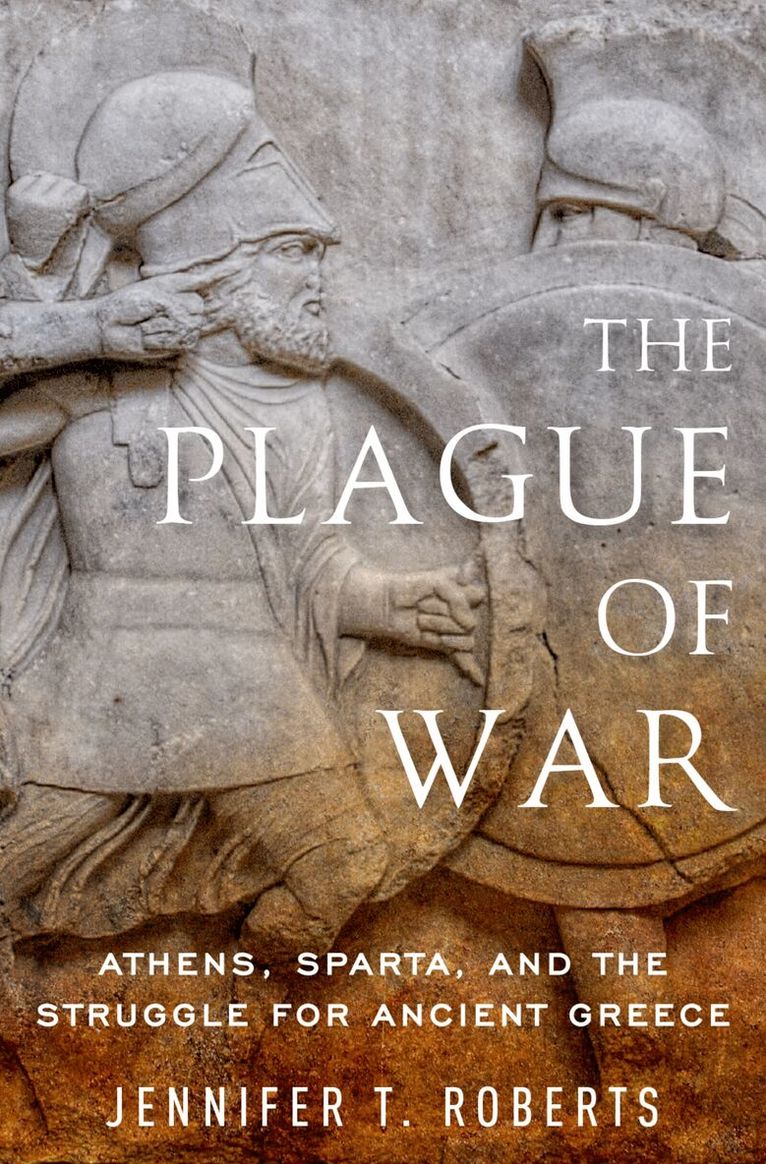
In 431 BC, the long simmering rivalry between the city-states of Athens and Sparta erupted into open warfare, and for more than a generation the two were locked in a life-and-death struggle. The war embroiled the entire Greek world, provoking years of butchery previously unparalleled in ancient Greece. Whole cities were exterminated, their men killed, their women and children enslaved. While the war is commonly believed to have ended with the capture of the Athenian navy in 405 and the subsequent starvation of Athens, fighting in Greece would continue for several decades. Sparta's authority was challenged in the so-called Corinthian War (395-387) when Persian gold helped unite Athens with Sparta's former allies. The war did not truly end until, in 371, Thebes' crack infantry resoundingly defeated Sparta at Leuctra, forever shattering the myth of Spartan military supremacy.Jennifer Roberts' rich narrative of this famous conflict is the first general history to tell the whole story, from the war's origins down to Sparta's defeat at Leuctra. In her masterful account, this long and bloody war affected every area of life in Athens, exacerbated divisions between rich and poor in Sparta, and sparked civil strife throughout the Greek world. Yet despite the biting sorrows the fighting occasioned, it remains a gripping saga of plots and counter-plots, murders and lies, thrilling sea chases and desperate overland marches, missed opportunities and last-minute reprieves, and, as the war's first historian Thucydides had hoped, lessons for a less bellicose future. In addition, Roberts considers the impact of the war on Greece's cultural life, including the great masterworks of tragedy and comedy performed at this time and, most infamously, the trial and execution of Socrates. A fast-paced narrative of one of antiquity's most famous clashes, The Plague of War is a must-read for history enthusiasts of all ages.
248 kr
Skickas inom 5-8 vardagar
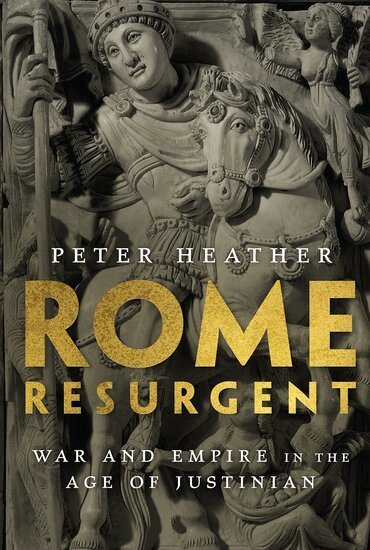
Between the fall of the western Roman Empire in the fifth century and the collapse of the east in the face of the Arab invasions in the seventh, the remarkable era of the Emperor Justinian (527-568) dominated the Mediterranean region. Famous for his conquests in Italy and North Africa, and for the creation of spectacular monuments such as the Hagia Sophia, his reign was also marked by global religious conflict within the Christian world and an outbreak of plague that some have compared to the Black Death. For many historians, Justinian is far more than an anomaly of Byzantine ambition between the eras of Attila and Muhammad; he is the causal link that binds together the two moments of Roman imperial collapse. Determined to reverse the losses Rome suffered in the fifth century, Justinian unleashed an aggressive campaign in the face of tremendous adversity, not least the plague. This book offers a fundamentally new interpretation of his conquest policy and its overall strategic effect, which has often been seen as imperial overreach, making the regime vulnerable to the Islamic takeover of its richest territories in the seventh century and thus transforming the great Roman Empire of Late Antiquity into its pale shadow of the Middle Ages. In Rome Resurgent, historian Peter Heather draws heavily upon contemporary sources, including the writings of Procopius, the principal historian of the time, while also recasting that author's narrative by bringing together new perspectives based on a wide array of additional source material. A huge body of archaeological evidence has become available for the sixth century, providing entirely new means of understanding the overall effects of Justinian's war policies. Building on his own distinguished work on the Vandals, Goths, and Persians, Heather also gives much fuller coverage to Rome's enemies than Procopius ever did. A briskly paced narrative by a master historian, Rome Resurgent promises to introduce readers to this captivating and unjustly overlooked chapter in ancient warfare.
276 kr
Skickas
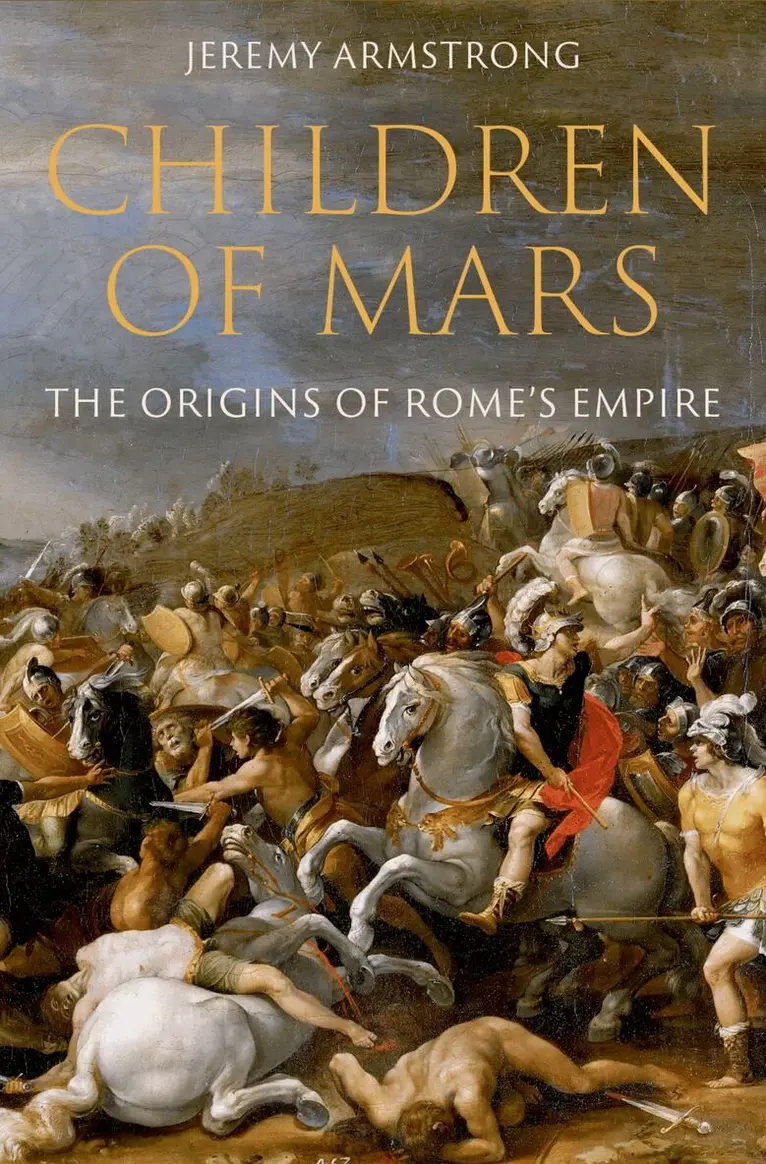
A fresh narrative history of the rise of Rome's empire in Italy, that exposes the monumental expansion of the Roman familial, social, political, and militaristic way of living across Italy.Before the Romans could become masters of the Mediterranean, they had to first conquer the people of their own peninsula. This book explores the origins of Roman imperialism and the creation of Rome's early Italian empire, bringing new light and interpretations to this important but problematic period in Roman history. It explains how and why the Romans were able to expand their influence within Italy, often through the use of armed conflict, laying the foundations for their great imperial project.This book critically reexamines and reframes the traditional literary narrative within an archaeologically informed, archaic Italian context. Jeremy Armstrong presents a new interpretation of the early Roman army, highlighting the fluid and family-driven character which is increasingly visible in the evidence. Drawing on recent developments within the field of early Roman studies, Children of Mars argues that the emergence of Rome's empire in Italy should not be seen as the spread of a distinct “Roman” people across Italian land, but rather the expansion of a social, political, and military network amongst the Italian people. Armstrong suggests that Rome's early empire was a fundamentally human and relational one. While this reinterpretation of early Roman imperialism is no less violent than the traditional model, it alters its core dynamic and nature, and thus shifts the entire trajectory of Rome's Republican history.
182 kr
Skickas inom 5-8 vardagar
An authoritative new history of the Roman conquest of BritainWhy did Julius Caesar come to Britain? His own account suggests that he invaded to quell a resistance of Gallic sympathizers in the region of modern-day Kent -- but there must have been personal and divine aspirations behind the expeditions in 55 and 54 BCE. To the ancients, the Ocean was a body of water that circumscribed the known world, separating places like Britain from terra cognita, and no one, not even Alexander the Great, had crossed it. While Caesar came and saw, he did not conquer. In the words of the historian Tacitus, "he revealed, rather than bequeathed, Britain to Rome." For the next five hundred years, Caesar's revelation was Rome's remotest imperial bequest.Conquering the Ocean provides a new narrative of the Roman conquest of Britain, from the two campaigns of Caesar up until the construction of Hadrian's Wall across the Tyne-Solway isthmus during the 120s CE. Much of the ancient literary record portrays this period as a long march of Roman progress but recent archaeological discoveries reveal that there existed a strong resistance in Britain, Boudica's short lived revolt being the most celebrated of them, and that Roman success was by no means inevitable. Richard Hingley here draws upon an impressive array of new information from archaeological research and recent scholarship on the classical sources to provide a balanced picture of the military activities and strategies that led to the conquest and subjugation of Britain. Conquering the Ocean is the fullest picture to date of a chapter in Roman military history that continues to captivate the public.
388 kr
Skickas inom 3-6 vardagar
Between the fall of the western Roman Empire in the fifth century and the collapse of the east in the face of the Arab invasions in the seventh, the remarkable era of the Emperor Justinian (527-568) dominated the Mediterranean region. Famous for his conquests in Italy and North Africa, and for the creation of spectacular monuments such as the Hagia Sophia, his reign was also marked by global religious conflict within the Christian world and an outbreak of plague that some have compared to the Black Death. For many historians, Justinian is far more than an anomaly of Byzantine ambition between the eras of Attila and Muhammad; he is the causal link that binds together the two moments of Roman imperial collapse. Determined to reverse the losses Rome suffered in the fifth century, Justinian unleashed an aggressive campaign in the face of tremendous adversity, not least the plague. This book offers a fundamentally new interpretation of his conquest policy and its overall strategic effect, which has often been seen as imperial overreach, making the regime vulnerable to the Islamic takeover of its richest territories in the seventh century and thus transforming the great Roman Empire of Late Antiquity into its pale shadow of the Middle Ages. In Rome Resurgent, historian Peter Heather draws heavily upon contemporary sources, including the writings of Procopius, the principal historian of the time, while also recasting that author's narrative by bringing together new perspectives based on a wide array of additional source material. A huge body of archaeological evidence has become available for the sixth century, providing entirely new means of understanding the overall effects of Justinian's war policies. Building on his own distinguished work on the Vandals, Goths, and Persians, Heather also gives much fuller coverage to Rome's enemies than Procopius ever did. A briskly paced narrative by a master historian, Rome Resurgent promises to introduce readers to this captivating and unjustly overlooked chapter in ancient warfare.
553 kr
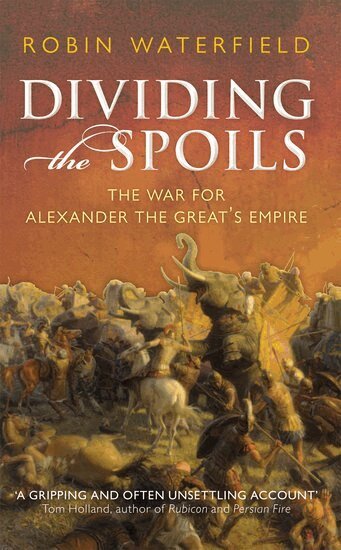
This is the story of one of the great forgotten wars of history - which led to the disintegration of one of the biggest empires the world has ever seen. Alexander the Great built up his huge empire in little more than a decade, stretching from Greece in the West, via Egypt, Syria, Babylonia, and Persia through to the Indian sub-continent in the East. After his death in 323 BC, it took forty years of world-changing warfare for his heirs to finish carving up these vast conquests. These years were filled with high adventure, intrigue, passion, assassinations, dynastic marriages, treachery, shifting alliances, and mass slaughter on battlefield after battlefield. And while the men fought on the field, the women schemed from their palaces and pavilions.Dividing the Spoils revives the memory of Alexander's Successors, whose fame has been dimmed only because they stand in his enormous shadow. In fact, Alexander left things in a mess at the time of his death, with no guaranteed succession, no administration in place suitable for such an enormous realm, and huge untamed areas both bordering and within his 'empire'. The Successors consolidated the Conqueror's gains. Their competing ambitions, however, meant that consolidation inevitably led to the break-up of the empire.Astonishingly, this period of brutal, cynical warfare was also characterized by brilliant cultural developments, especially in the fields of philosophy, literature, and art. So as well as an account of the military action, this is also the story of an amazing cultural flowering. In some senses, a new world emerged from the dust and haze of battle.A surprising amount of the history of many countries, from Greece to Afghanistan, began in the hearts and minds of the Successors of Alexander the Great. As this book demonstrates, their stories deserve to be better known.
137 kr
Skickas
This is the story of one of the great forgotten wars of history - which led to the division of one of the biggest empires the world has ever seen. Alexander the Great built up his huge empire in little more than a decade, stretching from Greece in the West, via Egypt, Syria, Babylonia, and Persia through to the Indian sub-continent in the East. After his death in 323 BC, it took forty years of world-changing warfare for his heirs to finish carving up these vast conquests. These years were filled with high adventure, intrigue, passion, assassinations, dynastic marriages, treachery, shifting alliances, and mass slaughter on battlefield after battlefield. And while the men fought on the field, the women schemed from their palaces and pavilions. Dividing the Spoils revives the memory of Alexander's Successors, whose fame has been dimmed only because they stand in his enormous shadow. In fact, Alexander left things in a mess at the time of his death, with no guaranteed succession, no administration in place suitable for such an enormous realm, and huge untamed areas both bordering and within his 'empire'. The Successors consolidated the Conqueror's gains. Their competing ambitions, however, meant that consolidation inevitably led to the break-up of the empire. Astonishingly, this period of brutal, cynical warfare was also characterized by brilliant cultural developments, especially in the fields of philosophy, literature, and art. As well as an account of the military action, this is also the story of an amazing cultural flowering. In some senses, a new world emerged from the dust and haze of battle - the world of Hellenistic Greece. A surprising amount of the history of many countries, from Greece to Afghanistan, began in the hearts and minds of the Successors of Alexander the Great. As this book demonstrates, their stories deserve to be better known.
256 kr
Skickas
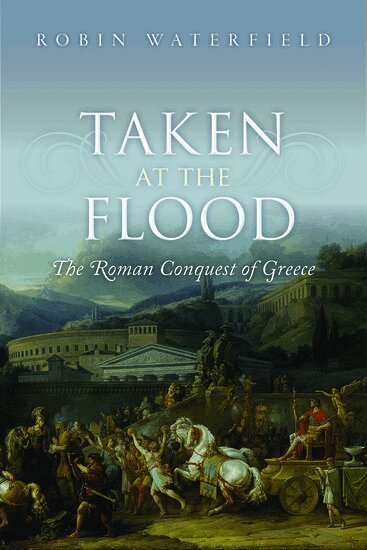
The Romans first set military foot on Greek soil in 229 BCE; only sixty or so years later it was all over, and shortly thereafter Greece became one of the first provinces of the emerging Roman Empire. It was an incredible journey - a swift, brutal, and determined conquest of the land to whose art, philosophy, and culture the Romans owed so much. Rome found the eastern Mediterranean divided, in an unstable balance of power, between three great kingdoms - the three Hellenistic kingdoms that had survived and flourished after the wars of Alexander the Great's Successors: Macedon, Egypt, and Syria. Internal troubles took Egypt more or less out of the picture, but the other two were reduced by Rome. Having established itself, by its defeat of Carthage, as the sole superpower in the western Mediterranean, Rome then systematically went about doing the same in the east, until the entire Mediterranean was under her control. Apart from the thrilling military action, the story of the Roman conquest of Greece is central to the story of Rome itself and the empire it created. As Robin Waterfield shows, the Romans developed a highly sophisticated method of dominance by remote control over the Greeks of the eastern Mediterranean - the cheap option of using authority and diplomacy to keep order rather than standing armies. And it is a story that raises a number of fascinating questions about Rome, her empire, and her civilization. For instance, to what extent was the Roman conquest a planned and deliberate policy? What was it about Roman culture that gave it such a will for conquest? And what was the effect on Roman intellectual and artistic culture, on their very identity, of their entanglement with an older Greek civilization, which the Romans themselves recognized as supreme?
261 kr
Skickas
In just over a hundred years--from the death of Muhammad in 632 to the beginning of the Abbasid Caliphate in 750--the followers of the Prophet swept across the whole of the Middle East, North Africa, and Spain. Their armies threatened states as far afield as the Franks in Western Europe and the Tang Empire in China. The conquered territory was larger than the Roman Empire at its greatest expansion, and it was claimed for the Arabs in roughly half the time. How this collection of Arabian tribes was able to engulf so many empires, states, and armies in such a short period of time is a question that has perplexed historians for centuries. Most recent popular accounts have been based almost solely on the early Muslim sources, which were composed centuries later for the purpose of demonstrating that God had chosen the Arabs as his vehicle for spreading Islam throughout the world. In this ground-breaking new history, distinguished Middle East expert Robert G. Hoyland assimilates not only the rich biographical and geographical information of the early Muslim sources but also the many non-Arabic sources, contemporaneous or near-contemporaneous with the conquests. The story of the conquests traditionally begins with the revelation of Islam to Muhammad. In God's Path, however, begins with a broad picture of the Late Antique world prior to the Prophet's arrival, a world dominated by the two superpowers of Byzantium and Sasanian Persia, "the two eyes of the world." In between these empires, in western (Saudi) Arabia, emerged a distinct Arab identity, which helped weld its members into a formidable fighting force. The Arabs are the principal actors in this drama yet, as Hoyland shows, the peoples along the edges of Byzantium and Persia--the Khazars, Bulgars, Avars, and Turks--also played important roles in the remaking of the old world order. The new faith propagated by Muhammad and his successors made it possible for many of the conquered peoples to join the Arabs in creating the first Islamic Empire.Well-paced and accessible, In God's Path presents a pioneering new narrative of one the great transformational periods in all of history.
By the Spear
Philip II, Alexander the Great, and the Rise and Fall of the Macedonian Empire
Inbunden, Engelska, 2014
414 kr
Skickas inom 5-8 vardagar
Alexander the Great, arguably the most exciting figure from antiquity, waged war as a Homeric hero and lived as one, conquering native peoples and territories on a superhuman scale. From the time he invaded Asia in 334 to his death in 323, he expanded the Macedonian empire from Greece in the west to Asia Minor, the Levant, Egypt, Central Asia and "India" (Pakistan and Kashmir) in the east. Although many other kings and generals forged empires, Alexander produced one that was without parallel, even if it was short-lived.And yet, Alexander could not have achieved what he did without the accomplishments of his father, Philip II (r. 359-336). It was Philip who truly changed the course of Macedonian history, transforming a weak, disunited, and economically backward kingdom into a military powerhouse. A warrior king par excellence Philip left Alexander with the greatest army in the Greek world, a centralized monarchy, economic prosperity, and a plan to invade Asia.For the first time, By the Spear offers an exhilarating military narrative of the reigns of these two larger-than-life figures in one volume. Ian Worthington gives full breadth to the careers of father and son, showing how Philip was the architect of the Macedonian empire, which reached its zenith under Alexander, only to disintegrate upon his death. By the Spear also explores the impact of Greek culture in the East, as Macedonian armies became avatars of social and cultural change in lands far removed from the traditional sphere of Greek influence. In addition, the book discusses the problems Alexander faced in dealing with a diverse subject population and the strategies he took to what might be called nation building, all of which shed light on contemporary events in culturally dissimilar regions of the world. The result is a gripping and unparalleled account of the role these kings played in creating a vast empire and the enduring legacy they left behind.
334 kr
Skickas inom 5-8 vardagar
The life-and-death struggle between Athens and Sparta that embroiled all of the Greek world for an entire generation was a war that almost did not happen. Both sides entered it with hesitation, and the fortunes of war swung back and forth so wildly that at many junctures either side could have won. The plague that visited Athens in the war's early years was entirely unforeseen, as was the death in 429 of their leading statesman Pericles, who was expected to guide Athens through the war until the Spartans acquiesced. The war could have concluded many times before the conventional ending of open hostilities in 404 BCE, even as early as 425 when a team of crack Spartan troops, marooned on an island off the coast of the Peloponnesus, laid down their arms and surrendered, something that had never happened before. Sparta sought peace to regain its men, but the Athenians thought they could get better terms and kept fighting. After 27 years of butchery on land and at sea previously unparalleled in Greece, nothing had really been gained by either side, not even by the Spartan "victors," who seemed to be as capable of winning a war as of losing a peace. War without Victory provides a superlative narrative of this famous conflict, authoritatively examining its origins and its impact on the culture and social structure of the participants. Jennifer Roberts' history will be distinguished for placing the war in a wider historical context, continuing the story down to the outbreak of the so-called Corinthian War in 395, when gold from the Persian king made it possible for Sparta's former allies to join Athens in making war on them. It will therefore include one of the most infamous episodes in Greek history, which was partly a direct consequence of the war: the trial and execution of Socrates. Finally, it will treat the events leading up to the stunning defeat of Sparta by its former ally Thebes at the battle of Leuctra in 371, a defeat which effectively ended Sparta's martial dominance forever. Including a discussion of Greece's rich cultural life of the period, this book promises to be just as masterful an account as Donald Kagan's condensed one-volume history.