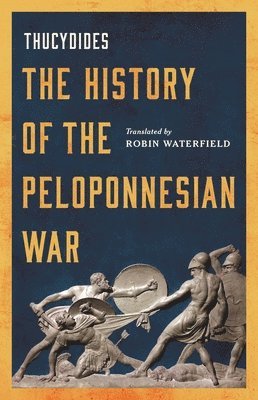
198 kr
Robin Waterfield – författare
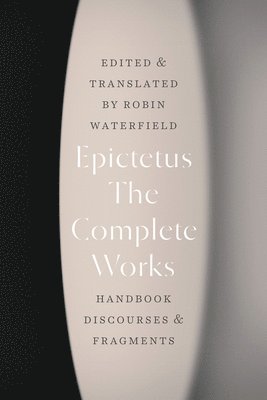
- Häftad, Engelska, 2022The complete surviving works of Epictetus, the most influential Stoic philosopher from antiquity.“Some things are up to us and some are not.” Epictetus was born into slavery around the year 50 CE, and, upon being granted his freedom, he set himself up as a philosophy teacher. After being expelled from Rome, he spent the rest of his life living and teaching in Greece. He is now considered the most important exponent of Stoicism, and his surviving work comprises a series of impassioned discourses, delivered live and recorded by his student Arrian, and the Handbook, Arrian’s own take on the heart of Epictetus’s teaching. In Discourses, Epictetus argues that happiness depends on knowing what is in our power to affect and what is not. Our internal states and our responses to events are up to us, but the events themselves are assigned to us by the benevolent deity, and we should treat them—along with our bodies, possessions, and families—as matters of indifference, simply making the best use of them we can. Together, the Discourses and Handbook constitute a practical guide to moral self-improvement, as Epictetus explains the work and exercises aspirants need to do to enrich and deepen their lives. Edited and translated by renowned scholar Robin Waterfield, this book collects the complete works of Epictetus, bringing to modern readers his insights on how to cope with death, exile, the people around us, the whims of the emperor, fear, illness, and much more.CUSTOMER NOTE: THE HARDCOVER IS FOR LIBRARIES AND HAS NO JACKET.
- Inbunden, Svenska, 2024
269 kr
Skickas
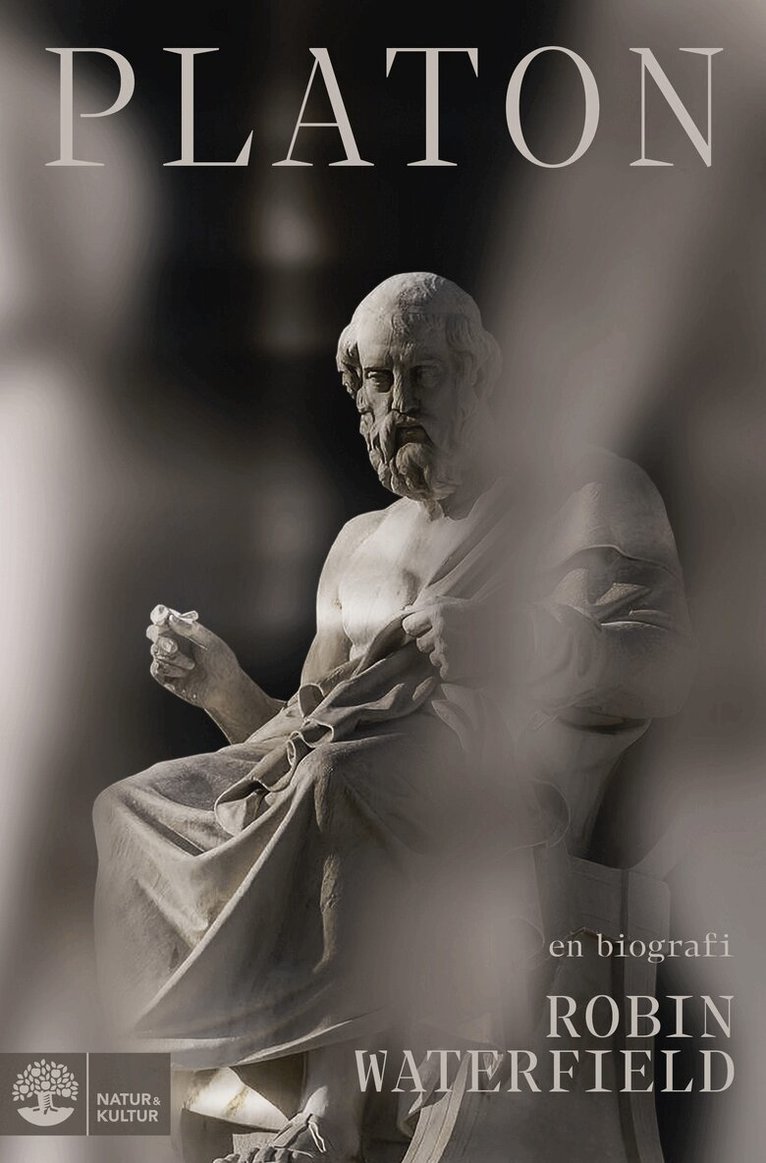
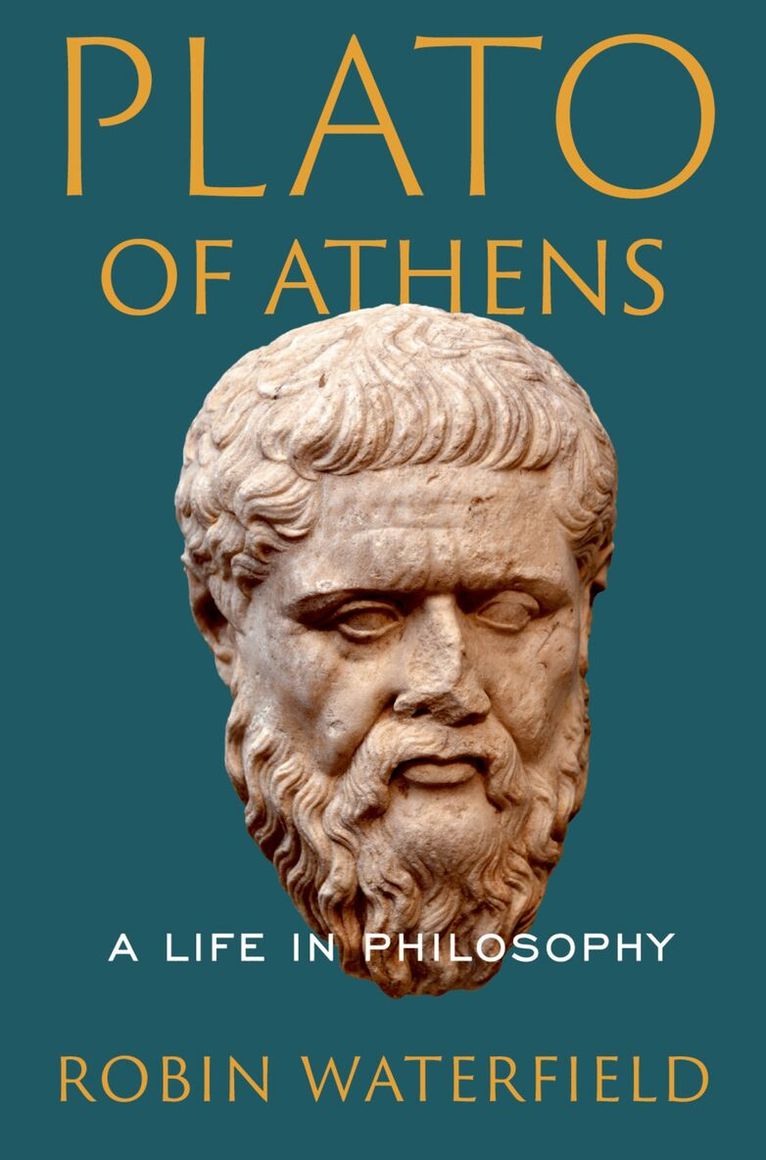
"En av de bästa böckerna som finns för den som vill närma sig Platon"Society"Ger en enastående helbild av personen, hans tankar och deras inflytande"Times Literary SupplementHan skapade filosofin såsom vi känner den sedan dess, och det har sagts att all senare filosofi bara är fotnoter till honom. Han var den store frågeställaren och problemformuleraren som var så förtegen om sig själv att inte ens lärjungen Aristoteles någonsin blev klar över vad läraren egentligen ansåg. Så vem var Platon, och vad tyckte han?Vi känner honom kanske mest för hans idélära, men i denna nya biografi vill Robin Waterfield inte göra stor sak av den – redan lärjungarna ifrågasatte den. I stället framhävs åtskillnaden mellan övermodig tro och sann kunskap som Platons stora bidrag till tänkandets historia – en distinktion av evig aktualitet, även i tider av fake news och faktoider.
I samma anda arbetar Waterfield: Med en hälsosamt kritisk blick och god hjälp av såväl antika källor som modern forskning ger han den vederhäftiga bilden av Platons liv och tänkande för vår egen tid. Ett bättre tillfälle att bekanta sig med Platon har inte givits på länge.
- Häftad, Engelska, 2022
217 kr
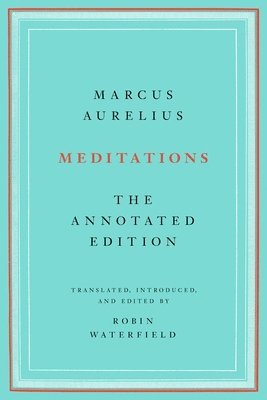
Marcus Aurelius Antoninus (121-180 CE) was the sixteenth emperor of Rome-and the most powerful man in the world. Yet he was also an intensely private person, with a rich interior life and one of the wisest minds of his generation. He collected his thoughts in notebooks that have come to be called his Meditations. Never intended for publication, the work has proved an inexhaustible source of wisdom and one of the most important Stoic texts of all time.This annotated edition offers the definitive translation of this classic and much beloved text, from world-renowned classics expert Robin Waterfield. Illuminating one of the greatest works of popular philosophy for new readers, it enriches the understanding of even the most devoted Stoic. - Inbunden, Engelska, 2021
346 kr
Skickas inom 5-8 vardagar
Marcus Aurelius Antoninus was the sixteenth emperor of Rome -- and by far the most powerful and wealthy man in the world. Yet he was also an intensely private person, with a rich interior life and deep reservoirs of personal insight. He collected his thoughts in notebooks, gems which have come to be called his Meditations. Never intended for publication, the work survived his death and has proved an inexhaustible source of wisdom and one of the most important Stoic texts of all time. In often passionate language, the entries range from essays to one-line aphorisms, and from profundity to bitterness.Marcus wrote to console himself in the face of the shortness of life, the shoddiness of the world, and the challenges of being human. He asks the very same questions that every thinking person must ask themselves today: Does the universe have a moral purpose, and what is my role in it? What exactly is it to be a good person, and how do I get there? Life is short: what does that mean for me? How can I get to know myself better? Anyone who is puzzled by such questions or searching for answers will profit from this timeless book, which is both an important historical document and a personal spiritual diary.This annotated edition will be the definitive translation of this classic and much-beloved text, with copious notes that will illuminate one of the greatest works of popular philosophy for new readers and enrich the understanding of even the most hardcore Stoic. - Häftad, Engelska, 2008
118 kr
Skickas inom 5-8 vardagar
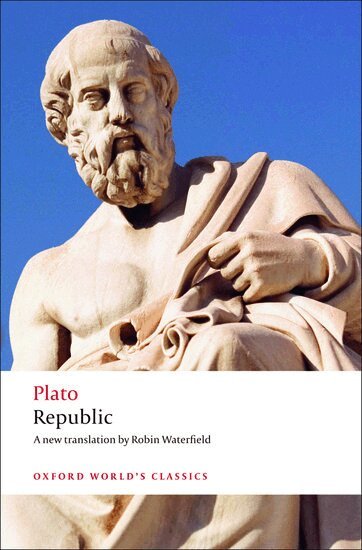
Republic is the central work of the Western world's most famous philosopher. Essentially an inquiry into morality, Republic also contains crucial arguments and insights into many other areas of philosophy. It is also a literary masterpiece: the philosophy is presented for the most part for the ordinary reader, who is carried along by the wit and intensity of the dialogue and by Plato's unforgettable images of the human condition. This new, lucid translation by Robin Waterfield is complemented by full explanatory notes and an up-to-date critical introduction. ABOUT THE SERIES: For over 100 years Oxford World's Classics has made available the widest range of literature from around the globe. Each affordable volume reflects Oxford's commitment to scholarship, providing the most accurate text plus a wealth of other valuable features, including expert introductions by leading authorities, helpful notes to clarify the text, up-to-date bibliographies for further study, and much more. - Inbunden, Engelska, 2025
186 kr
Skickas inom 5-8 vardagar
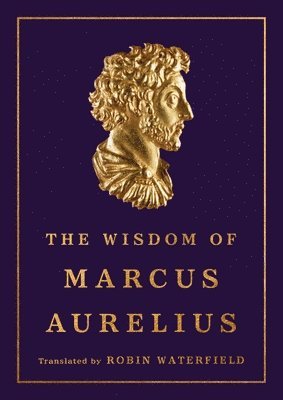
An exquisite abridged edition of Marcus Aurelius's Meditations by a renowned translatorMarcus Aurelius Antoninus was the sixteenth emperor of Rome-and by far the most powerful man in the world. His collected thoughts, gems that have come to be called his Meditations, have proved an inexhaustible source of wisdom and one of the most important Stoic texts of all time. In often passionate language, the entries range from one-line aphorisms to essays, from profundity to bitterness. An abridged and portable edition of Marcus Aurelius's sage insights, The Wisdom of Marcus Aurelius illuminates one of the greatest works of popular philosophy ever composed. - Häftad, Engelska, 2009
120 kr
Skickas
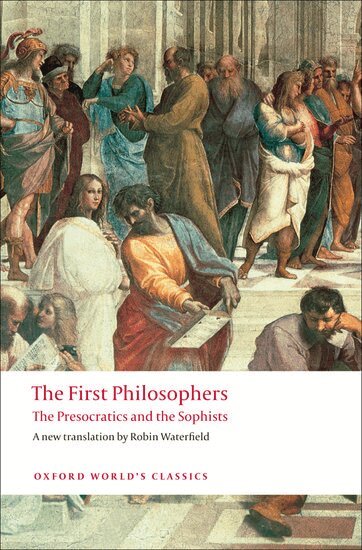
The first philosophers paved the way for the work of Plato and Aristotle - and hence for the whole of Western thought. Aristotle said that philosophy begins with wonder, and the first Western philosophers developed theories of the world which express simultaneously their sense of wonder and their intuition that the world should be comprehensible. But their enterprise was by no means limited to this proto-scientific task. Through, for instance, Heraclitus' enigmatic sayings, the poetry of Parmenides and Empedocles, and Zeno's paradoxes, the Western world was introduced to metaphysics, rationalist theology, ethics, and logic, by thinkers who often seem to be mystics or shamans as much as philosophers or scientists in the modern mould. And out of the Sophists' reflections on human beings and their place in the world arose and interest in language, and in political, moral, and social philosophy. This volume contains a translation of all the most important fragments of the Presocratics and Sophists, and of the most informative testimonia from ancient sources, supplemented by lucid commentary. ABOUT THE SERIES: For over 100 years Oxford World's Classics has made available the widest range of literature from around the globe. Each affordable volume reflects Oxford's commitment to scholarship, providing the most accurate text plus a wealth of other valuable features, including expert introductions by leading authorities, helpful notes to clarify the text, up-to-date bibliographies for further study, and much more. - Inbunden, Engelska, 2026
353 kr
Skickas inom 3-6 vardagar
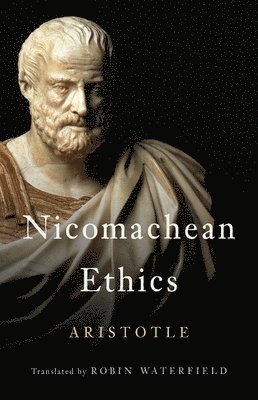
From a preeminent scholar and translator, the definitive translation of Aristotle's essential work.The Nicomachean Ethics is widely considered Aristotle's most significant work of ethical philosophy, and has had an unquestionably profound impact on all subsequent Western philosophy, law, and theology-from the works of Dante Alighieri to modern "virtue ethics."In this new translation, preeminent scholar Robin Waterfield masterfully renders Aristotle's indispensable work into readable English. Nicomachean Ethics argues that human happiness can be achieved through virtuous action, as typified by a "golden mean" of behavior between extremes. As well as analyzing the virtues, the work masterfully covers topics such as pleasure and self-control, friendship, and everything that makes up the good life and allows us to fulfill our godlike rational capacity. The Nicomachean Ethics is as instructive today for how a good life should be lived as it was over two thousand years ago.With John Sellars's illuminating and eminently practical introduction, this beautifully rendered new translation is required reading for anyone seeking insights into Aristotelian philosophy. - Häftad, Engelska, 2012
154 kr
Skickas inom 7-10 vardagar
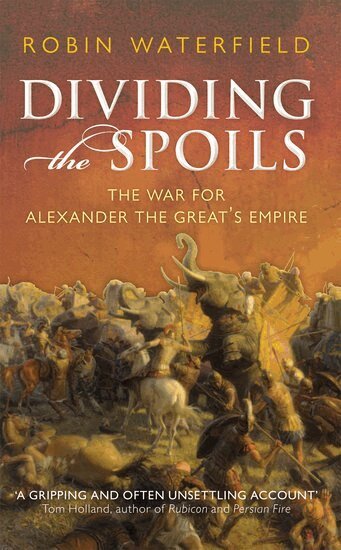
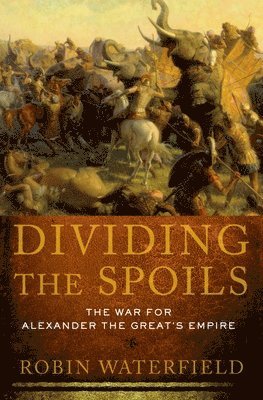
This is the story of one of the great forgotten wars of history - which led to the division of one of the biggest empires the world has ever seen. Alexander the Great built up his huge empire in little more than a decade, stretching from Greece in the West, via Egypt, Syria, Babylonia, and Persia through to the Indian sub-continent in the East. After his death in 323 BC, it took forty years of world-changing warfare for his heirs to finish carving up these vast conquests. These years were filled with high adventure, intrigue, passion, assassinations, dynastic marriages, treachery, shifting alliances, and mass slaughter on battlefield after battlefield. And while the men fought on the field, the women schemed from their palaces and pavilions. Dividing the Spoils revives the memory of Alexander's Successors, whose fame has been dimmed only because they stand in his enormous shadow. In fact, Alexander left things in a mess at the time of his death, with no guaranteed succession, no administration in place suitable for such an enormous realm, and huge untamed areas both bordering and within his 'empire'. The Successors consolidated the Conqueror's gains. Their competing ambitions, however, meant that consolidation inevitably led to the break-up of the empire. Astonishingly, this period of brutal, cynical warfare was also characterized by brilliant cultural developments, especially in the fields of philosophy, literature, and art. As well as an account of the military action, this is also the story of an amazing cultural flowering. In some senses, a new world emerged from the dust and haze of battle - the world of Hellenistic Greece. A surprising amount of the history of many countries, from Greece to Afghanistan, began in the hearts and minds of the Successors of Alexander the Great. As this book demonstrates, their stories deserve to be better known. - Häftad, Engelska, 2020
215 kr
Skickas inom 5-8 vardagar
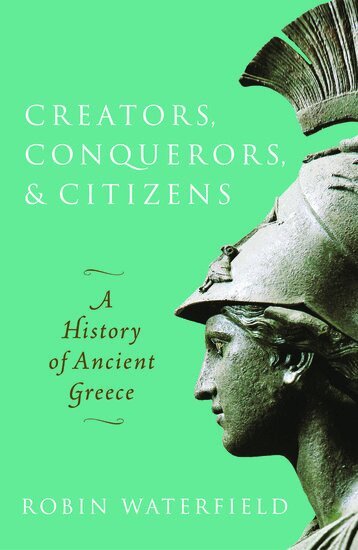
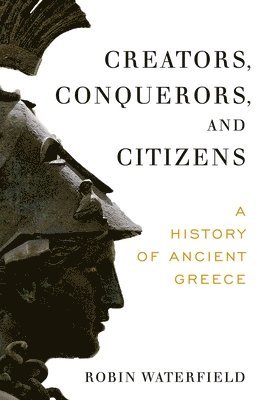
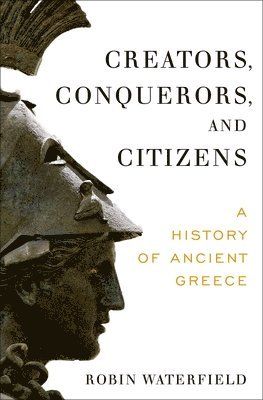
'WE GREEKS ARE ONE IN BLOOD AND ONE IN LANGUAGE; WE HAVE TEMPLES TO THE GODS AND RELIGIOUS RITES IN COMMON, AND A COMMON WAY OF LIFE.' So the fifth-century historian Herodotus has the Athenians declare, in explanation of why they would never betray their fellow Greeks to their 'barbarian' Persian enemy. And he could easily have added other common features to this list, such as clothing, culinary traditions, and political institutions. But if the Greeks understood their kinship to one another, why did so many of them fight for the invading Persians? And why, more generally, is ancient Greek history so often one of internecine wars and other, less violent forms of competition? This extraordinary contradiction is the central theme of Robin Waterfield's magisterial new history of ancient Greece. From their emergence in the Mediterranean around 750 BCE to the Roman conquest of the last of the Greco-Macedonian kingdoms in 30 BCE, this is the complete story of the ancient Greeks. Equal weight is given to all eras of Greek history-the Archaic, Classical, and Hellenistic periods-and to the celebrated figures who shaped it, from Solon and Pericles to Alexander and Cleopatra. In addition, by incorporating the most recent scholarship in classical history and archaeology, the book provides fascinating insights into Greek law, religion, philosophy, drama, and the role of women and slaves in ancient Greek society. A brilliant account of a remarkable civilization, Creators, Conquerors, and Citizens presents a comprehensive and compelling portrait of the perennial paradox of ancient Greece: political disunity combined with underlying cultural solidarity. - Häftad, Engelska, 2013
165 kr
Skickas inom 5-8 vardagar
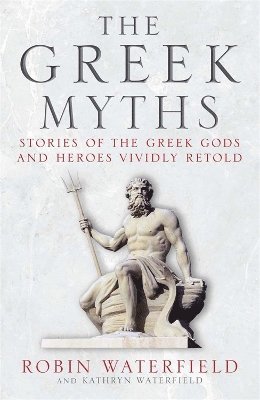
The Greek Myths contains some of the most thrilling, romantic and unforgettable stories in all human history. From Achilles rampant on the fields of Troy, to the gods at sport on Mount Olympus, from Icarus flying too close to the sun, to the superhuman feats of Heracles, Theseus and the wily Odysseus, these timeless tales exert a fascination and inspiration that have endured for millennia. There are few people as steeped in the Ancient World as Robin and Kathryn Waterfield, and in their hands the heroism, humour, mystery, sensuality and brutality of the Greek Myths are brought brilliantly to life. - Häftad, Engelska, 1996
119 kr
Skickas
A tale of love and revenge in the post-Napoleonic era. Edmond Dantes, a nineteen-year-old sailor from Marseilles, is soon to be captain of his own ship and to marry his beloved, the beautiful Mercedes. But spiteful enemies provoke his arrest on his wedding day, and he is condemned to life in prison. His sole companion is the 'crazy' priest Faria, who shares with Edmond a secret escape plan, and a map to hidden riches on the island of Monte Cristo. When Faria dies, Edmond attempts the incredible escape alone. finally he is free and rich beyond imagination after 14 years in prison. Keeping his true identity a secret, he enters society as Count of Monte Cristo, a polite, refined nobleman determined to reclaim his lost love, and to avenge his accusers. This is a story of suspense, intrigue, love and the triumph of good over evil.specially abridged for Puffin Classics. - Häftad, Engelska, 1982
151 kr
Skickas
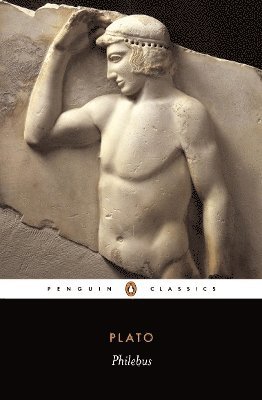
Taking the form of a discussion between the hedonist Philebus, his naïve disciple Protarchus and Socrates, Philebus is a compelling consideration of the popular belief that pleasure is the greatest attainable good. Here, Socrates speculates on the differing intensities of both pleasure and pain; explores the notion that they can be divided into pure and impure types; considers the relationship between the one and the many; and establishes knowledge as a far higher goal. A profound argument that true fulfillment can only be achieved by the pursuit of beauty, truth and moderation, Philebus is among the earliest and most fascinating explorations of one of the most fundamental human questions: how to lead a good life. - E-bokEngelska, 2004
104 kr
Läs direkt efter köp
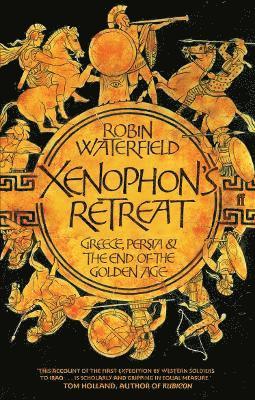
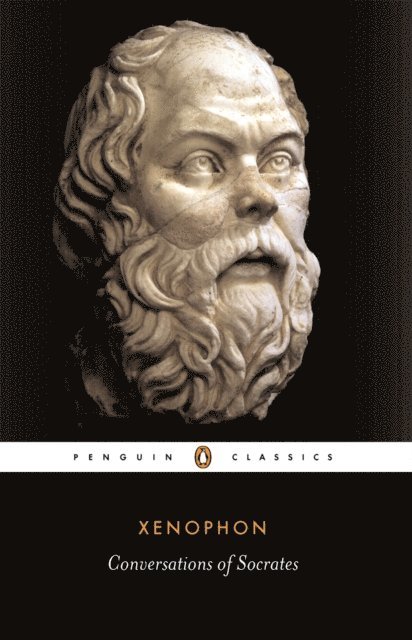
After the execution of Socrates in 399 BC, a number of his followers wrote dialogues featuring him as the protagonist and, in so doing, transformed the great philosopher into a legendary figure. Xenophon's portrait is the only one other than Plato's to survive, and while it offers a very personal interpretation of Socratic thought, it also reveals much about the man and his philosophical views. In 'Socrates' Defence' Xenophon defends his mentor against charges of arrogance made at his trial, while the 'Memoirs of Socrates' also starts with an impassioned plea for the rehabilitation of a wronged reputation. Along with 'The Estate-Manager', a practical economic treatise, and 'The Dinner-Party', a sparkling exploration of love, Xenophon's dialogues offer fascinating insights into the Socratic world and into the intellectual atmosphere and daily life of ancient Greece. - Häftad, Engelska, 2020
302 kr
Skickas inom 3-6 vardagar
- Inbunden, Engelska, 2018
460 kr
Skickas inom 3-6 vardagar
- Häftad, Engelska, 2016
302 kr
Skickas inom 3-6 vardagar
- E-bokPDF, Engelska, 2018
129 kr
Läs direkt efter köp
''WE GREEKS ARE ONE IN BLOOD AND ONE IN LANGUAGE; WE HAVE TEMPLES TO THE GODS AND RELIGIOUS RITES IN COMMON, AND A COMMON WAY OF LIFE.''So the fifth-century historian Herodotus has the Athenians declare, in explanation of why they would never betray their fellow Greeks to their ''barbarian'' Persian enemy. And he could easily have added other common features to this list, such as clothing, culinary traditions, and political institutions.But if the Greeks understood their kinship to one another, why did so many of them fight for the invading Persians? And why, more generally, is ancient Greek history so often one of internecine wars and other, less violent forms of competition? This extraordinary contradiction is the central theme of Robin Waterfield''s magisterial new history of ancient Greece.From their emergence in the Mediterranean around 750 BCE to the Roman conquest of the last of the Greco-Macedonian kingdoms in 30 BCE, this is the complete story of the ancient Greeks. Equal weight is given to all eras of Greek history-the Archaic, Classical, and Hellenistic periods-and to the celebrated figures who shaped it, from Solon and Pericles to Alexander and Cleopatra. In addition, by incorporating the most recent scholarship in classical history and archaeology, the book providesfascinating insights into Greek law, religion, philosophy, drama, and the role of women and slaves in ancient Greek society. A brilliant account of a remarkable civilization, Creators, Conquerors, and Citizens presents a comprehensive and compelling portrait of the perennial paradox of ancient Greece:political disunity combined with underlying cultural solidarity. - E-bokEngelska, 2018
127 kr
Läs direkt efter köp
''WE GREEKS ARE ONE IN BLOOD AND ONE IN LANGUAGE; WE HAVE TEMPLES TO THE GODS AND RELIGIOUS RITES IN COMMON, AND A COMMON WAY OF LIFE.''So the fifth-century historian Herodotus has the Athenians declare, in explanation of why they would never betray their fellow Greeks to their ''barbarian'' Persian enemy. And he could easily have added other common features to this list, such as clothing, culinary traditions, and political institutions.But if the Greeks understood their kinship to one another, why did so many of them fight for the invading Persians? And why, more generally, is ancient Greek history so often one of internecine wars and other, less violent forms of competition? This extraordinary contradiction is the central theme of Robin Waterfield''s magisterial new history of ancient Greece.From their emergence in the Mediterranean around 750 BCE to the Roman conquest of the last of the Greco-Macedonian kingdoms in 30 BCE, this is the complete story of the ancient Greeks. Equal weight is given to all eras of Greek history-the Archaic, Classical, and Hellenistic periods-and to the celebrated figures who shaped it, from Solon and Pericles to Alexander and Cleopatra. In addition, by incorporating the most recent scholarship in classical history and archaeology, the book providesfascinating insights into Greek law, religion, philosophy, drama, and the role of women and slaves in ancient Greek society. A brilliant account of a remarkable civilization, Creators, Conquerors, and Citizens presents a comprehensive and compelling portrait of the perennial paradox of ancient Greece:political disunity combined with underlying cultural solidarity. - E-bokPDF, Engelska, 2012
335 kr
Läs direkt efter köp
This is the story of one of the great forgotten wars of history - which led to the division of one of the biggest empires the world has ever seen.Alexander the Great built up his huge empire in little more than a decade, stretching from Greece in the West, via Egypt, Syria, Babylonia, and Persia through to the Indian sub-continent in the East. After his death in 323 BC, it took forty years of world-changing warfare for his heirs to finish carving up these vast conquests. These years were filled with high adventure, intrigue, passion, assassinations, dynastic marriages, treachery, shifting alliances, and mass slaughter on battlefieldafter battlefield. And while the men fought on the field, the women schemed from their palaces and pavilions.Dividing the Spoils revives the memory of Alexander''s Successors, whose fame has been dimmed only because they stand in his enormous shadow. In fact, Alexander left things in a mess at the time of his death, with no guaranteed succession, no administration in place suitable for such an enormous realm, and huge untamed areas both bordering and within his ''empire''. The Successors consolidated the Conqueror''s gains. Their competing ambitions, however, meant that consolidation inevitablyled to the break-up of the empire.Astonishingly, this period of brutal, cynical warfare was also characterized by brilliant cultural developments, especially in the fields of philosophy, literature, and art. As well as an account of the military action, this is also the story of an amazing cultural flowering. In some senses, a new world emerged from the dust and haze of battle - the world of Hellenistic Greece.A surprising amount of the history of many countries, from Greece to Afghanistan, began in the hearts and minds of the Successors of Alexander the Great. As this book demonstrates, their stories deserve to be better known. - E-bokEngelska, 2012
339 kr
Läs direkt efter köp
This is the story of one of the great forgotten wars of history - which led to the division of one of the biggest empires the world has ever seen.Alexander the Great built up his huge empire in little more than a decade, stretching from Greece in the West, via Egypt, Syria, Babylonia, and Persia through to the Indian sub-continent in the East. After his death in 323 BC, it took forty years of world-changing warfare for his heirs to finish carving up these vast conquests. These years were filled with high adventure, intrigue, passion, assassinations, dynastic marriages, treachery, shifting alliances, and mass slaughter on battlefieldafter battlefield. And while the men fought on the field, the women schemed from their palaces and pavilions.Dividing the Spoils revives the memory of Alexander''s Successors, whose fame has been dimmed only because they stand in his enormous shadow. In fact, Alexander left things in a mess at the time of his death, with no guaranteed succession, no administration in place suitable for such an enormous realm, and huge untamed areas both bordering and within his ''empire''. The Successors consolidated the Conqueror''s gains. Their competing ambitions, however, meant that consolidation inevitablyled to the break-up of the empire.Astonishingly, this period of brutal, cynical warfare was also characterized by brilliant cultural developments, especially in the fields of philosophy, literature, and art. As well as an account of the military action, this is also the story of an amazing cultural flowering. In some senses, a new world emerged from the dust and haze of battle - the world of Hellenistic Greece.A surprising amount of the history of many countries, from Greece to Afghanistan, began in the hearts and minds of the Successors of Alexander the Great. As this book demonstrates, their stories deserve to be better known. - E-bokPDF, Engelska, 2021
293 kr
Läs direkt efter köp
In the third century BCE, Macedon dominated mainland Greece, but was rapidly descending into chaos. One of the consequences was a massive invasion of Celts, who ravaged and plundered Macedon and northern Greece for several years. Antigonus Gonatas, son of one of Alexander the Great''s Successors, finally defeated the Celts and laid the foundations for a long but troubled reign (276-239 BCE). In order to achieve stability, he adopted repressive measures towards many of the Greek cities. The Making of a King is the first book in more than a century to tell the gripping story of Antigonus'' rule: how he gained the throne, how he held it, the nature of his court, the measures he took towards the Greeks, and their responses. While Antigonus was confirming his rule in Macedon by introducing constitutional changes there, the Greeks were making their own changes. Their only hope for independence lay in greater unity. Two great confederacies of Greek cities emerged: the Aetolians in central Greece, and the Achaeans in the Peloponnese. Robin Waterfield charts Antigonus'' conflicts with the Greeks and with his perennial enemy, Ptolemy of Egypt. Successes, both diplomatic and military, against these enemies in the 260s and 250s BCE were not enough to gain him peace, and in his final years he saw his control of Greece whittled away by rebellion and the Greek confederacies. Ultimately, the lack of firm control of Greece by Macedon made it possible for Rome to take its place as the arbiter of the Greeks'' future. - E-bokEngelska, 2021
296 kr
Läs direkt efter köp
In the third century BCE, Macedon dominated mainland Greece, but was rapidly descending into chaos. One of the consequences was a massive invasion of Celts, who ravaged and plundered Macedon and northern Greece for several years. Antigonus Gonatas, son of one of Alexander the Great''s Successors, finally defeated the Celts and laid the foundations for a long but troubled reign (276-239 BCE). In order to achieve stability, he adopted repressive measures towards many of the Greek cities. The Making of a King is the first book in more than a century to tell the gripping story of Antigonus'' rule: how he gained the throne, how he held it, the nature of his court, the measures he took towards the Greeks, and their responses. While Antigonus was confirming his rule in Macedon by introducing constitutional changes there, the Greeks were making their own changes. Their only hope for independence lay in greater unity. Two great confederacies of Greek cities emerged: the Aetolians in central Greece, and the Achaeans in the Peloponnese. Robin Waterfield charts Antigonus'' conflicts with the Greeks and with his perennial enemy, Ptolemy of Egypt. Successes, both diplomatic and military, against these enemies in the 260s and 250s BCE were not enough to gain him peace, and in his final years he saw his control of Greece whittled away by rebellion and the Greek confederacies. Ultimately, the lack of firm control of Greece by Macedon made it possible for Rome to take its place as the arbiter of the Greeks'' future. - Inbunden, Engelska, 2023
268 kr
Skickas
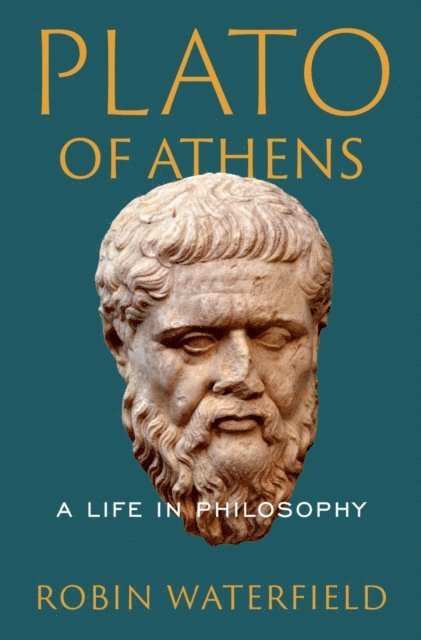
The first ever biography of the founder of Western philosophy Considered by many to be the most important philosopher ever, Plato was born into a well-to-do family in wartime Athens at the end of the fifth century BCE. In his teens, he honed his intellect by attending lectures from the many thinkers who passed through Athens and toyed with the idea of writing poetry. He finally decided to go into politics, but became disillusioned, especially after the Athenians condemned his teacher, Socrates, to death. Instead, Plato turned to writing and teaching. He began teaching in his twenties and later founded the Academy, the world's first higher-educational research and teaching establishment. Eventually, he returned to practical politics and spent a considerable amount of time and energy trying to create a constitution for Syracuse in Sicily that would reflect and perpetuate some of his political ideals. The attempts failed, and Plato's disappointment can be traced in some of his later political works.In his lifetime and after, Plato was considered almost divine. Though a measure of his importance, this led to the invention of many tall tales about him-both by those who adored him and his detractors. In this first ever full-length portrait of Plato, Robin Waterfield steers a judicious course among these stories, debunking some while accepting the kernels of truth in others. He explains why Plato chose to write dialogues rather than treatises and gives an overview of the subject matter of all of Plato's books. Clearly and engagingly written throughout, Plato of Athens is the perfect introduction to the man and his work. - E-bokPDF, Engelska, 2023
201 kr
Läs direkt efter köp
The first ever biography of the founder of Western philosophy Considered by many to be the most important philosopher ever, Plato was born into a well-to-do family in wartime Athens at the end of the fifth century BCE. In his teens, he honed his intellect by attending lectures from the many thinkers who passed through Athens and toyed with the idea of writing poetry. He finally decided to go into politics, but became disillusioned, especially after the Athenians condemned his teacher, Socrates, to death. Instead, Plato turned to writing and teaching. He began teaching in his twenties and later founded the Academy, the world''s first higher-educational research and teaching establishment. Eventually, he returned to practical politics and spent a considerable amount of time and energy trying to create a constitution for Syracuse in Sicily that would reflect and perpetuate some of his political ideals. The attempts failed, and Plato''s disappointment can be traced in some of his later political works.In his lifetime and after, Plato was considered almost divine. Though a measure of his importance, this led to the invention of many tall tales about him-both by those who adored him and his detractors. In this first ever full-length portrait of Plato, Robin Waterfield steers a judicious course among these stories, debunking some while accepting the kernels of truth in others. He explains why Plato chose to write dialogues rather than treatises and gives an overview of the subject matter of all of Plato''s books. Clearly and engagingly written throughout, Plato of Athens is the perfect introduction to the man and his work. - E-bokEngelska, 2023
201 kr
Läs direkt efter köp
The first ever biography of the founder of Western philosophy Considered by many to be the most important philosopher ever, Plato was born into a well-to-do family in wartime Athens at the end of the fifth century BCE. In his teens, he honed his intellect by attending lectures from the many thinkers who passed through Athens and toyed with the idea of writing poetry. He finally decided to go into politics, but became disillusioned, especially after the Athenians condemned his teacher, Socrates, to death. Instead, Plato turned to writing and teaching. He began teaching in his twenties and later founded the Academy, the world''s first higher-educational research and teaching establishment. Eventually, he returned to practical politics and spent a considerable amount of time and energy trying to create a constitution for Syracuse in Sicily that would reflect and perpetuate some of his political ideals. The attempts failed, and Plato''s disappointment can be traced in some of his later political works.In his lifetime and after, Plato was considered almost divine. Though a measure of his importance, this led to the invention of many tall tales about him-both by those who adored him and his detractors. In this first ever full-length portrait of Plato, Robin Waterfield steers a judicious course among these stories, debunking some while accepting the kernels of truth in others. He explains why Plato chose to write dialogues rather than treatises and gives an overview of the subject matter of all of Plato''s books. Clearly and engagingly written throughout, Plato of Athens is the perfect introduction to the man and his work. - Häftad, Engelska, 2025
169 kr
Skickas inom 5-8 vardagar
The first ever biography of the founder of Western philosophy Considered by many to be the most important philosopher ever, Plato was born into a well-to-do family in wartime Athens at the end of the fifth century BCE. In his teens, he honed his intellect by attending lectures from the many thinkers who passed through Athens and toyed with the idea of writing poetry. He finally decided to go into politics, but became disillusioned, especially after the Athenians condemned his teacher, Socrates, to death. Instead, Plato turned to writing and teaching. He began teaching in his twenties and later founded the Academy, the world's first higher-educational research and teaching establishment. Eventually, he returned to practical politics and spent a considerable amount of time and energy trying to create a constitution for Syracuse in Sicily that would reflect and perpetuate some of his political ideals. The attempts failed, and Plato's disappointment can be traced in some of his later political works.In his lifetime and after, Plato was considered almost divine. Though a measure of his importance, this led to the invention of many tall tales about him-both by those who adored him and his detractors. In this first ever full-length portrait of Plato, Robin Waterfield steers a judicious course among these stories, debunking some while accepting the kernels of truth in others. He explains why Plato chose to write dialogues rather than treatises and gives an overview of the subject matter of all of Plato's books. Clearly and engagingly written throughout, Plato of Athens is the perfect introduction to the man and his work. - Häftad, Engelska, 2019
166 kr
Skickas
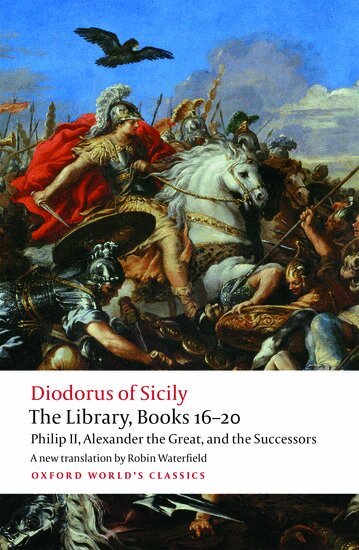
Starting with the most meagre resources, Philip made his kingdom the greatest power in EuropeThe Greek historian Diodorus of Sicily is one of our most valuable sources from ancient times. His history, in forty volumes, was intended to range from mythological times to 60 BCE, and fifteen of The Library's forty books survive. This new translation by Robin Waterfield of books 16-20 covers a vital period in European history. Book 16 is devoted to Philip, and without it the career of this great king would be far more obscure to us. Book 17 is the earliest surviving account by over a hundred years of the world-changing eastern conquests of Alexander the Great, Philip's son. Books 18-20 constitute virtually our sole source of information on the twenty turbulent years following Alexander's death and on the violent path followed by Agathocles of Syracuse. There are fascinating snippets of history from elsewhere too - from Republican Rome, the Cimmerian Bosporus, and elsewhere.Despite his obvious importance, Diodorus is a neglected historian. This is the first English translation of any of these books in over fifty years. The introduction places Diodorus in his context in first-century-BCE Rome, describes and discusses the kind of history he was intending to write, and assesses his strengths and weaknesses as a historian. With extensive explanatory notes on this gripping and sensational period of history, the book serves as a unique resource for historians and students. - Häftad, Engelska, 2016
155 kr
Skickas
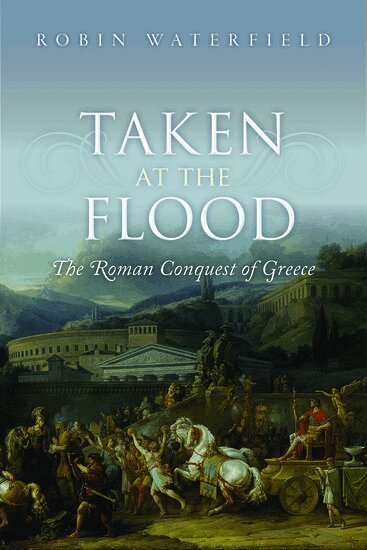
The Romans first set military foot on Greek soil in 229 BCE; only sixty or so years later it was all over, and shortly thereafter Greece became one of the first provinces of the emerging Roman Empire. It was an incredible journey - a swift, brutal, and determined conquest of the land to whose art, philosophy, and culture the Romans owed so much. Rome found the eastern Mediterranean divided, in an unstable balance of power, between three great kingdoms - the three Hellenistic kingdoms that had survived and flourished after the wars of Alexander the Great's Successors: Macedon, Egypt, and Syria. Internal troubles took Egypt more or less out of the picture, but the other two were reduced by Rome. Having established itself, by its defeat of Carthage, as the sole superpower in the western Mediterranean, Rome then systematically went about doing the same in the east, until the entire Mediterranean was under her control. Apart from the thrilling military action, the story of the Roman conquest of Greece is central to the story of Rome itself and the empire it created. As Robin Waterfield shows, the Romans developed a highly sophisticated method of dominance by remote control over the Greeks of the eastern Mediterranean - the cheap option of using authority and diplomacy to keep order rather than standing armies. And it is a story that raises a number of fascinating questions about Rome, her empire, and her civilization. For instance, to what extent was the Roman conquest a planned and deliberate policy? What was it about Roman culture that gave it such a will for conquest? And what was the effect on Roman intellectual and artistic culture, on their very identity, of their entanglement with an older Greek civilization, which the Romans themselves recognized as supreme? - Inbunden, Engelska, 2021
405 kr
Skickas inom 5-8 vardagar
In the third century BCE, Macedon dominated mainland Greece, but was rapidly descending into chaos. One of the consequences was a massive invasion of Celts, who ravaged and plundered Macedon and northern Greece for several years. Antigonus Gonatas, son of one of Alexander the Great's Successors, finally defeated the Celts and laid the foundations for a long but troubled reign (276-239 BCE). In order to achieve stability, he adopted repressive measures towards many of the Greek cities. The Making of a King is the first book in more than a century to tell the gripping story of Antigonus' rule: how he gained the throne, how he held it, the nature of his court, the measures he took towards the Greeks, and their responses. While Antigonus was confirming his rule in Macedon by introducing constitutional changes there, the Greeks were making their own changes. Their only hope for independence lay in greater unity. Two great confederacies of Greek cities emerged: the Aetolians in central Greece, and the Achaeans in the Peloponnese. Robin Waterfield charts Antigonus' conflicts with the Greeks and with his perennial enemy, Ptolemy of Egypt. Successes, both diplomatic and military, against these enemies in the 260s and 250s BCE were not enough to gain him peace, and in his final years he saw his control of Greece whittled away by rebellion and the Greek confederacies. Ultimately, the lack of firm control of Greece by Macedon made it possible for Rome to take its place as the arbiter of the Greeks' future.