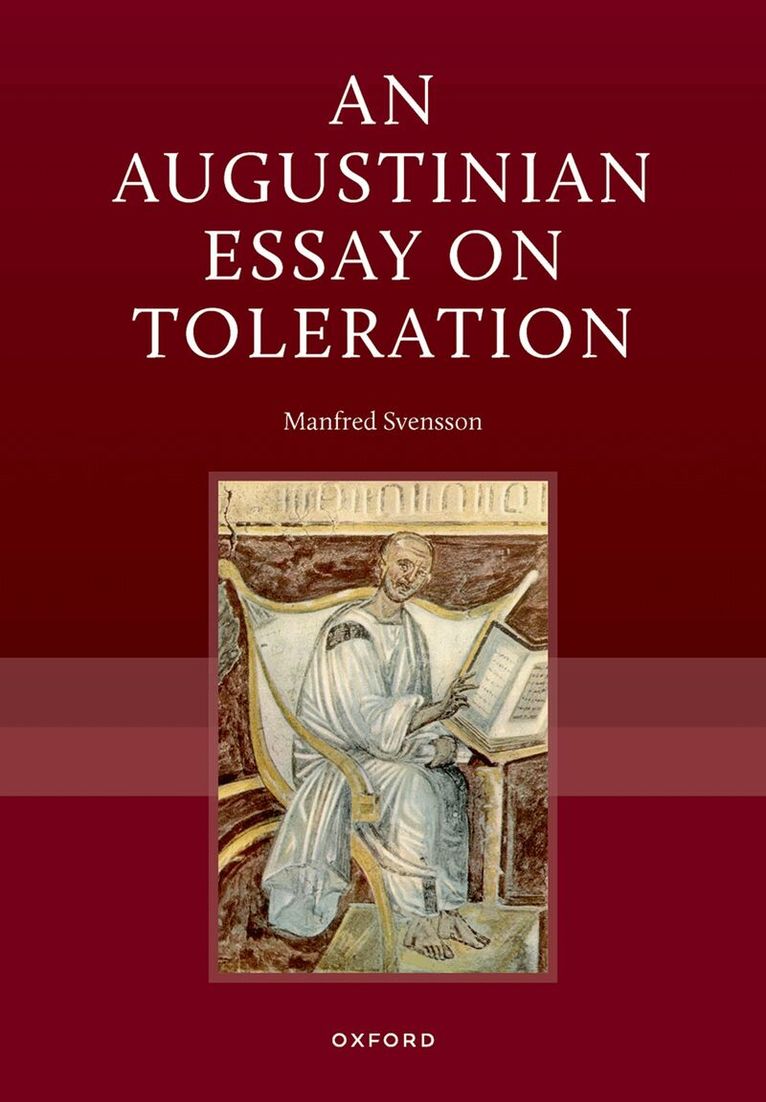
Inbunden, Engelska, 2026
An Augustinian Essay on Toleration
1262 kr
Beställningsvara. Skickas inom 7-10 vardagar. Fri frakt över 249 kr.
Beskrivning
It is widely acknowledged that appeals to tolerance are not as persuasive as they once were. Some argue that such calls simply reinforce the permissiveness that plagues our society. Others argue that tolerance does not go far enough and that positive recognition of differences should be our aim. To these, tolerance is judgmental and insulting. In response to these critiques, some seek to recover the lost foundations of tolerance as a virtue of coexistence without reciprocal affirmation. As An Augustinian Essay on Toleration shows, many of the problems affecting contemporary tolerance discourse were already present in the early modern world, where these lost foundations are typically sought. This explains the need for this more radical project of recovery that draws from Augustine and the Augustinian tradition. Like other classical authors, Augustine treats tolerance as a virtue needed in the face of adversity and evil. Unlike these other authors, however, Augustine offers deep philosophical reflections on evil that provide relevant reasons for toleration. This book demonstrates that Augustine's views on evil, history, personhood, conflict, and hope are consistent with a constructive Augustinian view of tolerance. The book discusses the nature of tolerance as a virtue, its place as a political practice, and questions of toleration that arise in relation to intermediate associations.
Produktinformation
- Utgivningsdatum: 2026-09-29
- Mått: 156 x 16 x 234 mm
- Vikt: 436 g
- Format: Inbunden
- Språk: Engelska
- Antal sidor: 194
- Förlag: OUP OXFORD
- ISBN: 9780197912720
Utforska kategorier
Betyg & recensioner
0 recensioner
Inga recensioner tillgängliga.