• Fri frakt över 249 kr
  • •
  • Snabba leveranser
  • •
  • Billiga böcker
Kundservice

Du är på sajten för privatpersoner.

Företag, bibliotek eller offentlig verksamhet?

Du handlar på classic.bokus.com, där alla dina funktioner finns intakta.
Till classic.bokus.com
Bokus logotyp. Gå till startsidan.
  • Erbjudanden
  • Student
  • Topplistor
  • Barn & ungdom
  • Bokus Play
  • E-böcker
  • Ljudböcker
  • Pocketböcker
  • Spel & pussel

Upp till 25% på utvalda nyheter →

Sidfot

Mina sidor

    Hjälp

    • Kundservice
    • Vanliga frågor och svar
    • Frakt och leverans
    • Retur vid ångerrätt
    • Reklamera vara
    • Betalning
    • Köpvillkor
    • Allmänna villkor
    • Information om webbplatsens tillgänglighet

    Om Bokus

    • Om oss
    • Pressrum
    • För studenter
    • För företag
    • För bibliotek och offentlig verksamhet
    • För leverantörer
    • Hållbarhet

    Populärt

    • Aktuella erbjudanden
    • Presentkort
    • Studentlitteratur
    • Nya böcker
    • Topplistor
    • Signerade böcker
    • Engelska böcker

    Inspiration

    • Boktips
    • BookTok
    • Populära bokserier
    • Barnbokskaraktärer
    • Populära författare
    Logotyp för Bokus
    Följ oss på Facebook (extern länk)Följ oss på Instagram (extern länk)Följ oss på YouTube (extern länk)Följ oss på TikTok (extern länk)
    bokus @ CookiesAnpassa cookiesIntegritetspolicyKöpvillkor
    Till Citymail hemsida (extern länk)Till Budbee hemsida (extern länk)Till Postnord hemsida (extern länk)Till Schenker hemsida (extern länk)Till Early Bird hemsida (extern länk)Till Walleys hemsida (extern länk)
    1. Data och IT
    2. Människa – datorinteraktion

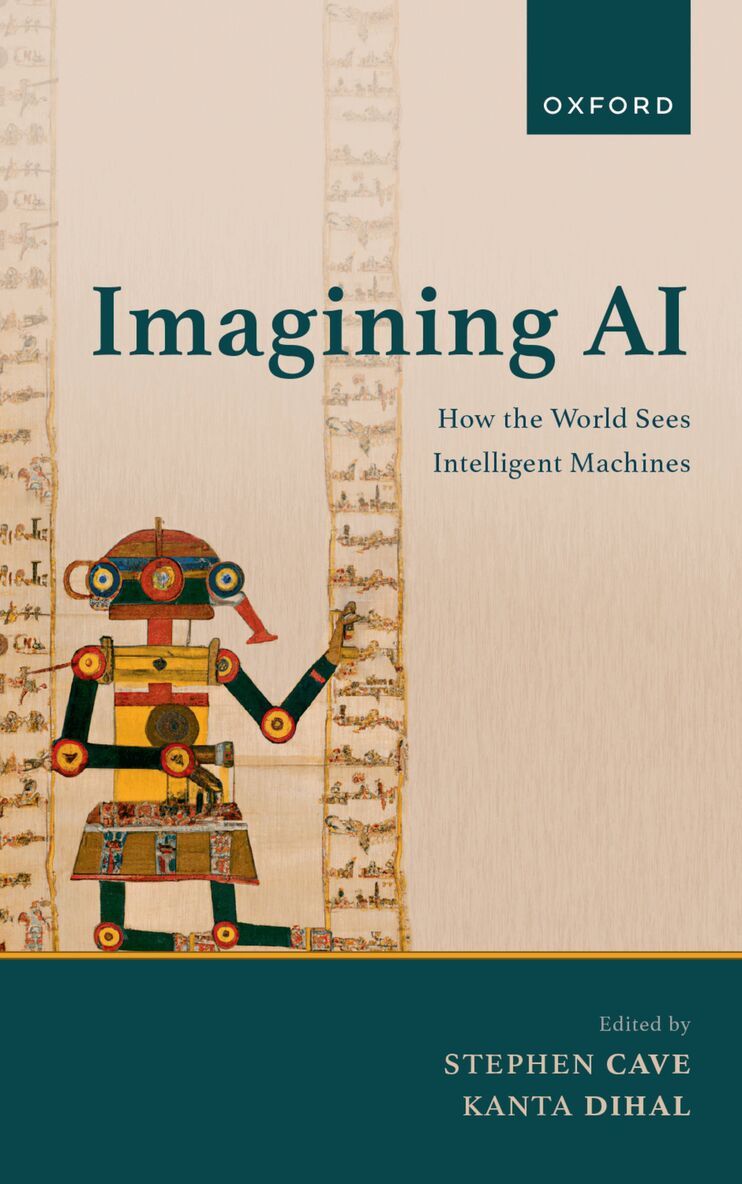
    Imagining AI

    How the World Sees Intelligent Machines

    AvStephen J. Cave,Kanta Dihal

    Häftad, Engelska, 2025

    490 kr

    Beställningsvara. Skickas inom 5-8 vardagar. Fri frakt över 249 kr.

    Beskrivning

    AI is now a global phenomenon. Yet Hollywood narratives dominate perceptions of AI in the English-speaking West and beyond, and much of the technology itself is shaped by a disproportionately white, male, US-based elite. However, different cultures have been imagining intelligent machines since long before we could build them, in visions that vary greatly across religious, philosophical, literary and cinematic traditions. This book aims to spotlight these alternative visions.Imagining AI draws attention to the range and variety of visions of a future with intelligent machines and their potential significance for the research, regulation, and implementation of AI. The book is structured geographically, with each chapter presenting insights into how a specific region or culture imagines intelligent machines. The contributors, leading experts from academia and the arts, explore how the encounters between local narratives, digital technologies, and mainstream Western narratives create new imaginaries and insights in different contexts across the globe. The narratives they analyse range from ancient philosophy to contemporary science fiction, and visual art to policy discourse.The book sheds new light on some of the most important themes in AI ethics, from the differences between Chinese and American visions of AI, to digital neo-colonialism. It is an essential work for anyone wishing to understand how different cultural contexts interplay with the most significant technology of our time.

    Produktinformation

    • Utgivningsdatum:2025-08-28
    • Mått:138 x 215 x 20 mm
    • Vikt:589 g
    • Format:Häftad
    • Språk:Engelska
    • Antal sidor:448
    • Förlag:OUP OXFORD
    • ISBN:9780198959557

    Utforska kategorier

    • Människa – datorinteraktion inom Data och IT
    • Artificiell intelligens inom Data och IT
    • Naturvetenskap:allmänt inom Naturvetenskap och teknik

    Mer om författaren

    Stephen Cave is Director of the Leverhulme Centre for the Future of Intelligence at the University of Cambridge. His research focuses on philosophy and ethics of technology, particularly AI, robotics and life-extension. He is the author of Immortality (Crown, 2012), a New Scientist book of the year, and Should We Want To Live Forever (Routledge, 2023); and co-editor of AI Narratives (Oxford University Press, 2020) and Feminist AI (Oxford University Press, 2023). He writes widely about philosophy, technology and society, including for the Guardian and Atlantic. He also advises governments around the world, and has served as a British diplomat.Kanta Dihal is Lecturer in Science Communication at Imperial College London, where she is Course Director of the MSc in Science Communication, and Associate Fellow of the Leverhulme Centre for the Future of Intelligence at the University of Cambridge. Her research focuses on science narratives, particularly science fiction, and how they shape public perceptions and scientific development. She is co-editor of the books AI Narratives (2020) and Imagining AI (2023) and has advised international governmental organizations and NGOs. She has a DPhil from Oxford on the communication of quantum physics.

    Recensioner i media

    Ranging between philosophy and the humanities to sociology, anthropology and IT, this valuable book not only complements the interdisciplinarity traditionally favoured within cybernetics but also seeks to decolonize the field and emphasize the global futures of AI.

    Innehållsförteckning

    • 1: Stephen Cave and Kanta Dihal: Introduction 2: Stephen Cave, Kanta Dihal, Tomasz Hollanek, Hirofumi Katsuno, Yang Liu, Apolline Taillandier, Daniel White: The Meanings of AI: a Cross-cultural Comparison Part I. Europe 3: Madeleine Chalmers: AI Narratives and the French Touch 4: Eleonora Lima: The Android as a New Political Subject: The Italian Cyberpunk Comic Ranxerox 5: Hans Esselborn: German Science Fiction Literature exploring AI. Expectations, Hopes, and Fears 6: Bogna Konior: Automatic Gnosis: On Lem's Summa Technologiae 7: Anton Pervushin: Boys from a Suitcase: The Evil Robot and the Funny Robot as the main AI Concepts in Science Fiction of the USSR 8: 1. Anzhelika Solovyeva & Nik Hynek: The Russian Imaginary of Robots, Cyborgs and Intelligent Machines: A Hundred-Year History Part II. The Americas and Pacific 9: Stephen Cave and Kanta Dihal: Fiery the Angels Fell: How Hollywood Imagines AI 10: Edward King: Afrofuturismo and the Aesthetics of Resistance to Algorithmic Racism in Brazil 11: Raul Cruz: Artificial Intelligence in the Art of Latin America 12: Macarena Areco: Imaginaries of Technology and Subjectivity: Representations of AI in Recent Latin American Science Fiction 13: Jason Edward Lewis: Imagining Indigenous AI 14: Noelani Arista: Maoli Intelligence: Indigenous Data Sovereignty and Futurity Part III. Africa, Middle East, and South Asia 15: Upamanyu Pablo Mukherjee: From Tafa to Robu: AI in the Fiction of Satyajit Ray 16: Abeba Birhane: Algorithmic Colonization of Africa 17: Rachel Adams: Artificial Intelligence Elsewhere: The Case of the Ogbanje 18: Kanta Dihal, Tomasz Hollanek, Nagla Rizk, Nadine Weheba, Stephen Cave: AI Oasis? Imagining Intelligent Machines in the Middle East and North Africa Part IV. East Asia 19: Hirofumi Katsuno & Daniel White: Engineering Robots with Heart in Japan: The Politics of Cultural Difference in Artificial Emotional Intelligence 20: So-Young Kim: Development and Developmentalism of Artificial Intelligence: Decoding South Korean Policy Discourse on Artificial Intelligence 21: Bing Song: How Chinese Philosophy Impacts AI Narratives and Imagined AI Futures 22: Baichun Zhang and Miao Tian: Attitudes of Thinkers in Pre-Qin Dynasty China to Mechanical Invention and Its Influence on the Development of Technology 23: Yan Wu: Artificial Intelligence in Chinese Science Fiction: From the Spring and Autumn and Warring States Periods to the Era of Deng Xiaoping 24: Feng Zhang: Algorithm of the Soul: Narratives of AI in Recent Chinese Science Fiction 25: Cheryl Julia Lee and Graham Matthews: Intelligent Infrastructure, Humans as Resources, and Coevolutionary Futures: AI Narratives in Singapore