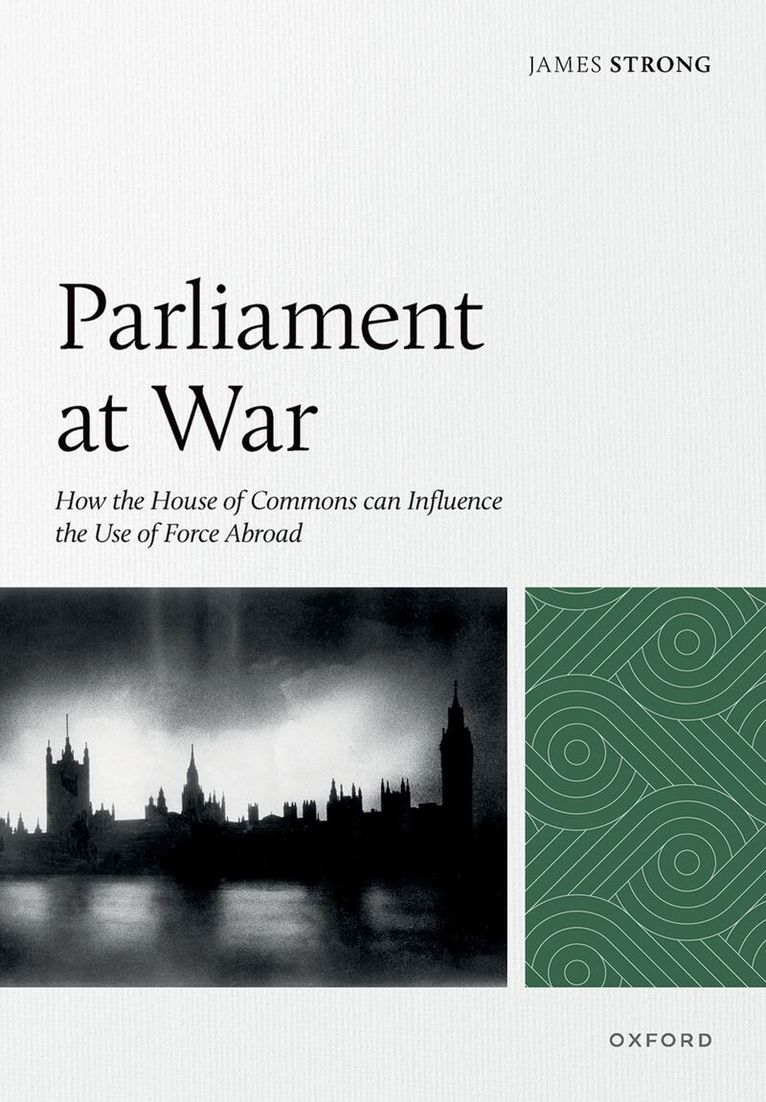
Inbunden, Engelska, 2027
Parliament at War
Av James Strong
1362 kr
Kommande
Beskrivning
Parliament at War studies the roles the House of Commons can play when the UK is at war. It moves beyond the post-Iraq debate over whether MPs should have the right to veto major military deployments, to show the wider range of powers they have used and functions they have performed in the past. It draws on detailed primary historical case studies of parliamentary events after British defeat at Yorktown in 1781, during the siege of Sebastopol in 1855, through the disasters of Gallipoli and the Somme in 1915-16, after the Norway expedition of 1940, and around the Suez Crisis of 1956. James Strong interprets and analyses these cases using contemporary theoretical insights drawn from comparative legislative studies, foreign policy analysis, and international security literatures, and identifies five main roles that MPs could plausibly play during a future conflict.First, if they really want to, MPs can find, resurrect, repurpose, or invent powers to influence or constrain wartime governments. Second, they can draw on a range of sources and tools to gather and publish information about a war. Third, they can evaluate and cast judgement on the quality of leadership that ministers show. Fourth, they can engage in partisan competition, both recognising and ignoring the interplay between domestic and international politics. Fifth, they can signal whether they have confidence in ministers, either strengthening their position or undermining it.The book concludes with some reflections on how MPs might develop their war powers in the future. There seems little prospect of parliament passing a War Powers Act, not least because the arguments against doing it are strong. The emergent convention that MPs should have the chance to veto some types of military deployment is likely to continue to exist, but whether it will have much impact is debatable. There is more MPs could do, however, to improve their knowledge about and ability to scrutinize military operations.
Produktinformation
- Utgivningsdatum: 2027-02-04
- Mått: 156 x 234 x undefined mm
- Format: Inbunden
- Språk: Engelska
- Antal sidor: 256
- Förlag: OUP OXFORD
- ISBN: 9780198990697
Utforska kategorier
Betyg & recensioner
0 recensioner
Inga recensioner tillgängliga.