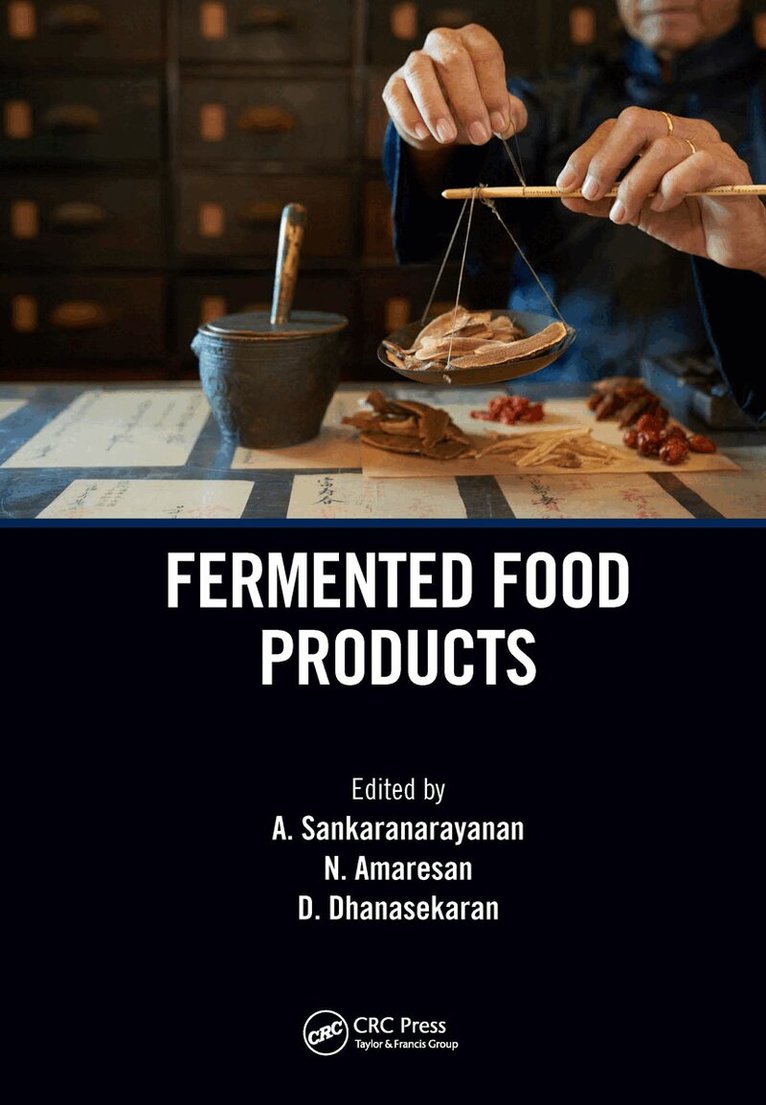
Inbunden, Engelska, 2019
Fermented Food Products
Av A. Sankaranarayanan, N. Amaresan, D. Dhanasekaran
3063 kr
Beställningsvara. Skickas inom 10-15 vardagar. Fri frakt över 249 kr.
Beskrivning
Fermented food play an important proactive role in the human diet. In many developing and under developed countries, fermented food is a cheap source of nutrition. Currently, more than 3500 different fermented foods are consumed by humans throughout the world; many are indigenous and produced in small quantities, however, the consumption of many fermented foods has gradually increased. Fermented Food Products presents in-depth insights into various microbes involved in the production of fermented foods throughout the world. It also focuses on recent developments in the fermented food microbiology field along with biochemical changes that are happening during the fermentation process. • Describes various fermented food products, especially indigenous products• Presents health benefits of fermented food products• Explains mechans involved in the production of fermented foods• Discusses molecular tools and its applications and therapeutic uses of fermented foodsThe book provides a comprehensive account about diversified ethnic fermented food products. Readers will get updated information regarding various types of fermented food products and will learn the effect these fermented food products have on human health.
Produktinformation
- Utgivningsdatum: 2019-12-09
- Mått: 178 x 254 x 31 mm
- Vikt: 960 g
- Format: Inbunden
- Språk: Engelska
- Antal sidor: 430
- Förlag: Taylor & Francis Ltd
- ISBN: 9780367224226
Utforska kategorier
Betyg & recensioner
0 recensioner
Inga recensioner tillgängliga.