E-bok, Engelska, 2013
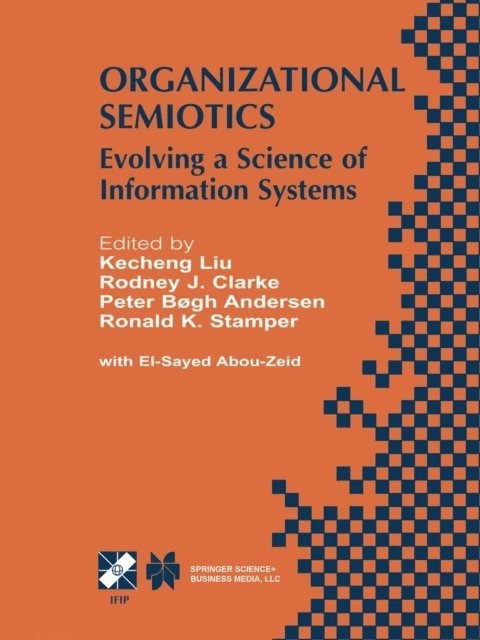
Organizational Semiotics
Av El-Sayed Abou-Zeid, Ronald K. Stamper, Peter Bogh Andersen, Rodney J. Clarke, Kecheng Liu
1470 kr
Läs direkt i Bokus Reader – eller ladda ned till din enhet (PDF kräver ofta zoom och scroll på små skärmar).
Beskrivning
Organizational Semiotics: Evolving a Science of Information Systems covers such issues as:
-Fundamental concepts such as ''information'', ''data'', ''message'', ''communication'', ''knowledge'', ''organization'', ''system'' and so on;
-Properties of signs vital to organizational functioning, such as their meanings, the intentions they express and the valuable social consequences they produce;
-''Architecture'' of organizations when they are viewed as information systems, based on their semiotics features;
-Understanding language in organizational contexts, for example, the limitations on the language used to conduct business affairs;
-The empirical study of communications for requirements elicitation;
-Applying semiotic categories (e.g. physical, empiric, syntactic, semantic, pragmatic, social) to various problems;
-Organizational knowledge representation;
-Business process re-engineering methods and the design of e-commerce systems.
-Fundamental concepts such as ''information'', ''data'', ''message'', ''communication'', ''knowledge'', ''organization'', ''system'' and so on;
-Properties of signs vital to organizational functioning, such as their meanings, the intentions they express and the valuable social consequences they produce;
-''Architecture'' of organizations when they are viewed as information systems, based on their semiotics features;
-Understanding language in organizational contexts, for example, the limitations on the language used to conduct business affairs;
-The empirical study of communications for requirements elicitation;
-Applying semiotic categories (e.g. physical, empiric, syntactic, semantic, pragmatic, social) to various problems;
-Organizational knowledge representation;
-Business process re-engineering methods and the design of e-commerce systems.
Produktinformation
- Utgivningsdatum: 2013-03-19
- Språk: Engelska
- Filformat: PDF
- Kopieringsskydd: LCP
- ISBN: 9780387356112
- Förlag: Springer US
Utforska kategorier
Betyg & recensioner
0 recensioner
Inga recensioner tillgängliga.