• Fri frakt över 249 kr
  • •
  • Snabba leveranser
  • •
  • Billiga böcker
Kundservice

Du är på sajten för privatpersoner.

Företag, bibliotek eller offentlig verksamhet?

Du handlar på classic.bokus.com, där alla dina funktioner finns intakta.
Till classic.bokus.com
Bokus logotyp. Gå till startsidan.
  • Erbjudanden
  • Student
  • Topplistor
  • Barn & ungdom
  • Bokus Play
  • E-böcker
  • Ljudböcker
  • Pocketböcker
  • Spel och pussel

Pocketfynda! Hundratals böcker för 49 kr/st →

Sidfot

Mina sidor

    Hjälp

    • Kundservice
    • Vanliga frågor och svar
    • Frakt och leverans
    • Retur vid ångerrätt
    • Reklamera vara
    • Betalning
    • Köpvillkor
    • Allmänna villkor
    • Information om webbplatsens tillgänglighet

    Om Bokus

    • Om oss
    • Pressrum
    • För studenter
    • För företag
    • För bibliotek och offentlig verksamhet
    • För leverantörer
    • Hållbarhet

    Populärt

    • Aktuella erbjudanden
    • Presentkort
    • Studentlitteratur
    • Nya böcker
    • Topplistor
    • Signerade böcker
    • Engelska böcker

    Inspiration

    • Boktips
    • BookTok
    • Barnbokskaraktärer
    • Populära författare
    Logotyp för Bokus
    Följ oss på Facebook (extern länk)Följ oss på Instagram (extern länk)Följ oss på YouTube (extern länk)Följ oss på TikTok (extern länk)
    bokus @ CookiesAnpassa cookiesIntegritetspolicyKöpvillkor
    Till Citymail hemsida (extern länk)Till Budbee hemsida (extern länk)Till Postnord hemsida (extern länk)Till Schenker hemsida (extern länk)Till Early Bird hemsida (extern länk)Till Walleys hemsida (extern länk)
    1. Psykologi och pedagogik
    2. Psykologi
    3. Barnpsykologi och utvecklingspsykologi

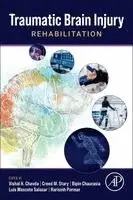
    Traumatic Brain Injury Rehabilitation

    AvVishal K. Chavda,Creed M. Stary

    Häftad, Engelska, 2027

    1 970 kr

    Kommande

    Beskrivning

    Traumatic Brain Injury Rehabilitation addresses the critical need for an integrated resource spanning traumatic and vascular brain injury models. This reference consolidates diverse experimental platforms from classical rodent systems to advanced human brain organoids and AI-driven simulations, targeting researchers and clinicians navigating the complexities of neurotrauma and stroke. The book responds to the growing demand for translational approaches that link bench-side discoveries with bedside applications to improve therapeutic development. The content is systematically organized into sections covering foundational principles, preclinical models of traumatic brain injury and stroke, pediatric brain injury models, in vitro and ex vivo platforms, clinical biomarkers and neuroimaging, and emerging future directions including personalized medicine and AI modeling. Each chapter offers detailed methodologies, comparative evaluations, and clinical translation insights, supported by extensive visuals such as flowcharts, neuroimaging figures, and infographics to enhance comprehension.

    • Integrates preclinical and clinical brain injury models across injury types and species
    • Presents emerging technologies such as brain organoids, 3D bioprinting, and AI simulations
    • Emphasizes translational relevance to bridge bench research and clinical practice
    • Organizes content by injury type, modeling approach, and age group for targeted navigation
    • Includes detailed evaluations of model strengths, limitations, and applications

    Produktinformation

    • Utgivningsdatum:2027-05-01
    • Mått:152 x 229 x undefined mm
    • Vikt:450 g
    • Format:Häftad
    • Språk:Engelska
    • Antal sidor:450
    • Förlag:Elsevier Science
    • ISBN:9780443454226

    Utforska kategorier

    • Barnpsykologi och utvecklingspsykologi inom Psykologi och pedagogik
    • Biovetenskap inom Naturvetenskap och teknik

    Mer om författaren

    Vishal Chavda, MS, PhD - Dr. Vishal Chavda is a distinguished neuroscientist and clinician-scientist & Honorary Professor of Neurology, Neurosurgery & Neurogenetics at ChromoMed Institute whose work bridges basic Neuroscience, clinical neurology, cerebrovascular disease and neurosurgical research. His work addresses critical gaps in understanding ischemic brain injury, cerebral trauma, and translational neuroscience. He serves as Editorial Board Member of multiple Reputed Neuroscience, Neurology and Neurosurgery Journals.Creed M Stary, MD, PhD – Dr. Creed Stary is a clinical anaesthesiologist with a faculty appointment as an Associate Professor of Anaesthesiology, Perioperative and Pain Medicine (MSD) at the Stanford University School of Medicine. His basic neuroscience laboratory studies epigenetic regulation of mitochondrial dysfunction in the brain after stroke. Mr. Bipin Chaurasia is a neurosurgeon and Consultant at Neurosurgery Clinic in Birgunj, Nepal, known for his significant contributions to neurosurgical education and practice in low- and middle-income countries. He sits on the editorial board of the Nepalese Journal of Neuroscience and has extensively published on neurosurgery training and healthcare delivery in Nepal. Notable works include "Neurosurgery training in Nepal: Then and now" and "Exploring the scope and output of neurosurgery in Nepal", which analyze workforce development challenges and chart a path forward for surgical education and service expansion. Dr. Chaurasia's work underscores the importance of structuring experimental and clinical models relevant to resource-limited settings a perspective that is invaluable to this volume’s global and translational focus.Mr. Harisinh Parmar is an Assistant Professor of Neurosurgery at PDU Medical College and Government Hospital, Rajkot, India. He holds an MS in General Surgery and MCh in Neurosurgery, with advanced international training in skull base and vascular microneurosurgery from leading centers in Japan. Dr. Parmar’s surgical expertise focuses on complex skull base lesions, cerebrovascular neurosurgery, and minimally invasive neuro-oncological procedures. He has been an invited participant in high-level neurosurgical cadaver labs and microdissection workshops held in Japan, Indonesia, and Nepal. His contributions to the development of neurosurgical education and microsurgical techniques in India make him a strong advocate for bridging the gap between global standards and local care delivery. As a contributing editor, he brings a deep understanding of neuroanatomical modeling and its surgical relevance to this volume.Dr. Luis Rafael Moscote Salazar is a professor at the University of Cartagena and a renowned clinician-scientist in neurocritical care and neurosurgery. After completing his MD and neurosurgical training in Colombia, he pursued advanced research at Spain's Ramón y Cajal Institute. He has authored influential Spanish-language texts—Neuroemergencias, Neurocirugía Práctica, Fluidoterapia en Neurotrauma, and Trauma Craneoencefálico and is a founding member and elected leader within Latin American neurocritical and trauma research networks Dr. Moscote Salazar’s scholarly work covers neurovascular management, intracranial hemorrhage, and neurocritical protocols, published in outlets such as the Manipal Journal of Medical Sciences. He is deeply engaged in advancing neurovascular care standards across Latin America, contributing to global neurotrauma education and clinical translation.

    Innehållsförteckning

    • SECTION I: FOUNDATIONS IN BRAIN INJURY MODELING1. The Evolution of Experimental Brain Injury Models2. Ethical Frameworks and Guidelines in Brain Injury Research3. Comparative Anatomy and Pathophysiology of the Human Brain vs. Animal Models4. Translational Gaps in Brain Injury Research: Bridging Preclinical and Clinical FindingsSECTION II: PRECLINICAL MODELS OF TRAUMATIC BRAIN INJURY (TBI)5. Rodent Models of Focal and Diffuse TBI: Techniques and Relevance6. Large Animal Models in TBI Research: Pigs, Sheep, and Non-Human Primates7. Closed Head Injury vs. Open Head Injury Models: Applications and Limitations8. Blast-Induced Brain Injury Models: Military and Civilian ImplicationsSECTION III: PRECLINICAL MODELS OF STROKE AND CEREBROVASCULAR INJURY9. Ischemic Stroke Models: Intraluminal Filament, Embolic, and Photothrombotic Approaches10. Hemorrhagic Stroke Models: Intracerebral Hemorrhage and Subarachnoid Hemorrhage11. Comorbidities in Stroke Models: Aging, Hypertension, Diabetes, and Obesity12. Microvascular Dysfunction in Stroke and TBI: Insights from Preclinical ModelsSECTION IV: PRECLINICAL MODELS OF PEDIATRIC AND DEVELOPMENTAL BRAIN INJURY13. Models of Neonatal Hypoxic-Ischemic Encephalopathy (HIE)14. Pediatric TBI Models: Unique Pathophysiological Insights15. Perinatal and Early-Life Brain Injury: Translational ChallengesSECTION V: CLINICALLY RELEVANT IN VITRO AND EX VIVO MODELS16. Human Brain Organoids and iPSC-derived Neural Systems for Brain Injury Research17. 3D Bioprinted Brain Tissue Models: New Frontiers in Experimental Neuropathology18. Organotypic Brain Slice Cultures in Neurotrauma and Stroke ResearchSECTION VI: CLINICAL MODELS AND BIOMARKERS IN BRAIN INJURY19. Biomarkers of Brain Injury: From Discovery to Clinical Implementation20. Advanced Neuroimaging in Brain Injury Research: fMRI, PET, DTI, and Beyond21. Neurocritical Care Data Integration: Clinical Registries and Machine Learning ApproachesSECTION VII: EMERGING CONCEPTS AND FUTURE DIRECTIONS22. Systems Biology Approaches to Brain Injury Research23. Artificial Intelligence and Predictive Modeling in Brain Injury24. Personalized Medicine in Neurotrauma and Stroke25. Next-Generation Translational Models: Toward Precision Neurotherapeutics