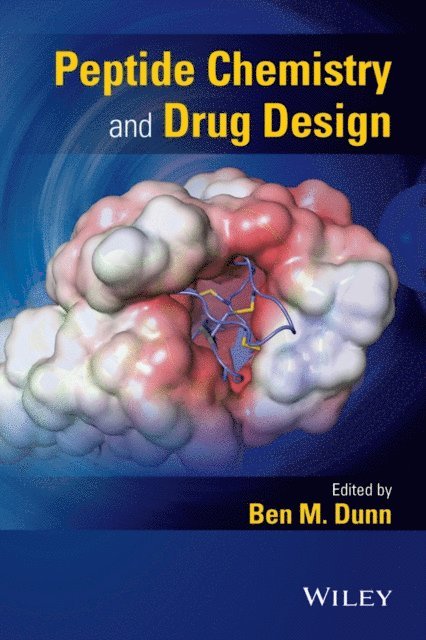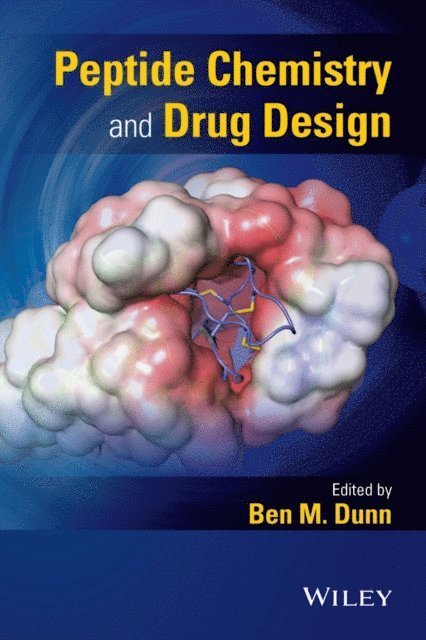
Peptide Chemistry and Drug Design
Inbunden, Engelska, 2015
1 826 kr
Beställningsvara. Skickas inom 5-8 vardagar. Fri frakt över 249 kr.
Beskrivning
This book focuses on peptides as drugs, a growing area of pharmaceutical research and development. It helps readers solve problems of discovering, developing, producing, and delivering peptide-based drugs.• Identifies promising new areas in peptide drug discovery• Includes chapters on discovery from natural sources, metabolic modification, and drug delivery• Overviews separation methods and techniques for analysis, bond formation, and purification• Offers readers both a professional reference and a text or resource for graduate-level students
Produktinformation
- Utgivningsdatum:2015-04-24
- Mått:163 x 244 x 24 mm
- Vikt:585 g
- Format:Inbunden
- Språk:Engelska
- Antal sidor:336
- Förlag:John Wiley & Sons Inc
- ISBN:9780470317617
Utforska kategorier
Mer om författaren
Ben Dunn is a Distinguished Professor in the Department of Biochemistry and Molecular Biology at the University of Florida. Dr. Dunn has served on many NIH review panels and is on the editorial board of Current Protocols in Protein Science. He is an author on 200 peer-reviewed publications and 4 books. Prof. Dunn has been a councillor, president-elect, president, and now past-president of the American Peptide Society.
Innehållsförteckning
- Preface xiList of Contributors xv1 Peptide Therapeutics 1Nader Fotouhi1.1 History of Peptides as Drugs, 11.2 Factors Limiting the Use of Peptides in the Clinic, 21.3 Advances that have Stimulated the Use of Peptides as Drugs, 31.4 Development of Peptide Libraries, 41.5 Modification of Peptides to Promote Stability and Cell Entry, 61.6 Targeting Peptides to Specific Cells, 71.7 Formulations to Improve Properties, 7References, 82 Methods for the Peptide Synthesis and Analysis 11Judit Tulla-Puche, Ayman El-Faham, Athanassios S. Galanis, Eliandre de Oliveira, Aikaterini A. Zompra, and Fernando Albericio2.1 Introduction, 112.2 Solid Supports, 132.3 Linkers, 152.4 Protecting Groups, 172.4.1 The Special Case of Cysteine, 182.5 Methods for Peptide Bond Formation, 202.5.1 Peptide-Bond Formation from Carbodiimide-Mediated Reactions, 202.5.2 Peptide-Bond Formation from Preformed Symmetric Anhydrides, 222.5.3 Peptide-Bond Formation from Acid Halides, 232.5.4 Peptide-Bond Formation from Phosphonium Salt-Mediated Reactions, 232.5.5 Peptide-Bond Formation from Aminium/Uronium Salt-Mediated Reactions, 242.6 Solid-Phase Stepwise Synthesis, 262.6.1 Long Peptides, 272.7 Synthesis in Solution, 292.7.1 N α Protection of the N-Terminal Amino Acid Derivative or Fragment, 302.7.2 Carboxy-Group Protection of the C-terminal Amino-Acid Derivative or Fragment, 312.7.3 Peptide Bond Formation, 342.8 Hybrid Synthesis–Combination of Solid and Solution Synthesis, 342.8.1 Classical Segment Condensation, 352.8.2 Native Chemical Ligation, 362.9 Cyclic Peptides, 372.10 Depsipeptides, 382.11 Separation and Purification of Peptides, 402.11.1 Gel-Filtration Chromatography, 412.11.2 Ion-Exchange Chromatography, 412.11.3 Reverse-Phase High Performance Liquid Chromatography, 422.12 Characterization of Peptides Through Mass Spectrometry, 432.12.1 Ionization Source, 442.12.2 Mass Analysers, 452.12.3 Peptide Fragmentation, 492.12.4 Quantification by MS, 512.13 Conclusions, 52Acknowledgments, 53Abbreviations, 53References, 563 Peptide Design Strategies for G-Protein Coupled Receptors (GPCRs) 75Anamika Singh and Carrie Haskell-Luevano3.1 Introduction, 753.2 Classification of GPCRs, 763.3 Catalog of Peptide-Activated G-Protein Coupled Receptors, 773.4 Structure of GPCRs: Common Features, 773.4.1 Crystal Structures, 773.5 GPCR Activation, 933.5.1 Ligand (Peptide) Binding and Receptor Activation, 943.5.2 Common Structural Changes among GPCRs, 953.5.3 G-Protein Coupled Intracellular Signaling Pathways, 953.6 Structure and Function of Peptide Hormones, 983.7 Design Approaches for GPCR Selective Peptide Ligands, 983.7.1 Structure–Activity Relationship (SAR) Studies, 993.7.2 Chimeric Peptide Analogs, 1033.7.3 Combinatorial Libraries, 1033.7.4 Three-Dimensional (3D) GPCR Homology Molecular Modeling, 1043.8 Conclusions, 105Acknowledgments, 105References, 1064 Peptide-Based Inhibitors of Enzymes 113Anna Knapinska, Sabrina Amar, Trista K. Robichaud, and Gregg B. Fields4.1 Introduction, 1134.2 Angiotensin-Converting Enzyme and Neprilysin/Neutral Endopeptidase, 1144.3 Peptide Inhibitors of the HIV-1 Viral Life Cycle, 1174.4 Matrix Metalloproteinases, 1184.5 Antrax Lethal Factor Inhibition by Defensins, 1254.6 Kinases, 1274.7 Glycosyltransferases (Oligosaccharyltransferases), 1314.8 Telomerase Inhibitors, 1344.9 Tyrosinase, 1384.10 Peptidyl-Prolyl Isomerase, 1404.11 Histone Modifying Enzymes, 1434.11.1 Histone Deacetylase, 1444.11.2 Histone Methyl-Transferase, 1454.12 Putting it all Together: Peptide Inhibitor Applications in Skin Care, 1464.13 Strategies for the Discovery of Novel Peptide Inhibitors, 147Acknowledgments, 148References, 1485 Discovery of Peptide Drugs as Enzyme Inhibitors and Activators 157Jeffrey-Tri Nguyen and Yoshiaki Kiso5.1 Introduction, 1575.1.1 Peptide Residue Nomenclature, 1585.1.2 Common Methods of Drug Design, 1595.1.3 Phases of Drug Development, 1635.2 Enzyme Types That Process Peptides, 1645.2.1 Enzymes as Chemicals in Consumer and Medical Products, 1645.2.2 Nonspecific Enzyme Inhibitors, 1665.3 Amino Acid Drugs, 1665.3.1 Thyroid Hormones, 1665.3.2 An Ornithine Decarboxylase Inhibitor, 1675.3.3 Catecholamines, 1685.4 Serine Proteases and Blood Clotting, 1695.4.1 Blood Coagulating Agents, 1705.4.2 Enzymes as Blood Anticoagulants, 1715.4.3 Direct Thrombin Inhibitors as Blood Anticoagulants, 1715.5 Diabetes Mellitus, 1745.5.1 Peptide Hormones and Blood Glucose Regulation, 1745.5.2 Glucagon-Like Peptide-1 and Analogs, 1755.5.3 Dipeptidyl Peptidase-4 Inhibitors, 1765.6 Renin–Angiotensin–Aldosterone System, 1785.6.1 ACE Inhibitors, 1785.6.2 Renin Inhibitors, 1805.7 Penicillin and Cephalosporin Antibiotics, 1835.8 HIV Protease, 1845.8.1 HIV-Specific Protease Inhibitors, 1855.9 Peptide Drugs Under Development, 1885.9.1 Cathepsins, 1885.9.2 Cysteine Proteases, 1895.9.3 Secretases in Alzheimer’s Disease, 1895.9.4 Trypsin-Like Serine Proteases, 1905.9.5 Zinc Metalloproteases, 1905.9.6 Non-mammalian Proteases, 1915.10 Discussion, 192Acknowledgments, 193References, 1936 Discovery of Peptide Drugs from Natural Sources 203Sónia T. Henriques and David J. Craik6.1 Introduction, 2036.2 Peptides are Involved in the Host Defense Mechanism of Living Organisms, 2066.2.1 Cationic AMPs from Eukaryotes, Peptides that Target the Membrane, 2076.2.2 Peptides and the Host Defense in Bacteria – Bacteriocins, 2116.2.3 Cyclotides, Ultra-Stable Peptides that are Part of Plant Defense Mechanism, 2166.3 Animal Venoms, a Rich Source of Peptides with Therapeutic Potential, 2196.3.1 Conotoxins, a Naturally Occurring Combinatorial Peptide Library, 2196.4 Optimization of Peptides for Drug Development, 2246.4.1 Chemical Modifications to Improve Activity, 2246.5 Conclusions, 227Acknowledgments, 227References, 2277 Modification of Peptides to Limit Metabolism 247Isuru R. Kumarasinghe and Victor J. Hruby7.1 Introduction, 2477.2 Introduction of Unnatural Amino Acids, 2487.3 Cyclization of Linear Peptides to Improve Stability Toward Blood and Brain Protease Degradation, 2497.4 Introduction of D-Amino Acids into Peptides Improves Stability Toward Blood and Brain Protease Degradation, 2537.5 Introduction of β-Amino Acids Increases the Stability Toward Blood and Brain Protease Degradation, 2547.6 Introduction of Peptide Bond Isosteres, 2557.7 Introduction of a N-Methylation of the Amide Bond of Peptides can Improve the Stability Toward Blood and Brain Protease Degradation, 2587.8 Use of Unnatural Amino Acids – Use of Topographically Constrained Amino Acid, 2607.9 Using Glycosylated Amino Acids to Increase the Resistance of the Proteolytic Degradation, 2617.10 Creation of Peptides as Multiple Antigen Peptide (MAP) Dendrimeric Forms Increases the Stability Toward Blood and Brain Protease Degradation, 2627.11 Halogenations of Aromatic Residues in Peptides can Reduce the Enzymatic Recognition Required for Peptide Hydrolysis, 2637.12 Concluding Discussion, 264References, 2658 Delivery of Peptide Drugs 271Jeffrey-Tri Nguyen and Yoshiaki Kiso8.1 Introduction, 2718.2 Lipinski’s Rule of Five, 2718.2.1 Molecular Size, 2728.2.2 Lipophilicity, 2748.2.3 Chemical Stability, 2788.2.4 Routes of Administration, 2828.3 Approaches to Delivering Peptide Drugs, 2828.3.1 Enzyme Inhibitors, 2838.3.2 Permeation Enhancers, 2848.3.3 Delivery of Peptide Drugs across the Blood–Brain Barrier, 2868.4 Parenteral Peptide Drugs, 2908.5 Topical Peptide Drugs for Local Effects, 2948.5.1 Cosmeceutical Peptides, 2948.6 Intranasal Peptide Drug Delivery, 2958.7 Enteral Peptide Drugs, 2978.8 Different Routes of Administration for Insulin, 2998.9 Discussion, 300Acknowledgments, 301References, 301Index 311
Hoppa över listan


Du kanske också är intresserad av

Peptide Analysis Protocols
Ben M. Dunn, Michael W. Pennington, Ben M. Dunn, Michael W. Pennington
Häftad, 2013
1 633 kr
- Signerad!
SIGNERAD - Mental uppgradering : Att navigera i en tid av smart teknik och mänsklig dumhet
Emma Frans
Inbunden, 2026
259 kr
- Signerad!