Ben M. Dunn - Böcker
Visar alla böcker från författaren Ben M. Dunn. Handla med fri frakt och snabb leverans.
4 produkter
4 produkter
1 836 kr
Skickas inom 11-20 vardagar
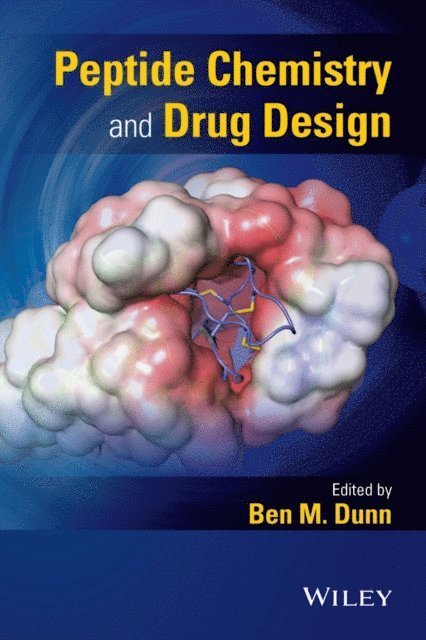
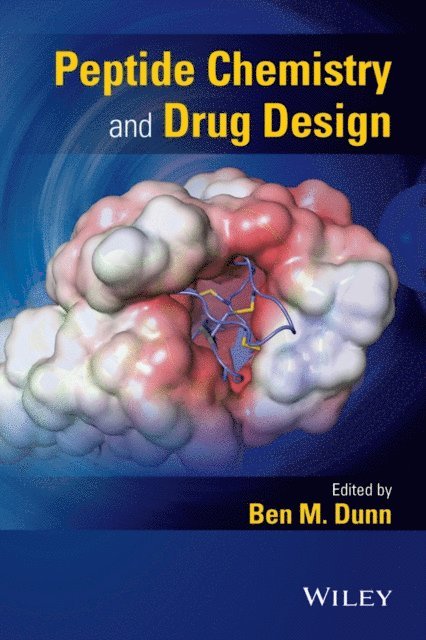
This book focuses on peptides as drugs, a growing area of pharmaceutical research and development. It helps readers solve problems of discovering, developing, producing, and delivering peptide-based drugs.• Identifies promising new areas in peptide drug discovery• Includes chapters on discovery from natural sources, metabolic modification, and drug delivery• Overviews separation methods and techniques for analysis, bond formation, and purification• Offers readers both a professional reference and a text or resource for graduate-level students
1 582 kr
Skickas inom 10-15 vardagar
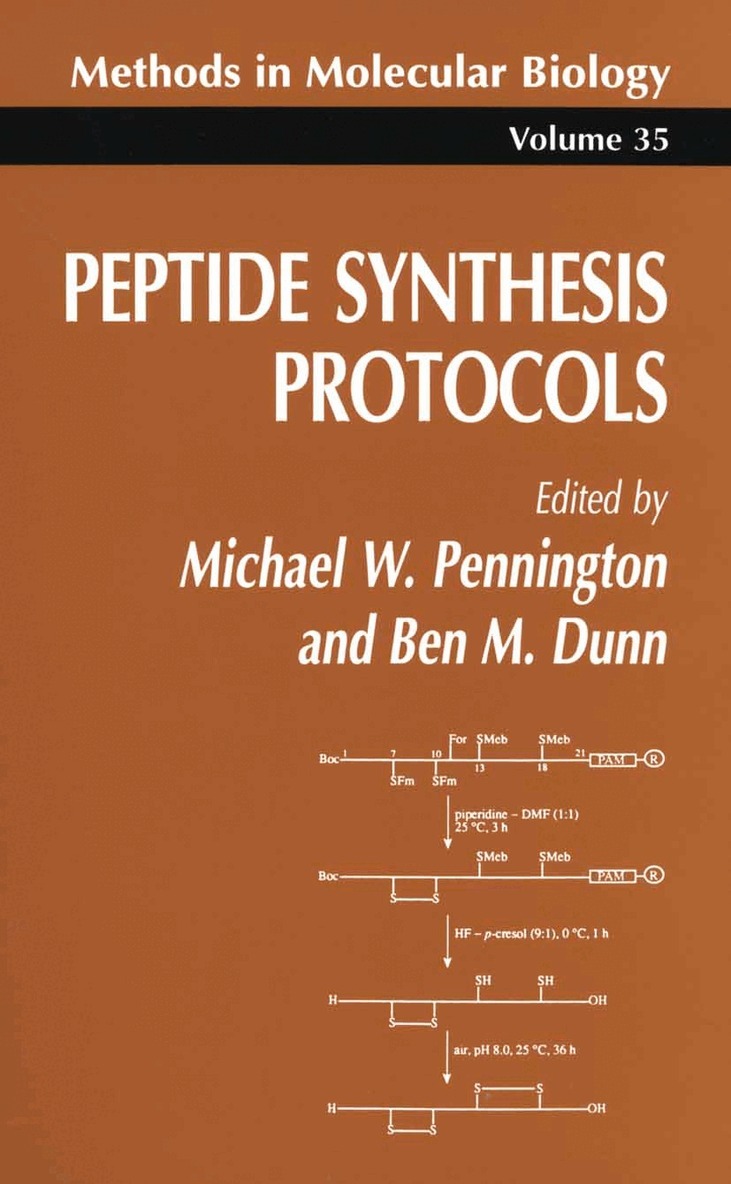
In Peptide Synthesis Protocols leading authorities assemble in one volume a broad range of state-of-the-art methods for the preparation, purification, and synthesis of peptides. These powerful and useful protocols contain many innovations not previously described, including a compilation of chemical modification procedures and peptide synthesis improvements. The authors describe each procedure in a practical, step-by-step fashion suitable for both the skilled and novice researcher. They also provide troubleshooting tips, alternative ways of doing things, and informative explanations about why certain steps are necessary-aids not usually found in standard journal recipes-all designed to guarantee a significant difference in the outcome of your experiments. Pennington and Dunn's Peptide Synthesis Protocols offers a comprehensive collection of standardized, readily reproducible methods for many critical procedures that will enable scientists in every area of biochemical and biological research to prepare, purify, characterize, and use peptides effectively.
Structure and Function of the Aspartic Proteinases
Genetics, Structures, and Mechanisms
Häftad, Engelska, 2012
556 kr
Skickas inom 10-15 vardagar
In September, 1990, a group of 160 scientists from 19 countries and 21 of the United States met at the Red Lion Inn in Rohnert Park, Sonoma County, California. The purpose of this meeting was to share new information from recent research on the Aspartic Proteinases. This book is a compilation of the information transferred in that forum. The Aspartic Proteinases include all those enzymes from the "fourth" class of proteolytic enzymes, the first three being the Serine, Cysteine and Metalloproteinases. Of course, all the scientists in attendance at the Sonoma Aspartic Proteinase Conference would agree that our current level of understanding of the structure and function of the Aspartic Proteinase class of enzymes is clearly first class. The reasons for this require a bit of historical perspective. The group of scientists who are engaged in study of this family of enzymes first met as a separate entity in 1976, in Norman, Oklahoma, at a meeting organized by Jordan Tang of the Oklahoma Medical Research Foundation. This was an exciting time, as the first crystal structures of some of these enzymes were described by Blundell, James and Davies. During that conference, the relationship between the two halves of the mammalian and fungal enzymes was recognized and this has provided a structural foundation for analysis of the retroviral enzymes, which came later. A book was published by Plenum Press documenting l this conference, and the current book is an update to that important work.
1 590 kr
Skickas inom 10-15 vardagar
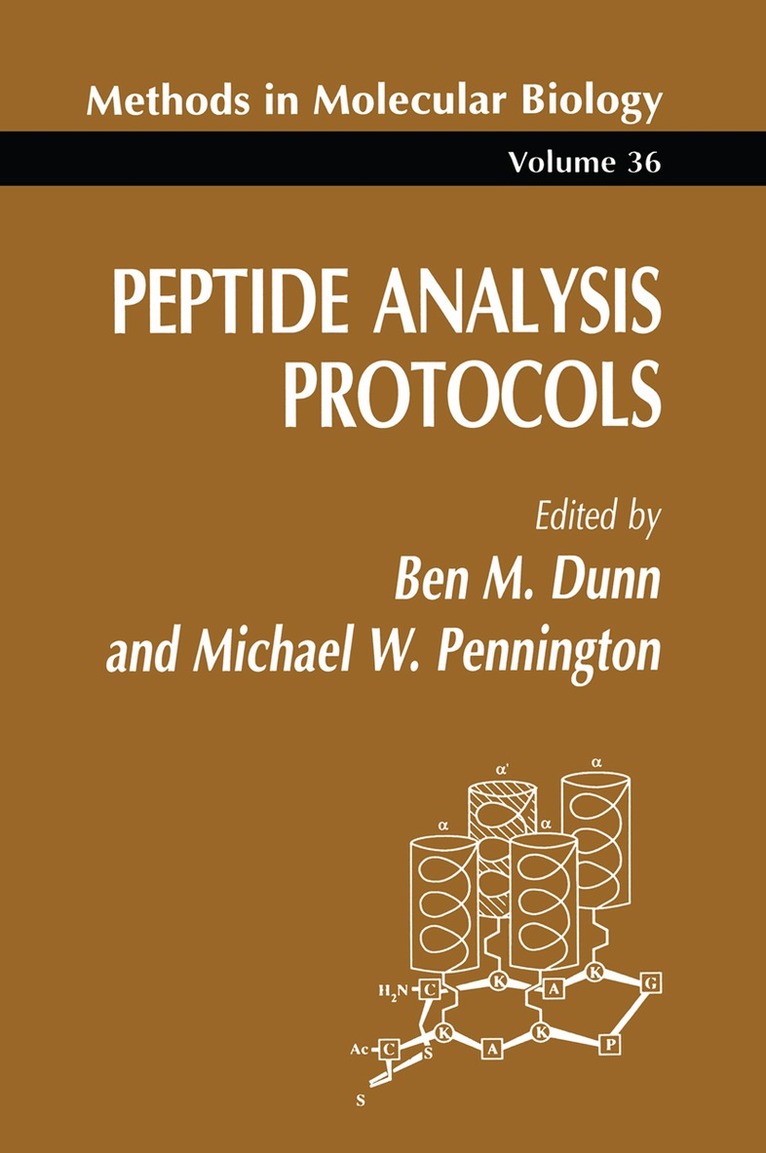
As the technology base for the preparation of increasingly c- plex peptides has improved, the methods for their purification and ana- sis have also been improved and supplemented. Peptide science routinely utilizes tools and techniques that are common to organic chemistry, p- tein chemistry, biophysical chemistry, enzymology, pharmacology, and molecular biology. A fundamental understanding of each of these areas is essential for interpreting all of the data that a peptide scientist may see. The purpose of Peptide Analysis Protocols is to provide the novice with sufficient practical information necessary to begin developing useful analysis and separation skills. Understanding and developing these skills will ultimately yield a scientist with broadened knowledge and good problem-solving abilities. Although numerous books that address d- ferent specialties, such as HPLC, FAB-MS, CE, and NMR, have been written, until now no single volume has reviewed all of these techniques with a focus on "getting started" in separation and analysis of peptides. This volume will also provide those who already possess practical knowledge of the more advanced aspects of peptide science with detailed applications for each of these protocols. Because the chapters have been written by researchers active in each of the fields that they discuss, a great deal of information on and insight into solution of real problems that they have encountered is presented. Examplary results are clearly demonstrated and discussed. For more advanced investi- tions, supplementary experiments are often suggested.