• Fri frakt över 249 kr
  • •
  • Snabba leveranser
  • •
  • Billiga böcker
Kundservice

Du är på sajten för privatpersoner.

Företag, bibliotek eller offentlig verksamhet?

Du handlar på classic.bokus.com, där alla dina funktioner finns intakta.
Till classic.bokus.com
Bokus logotyp. Gå till startsidan.
  • Erbjudanden
  • Student
  • Topplistor
  • Barn & ungdom
  • Bokus Play
  • E-böcker
  • Ljudböcker
  • Pocketböcker
  • Spel och pussel

Pocketfynda! Hundratals böcker för 49 kr/st →

Sidfot

Mina sidor

    Hjälp

    • Kundservice
    • Vanliga frågor och svar
    • Frakt och leverans
    • Retur vid ångerrätt
    • Reklamera vara
    • Betalning
    • Köpvillkor
    • Allmänna villkor
    • Information om webbplatsens tillgänglighet

    Om Bokus

    • Om oss
    • Pressrum
    • För studenter
    • För företag
    • För bibliotek och offentlig verksamhet
    • För leverantörer
    • Hållbarhet

    Populärt

    • Aktuella erbjudanden
    • Presentkort
    • Studentlitteratur
    • Nya böcker
    • Topplistor
    • Signerade böcker
    • Engelska böcker

    Inspiration

    • Boktips
    • BookTok
    • Barnbokskaraktärer
    • Populära författare
    Logotyp för Bokus
    Följ oss på Facebook (extern länk)Följ oss på Instagram (extern länk)Följ oss på YouTube (extern länk)Följ oss på TikTok (extern länk)
    bokus @ CookiesAnpassa cookiesIntegritetspolicyKöpvillkor
    Till Citymail hemsida (extern länk)Till Budbee hemsida (extern länk)Till Postnord hemsida (extern länk)Till Schenker hemsida (extern länk)Till Early Bird hemsida (extern länk)Till Walleys hemsida (extern länk)
    1. Naturvetenskap och teknik
    2. Teknik och industri
    3. Elektronik och kommunikationer

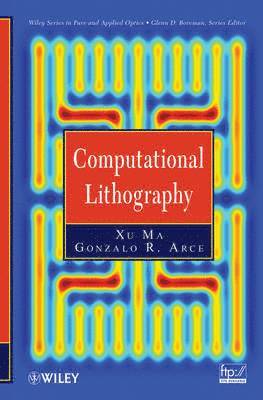
    Computational Lithography

    AvXu Ma,Gonzalo R. Arce

    Inbunden, Engelska, 2010

    Del 73 i serien Wiley Series in Pure and Applied Optics

    1 427 kr

    Beställningsvara. Skickas inom 5-8 vardagar. Fri frakt över 249 kr.

    Beskrivning

    A Unified Summary of the Models and Optimization Methods Used in Computational Lithography Optical lithography is one of the most challenging areas of current integrated circuit manufacturing technology. The semiconductor industry is relying more on resolution enhancement techniques (RETs), since their implementation does not require significant changes in fabrication infrastructure. Computational Lithography is the first book to address the computational optimization of RETs in optical lithography, providing an in-depth discussion of optimal optical proximity correction (OPC), phase shifting mask (PSM), and off-axis illumination (OAI) RET tools that use model-based mathematical optimization approaches.The book starts with an introduction to optical lithography systems, electric magnetic field principles, and the fundamentals of optimization from a mathematical point of view. It goes on to describe in detail different types of optimization algorithms to implement RETs. Most of the algorithms developed are based on the application of the OPC, PSM, and OAI approaches and their combinations. Algorithms for coherent illumination as well as partially coherent illumination systems are described, and numerous simulations are offered to illustrate the effectiveness of the algorithms. In addition, mathematical derivations of all optimization frameworks are presented.The accompanying MATLAB® software files for all the RET methods described in the book make it easy for readers to run and investigate the codes in order to understand and apply the optimization algorithms, as well as to design a set of optimal lithography masks. The codes may also be used by readers for their research and development activities in their academic or industrial organizations. An accompanying MATLAB® software guide is also included. An accompanying MATLAB® software guide is included, and readers can download the software to use with the guide at ftp://ftp.wiley.com/public/sci_tech_med/computational_lithography.Tailored for both entry-level and experienced readers, Computational Lithography is meant for faculty, graduate students, and researchers, as well as scientists and engineers in industrial organizations whose research or career field is semiconductor IC fabrication, optical lithography, and RETs. Computational lithography draws from the rich theory of inverse problems, optics, optimization, and computational imaging; as such, the book is also directed to researchers and practitioners in these fields.

    Produktinformation

    • Utgivningsdatum:2010-08-06
    • Mått:160 x 241 x 18 mm
    • Vikt:508 g
    • Format:Inbunden
    • Språk:Engelska
    • Serie:Wiley Series in Pure and Applied Optics
    • Antal sidor:256
    • Förlag:John Wiley & Sons Inc
    • ISBN:9780470596975

    Utforska kategorier

    • Elektronik och kommunikationer inom Naturvetenskap och teknik

    Mer om författaren

    Dr. Xu Ma received a PhD in electrical and computer engineering from the University of Delaware. He is now with the Electrical Engineering and Computer Science Department at the University of California at Berkeley. Dr. Ma's research interests include computational imaging, signal processing, and computational lithography. Dr. Gonzalo R. Arce received a PhD degree in electrical engineering from Purdue University. He is the Charles Black Evans Distinguished Professor of Electrical and Computer Engineering at the University of Delaware and holds the Fulbright-Nokia Distinguished Chair in Information and Communications Technologies. Dr. Arce's fields of interest include nonlinear and statistical signal processing, digital printing, and computational imaging. He is a Fellow of the IEEE for his contributions to the theory and applications of nonlinear signal processing.

    Recensioner i media

    "Computational lithography draws from the rich theory of inverse problems, optics, optimization, and computational imaging; as such, the book is also directed to researchers and practitioners in these fields. " (Consumer Electronics Net, 15 March 2011)

    Innehållsförteckning

    • Preface xiAcknowledgments xiiiAcronyms xv1 Introduction 11.1 Optical Lithography 11.1.1 Optical Lithography and Integrated Circuits 21.1.2 Brief History of Optical Lithography Systems 31.2 Rayleigh’s Resolution 51.3 Resist Processes and Characteristics 71.4 Techniques in Computational Lithography 101.4.1 Optical Proximity Correction 111.4.2 Phase-Shifting Masks 111.4.3 Off-Axis Illumination 141.4.4 Second-Generation RETs 151.5 Outline 162 Optical Lithography Systems 192.1 Partially Coherent Imaging Systems 192.1.1 Abbe’s Model 192.1.2 Hopkins Diffraction Model 222.1.3 Coherent and Incoherent Imaging Systems 242.2 Approximation Models 252.2.1 Fourier Series Expansion Model 252.2.2 Singular Value Decomposition Model 292.2.3 Average Coherent Approximation Model 322.2.4 Discussion and Comparison 342.3 Summary 363 Rule-Based Resolution Enhancement Techniques 373.1 RET Types 373.1.1 Rule-Based RETs 373.1.2 Model-Based RETs 383.1.3 Hybrid RETs 393.2 Rule-Based OPC 393.2.1 Catastrophic OPC 403.2.2 One-Dimensional OPC 403.2.3 Line-Shortening Reduction OPC 423.2.4 Two-Dimensional OPC 433.3 Rule-Based PSM 443.3.1 Dark-Field Application 443.3.2 Light-Field Application 453.4 Rule-Based OAI 463.5 Summary 474 Fundamentals of Optimization 484.1 Definition and Classification 484.1.1 Definitions in the Optimization Problem 484.1.2 Classification of Optimization Problems 494.2 Unconstrained Optimization 504.2.1 Solution of Unconstrained Optimization Problem 504.2.2 Unconstrained Optimization Algorithms 524.3 Summary 575 Computational Lithography with Coherent Illumination 585.1 Problem Formulation 595.2 OPC Optimization 625.2.1 OPC Design Algorithm 625.2.2 Simulations 645.3 Two-Phase PSM Optimization 655.3.1 Two-Phase PSM Design Algorithm 655.3.2 Simulations 685.4 Generalized PSM Optimization 725.4.1 Generalized PSM Design Algorithm 725.4.2 Simulations 755.5 Resist Modeling Effects 795.6 Summary 826 Regularization Framework 836.1 Discretization Penalty 846.1.1 Discretization Penalty for OPC Optimization 846.1.2 Discretization Penalty for Two-Phase PSM Optimization 866.1.3 Discretization Penalty for Generalized PSM Optimization 876.2 Complexity Penalty 936.2.1 Total Variation Penalty 936.2.2 Global Wavelet Penalty 946.2.3 Localized Wavelet Penalty 986.3 Summary 1007 Computational Lithography with Partially Coherent Illumination 1017.1 OPC Optimization 1027.1.1 OPC Design Algorithm Using the Fourier Series Expansion Model 1027.1.2 Simulations Using the Fourier Series Expansion Model 1057.1.3 OPC Design Algorithm Using the Average Coherent Approximation Model 1077.1.4 Simulations Using the Average Coherent Approximation Model 1117.1.5 Discussion and Comparison 1117.2 PSM Optimization 1157.2.1 PSM Design Algorithm Using the Singular Value Decomposition Model 1167.2.2 Discretization Regularization for PSM Design Algorithm 1187.2.3 Simulations 1187.3 Summary 1228 Other RET Optimization Techniques 1238.1 Double-Patterning Method 1238.2 Post-Processing Based on 2D DCT 1288.3 Photoresist Tone Reversing Method 1318.4 Summary 1359 Source and Mask Optimization 1369.1 Lithography Preliminaries 1379.2 Topological Constraint 1409.3 Source–Mask Optimization Algorithm 1419.4 Simulations 1419.5 Summary 14510 Coherent Thick-Mask Optimization 14610.1 Kirchhoff Boundary Conditions 14710.2 Boundary Layer Model 14710.2.1 Boundary Layer Model in Coherent Imaging Systems 14710.2.2 Boundary Layer Model in Partially Coherent Imaging Systems 15110.3 Lithography Preliminaries 15310.4 OPC Optimization 15710.4.1 Topological Constraint 15710.4.2 OPC Optimization Algorithm Based on BL Model Under Coherent Illumination 15810.4.3 Simulations 15910.5 PSM Optimization 16210.5.1 Topological Constraint 16210.5.2 PSM Optimization Algorithm Based on BL Model Under Coherent Illumination 16510.5.3 Simulations 16510.6 Summary 17011 Conclusions and New Directions of Computational Lithography 17111.1 Conclusion 17111.2 New Directions of Computational Lithography 17311.2.1 OPC Optimization for the Next-Generation Lithography Technologies 17311.2.2 Initialization Approach for the Inverse Lithography Optimization 17311.2.3 Double Patterning and Double Exposure Methods in Partially Coherent Imaging System 17411.2.4 OPC and PSM Optimizations for Inverse Lithography Based on Rigorous Mask Models in Partially Coherent Imaging System 17411.2.5 Simultaneous Source and Mask Optimization for Inverse Lithography Based on Rigorous Mask Models 17411.2.6 Investigation of Factors Influencing the Complexity of the OPC and PSM Optimization Algorithms 174Appendix A: Formula Derivation in Chapter 5 175Appendix B: Manhattan Geometry 181Appendix C: Formula Derivation in Chapter 6 182Appendix D: Formula Derivation in Chapter 7 185Appendix E: Formula Derivation in Chapter 8 189Appendix F: Formula Derivation in Chapter 9 194Appendix G: Formula Derivation in Chapter 10 195Appendix H: Software Guide 199References 217Index 223