• Fri frakt över 249 kr
  • •
  • Snabba leveranser
  • •
  • Billiga böcker
Kundservice

Du är på sajten för privatpersoner.

Företag, bibliotek eller offentlig verksamhet?

Du handlar på classic.bokus.com, där alla dina funktioner finns intakta.
Till classic.bokus.com
Bokus logotyp. Gå till startsidan.
  • Erbjudanden
  • Student
  • Topplistor
  • Barn & ungdom
  • Bokus Play
  • E-böcker
  • Ljudböcker
  • Pocketböcker
  • Spel och pussel

Pocketfynda! Hundratals böcker för 49 kr/st →

Sidfot

Mina sidor

    Hjälp

    • Kundservice
    • Vanliga frågor och svar
    • Frakt och leverans
    • Retur vid ångerrätt
    • Reklamera vara
    • Betalning
    • Köpvillkor
    • Allmänna villkor
    • Information om webbplatsens tillgänglighet

    Om Bokus

    • Om oss
    • Pressrum
    • För studenter
    • För företag
    • För bibliotek och offentlig verksamhet
    • För leverantörer
    • Hållbarhet

    Populärt

    • Aktuella erbjudanden
    • Presentkort
    • Studentlitteratur
    • Nya böcker
    • Topplistor
    • Signerade böcker
    • Engelska böcker

    Inspiration

    • Boktips
    • BookTok
    • Barnbokskaraktärer
    • Populära författare
    Logotyp för Bokus
    Följ oss på Facebook (extern länk)Följ oss på Instagram (extern länk)Följ oss på YouTube (extern länk)Följ oss på TikTok (extern länk)
    bokus @ CookiesAnpassa cookiesIntegritetspolicyKöpvillkor
    Till Citymail hemsida (extern länk)Till Budbee hemsida (extern länk)Till Postnord hemsida (extern länk)Till Schenker hemsida (extern länk)Till Early Bird hemsida (extern länk)Till Walleys hemsida (extern länk)
    1. Medicin
    2. Andra medicinska specialiteter
    3. Farmakologi

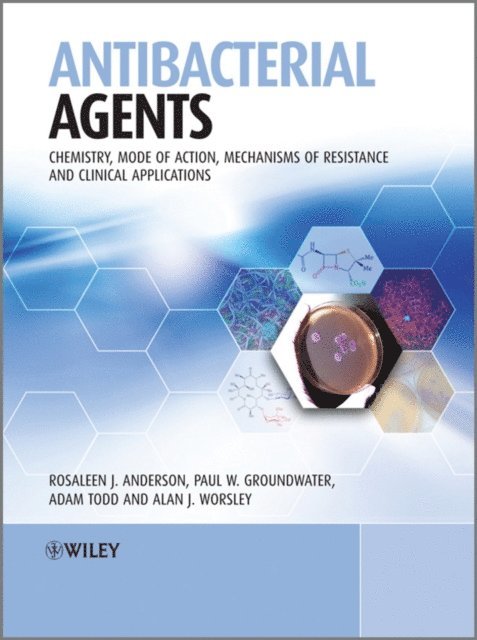
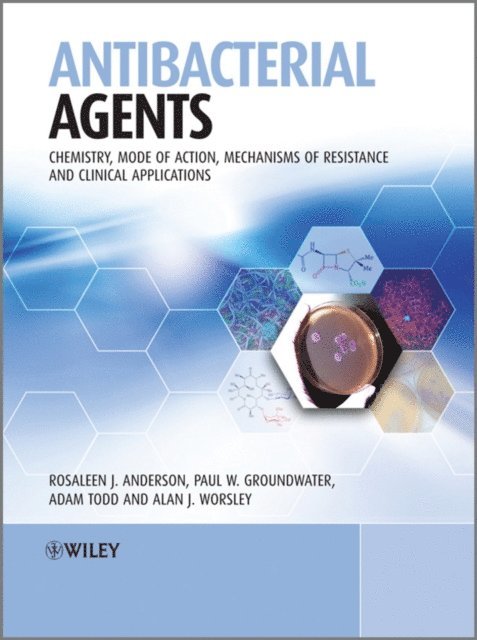
    Antibacterial Agents

    Chemistry, Mode of Action, Mechanisms of Resistance and Clinical Applications

    AvRosaleen Anderson,Paul W. Groundwater

    Inbunden, Engelska, 2012

    1 421 kr

    Tillfälligt slut

    Fler format och utgåvor

    Häftad

    632 kr

    Beskrivning

    Antibacterial agents act against bacterial infection either by killing the bacterium or by arresting its growth. They do this by targeting bacterial DNA and its associated processes, attacking bacterial metabolic processes including protein synthesis, or interfering with bacterial cell wall synthesis and function. Antibacterial Agents is an essential guide to this important class of chemotherapeutic drugs. Compounds are organised according to their target, which helps the reader understand the mechanism of action of these drugs and how resistance can arise. The book uses an integrated “lab-to-clinic” approach which covers drug discovery, source or synthesis, mode of action, mechanisms of resistance, clinical aspects (including links to current guidelines, significant drug interactions, cautions and contraindications), prodrugs and future improvements. Agents covered include: agents targeting DNA - quinolone, rifamycin, and nitroimidazole antibacterial agentsagents targeting metabolic processes -  sulfonamide antibacterial agents and trimethoprimagents targeting protein synthesis - aminoglycoside, macrolide and tetracycline antibiotics, chloramphenicol, and oxazolidinonesagents targeting cell wall synthesis - β-Lactam and glycopeptide antibiotics, cycloserine, isonaizid, and daptomycinAntibacterial Agents will find a place on the bookshelves of students of pharmacy, pharmacology, pharmaceutical sciences, drug design/discovery, and medicinal chemistry, and as a bench reference for pharmacists and pharmaceutical researchers in academia and industry.

    Produktinformation

    • Utgivningsdatum:2012-06-22
    • Mått:196 x 254 x 22 mm
    • Vikt:989 g
    • Format:Inbunden
    • Språk:Engelska
    • Antal sidor:376
    • Förlag:John Wiley & Sons Inc
    • ISBN:9780470972441

    Utforska kategorier

    • Farmakologi inom Medicin
    • Tillverkningsteknik inom Naturvetenskap och teknik

    Mer om författaren

    Professor Rosaleen Anderson, Professor of Pharmaceutical Chemistry, Sunderland Pharmacy School, University of Sunderland, UK Professor Paul Groundwater, Professor of Medicinal Chemistry, Faculty of Pharmacy, The University of Sydney, AustraliaDr Adam Todd, Senior Lecturer in Pharmacy Practice, Sunderland Pharmacy School, University of Sunderland, UKDr Alan Worsley, Principal Lecturer in Pharmacy Practice, Sunderland Pharmacy School, University of Sunderland, UK

    Innehållsförteckning

    • Preface xi SECTION 1 INTRODUCTION TO MICROORGANISMS AND ANTIBACTERIALCHEMOTHERAPY 11.1 Microorganisms 3Key points 31.1.1 Classification 31.1.2 Structure 41.1.3 Bacterial detection and identification 171.1.4 Other than its mode of action, what factors determine the antibacterial activity of a drug? 251.1.5 Bacterial resistance 271.1.6 The ‘post-antibiotic age’? 29References 31Questions 33SECTION 2 AGENTS TARGETING DNA 352.1 Quinolone antibacterial agents 37Key points 372.1.1 Discovery 372.1.2 Synthesis 392.1.3 Bioavailability 412.1.4 Mode of action and selectivity 442.1.5 Bacterial resistance 452.1.6 Clinical applications 472.1.7 Adverse drug reactions 502.1.8 Drug interactions 552.1.9 Recent developments 56References 602.2 Rifamycin antibacterial agents 63Key points 632.2.1 Discovery 632.2.2 Synthesis 652.2.3 Bioavailability 682.2.4 Mode of action and selectivity 692.2.5 Bacterial resistance 712.2.6 Clinical applications 712.2.7 Adverse drug reactions 772.2.8 Drug interactions 782.2.9 Recent developments 81References 812.3 Nitroimidazole antibacterial agents 85Key points 852.3.1 Discovery 852.3.2 Synthesis 862.3.3 Bioavailability 862.3.4 Mode of action and selectivity 872.3.5 Mechanisms of resistance 892.3.6 Clinical applications 902.3.7 Adverse drug reactions and contraindications 942.3.8 Drug interactions 952.3.9 Recent developments 97References 97Questions 101SECTION 3 AGENTS TARGETING METABOLIC PROCESSES 1033.1 Sulfonamide antibacterial agents 105Key points 1053.1.1 Discovery 1053.1.2 Synthesis 1073.1.3 Bioavailability 1083.1.4 Mode of action and selectivity 1113.1.5 Bacterial resistance 1143.1.6 Clinical applications 1153.1.7 Adverse drug reactions 1193.1.8 Drug interactions 1223.1.9 Recent developments 123References 1243.2 Trimethoprim 127Key points 1273.2.1 Discovery 1273.2.2 Synthesis 1283.2.3 Bioavailability 1303.2.4 Mode of action and selectivity 1303.2.5 Bacterial resistance 1363.2.6 Clinical applications 1363.2.7 Adverse drug reactions 1383.2.8 Drug interactions 1383.2.9 Recent developments 139References 140Questions 145SECTION 4 AGENTS TARGETING PROTEIN SYNTHESIS 1474.1 Aminoglycoside antibiotics 149Key points 1494.1.1 Discovery 1494.1.2 Synthesis 1524.1.3 Bioavailability 1564.1.4 Mode of action and selectivity 1584.1.5 Bacterial resistance 1604.1.6 Clinical applications 1614.1.7 Adverse drug reactions 1654.1.8 Drug interactions 1674.1.9 Recent developments 168References 1684.2 Macrolide antibiotics 173Key points 1734.2.1 Discovery 1734.2.2 Synthesis 1754.2.3 Bioavailability 1774.2.4 Mode of action and selectivity 1804.2.5 Bacterial resistance 1814.2.6 Clinical applications 1824.2.7 Adverse drug reactions 1874.2.8 Drug interactions 1894.2.9 Recent developments 192References 1934.3 Tetracycline antibiotics 197Key points 1974.3.1 Discovery 1974.3.2 Synthesis 2004.3.3 Bioavailability (agwuh and macgowan, 2006) 2054.3.4 Mode of action and selectivity 2104.3.5 Bacterial resistance 2134.3.6 Clinical applications 2174.3.7 Adverse drug reactions 2234.3.8 Drug interactions 2244.3.9 Recent developments 224References 2254.4 Chloramphenicol 231Key points 2314.4.1 Discovery 2314.4.2 Synthesis 2314.4.3 Bioavailability 2324.4.4 Mode of action and selectivity 2354.4.5 Bacterial resistance 2354.4.6 Clinical applications 2364.4.7 Adverse drug reactions 2384.4.8 Drug interactions 2394.4.9 Recent developments 239References 2414.5 Oxazolidinones 243Key points 2434.5.1 Discovery 2434.5.2 Synthesis 2454.5.3 Bioavailability 2474.5.4 Mode of action and selectivity 2484.5.5 Bacterial resistance 2494.5.6 Clinical applications 2514.5.7 Adverse drug reactions 2524.5.8 Drug interactions 2534.5.9 Recent developments 254References 254Questions 259SECTION 5 AGENTS TARGETING CELL-WALL SYNTHESIS 2615.1 b-lactam antibiotics 263Key points 2635.1.1 Discovery 2635.1.2 Synthesis 2725.1.3 Bioavailability 2775.1.4 Mode of action and selectivity 2845.1.5 Bacterial resistance 2855.1.6 Clinical applications 2905.1.7 Adverse drug reactions 2965.1.8 Drug interactions 2985.1.9 Recent developments 300References 3015.2 Glycopeptide antibiotics 3055.2.1 Discovery 3055.2.2 Synthesis 3055.2.3 Bioavailability 3075.2.4 Mode of action and selectivity 3085.2.5 Bacterial resistance 3115.2.6 Clinical applications 3135.2.7 Adverse drug reactions 3145.2.8 Drug interactions 3155.2.9 Recent developments 316References 3175.3 Cycloserine 319Key points 3195.3.1 Discovery 3195.3.2 Synthesis 3195.3.3 Bioavailability 3205.3.4 Mode of action and selectivity 3215.3.5 Bacterial resistance 3235.3.6 Clinical applications 3235.3.7 Adverse drug reactions and contraindications 3255.3.8 Drug interactions 3255.3.9 Recent developments 325References 3255.4 Isoniazid 327Key points 3275.4.1 Discovery 3275.4.2 Synthesis 3285.4.3 Bioavailability 3295.4.4 Mode of action and selectivity 3295.4.5 Bacterial resistance 3305.4.6 Clinical applications 3315.4.7 Adverse drug reactions and contraindications 3335.4.8 Drug interactions 3345.4.9 Recent developments 335References 3355.5 Daptomycin 339Key points 3395.5.1 Discovery 3395.5.2 Synthesis 3405.5.3 Bioavailability 3415.5.4 Mode of action and selectivity 3415.5.5 Bacterial resistance 3435.5.6 Clinical applications 3435.5.7 Adverse drug reactions and contraindications 3445.5.8 Recent developments 345References 346Questions 349Index 351