• Fri frakt över 249 kr
  • •
  • Snabba leveranser
  • •
  • Billiga böcker
Kundservice

Du är på sajten för privatpersoner.

Företag, bibliotek eller offentlig verksamhet?

Du handlar på classic.bokus.com, där alla dina funktioner finns intakta.
Till classic.bokus.com
Bokus logotyp. Gå till startsidan.
  • Erbjudanden
  • Nyheter
  • Student
  • Topplistor
  • Barn & ungdom
  • Bokus Play
  • E-böcker
  • Pocketböcker
  • Spel & pussel

Må bättre, för mindre! Upp till 50% rabatt på hälsoböcker

Sidfot

Mina sidor

    Hjälp

    • Kundservice
    • Vanliga frågor och svar
    • Frakt och leverans
    • Retur vid ångerrätt
    • Reklamera vara
    • Betalning
    • Köpvillkor
    • Allmänna villkor
    • Information om webbplatsens tillgänglighet

    Om Bokus

    • Om oss
    • Pressrum
    • För studenter
    • För företag
    • För bibliotek och offentlig verksamhet
    • För leverantörer
    • Hållbarhet

    Populärt

    • Aktuella erbjudanden
    • Presentkort
    • Studentlitteratur
    • Nya böcker
    • Topplistor
    • Signerade böcker
    • Engelska böcker

    Inspiration

    • Boktips
    • BookTok
    • Populära bokserier
    • Barnbokskaraktärer
    • Populära författare
    Logotyp för Bokus
    Följ oss på Facebook (extern länk)Följ oss på Instagram (extern länk)Följ oss på YouTube (extern länk)Följ oss på TikTok (extern länk)
    bokus @ CookiesAnpassa cookiesIntegritetspolicyKöpvillkor
    Till Citymail hemsida (extern länk)Till Budbee hemsida (extern länk)Till Postnord hemsida (extern länk)Till Schenker hemsida (extern länk)Till Early Bird hemsida (extern länk)Till Walleys hemsida (extern länk)
    1. Naturvetenskap och teknik
    2. Teknik och industri
    3. Tillverkningsteknik

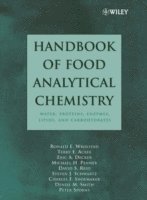
    Handbook of Food Analytical Chemistry, Volume 1

    Water, Proteins, Enzymes, Lipids, and Carbohydrates

    AvRonald E. Wrolstad,Terry E. Acree

    Inbunden, Engelska, 2005

    3 129 kr

    Beställningsvara. Skickas inom 5-8 vardagar. Fri frakt över 249 kr.

    Beskrivning

    Emphasizing effective, state-of-the art methodology and written by recognized experts in the field, the Handbook of Food Analytical Chemistry is an indispensable reference for food scientists and technologists to enable successful analysis.* Provides detailed reports on experimental procedures* Includes sections on background theory and troubleshooting* Emphasizes effective, state-of-the art methodology, written by recognized experts in the field* Includes detailed instructions with annotated advisory comments, key references with annotation, time considerations and anticipated results

    Produktinformation

    • Utgivningsdatum:2005-01-25
    • Mått:216 x 272 x 46 mm
    • Vikt:1 940 g
    • Format:Inbunden
    • Språk:Engelska
    • Antal sidor:784
    • Förlag:John Wiley & Sons Inc
    • ISBN:9780471663782

    Utforska kategorier

    • Tillverkningsteknik inom Naturvetenskap och teknik

    Mer om författaren

    Ronald E. Wrolstad, PhD, is a Distinguised Professor in the Department of Food Science & Technology at Oregon State University.Eric A. Decker, PbD, is a Professor in the Department of Food Science at the University of Massachusetts, Amherst. He is an author, with Cameron Faustman and Clemente J. Lopez-Bote of Antioxidants in Muscle Foods: Nutritional Strategies to Improve Quality, also published by Wiley.Steven J. Schwartz, PhD, is a Professor in the Department of Food Science & Technology at The Ohio State University.Peter Sporns, PhD, is a Professor in the Department of Agricultural, Food, and Nutritional Science and is the Associate Chair of the graduate program in that department at the University of Alberta, Canada.

    Recensioner i media

    "This volume is a valuable source of detailed analytical methods for food science…" (E-STREAMS, May 2005) “...recommendable to everyone in need of a compendium explaining in detail the “how-to” for a… food-analysis laboratory.” (Analytical and Bioanalytical Chemistry, February 2007)

    Innehållsförteckning

    • VOLUME 1. Preface.Foreword to Current Protocols in Food Analytical Chemistry.Contributors.A: WATER.A1. Gravimetric Measurements of Water.A1.1 Gravimetric Determination of Water by Drying and Weighing.A1.2 Karl Fischer Titration.A1.3 Application of Low-Resolution NMR for Simultaneous Moisture and Oil Determination in Flood (Oilseeds).A1.4 Traditional Indirect methods for Estimation of Water Content: Measurement of Brix.A.2 Vapor Pressure Measurements of Water.A2.1 Factors to Consider When Estimating Water Vapor Pressure.A2.2 Dew-Point Method for the Determination of Water Activity.A2.3 Measurement of Water Activity Using Isopiestic Method.A2.4 Direct Manometric Determination of Vapor Pressure.A2.5 Measurement of Water Activity by Electronic Sensors.B: PROTEINS.B1. Measurement of Protein Content.B1.1 The Colorimetric Detection and Quantitation of Total Protein.B1.2 Determination of Total Nitrogen.B1.3 Spectrophotometric Determination of Protein Concentration.B.2 Biochemical Compositional Analyses of Proteins.B2.1 Analyses of Protein Quality.B2.2 Evaluation of the Progress of Protein Hydrolysis.B.3 Characterization of Proteins.B3.1 Electrophoresis Analysis.B3.2 Electrobloting from Polyacrylamide Gels.B3.3 Detection of Proteins on Blot Membranes.B3.4 Immunoblot Detection.B3.5 Determining the CD Spectrum of a Protein.B3.6 Determining the Fluorescence Spectrum of a Protein.B.4 Purification of Proteins.B4.1 Overview of Protein Purification and Characterization.B4.2 Overview of Conventional Chromatography.B.5 Functionality of Proteins.B5.1 Measurement of Functional Properties: Overview of Protein Functionality Testing.B5.2 Measurement of Protein Hydrophobicity.B5.3 Water Retention Properties of Solid Foods.C: ENZYMES.C1. Strategies for Enzymes Activity Measurements.C1.1 Expression and Measurement of Enzyme Activity.C1.2 Detecting Enzyme Activity: A Case Study of Polygalacturonase.C.2 Proteolytic Enzymes.C2.1 Activity Measurements of Proteinases Using Synthetic Substrates.C2.2 Peptodase Activity Assays Using Protein Substrates.C.3 Lipolytic Enzymes.C3.1 Lipase Assays.C.4 Oxidoreductases.C4.1 Polarographic and Spectrophotometric Assay of Diphenol Oxidases (Polyphenol Oxidase).C4.2 Analysis of Lipoxygenase Activity and Products.D: LIPIDS.D1. Lipid Composition.D1.1 Extraction and Measurement of Total Lipids.D1.2 Analysis of Fatty Acids in Food Lipids.D1.3 Cholesterol.D1.4 Oil Quality Indices.D1.5 Analysis of Tocopherols and Tocotrienols.D1.6 Quantitation of Lipid Classes by Thin-Layer Chromatography with Flame Ionization Detection.D1.7 Infrared Spectroscopic Determination of Total Trans Fatty Acids.D.2 Lipid Oxidation/Stability.D2.1 Measurement of Primary Lipid Oxidation Products.D2.2 Chromatographic Analysis of Secondary Lipid Oxidation Products.D2.3 Assessment of Oxidative Stability for Lipids.D2.4 Spectrophotometric Measurement of Secondary Lipid Oxidation Products.D.3 Physical Properties of Lipids.D3.1 Determination of Solid Fat Content by Nuclear Magnetic Resonance.D3.2 Lipid Crystal Characterization.D3.3 Emulsion Droplet Size Determination.D3.4 Emulsion Stability Determination.D3.5 Key Concepts of Interfacial Properties in Food Chemistry.D3.6 Static and Dynamic Interfacial Tension Analysis.E: CARBOHYDRATES.E1. Mono- and Oligosaccharides.E1.1 Colorimetric Quantification of Carbohydrates.E1.2 HPLC of Mon- and Disaccharides Using Refractive Index Detection.E.2 Starch and Starch Derivatives.E2.1 Overview of Laboratory Isolation of Starch from Plant Materials.E2.2 Enzymatic Quantitation of Total Starch in Plant Products.E2.3 Determination of Total Amylose Content of Starch.E.3 Cell Wall Polysaccharides.E3.1 Isolation of Plant Cell Walls and Fractionation of Cell wall Polysaccharides.E3.2 Determination of Neutral Sugars by Gas Chromatography of Their Alditol Acetates.E3.3 Determination of the Uronic Acid Content of Plant Cell Walls Using a Colorimetric Assay.E3.4 Determining the Degree of Methylation and Acetylation of Pectin.E3.5 Quantitative Determination of ß-Glucan Content.Index.