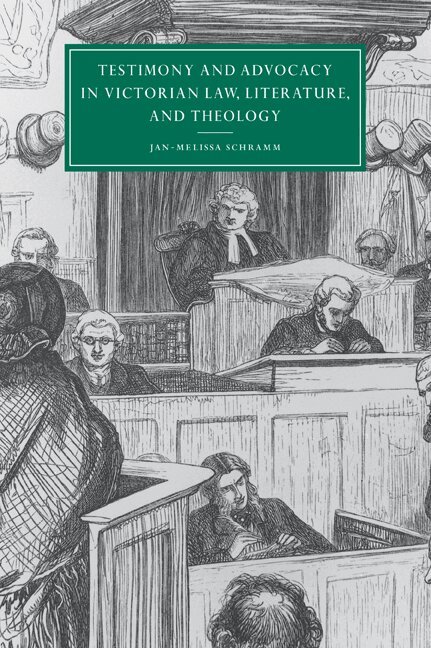
Häftad, Engelska, 2006
Testimony and Advocacy in Victorian Law, Literature, and Theology
Av Jan-Melissa Schramm, Gillian Beer
824 kr
Beställningsvara. Skickas inom 5-8 vardagar. Fri frakt över 249 kr.
Beskrivning
The eighteenth-century model of the criminal trial - with its insistence that the defendant and the facts of a case could 'speak for themselves' - was abandoned in 1836, when legislation enabled barristers to address the jury on behalf of prisoners charged with felony. Increasingly, professional acts of interpretation were seen as necessary to achieve a just verdict, thereby silencing the prisoner and affecting the testimony given by eye witnesses at criminal trials. Jan-Melissa Schramm examines the profound impact of the changing nature of evidence in law and theology on literary narrative in the nineteenth century. Already a locus of theological conflict, the idea of testimony became a fiercely contested motif of Victorian debate about the ethics of literary and legal representation. She argues that authors of fiction created a style of literary advocacy which both imitated, and reacted against, the example of their storytelling counterparts at the Bar.
Produktinformation
- Utgivningsdatum: 2006-04-27
- Mått: 151 x 228 x 14 mm
- Vikt: 404 g
- Format: Häftad
- Språk: Engelska
- Serie: Cambridge Studies in Nineteenth-Century Literature and Culture
- Antal sidor: 264
- Förlag: Cambridge University Press
- ISBN: 9780521026352
Utforska kategorier
Betyg & recensioner
0 recensioner
Inga recensioner tillgängliga.