E-bok, Engelska, 2026
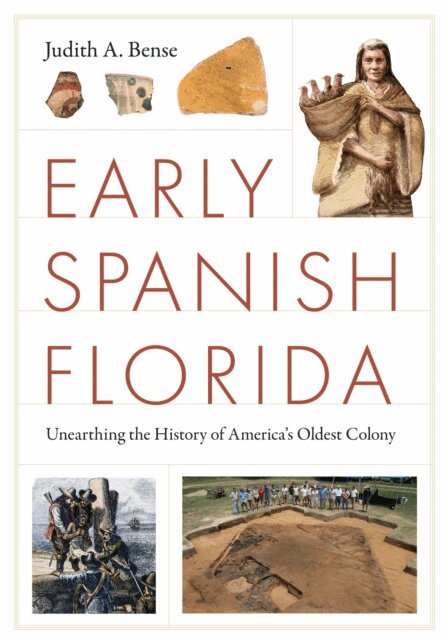
Early Spanish Florida
394 kr
Läs direkt i Bokus Reader – eller ladda ned till din enhet
Beskrivning
A leading authority on the archaeology of Florida tells the story of the states past as a Spanish colonyFlorida is the state with the oldest recorded history of European contact, beginning with the arrival of Spanish explorer Juan Ponce de Len more than five centuries agobut many people dont know the full story of Florida during this momentous time. Engagingly written and extensively illustrated, Early Spanish Florida delves into archaeological discoveries to uncover the 250-year history of Spanish colonization on the peninsula.Judith Bense, a lifelong archaeologist and expert on Spanish Florida, traces the story from 1513 when Ponce de Len accidentally landed on La Florida to 1763 when Spain lost the land to Britain after the Seven Years War. Bense explores how the first Spanish settlers tried to colonize Florida with aims to take over the entire Southeast, encountering harsh weather, competing colonizing nations, and Native resistance. The story includes the establishment of St. Augustine in 1565, shipwrecks of early explorers and colonists, the building of Catholic missions in the 1600s, and the journeys of people of African descent escaping slavery on northern plantations.The events in Early Spanish Florida are told from the perspectives of the intertwined groups of people whose interactions created deep cultural changes, including Spanish, Indigenous, and African communities. Filled with maps and images of artifacts, excavations, historical sites, and original documents, and featuring suggested readings and places to visit, this book offers a wealth of knowledge and sparks enduring interest in Floridas past.Funding for this publication was provided through a grant from Florida Humanities with funds from the National Endowment for the Humanities. Any views, findings, conclusions, or recommendations expressed in this publication do not necessarily represent those of Florida Humanities or the National Endowment for the Humanities.
Produktinformation
- Utgivningsdatum: 2026-03-03
- Språk: Engelska
- Filformat: EPUB
- Kopieringsskydd: LCP
- ISBN: 9780813075310
- Förlag: University Press of Florida
Utforska kategorier
Betyg & recensioner
0 recensioner
Inga recensioner tillgängliga.