• Fri frakt över 249 kr
  • •
  • Snabba leveranser
  • •
  • Billiga böcker
Kundservice

Du är på sajten för privatpersoner.

Företag, bibliotek eller offentlig verksamhet?

Du handlar på classic.bokus.com, där alla dina funktioner finns intakta.
Till classic.bokus.com
Bokus logotyp. Gå till startsidan.
  • Erbjudanden
  • Student
  • Topplistor
  • Barn & ungdom
  • Bokus Play
  • E-böcker
  • Ljudböcker
  • Pocketböcker
  • Spel & pussel

Upp till 25% på utvalda nyheter →

Sidfot

Mina sidor

    Hjälp

    • Kundservice
    • Vanliga frågor och svar
    • Frakt och leverans
    • Retur vid ångerrätt
    • Reklamera vara
    • Betalning
    • Köpvillkor
    • Allmänna villkor
    • Information om webbplatsens tillgänglighet

    Om Bokus

    • Om oss
    • Pressrum
    • För studenter
    • För företag
    • För bibliotek och offentlig verksamhet
    • För leverantörer
    • Hållbarhet

    Populärt

    • Aktuella erbjudanden
    • Presentkort
    • Studentlitteratur
    • Nya böcker
    • Topplistor
    • Signerade böcker
    • Engelska böcker

    Inspiration

    • Boktips
    • BookTok
    • Populära bokserier
    • Barnbokskaraktärer
    • Populära författare
    Logotyp för Bokus
    Följ oss på Facebook (extern länk)Följ oss på Instagram (extern länk)Följ oss på YouTube (extern länk)Följ oss på TikTok (extern länk)
    bokus @ CookiesAnpassa cookiesIntegritetspolicyKöpvillkor
    Till Citymail hemsida (extern länk)Till Budbee hemsida (extern länk)Till Postnord hemsida (extern länk)Till Schenker hemsida (extern länk)Till Early Bird hemsida (extern länk)Till Walleys hemsida (extern länk)
    1. Språk och ordböcker
    2. Språk: referensverk och allmänt
    3. Skrivande och redigering

    Large Type Edition

    Large Type Edition

    AvTimothy Giles,Charles Sides

    Inbunden, Engelska, 2008

    Del i serien Baywood's Technical Communications

    2 494 kr

    Beställningsvara. Skickas inom 10-15 vardagar. Fri frakt över 249 kr.

    Fler format och utgåvor

    Häftad

    800 kr

    Beskrivning

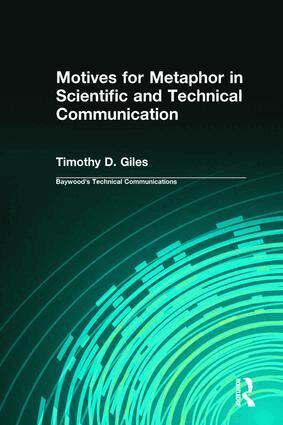
    Examination of the work of scientific icons-Newton, Descartes, and others-reveals the metaphors and analogies that directed their research and explain their discoveries. Today, scientists tend to balk at the idea of their writing as rhetorical, much less metaphorical. How did this schism over metaphor occur in the scientific community? To establish that scientists should use metaphors to explain science to the public and need to be conscious of how metaphor can be useful to their research, this book examines the controversy over cloning and the lack of a metaphor to explain it to a public fearful of science's power.The disjunction between metaphor and science is traced to the dispensation of the Solar System Analogy in favor of a mathematical model. Arguing that mathematics is metaphorical, the author supports the idea of all language as metaphorical-unlike many rhetoricians and philosophers of science who have proclaimed all language as metaphorical but have allowed a distinction between a metaphorical use of language and a literal use.For technical communication pedagogy, the implications of this study suggest foregrounding metaphor in textbooks and in the classroom. Though many technical communication textbooks recommend metaphor as a rhetorical strategy, some advise avoiding it, and those that recommend it usually do so in a paragraph or two, with little direction for students on how to recognize metaphors or to how use them. This book provides the impetus for a change in the pedagogical approach to metaphor as a rhetorical tool with epistemological significance.

    Produktinformation

    • Utgivningsdatum:2008-04-15
    • Mått:152 x 229 x 16 mm
    • Vikt:850 g
    • Format:Inbunden
    • Språk:Engelska
    • Serie:Baywood's Technical Communications
    • Antal sidor:182
    • Förlag:Baywood Publishing Company Inc
    • ISBN:9780895033376

    Utforska kategorier

    • Skrivande och redigering inom Språk och ordböcker

    Mer om författaren

    Timothy D. Giles has been involved in technical communication for more than 20 years. His articles on metaphor and other technical communication topics have appeared in the Journal of Technical Writing & Communication and other publications. He teaches technical communication and other writing courses for Georgia Southern University's Department of Writing and Linguistics. His Ph.D., in Rhetoric, Scientific, and Technical Communication, is from the University of Minnesota, St. Paul, and his M.A., in English, Technical and Professional Writing, is from East Carolina University, where he first began reading about metaphor in scientific and technical communication.

    Recensioner i media

    "Giles reminds us of the power of metaphor to shape scientific thinking and its development. This is an important book for anyone interested in practicing or teaching technical communication." -Stuart A. Selber, Associate Professor, Penn State University "Motives for Metaphor presents an important and detailed account of metaphor as a key epistemological strategy for scientific and technical disciplines. In detailed historical accounting and in case studies on the definition of he atom and the representation and debate over cloning. Giles shows us how metaphor is crucial for invention, meaning making, and stabilizing knowledge within scientific practices." -Brenton Faber, Professor, Author, Discourse, Technology & Change"

    Innehållsförteckning

    • AcknowledgmentsIntroduction: The Problem of Metaphor in Scientific and Technical CommunicationDifferentiating between Scientific and Technical CommunicationMetaphor and AnalogySummary of ChaptersChapter One: Reintroducing Metaphor in the Technical Communication ClassroomProblemMethodologySome General Considerations of MetaphorTechnical Communication TextbooksScience Writing TextsChapter Two: Metaphor in the Technical Communication LiteratureMetaphor and the ComputerTechnical Communication TheoryTechnical Communication PedagogyConclusionChapter Three: A Review of the Theories of MetaphorSubstitution Theory of MetaphorAristotle on MetaphorTwentieth-Century SubstitutionistsNietzsche and Post-Modern MetaphorThe Tensionists: An Introduction to InteractionThe InteractionistsMetaphor as EpistemologyConclusionChapter Four: The Metaphor of Mathematics: A Case Study of the Solar System AnalogyScottish Natural Philosophy Lodge and the BAASThe Solar System AnalogyThe Solar System Analogy in Secondary-School TextsA Narrative History of the Solar System AnalogyLord KelvinJames Clerk MaxwellJ. J. ThomsonOliver LodgeErnest RutherfordNiels BohrConclusionChapter Five: The Question of Metaphor in Natural Language: A Case StudyThe Question of CloningRecognition of the Dominant/Emergent MetaphorsThe Effect Upon the Scientific CommunityConclusionChapter Six: ImplicationsAn Approach Based on this StudyOther Avenues for ResearchReferencesIndex