• Fri frakt över 249 kr
  • •
  • Snabba leveranser
  • •
  • Billiga böcker
Kundservice

Du är på sajten för privatpersoner.

Företag, bibliotek eller offentlig verksamhet?

Du handlar på classic.bokus.com, där alla dina funktioner finns intakta.
Till classic.bokus.com
Bokus logotyp. Gå till startsidan.
  • Erbjudanden
  • Student
  • Topplistor
  • Barn & ungdom
  • Bokus Play
  • E-böcker
  • Ljudböcker
  • Pocketböcker
  • Spel & pussel

Upp till 25% på utvalda nyheter →

Sidfot

Mina sidor

    Hjälp

    • Kundservice
    • Vanliga frågor och svar
    • Frakt och leverans
    • Retur vid ångerrätt
    • Reklamera vara
    • Betalning
    • Köpvillkor
    • Allmänna villkor
    • Information om webbplatsens tillgänglighet

    Om Bokus

    • Om oss
    • Pressrum
    • För studenter
    • För företag
    • För bibliotek och offentlig verksamhet
    • För leverantörer
    • Hållbarhet

    Populärt

    • Aktuella erbjudanden
    • Presentkort
    • Studentlitteratur
    • Nya böcker
    • Topplistor
    • Signerade böcker
    • Engelska böcker

    Inspiration

    • Boktips
    • BookTok
    • Populära bokserier
    • Barnbokskaraktärer
    • Populära författare
    Logotyp för Bokus
    Följ oss på Facebook (extern länk)Följ oss på Instagram (extern länk)Följ oss på YouTube (extern länk)Följ oss på TikTok (extern länk)
    bokus @ CookiesAnpassa cookiesIntegritetspolicyKöpvillkor
    Till Citymail hemsida (extern länk)Till Budbee hemsida (extern länk)Till Postnord hemsida (extern länk)Till Schenker hemsida (extern länk)Till Early Bird hemsida (extern länk)Till Walleys hemsida (extern länk)
    1. Psykologi och pedagogik
    2. Pedagogik
    3. Pedagogisk psykologi

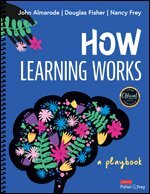
    How Learning Works

    A Playbook

    AvJohn T. Almarode,Douglas Fisher

    Häftad, Engelska, 2022

    430 kr

    Beställningsvara. Skickas inom 5-8 vardagar. Fri frakt över 249 kr.

    Beskrivning

    Translate the science of learning into strategies for maximum learning impact in your classroom.

    The content, skills, and understandings students need to learn today are as diverse, complex, and multidimensional as the students in our classrooms. How can educators best create the learning experiences students need to truly learn?

    How Learning Works: A Playbook unpacks the science of how students learn and translates that knowledge into promising principles or practices that can be implemented in the classroom or utilized by students on their own learning journey. Designed to help educators create learning experiences that better align with how learning works, each module in this playbook is grounded in research and features prompts, tools, practice exercises, and discussion strategies that help teachers to

    • Describe what is meant by learning in the local context of your classroom, including identifying any barriers to learning.
    • Adapt promising principles and practices to meet the specific needs of your students—particularly regarding motivation, attention, encoding, retrieval and practice, cognitive load and memory, productive struggle, and feedback.
    • Translate research on learning into learning strategies that accelerate learning and build students’ capacity to take ownership of their own learning—such as summarizing, spaced practice, interleaved practice, elaborate interrogation, and transfer strategies.
    • Generate and gather evidence of impact by engaging students in reciprocal teaching and effective feedback on learning.
    Rich with resources that support the process of parlaying scientific findings into classroom practice, this playbook offers all the moves teachers need to design learning experiences that work for all students!

    Produktinformation

    • Utgivningsdatum:2022-02-14
    • Mått:215 x 279 x 24 mm
    • Vikt:680 g
    • Format:Häftad
    • Språk:Engelska
    • Antal sidor:240
    • Upplaga:1
    • Förlag:SAGE Publications
    • ISBN:9781071856635

    Utforska kategorier

    • Pedagogisk psykologi inom Psykologi och pedagogik
    • Pedagogisk metodik inom Psykologi och pedagogik

    Mer om författaren

    John Almarode is a professor of education at James Madison University. He was awarded the inaugural Sarah Miller Luck Endowed Professorship in 2015 and received an Outstanding Faculty Award from the State Council for Higher Education in Virginia in 2021. John started as a mathematics and science teacher in Augusta County, Virginia. John has written multiple books, book chapters, papers, and reports. His collaborative work with colleagues on what works best in teaching and learning includes How Tutoring Works, Visible Learning in Early Childhood, and How Learning Works, all with Corwin Press.Douglas Fisher is a professor and chair of educational leadership at San Diego State University and a teacher leader at Health Sciences High and Middle College. Previously, Fisher was an early intervention teacher and elementary school educator. In 2022, he was inducted into the Reading Hall of Fame by the Literacy Research Association. He has published numerous articles on reading and literacy, leadership, and curriculum design, as well as books such as Your Introduction to PLC+, Welcome to Teaching, How Feedback Works, Teaching Reading, and RIGOR Unveiled. Fisher loves being an educator and hopes to share that passion with others.Nancy Frey is a professor of educational leadership at San Diego State University and a teacher leader at Health Sciences High and Middle College. Her published titles include The Courage to Learn, The Art and Science of Coaching, How Scaffolding Works, and The Illustrated Guide to Visible Learning. Frey is a credentialed special educator, reading specialist, and administrator in California and learns from teachers and students every day.

    Recensioner i media

    Easy to understand, yet covers many important concepts. Spiral binding constitutes its use over many years, hopefully.

    Innehållsförteckning

    • AcknowledgmentsINTRODUCTIONThe Purpose of This Learning PlaybookThe Learning Plan With the ModulesLearning Within the ModulesCollaborating for Great LearningPART ICHAPTER 1. WHAT DOES LEARNING LOOK LIKE IN YOUR CLASSROOM?A Definition of LearningChecks for UnderstandingCHAPTER 2. WHAT ARE DIFFERENT WAYS TO THINK ABOUT LEARNING?Three Different Types of KnowledgeThree Parts of the Learning ProcessChecks for UnderstandingCHAPTER 3. WHAT ARE THE BARRIERS TO LEARNING?AcquisitionConsolidationStorageChallenges to Learning by DesignChecks for UnderstandingCHAPTER 4. HOW DO STUDENTS LEARN?Learning MythsThe Science of LearningChecks for UnderstandingPART IICHAPTER 5. PROMISING PRINCIPLE 1: MOTIVATIONWhat Is Motivation?What Does This Principle or Practice Look Like in the Classroom?How Do We Implement This Principle and Practice Into Our Classrooms?Checks for UnderstandingCHAPTER 6. PROMISING PRINCIPLE 2: ATTENTIONWhat Is Attention?Factors Influencing AttentionWhat Does This Principle or Practice Look Like in the Classroom?How Do We Implement This Principle and Practice Into Our Classrooms?Checks for UnderstandingCHAPTER 7. PROMISING PRINCIPLE 3: ELABORATE ENCODINGWhat Is Elaborate Encoding?Components of Elaborate EncodingApproaches to Promoting Elaborate EncodingWhat Does This Principle or Practice Look Like in the Classroom?How Do We Implement This Principle and Practice Into Our Classrooms?Checks for UnderstandingCHAPTER 8. PROMISING PRINCIPLE 4: RETRIEVAL AND PRACTICEWhat Is Retrieval and Practice?Timing of RetrievalTypes of Retrieval PracticeWhat Does This Principle or Practice Look Like in the Classroom?How Do We Implement This Principle and Practice Into Our Classrooms?Checks for UnderstandingCHAPTER 9. PROMISING PRINCIPLE 5: COGNITIVE LOADWhat Is Cognitive Load?What Does This Principle or Practice Look Like in the Classroom?How Do We Implement This Principle and Practice Into Our Classrooms?Checks for UnderstandingCHAPTER 10. PROMISING PRINCIPLE 6: PRODUCTIVE STRUGGLEWhat Is Productive Struggle?What Does This Principle or Practice Look Like in the Classroom?How Do We Implement This Principle and Practice Into Our Classrooms?Checks for UnderstandingCHAPTER 11. PROMISING PRINCIPLE 7: FEEDBACKWhat Is Feedback and What Makes It Effective?What Does This Principle or Practice Look Like in the Classroom?How Do We Implement This Principle and Practice Into Our Classrooms?Checks for UnderstandingWhere to Next?PART IIICHAPTER 12. EXPLICIT STRATEGY INSTRUCTIONThe Gradual Release of ResponsibilityEffective Learning PracticesA Return to Germane Cognitive LoadChecks for UnderstandingCHAPTER 13. LEARNING STRATEGY 1: GOAL SETTINGThe Benefits of Goal SettingGetting Ready for Goal SettingThe Process of Goal SettingChecks for UnderstandingCHAPTER 14. LEARNING STRATEGY 2: INTEGRATING PRIOR KNOWLEDGEThe Benefits of Integrating Prior KnowledgeGetting Ready to Integrate Prior KnowledgeA Process for Integrating Prior KnowledgeBonus Material: Annotated ReadingChecks for UnderstandingCHAPTER 15. LEARNING STRATEGY 3: SUMMARIZINGEssential Characteristics of SummarizingGetting Ready to SummarizeA Process for the Explicit Instruction of SummarizingChecks for UnderstandingCHAPTER 16. LEARNING STRATEGY 4: MAPPINGThree Different Ways to MapGetting Ready for MappingA Process for the Explicit Instruction of SummarizingChecks for UnderstandingCHAPTER 17. LEARNING STRATEGY 5: SELF-TESTINGBenefits of Self-TestingWhat if Learners Make Mistakes?Getting Ready to Implement Self-TestingA Process for Implementing Self-TestingBonus Material: Cooperative LearningChecks for UnderstandingCHAPTER 18. LEARNING STRATEGY 6: ELABORATIVE INTERROGATIONBenefits of Elaborative InterrogationGetting Ready to Implement Elaborative InterrogationBonus Material: JigsawA Process for Implementing Elaborative InterrogationChecks for UnderstandingPART IVCHAPTER 19. GENERATING AND GATHERING EVIDENCEPlanning for EvaluationSuccess Criteria and EvaluationPlanning to Gather EvidencePlanning to Collect and Organize EvidenceMaking Sense of the EvidenceConclusionReferencesIndexAbout the Authors