• Fri frakt över 249 kr
  • •
  • Snabba leveranser
  • •
  • Billiga böcker
Kundservice

Du är på sajten för privatpersoner.

Företag, bibliotek eller offentlig verksamhet?

Du handlar på classic.bokus.com, där alla dina funktioner finns intakta.
Till classic.bokus.com
Bokus logotyp. Gå till startsidan.
  • Erbjudanden
  • Nyheter
  • Student
  • Topplistor
  • Barn & ungdom
  • Bokus Play
  • E-böcker
  • Pocketböcker
  • Spel & pussel

10% rabatt på allt med kod: NYSTART10 →

Sidfot

Mina sidor

    Hjälp

    • Kundservice
    • Vanliga frågor och svar
    • Frakt och leverans
    • Retur vid ångerrätt
    • Reklamera vara
    • Betalning
    • Köpvillkor
    • Allmänna villkor
    • Information om webbplatsens tillgänglighet

    Om Bokus

    • Om oss
    • Pressrum
    • För studenter
    • För företag
    • För bibliotek och offentlig verksamhet
    • För leverantörer
    • Hållbarhet

    Populärt

    • Aktuella erbjudanden
    • Presentkort
    • Studentlitteratur
    • Nya böcker
    • Topplistor
    • Signerade böcker
    • Engelska böcker

    Inspiration

    • Boktips
    • BookTok
    • Populära bokserier
    • Barnbokskaraktärer
    • Populära författare
    Logotyp för Bokus
    Följ oss på Facebook (extern länk)Följ oss på Instagram (extern länk)Följ oss på YouTube (extern länk)Följ oss på TikTok (extern länk)
    bokus @ CookiesAnpassa cookiesIntegritetspolicyKöpvillkor
    Till Citymail hemsida (extern länk)Till Budbee hemsida (extern länk)Till Postnord hemsida (extern länk)Till Schenker hemsida (extern länk)Till Early Bird hemsida (extern länk)Till Walleys hemsida (extern länk)
    1. Psykologi och pedagogik
    2. Pedagogik
    3. Högskola och universitet
    4. Lärarutbildning

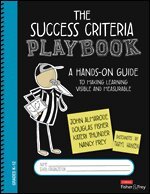
    The Success Criteria Playbook

    A Hands-On Guide to Making Learning Visible and Measurable

    AvJohn T. Almarode,Douglas Fisher

    Häftad, Engelska, 2021

    430 kr

    Beställningsvara. Skickas inom 5-8 vardagar. Fri frakt över 249 kr.

    Beskrivning

    Provide students a clear view of what success looks like for any process, task, or product.

    What does success look like for your students? How will they know if they have learned? This essential component of teaching and learning can be difficult to articulate but is vital to achievement for both teachers and students. 

    The Success Criteria Playbook catapults teachers beyond learning intentions to define clearly what success looks like for every student—whether face-to-face or in a remote learning environment. Designed to be used collaboratively in grade-level, subject area teams—or even on your own—the step-by-step playbook expands teacher understanding of how success criteria can be utilized to maximize student learning and better engage learners in monitoring and evaluating their own progress. Each module is designed to support the creation and immediate implementation of high-quality, high impact success criteria and includes:

    • Templates that allow for guided and independent study for teachers. 
    • Extensive STEM-focused examples from across the K-12 STEM curriculum to guide teacher learning and practice. 
    • Examples of success criteria applied across learning domains and grades, including high school content, skills, practices, dispositions, and understandings.

    Ensure equity of access to learning and opportunity for all students by designing and employing high-quality, high-impact success criteria that connect learners to a shared understanding of what success looks like for any given learning intention.

    Produktinformation

    • Utgivningsdatum:2021-05-26
    • Mått:215 x 279 x 23 mm
    • Vikt:640 g
    • Format:Häftad
    • Språk:Engelska
    • Antal sidor:224
    • Upplaga:1
    • Förlag:SAGE Publications
    • ISBN:9781071831540

    Utforska kategorier

    • Lärarutbildning inom Psykologi och pedagogik
    • Pedagogisk metodik inom Psykologi och pedagogik

    Mer om författaren

    John Almarode is a professor of education at James Madison University. He was awarded the inaugural Sarah Miller Luck Endowed Professorship in 2015 and received an Outstanding Faculty Award from the State Council for Higher Education in Virginia in 2021. John started as a mathematics and science teacher in Augusta County, Virginia. John has written multiple books, book chapters, papers, and reports. His collaborative work with colleagues on what works best in teaching and learning includes How Tutoring Works, Visible Learning in Early Childhood, and How Learning Works, all with Corwin Press.Douglas Fisher is a professor and chair of educational leadership at San Diego State University and a teacher leader at Health Sciences High and Middle College. Previously, Fisher was an early intervention teacher and elementary school educator. In 2022, he was inducted into the Reading Hall of Fame by the Literacy Research Association. He has published numerous articles on reading and literacy, leadership, and curriculum design, as well as books such as Your Introduction to PLC+, Welcome to Teaching, How Feedback Works, Teaching Reading, and RIGOR Unveiled. Fisher loves being an educator and hopes to share that passion with others.Kateri Thunder, Ph.D., has the pleasure of collaborating with learners and educators from school divisions and early learning centers around the world to translate research into practice. She has served as an inclusive early childhood educator, an Upward Bound educator, a mathematics specialist, an assistant professor of mathematics education at James Madison University, and Site Director for the Central Virginia Writing Project. Her research, writing, and presentations focus on equity and access in early childhood and mathematics education, as well as the intersection of literacy and mathematics for teaching and learning. Kateri has collaborated with thousands of educators to catalyze change in their classrooms, centers, and schools. She is the chair of NCTM’s Research Committee and co-creator of The Math Diet. Additionally, she is a best-selling author for Corwin’s Teaching Mathematics in the Visible Learning Classroom Series, the Success Criteria Playbook, and Visible Learning in Early Childhood. Nancy Frey is a professor of educational leadership at San Diego State University and a teacher leader at Health Sciences High and Middle College. Her published titles include The Courage to Learn, The Art and Science of Coaching, How Scaffolding Works, and The Illustrated Guide to Visible Learning. Frey is a credentialed special educator, reading specialist, and administrator in California and learns from teachers and students every day.

    Recensioner i media

    With over 30 years of experience in education, you learn to recognize those practices that make a difference in your teaching. The Success Criteria Playbook is one of those books. Focusing on developing high-quality success criteria, John Almarode, Douglas Fisher, Kateri Thunder, and Nancy Frey take success criteria to the next level by laying out a step-by-step process that helps teachers ensure every student has clarity and can be successful in meeting the learning intentions. Each module walks you through the process of developing success criteria that help break down barriers and maximize student learning. This book is a must-have in providing your students a clear understanding of what success looks like!

    Innehållsförteckning

    • IntroductionModule 1: What are success criteria?Module 2: What are the challenges to creating and implementing success criteria? How do we overcome those challenges?Module 3: How do success criteria pave the way for equity?Module 4: Creating and implementing effective "I Can"/"We Can" statementsModule 5: Creating and implementing single-point rubricsModule 6: Creating and implementing rubricsModule 7: Creating and implementing success criteria through teacher modelingModule 8: Creating and implementing success criteria through exemplarsModule 9: Co-constructing criteria for successModule 10: Different types of success criteria for different aspects of learningModule 11: How do we use success criteria to foster meta-cognitionModule 12: How do success criteria support deliberate practice and transfer of learning?Module 13: What is the relationship between success criteria and feedback?Module 14: How do we use success criteria to fulfill the promise of equity?References