Kateri Thunder - Böcker
383 kr
Skickas
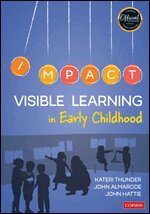
Make learning visible in the early years
Early childhood is a uniquely sensitive time, when young learners are rapidly developing across multiple domains, including language and literacy, mathematics, and motor skills. Knowing which teaching strategies work best and when can have a significant impact on a child’s development and future success.
Visible Learning in Early Childhood investigates the critical years between ages 3 and 6 and, backed by evidence from the Visible Learning® research, explores seven core strategies for learning success: working together as evaluators, setting high expectations, measuring learning with explicit success criteria, establishing developmentally appropriate levels of learning, viewing mistakes as opportunities, continually seeking feedback, and balancing surface, deep, and transfer learning. The authors unpack the symbiotic relationship between these seven tenets through
Authentic examples of diverse learners and settings Voices of master teachers from the US, UK, and Australia Multiple assessment and differentiation strategies Multidisciplinary approaches depicting mathematics, literacy, art and music, social-emotional learning, and moreUsing the Visible Learning research, teachers partner with children to encourage high expectations, developmentally appropriate practices, the right level of challenge, and a focus on explicit success criteria. Get started today and watch your young learners thrive!
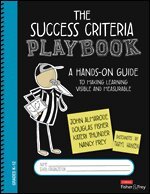
The Success Criteria Playbook
A Hands-On Guide to Making Learning Visible and Measurable
423 kr
Skickas inom 5-8 vardagar
410 kr
Skickas inom 5-8 vardagar
Learn how the Visible Learning® research guides our planning and teaching as we partner with families and colleagues to have the greatest impact on the learning and development of young children.
422 kr
Skickas inom 5-8 vardagar
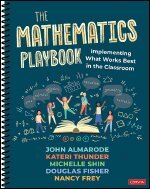
In this sequel to the megawatt best seller Visible Learning for Mathematics, John Almarode, Douglas Fisher, Nancy Frey, John Hattie, and Kateri Thunder help you answer that question by showing how Visible Learning strategies look in action in the mathematics classroom. Walk in the shoes of elementary school teachers as they engage in the 200 micro-decisions-per-minute needed to balance the strategies, tasks, and assessments seminal to high-impact mathematics instruction. Using grade-leveled examples and a decision-making matrix, you’ll learn to
Articulate clear learning intentions and success criteria at surface, deep, and transfer levels Employ evidence to guide students along the path of becoming metacognitive and self-directed mathematics achievers Use formative assessments to track what students understand, what they don’t, and why Select the right task for the conceptual, procedural, or application emphasis you want, ensuring the task is for the right phase of learning Adjust the difficulty and complexity of any task to meet the needs of all learnersIt’s not only what works, but when. Exemplary lessons, video clips, and online resources help you leverage the most effective teaching practices at the most effective time to meet the surface, deep, and transfer learning needs of every student.
466 kr
Skickas inom 11-20 vardagar
Select the right task, at the right time, for the right phase of learning
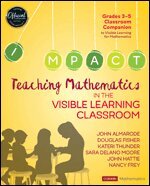
Young students come to elementary classrooms with different background knowledge, levels of readiness, and learning needs. What works best to help K–2 students develop the tools to become visible learners in mathematics? What works best for K-=–2 mathematics learning at the surface, deep, and transfer levels?
In this sequel to the megawatt bestseller Visible Learning for Mathematics, John Almarode, Douglas Fisher, Kateri Thunder, John Hattie, and Nancy Frey help you answer those questions by showing how Visible Learning strategies look in action in K–2 mathematics classrooms. Walk in the shoes of teachers as they mix and match the strategies, tasks, and assessments seminal to making conceptual understanding, procedural knowledge, and the application of mathematical concepts and thinking skills visible to young students as well as to you.
Using grade-leveled examples and a decision-making matrix, you’ll learn to
Articulate clear learning intentions and success criteria at surface, deep, and transfer levels Employ evidence to guide students along the path of becoming metacognitive and self-directed mathematics achievers Use formative assessments to track what students understand, what they don’t, and why Select the right task for the conceptual, procedural, or application emphasis you want, ensuring the task is for the right phase of learning Adjust the difficulty and complexity of any task to meet the needs of all learnersIt’s not only what works, but when. Exemplary lessons, video clips, and online resources help you leverage the most effective teaching practices at the most effective time to meet the surface, deep, and transfer learning needs of every K–2 student.